Listen to this Post
Introduction
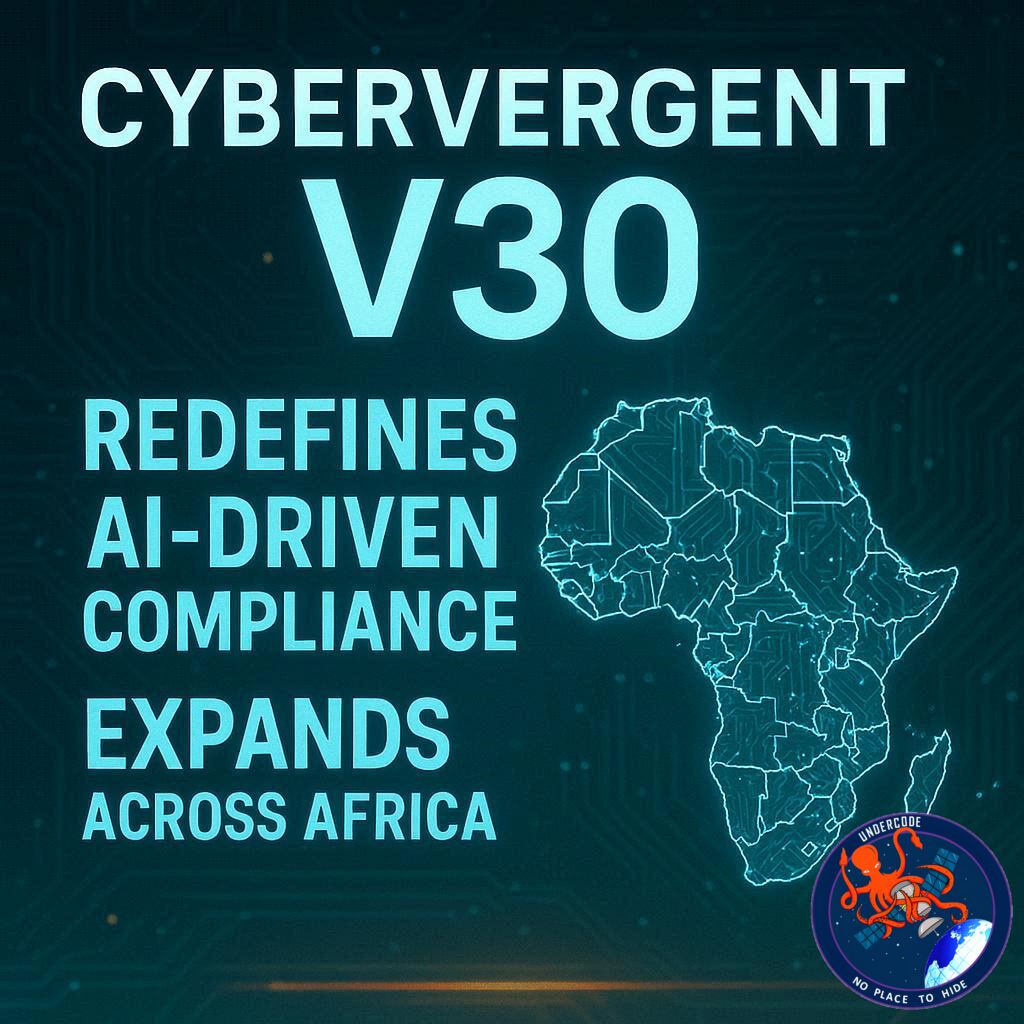
The governance, risk, and compliance (GRC) industry is undergoing a structural shift, driven by automation, artificial intelligence, and the growing demand for real-time security validation. In this transformation, African tech companies are no longer just participants but increasingly becoming innovators setting global benchmarks. One of the clearest examples of this shift is Cybervergent, an AI-native platform originating from Africa that is challenging legacy compliance systems with continuous, automated verification. Its latest milestone, the launch of v3.0 alongside expansion into Kenya, Ghana, and South Africa, signals a broader change in how enterprises approach digital trust and regulatory oversight.
Summary of the Original
Cybervergent has introduced its v3.0 AI-powered governance and compliance platform
The system replaces static reporting models with continuous risk and compliance management
It enables real-time oversight across risk, audit, compliance, and data security domains
The platform independently verifies up to 99.9% of audit findings before dashboard presentation
Traditional GRC systems often rely on static reports without independent validation
Cybervergent shifts the model toward continuous posture management instead of periodic checks
Its AI engine significantly improves trust by validating data before it is displayed
The platform supports risk quantification in financial terms for better board-level decisions
It maps more than 4,500 compliance controls across global frameworks
These include GDPR, ISO 27001, SOC 2, and Nigeria’s NDPA regulations
This allows organizations to conduct a single assessment across multiple certifications
Audit functionality ensures full traceability of evidence to verified documentation
The system maintains continuous audit readiness across enterprise environments
Data security monitoring provides unified visibility across cloud and on-prem systems
Cybervergent has successfully onboarded its first South African customer
South Africa is seen as a mature and highly regulated compliance market
The expansion is part of a broader channel-first growth strategy
The company works with local partners in regions such as Lagos and Accra
This approach enables scalable deployment of security infrastructure
Executives emphasize that verification is embedded at the architectural level
Only findings traceable to source documentation are accepted into dashboards
The company positions itself as a foundational layer of digital trust
Its growth strategy combines fundraising, product expansion, and enterprise deals
Cybervergent argues that African-built tech can meet global standards
The platform is evolving into a continuous compliance infrastructure model
Its focus is shifting from reporting compliance to enforcing verified compliance
The system aims to reduce human error and manual audit inefficiencies
It also supports faster regulatory readiness for multinational companies
The expansion reflects increasing global trust in African AI innovation
Cybervergent is positioning itself as a leader in AI-native governance systems
What Undercode Say:
Cybervergent’s evolution with v3.0 represents a deeper shift than a simple product upgrade. It signals a structural rethinking of how compliance is defined, measured, and enforced in enterprise systems. Traditional GRC platforms have long been criticized for being reactive, relying on snapshots of compliance that are outdated almost immediately after generation. Cybervergent’s model instead pushes toward continuous validation, where compliance is not an event but a persistent state.
The claim of 99.9% automated verification is particularly significant because it challenges the industry assumption that compliance still requires heavy human validation. If accurate at scale, this level of automation could reduce audit costs dramatically while increasing reliability. However, it also raises questions about dependency on AI systems for regulatory assurance, especially in high-risk industries.
The platform’s ability to map 4,500+ controls across multiple frameworks is another strong indicator of consolidation in the compliance tech space. Instead of organizations juggling multiple audits for different regulations, Cybervergent proposes a unified compliance layer. This reduces redundancy but also increases system complexity, as failures in one mapping layer could cascade across multiple certifications.
From a market perspective, Cybervergent’s expansion into South Africa is strategically important. South Africa is widely considered one of the strictest regulatory environments in Africa, making it a proving ground for enterprise-grade compliance solutions. Success there implies readiness for broader global adoption.
The channel-first strategy using local partners in Lagos and Accra reflects a practical scaling approach. Rather than relying solely on centralized deployment, Cybervergent is embedding itself into regional ecosystems, which increases adaptability and trust among enterprise clients.
One of the most important shifts introduced by Cybervergent is the concept of “verified compliance.” Instead of assuming compliance based on documentation, the system validates every finding against source evidence. This reduces risk of false reporting but also introduces reliance on data integrity pipelines.
There is also a broader geopolitical implication. African-developed AI infrastructure entering global compliance markets challenges long-standing assumptions about innovation flow direction. Instead of importing governance tools, Africa is exporting them.
The financial risk modeling feature is particularly relevant for board-level decision making. Translating risk into monetary impact allows executives to prioritize mitigation strategies more effectively. This aligns compliance more closely with business strategy rather than treating it as a regulatory burden.
However, continuous compliance systems also introduce new vulnerabilities. Always-on monitoring requires constant data access, which increases the importance of cybersecurity resilience within the platform itself.
Cybervergent’s architecture suggests a future where audit processes become largely autonomous. While this improves efficiency, regulatory bodies may need to adapt frameworks to account for AI-driven verification systems.
Overall, the platform represents a transition from compliance reporting tools to compliance enforcement infrastructure. This is a fundamental category shift, not just an incremental improvement.
Fact Checker Results
❌ The claim of “99.9% verification accuracy” is not independently verified by third-party audit benchmarks
⚠️ Expansion into South Africa is confirmed, but broader global competitiveness claims remain market-positioned statements
✅ The shift from static reporting to continuous compliance reflects a real and ongoing trend in modern GRC systems
Prediction
Cybervergent is likely to accelerate its expansion into additional regulated markets, particularly in Europe and the Middle East, where compliance automation demand is increasing.
The next stage of development will likely focus on deeper AI governance features, including predictive compliance risk modeling and autonomous audit remediation.
Competition from established GRC vendors may intensify, leading to either strategic partnerships or acquisition interest in similar AI-native compliance platforms.
🕵️📝Let’s dive deep and fact‑check.
References:
Reported By: www.legit.ng
Extra Source Hub (Possible Sources for article):
https://www.quora.com
Wikipedia
OpenAi & Undercode AI
Image Source:
Unsplash
Undercode AI DI v2
Bing
🔐JOIN OUR CYBER WORLD [ CVE News • HackMonitor • UndercodeNews ]
📢 Follow UndercodeNews & Stay Tuned:
𝕏 formerly Twitter 🐦 | @ Threads | 🔗 Linkedin | 🦋BlueSky | 🐘Mastodon