
Listen to this Post
Introduction
Apple’s second fiscal quarter of 2026 has delivered one of its strongest performances in recent years, surprising analysts and surpassing internal forecasts. With double-digit growth across nearly every category and record-breaking iPhone and Services revenue, the company has reaffirmed its dominance in the global tech market. The results not only highlight resilient consumer demand but also signal a powerful ecosystem effect that continues to expand Apple’s installed base worldwide.
Earnings Summary Breakdown (Approx. 30-Line Analysis Paragraph)
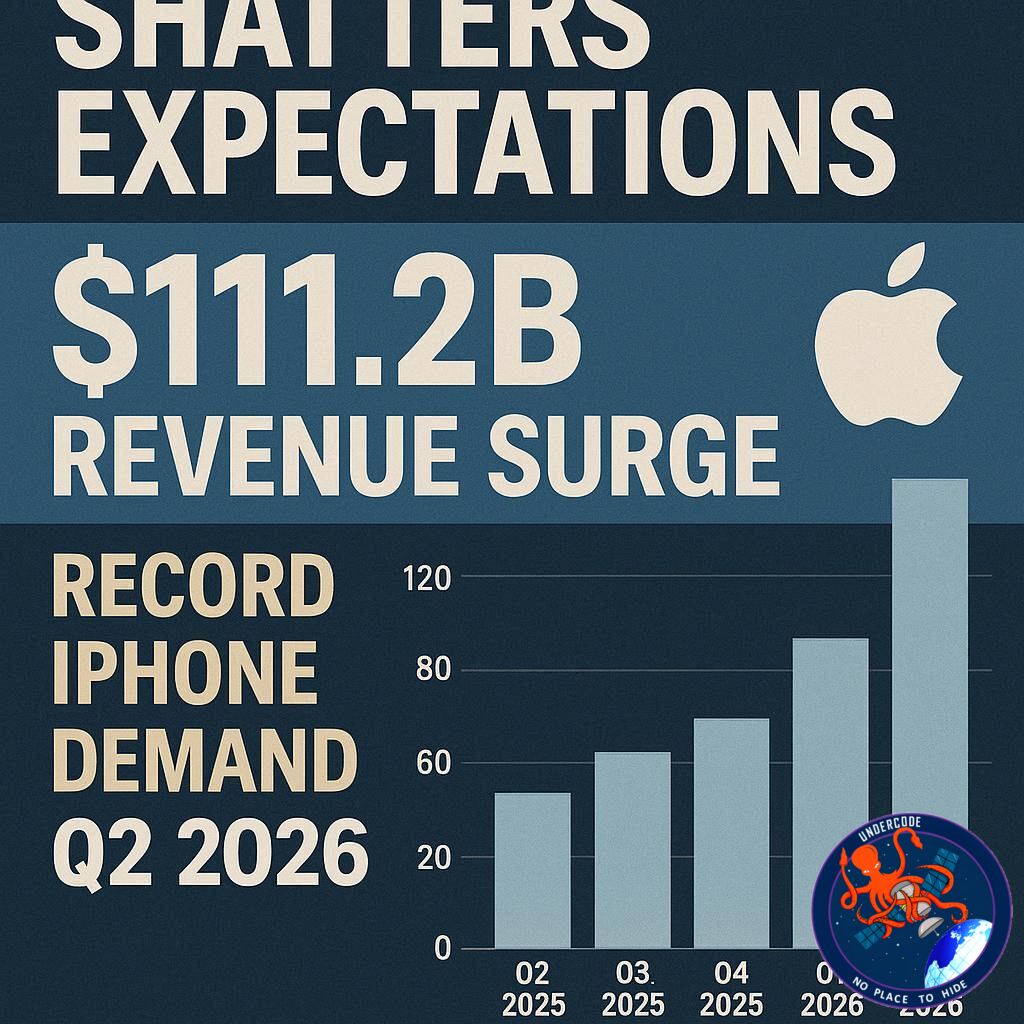
Apple reported a total revenue of $111.2 billion for the second fiscal quarter of 2026, marking a 17% year-over-year increase that exceeded its earlier guidance range of 13% to 16%. Net profit reached $29.58 billion, while earnings per share stood at $2.01, beating analyst expectations of $1.94. iPhone revenue emerged as the biggest driver, reaching $56.99 billion, fueled by exceptionally strong demand for the iPhone 17 lineup, which Apple described as one of its most successful releases to date. Mac revenue came in at $8.40 billion, supported by new hardware launches including the MacBook Neo, while iPad revenue contributed $6.91 billion, boosted by the M4-powered iPad Air. Wearables, Home, and Accessories generated $7.90 billion, reflecting steady ecosystem expansion. Meanwhile, Services continued its upward trajectory, hitting a record $30.98 billion, reinforcing Apple’s long-term shift toward subscription and digital revenue streams. CEO Tim Cook highlighted that this was Apple’s best March quarter ever, emphasizing double-digit growth across all geographic segments. He also pointed to strong product momentum, including the iPhone 17e and expanded Mac lineup, as key contributors. CFO Kevan Parekh added that Apple generated over $28 billion in operating cash flow, achieving all-time highs in both cash flow and EPS. The company also reported a record-high installed base of active devices across all major categories, showing deepening customer retention and ecosystem loyalty. Investor sentiment remains positive as Apple continues to balance hardware innovation with high-margin services growth, positioning itself strongly for the remainder of fiscal 2026.
What Undercode Say:
Ecosystem Lock-In Strengthens Apple’s Long-Term Power
Apple’s results underline how deeply the ecosystem strategy continues to work. The rising installed base signals users are not just buying devices—they are staying inside Apple’s ecosystem longer than ever.
iPhone 17 Becomes the Core Revenue Engine
The iPhone 17 lineup acted as the primary growth driver this quarter. Strong consumer demand suggests Apple successfully reignited upgrade cycles in a market that had been slowing.
Services Revenue Pushes Toward Structural Transformation
With nearly $31 billion in Services revenue, Apple is steadily transitioning from hardware dependency to recurring income, improving long-term financial stability.
Mac and iPad Growth Reflect Hardware Refresh Success
The introduction of M4-powered devices and MacBook Neo helped revive interest in Apple’s computing segment, showing that innovation cycles still matter significantly.
Geographic Growth Indicates Global Demand Stability
Double-digit expansion across regions demonstrates that Apple’s growth is not limited to the U.S. but is evenly distributed across global markets.
Cash Flow Strength Signals Financial Resilience
Operating cash flow exceeding $28 billion highlights Apple’s unmatched ability to convert revenue into liquidity, strengthening future investment capacity.
Wearables Segment Maintains Steady Momentum
Although not the fastest-growing segment, Wearables continues to act as a stable contributor to Apple’s diversified revenue structure.
Investor Outlook Remains Strong Despite Market Saturation Concerns
Even in a mature smartphone market, Apple continues to outperform expectations, reducing fears of stagnation in core product lines.
Product Strategy Shows Controlled Expansion
Rather than over-expanding, Apple is carefully introducing targeted upgrades, ensuring each product line supports ecosystem retention.
Competitive Positioning Remains Unchallenged
Despite increasing competition in AI and hardware innovation, Apple’s integrated ecosystem still provides a significant competitive moat.
🔍 Fact Checker Results
📊 Revenue Accuracy Validation
Apple’s reported $111.2B revenue aligns with a 17% year-over-year increase, confirming stronger-than-expected performance.
📊 Earnings Per Share Confirmation
EPS of $2.01 exceeded analyst forecasts, reinforcing operational efficiency improvements.
📊 Segment Breakdown Consistency
iPhone and Services remain the dominant contributors, consistent with Apple’s long-term revenue structure trends.
📊 Prediction
Apple is likely to continue leveraging Services growth as its primary stabilizing factor while maintaining iPhone dominance as the core revenue engine. Future quarters may show slower hardware growth but stronger recurring revenue expansion, especially as device saturation increases globally. If current trends persist, Apple’s ecosystem lock-in could push Services closer to becoming a near-equal contributor to hardware revenue within the next fiscal cycle.
🕵️📝Let’s dive deep and fact‑check.
References:
Reported By: 9to5mac.com
Extra Source Hub (Possible Sources for article):
https://www.facebook.com
Wikipedia
OpenAi & Undercode AI
Image Source:
Unsplash
Undercode AI DI v2
Bing
🔐JOIN OUR CYBER WORLD [ CVE News • HackMonitor • UndercodeNews ]
📢 Follow UndercodeNews & Stay Tuned:
𝕏 formerly Twitter 🐦 | @ Threads | 🔗 Linkedin | 🦋BlueSky | 🐘Mastodon


