
Listen to this Post
⚠️ Introduction: A New Wave of Gaming Data Panic Emerges
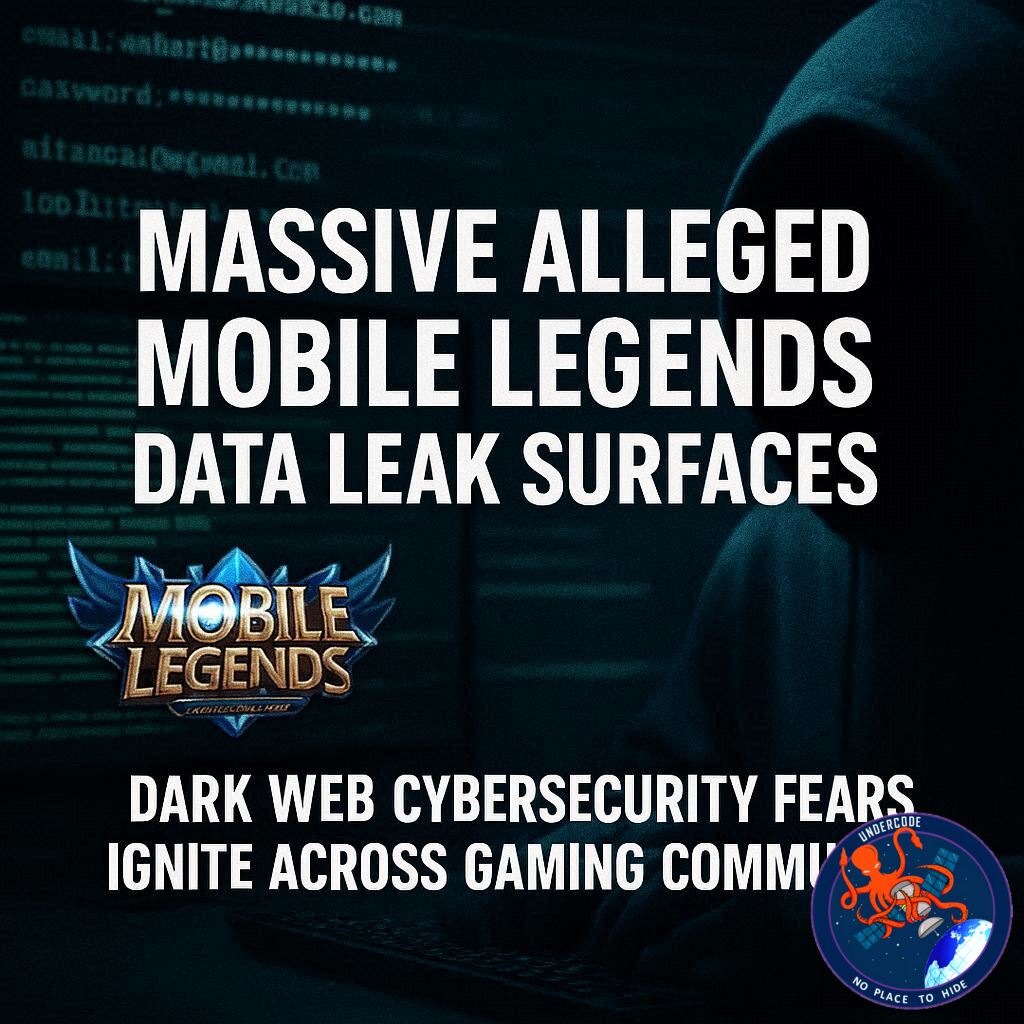
A new claim circulating on underground forums has sparked concern across the global gaming and cybersecurity communities. A threat actor reportedly published what is described as a database linked to the widely popular mobile game Mobile Legends. According to posts shared by cyber intelligence observers, the dataset allegedly contains sensitive account-related information, raising immediate questions about user privacy, platform security, and the growing targeting of gaming ecosystems by cybercriminal groups. However, no official confirmation has been issued, and the authenticity of the data remains unverified. Despite the uncertainty, the incident highlights the persistent risks facing large-scale online gaming platforms in an era where digital identities are increasingly valuable targets.
📊 the Alleged Incident: What Was Claimed on the Underground Forum
🧩 Alleged Database Appearance on Dark Web Platforms
A threat actor reportedly posted a database on an underground forum claiming it is associated with Mobile Legends, one of the world’s most popular mobile multiplayer games. The appearance of such listings on hidden cybercrime forums often triggers immediate attention from researchers due to the high value of gaming accounts.
🧾 Claimed Scope of Exposed Data Fields
The sample data allegedly includes usernames, email addresses, URLs, tracking parameters, account metadata, timestamps, IP-related entries, and backend system fields. These categories suggest structured database extraction rather than random leaks, although no verification confirms legitimacy.
🎮 Focus on Gaming Ecosystem Targeting
Gaming platforms like Mobile Legends are frequent targets because accounts often hold financial value, rare skins, and progression data. This makes them attractive for resale markets operating in underground ecosystems.
🌐 No Confirmation from Official Sources
At the time of reporting, there has been no technical validation or confirmation from the game’s developers or associated service providers regarding any breach or data exposure.
⚠️ Verification Status Remains Unclear
Cybersecurity observers emphasize that the dataset has not been authenticated. Claims originating from underground forums often contain inflated or fabricated datasets designed to gain attention or credibility in threat actor communities.
🔍 Potential Risks if Data Were Real
If confirmed authentic, such a dataset could expose users to phishing attacks, account takeovers, identity correlation risks, and credential stuffing attempts across gaming and social platforms.
🧠 Industry Context of Frequent False Leaks
Cyber threat forums are known for recycling old breaches or combining partial datasets to simulate “new” leaks. This pattern complicates real-time threat intelligence verification.
📉 Lack of Technical Evidence Shared Publicly
No hash samples, schema validation, or forensic proof has been made available to independent analysts, further weakening the credibility of the claim.
🎯 Community Reaction and Early Concern
Despite the uncertainty, discussions across cybersecurity communities reflect concern due to the scale of Mobile Legends’ global user base.
🧩 Broader Implication for Digital Gaming Security
The alleged leak reinforces the ongoing challenge of protecting gaming ecosystems, which increasingly function like financial platforms due to in-game purchases and digital asset economies.
What Undercode Say:
🧠 The Nature of Modern Cyber Claims in Gaming Ecosystems
The alleged Mobile Legends database leak fits a familiar pattern in modern cybercrime ecosystems where claims often surface before verification. Underground forums thrive on attention-driven credibility cycles, where posting large datasets—even unverified ones—can elevate a threat actor’s reputation. In many cases, these claims are exaggerated or partially reconstructed from older breaches, reused credentials, or publicly available datasets stitched together to appear new.
🕵️ The Difficulty of Immediate Verification in Dark Web Intelligence
One of the core challenges in cybersecurity intelligence is the delay between claim emergence and technical validation. Without schema access, forensic samples, or confirmation from affected systems, analysts must rely on indirect indicators. These include metadata consistency, historical breach comparisons, and cross-platform credential testing patterns. In this case, the absence of verifiable proof makes classification difficult, leaving the claim in a “pending authenticity” state.
🎮 Why Gaming Platforms Are High-Value Targets
Gaming ecosystems like Mobile Legends represent a growing cybersecurity frontier. Unlike traditional platforms, gaming accounts often combine financial value, social identity, and progression assets. This convergence makes them lucrative for attackers who monetize stolen accounts through resale markets. Additionally, younger user demographics may be less cautious about phishing or credential reuse, increasing exploitation success rates.
🌍 The Scale Problem in Global Multiplayer Systems
With hundreds of millions of users globally, even a minor vulnerability in a gaming backend can have disproportionate consequences. Attackers do not need full system compromise; even partial data exposure can fuel large-scale credential stuffing campaigns. The alleged dataset, if real, would provide enough structure for automated attacks across multiple platforms.
🔐 The Pattern of “Unverified Leaks” in Cybercrime Forums
Cybercrime forums frequently host what analysts call “credibility bait leaks.” These are datasets posted without proof, often designed to attract buyers, researchers, or competing threat actors. The lack of validation is intentional, as it creates uncertainty that drives engagement. Over time, some of these claims are debunked, while others are later confirmed in smaller fragments.
📡 The Role of Cyber Intelligence Observers
Independent cybersecurity trackers play a critical role in documenting early-stage claims. However, their reports are often misinterpreted as confirmations by the public. This creates a feedback loop where unverified intelligence spreads rapidly across social platforms, amplifying perceived threat levels before evidence is established.
🧩 Structural Indicators in the Alleged Dataset
The mention of backend fields, timestamps, and tracking parameters suggests a structured export rather than random credential dumps. While this may appear convincing, attackers often fabricate such structure descriptions to simulate authenticity. Without raw samples, this remains speculative.
⚖️ Risk Assessment Perspective
From a defensive standpoint, even unverified leaks are treated seriously because attackers may still exploit uncertainty. Organizations typically initiate precautionary monitoring, password reset advisories, and anomaly detection protocols when such claims appear.
🔎 Long-Term Implications for Game Security Architecture
If trends continue, gaming platforms may need to adopt stronger identity verification layers, zero-trust architecture, and behavioral authentication systems. The increasing overlap between gaming economies and financial systems will likely accelerate regulatory and security pressure.
🧭 Final Analytical Viewpoint
Ultimately, this incident—whether real or fabricated—highlights a consistent truth in cybersecurity: perception alone can trigger defensive and offensive cycles. In the modern threat landscape, even unverified claims can shape user behavior, security responses, and attacker strategies.
🔍 Fact Checker Results
🧾 Claim Authenticity Status: Unverified
No official confirmation or forensic validation has been provided regarding the alleged Mobile Legends database exposure.
📉 Evidence Availability Assessment
No technical samples, hashes, or verifiable dataset structures have been independently analyzed or confirmed.
⚠️ Reliability of Source Environment
The claim originates from an underground forum, a known environment for both real leaks and fabricated datasets designed for attention.
📊 Prediction
🎯 Short-Term Scenario: Increased Monitoring and Speculation
In the immediate future, cybersecurity analysts and gaming communities are likely to intensify monitoring efforts. Even without confirmation, discussions and precautionary measures will increase across platforms, especially among high-value account holders.
🧠 Medium-Term Outcome: Possible Fragment Validation
It is possible that parts of the dataset—if real—may later be linked to smaller, previously unknown breaches or reused credential dumps. This would shift the narrative from “unverified leak” to “partial exposure confirmation.”
🌐 Long-Term Trend: Gaming Sector Becomes Primary Cyber Target
Regardless of this specific claim’s validity, the trajectory is clear: gaming platforms will continue to be major targets for cybercriminal ecosystems due to monetized accounts, digital economies, and massive global user bases.
🕵️📝Let’s dive deep and fact‑check.
References:
Reported By: x.com
Extra Source Hub (Possible Sources for article):
https://www.quora.com/topic/Technology
Wikipedia
OpenAi & Undercode AI
Image Source:
Unsplash
Undercode AI DI v2
Bing
🔐JOIN OUR CYBER WORLD [ CVE News • HackMonitor • UndercodeNews ]
📢 Follow UndercodeNews & Stay Tuned:
𝕏 formerly Twitter 🐦 | @ Threads | 🔗 Linkedin | 🦋BlueSky | 🐘Mastodon


