
Listen to this Post
Introduction
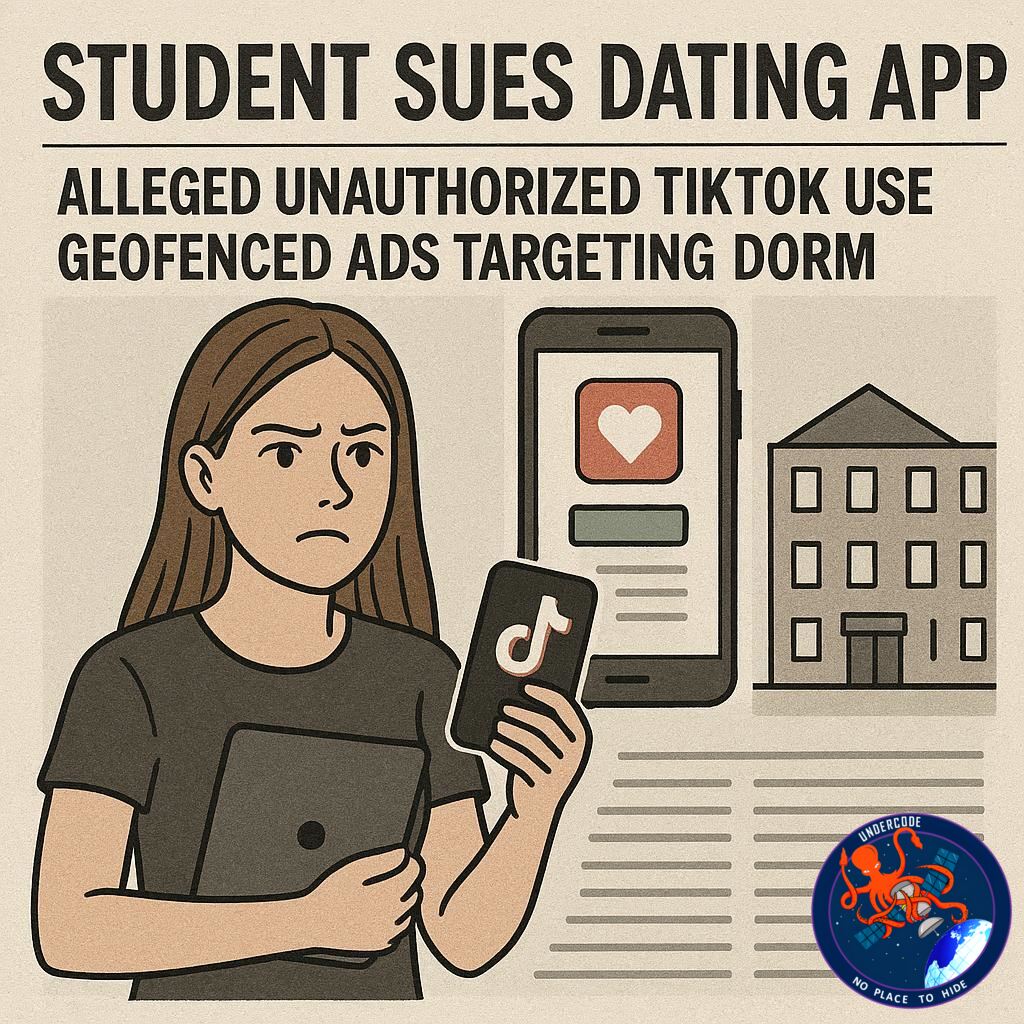
A new legal case in Tennessee is drawing attention to how social media content can be repurposed without consent in digital advertising. A 19-year-old college student is suing the makers of a dating app, claiming her TikTok video was taken, edited, and turned into a misleading advertisement. The lawsuit also alleges that the company used geofencing technology to target the ad directly to people near her, including students in her own dormitory. The case raises serious concerns about digital consent, online identity exploitation, and the growing precision of location-based advertising.
Summary of the Original Case
A 19-year-old University of Tennessee student, Kaelyn Lunglhofer, has filed a lawsuit against the makers of a dating app called Meete, alleging misuse of her online identity. According to the complaint, a TikTok video she originally posted celebrating her high school graduation was allegedly taken without her permission and repurposed into a promotional advertisement.
The lawsuit claims the company added a voiceover and graphics to her video, making it appear as though she was promoting casual dating and hookups through the app. The edited content reportedly included fabricated statements encouraging viewers to use the app to meet nearby women.
Her attorney says Lunglhofer only discovered the issue after a male student in her dorm informed her that he had repeatedly seen her face in Snapchat ads promoting the app. This suggests that geofencing technology was used to target individuals near her physical location, including people in her immediate campus environment.
The lawsuit argues that this targeting was intentional and designed to make viewers believe they personally recognized her, increasing engagement with the advertisement. Legal filings also claim that this strategy could expose her to harassment and damage her reputation as a social media influencer.
Investigators hired by her legal team allegedly found further evidence suggesting similar misuse of images may have occurred involving other individuals, though they have not yet been identified.
The complaint names multiple companies across different countries, including entities based in the Virgin Islands and China, as responsible for the app’s operations and advertising network.
The student is seeking $750,000 in damages, along with compensation for any profits generated using her likeness. She also claims reputational harm and emotional distress resulting from the unauthorized use of her image.
The lawsuit cites violations of U.S. federal and state laws, including right of publicity protections and the Tennessee ELVIS Act, which protects individuals from unauthorized commercial use of their identity.
The defendants have not publicly responded to the allegations, and attempts to reach them reportedly failed due to limited or inactive corporate contact information.
What Undercode Say:
This case reflects a growing conflict between social media culture and aggressive digital marketing ecosystems. What makes this situation particularly concerning is not just the reuse of content, but the layering of technologies used to amplify its impact.
First, the alleged misuse of a TikTok video highlights how easily user-generated content can be detached from its original context. In today’s platform economy, short videos are often treated as freely reusable assets by bad actors, despite clear platform policies against unauthorized repurposing.
Second, the addition of synthetic voiceover and marketing graphics shows how minimal editing can completely transform meaning. Even without AI-generated imagery, simple video manipulation can create misleading narratives that appear authentic to viewers.
Third, the use of geofencing raises ethical questions about hyper-local targeting. When ads are delivered to people physically near the victim, the psychological impact increases significantly. It is no longer abstract exposure, but direct social proximity exploitation.
Fourth, the case highlights the vulnerability of young influencers. As students build online identities, they often lack control over how their content is redistributed across platforms and advertising networks.
Fifth, this lawsuit suggests a gap in enforcement between platforms hosting content and third-party advertisers using it. Even when apps claim “safety and moderation,” enforcement often depends on automated systems that fail to detect repurposed media.
Sixth, cross-border corporate structures complicate accountability. With companies operating across multiple jurisdictions, legal responsibility becomes fragmented and harder to enforce in U.S. courts.
Seventh, the allegations show how dating apps can rely on psychological triggers such as familiarity. Seeing a recognizable face increases engagement, even if that recognition is artificially engineered.
Eighth, this case underscores the blurred boundary between advertising and impersonation. When a person’s likeness is used without consent to simulate endorsement, it begins to resemble identity exploitation rather than standard marketing.
Ninth, the reliance on third-party ad networks like Snapchat adds another layer of opacity. Platforms often act as distribution channels without full visibility into ad creation processes.
Tenth, this lawsuit may set precedent for how courts interpret geofenced identity misuse in digital advertising environments.
Eleventh, it raises questions about whether current right-of-publicity laws are strong enough to cover dynamic, algorithmically distributed content.
Twelfth, the emotional and reputational risks in such cases extend beyond financial harm, especially for young creators building public profiles.
Thirteenth, if proven, the case could push stricter regulation around consent-based use of social media content in advertising.
Fourteenth, it also highlights the imbalance between individual users and multi-layered ad-tech infrastructures.
Fifteenth, overall, the case signals a shift where digital identity is becoming a contested commercial asset rather than personal expression.
Fact Checker Results
❌ No confirmed court ruling yet, only allegations in a filed lawsuit.
⚠️ Claims about geofencing and ad targeting are based on plaintiff statements and require independent verification.
✅ The lawsuit and named legal statutes (Lanham Act, Tennessee ELVIS Act) are real legal frameworks cited in filings.
Prediction
📉 This case may encourage stricter oversight of influencer content usage in advertising networks.
⚖️ Courts could expand interpretations of digital likeness misuse in geofenced marketing.
📲 Platforms may face pressure to improve verification of ad creatives and data-driven targeting practices.
🕵️📝Let’s dive deep and fact‑check.
References:
Reported By: cyberscoop.com
Extra Source Hub (Possible Sources for article):
https://www.github.com
Wikipedia
OpenAi & Undercode AI
Image Source:
Unsplash
Undercode AI DI v2
Bing
🔐JOIN OUR CYBER WORLD [ CVE News • HackMonitor • UndercodeNews ]
📢 Follow UndercodeNews & Stay Tuned:
𝕏 formerly Twitter 🐦 | @ Threads | 🔗 Linkedin | 🦋BlueSky | 🐘Mastodon


