
Listen to this Post
Introduction: A Silent Risk Hiding in Plain Sight
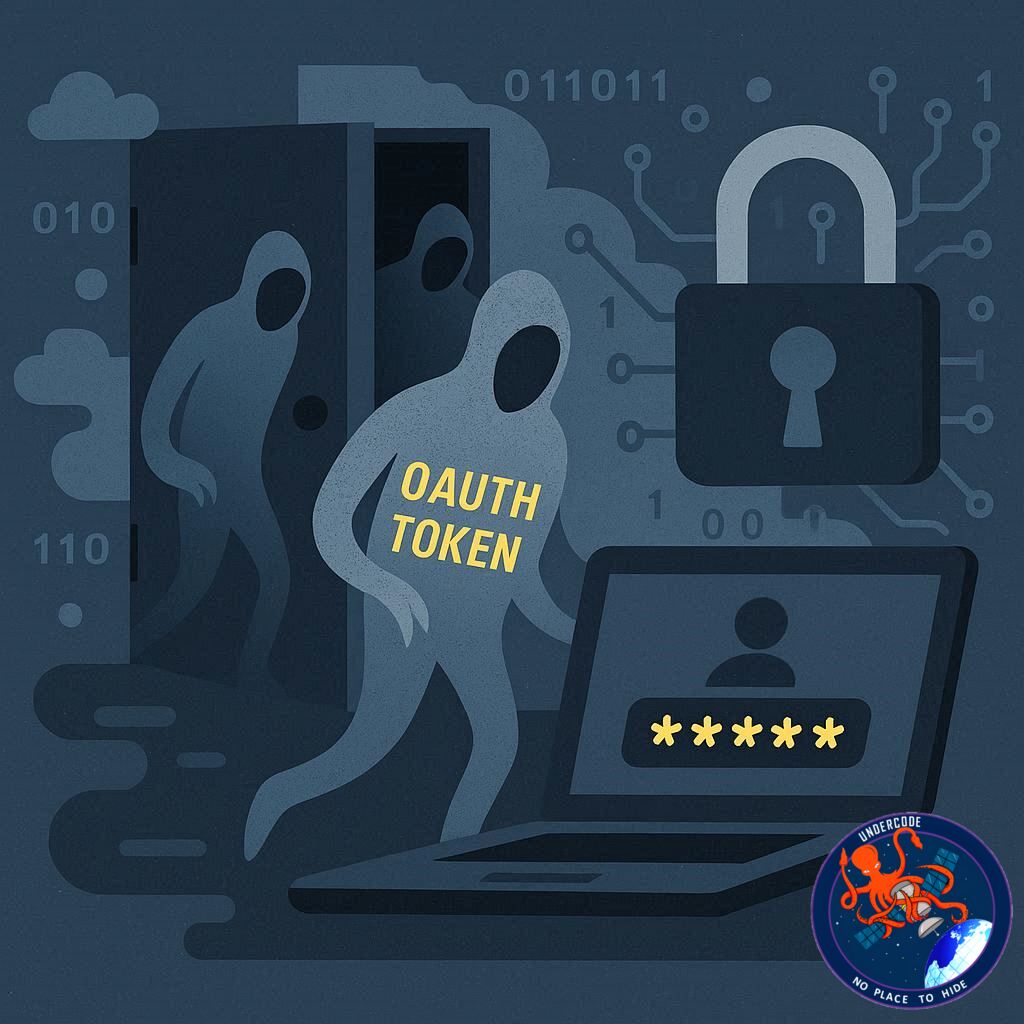
Every time an employee connects an AI tool, automation workflow, or productivity app to Google or Microsoft, something invisible but powerful is left behind—a persistent OAuth token. These tokens don’t expire, aren’t automatically revoked, and often exist without any oversight. While organizations invest heavily in perimeter defenses and multi-factor authentication, this overlooked access layer quietly bypasses them all. The result is a growing, unmanaged attack surface that most companies barely understand—let alone control.
the Original
Modern workplaces are increasingly dependent on third-party integrations, especially with the rise of AI tools and workflow automation platforms. Each integration typically relies on OAuth, a system designed to grant apps limited access to user accounts without sharing passwords. However, what once worked for a handful of trusted applications has become dangerously outdated in today’s decentralized, app-heavy environments.
OAuth tokens are persistent by design. They do not expire when employees leave, nor are they reset when passwords change. This creates a long-term security gap, especially when organizations lack centralized visibility into these connections. Despite widespread awareness among security leaders—80% consider unmanaged OAuth grants a serious risk—nearly half of organizations do nothing to monitor them. Others rely on manual tracking methods like spreadsheets, which offer little real protection.
The issue extends beyond data leakage into third-party tools. OAuth tokens themselves have become a direct attack vector. A notable example is the Drift incident, where attackers obtained valid OAuth refresh tokens and used them to infiltrate Salesforce environments across more than 700 organizations. Because the tokens were legitimate, traditional security measures like MFA were completely bypassed. The attackers didn’t need credentials—they simply used authorized access.
This breach highlights a critical flaw: trust at the moment of app installation does not guarantee ongoing security. Many current tools only evaluate OAuth permissions during setup, failing to detect threats that emerge later when tokens are compromised. Effective protection requires continuous monitoring of app behavior, understanding the level of access granted, and responding dynamically to risks.
Material Security proposes a more advanced approach through its OAuth Threat Remediation Agent. This system continuously evaluates connected apps based on vendor trust, behavior over time, and the potential impact of a breach. It allows organizations to automatically revoke high-risk tokens while escalating uncertain cases for human review. Ultimately, the article argues that OAuth isn’t going away—and instead of limiting integrations, organizations must improve visibility and response capabilities to manage this growing threat.
What Undercode Say:
The Illusion of Security in a Token-Driven World
The fundamental issue isn’t OAuth itself—it’s the misplaced confidence organizations have in their existing security frameworks. Companies continue to invest in firewalls, endpoint protection, and identity verification, yet OAuth tokens quietly bypass all of them. This creates a dangerous illusion: everything appears secure while a parallel access system operates unchecked.
Why OAuth Is Becoming the Perfect Attack Vector
OAuth tokens are attractive to attackers because they eliminate friction. No passwords to crack, no MFA challenges to bypass—just valid, reusable access. In a world where attackers prioritize efficiency, tokens represent a low-noise, high-reward method of infiltration. The Drift incident is not an anomaly; it’s a preview of a broader trend.
Decentralization Is Breaking Security Models
The rise of employee-driven tool adoption—especially AI apps—has shattered centralized IT control. Security teams no longer approve every integration. Instead, employees connect tools independently, creating a fragmented ecosystem of access points. Traditional security models were never designed for this level of decentralization.
The Dangerous Longevity of OAuth Grants
One of the most overlooked risks is persistence. OAuth tokens can remain active indefinitely, even after the original context for their use disappears. Former employees, abandoned tools, and forgotten integrations all leave behind active credentials. This creates a growing backlog of invisible vulnerabilities.
Manual Oversight Is a Dead Strategy
Relying on spreadsheets or occasional audits to track OAuth connections is fundamentally flawed. These methods are reactive, incomplete, and incapable of scaling with modern environments. Security requires real-time awareness, not periodic snapshots.
Behavioral Monitoring as the New Standard
The shift from static analysis to behavioral monitoring is crucial. It’s no longer enough to know what an app can do—you need to know what it is actually doing. Patterns such as unusual data access, odd timing, or spikes in activity can reveal compromised tokens long before damage escalates.
Risk Isn’t Equal Across All Accounts
Not all OAuth connections carry the same weight. An app connected to a low-level employee account is vastly different from one tied to an executive with access to sensitive data. Security strategies must incorporate context, prioritizing threats based on potential impact.
Automation vs. Human Decision-Making
There’s a delicate balance between automated response and human oversight. Immediate revocation is necessary for clear threats, but over-automation can disrupt critical business operations. Intelligent systems must distinguish between high-risk anomalies and benign irregularities.
The AI Explosion Will Make This Worse
As AI adoption accelerates, OAuth connections will multiply rapidly. Each new tool represents another potential entry point. Organizations that fail to adapt their security strategies now will face exponential risk in the near future.
The Real Solution: Visibility and Control
The future of OAuth security lies in continuous visibility and adaptive control. Organizations must treat OAuth tokens as active credentials, not passive permissions. This means monitoring, scoring, and responding in real time—not relying on outdated approval-based models.
Fact Checker Results
Verified Security Gap
✅ OAuth tokens do not automatically expire and often remain active beyond employee lifecycle events.
Confirmed Real-World Exploits
✅ The Drift-related attack demonstrated that valid OAuth tokens can bypass MFA and traditional defenses.
Misconception Around App Trust
❌ Trusting an app at installation does not guarantee ongoing security, contradicting common enterprise assumptions.
Prediction
The Rise of Token-Centric Cyberattacks
OAuth-based attacks are likely to surge as attackers shift away from credential theft toward token exploitation. Within the next few years, token abuse could rival phishing as a primary breach method.
Security Tools Will Evolve Rapidly
Expect a new wave of security platforms focused specifically on identity-layer monitoring, with OAuth visibility becoming a standard feature rather than a niche capability.
Organizations Will Be Forced to Adapt
Companies that fail to implement continuous monitoring and automated response mechanisms will face increased breach frequency, regulatory scrutiny, and financial losses—forcing a reactive transformation across the industry.
🕵️📝Let’s dive deep and fact‑check.
References:
Reported By: thehackernews.com
Extra Source Hub (Possible Sources for article):
https://www.reddit.com/r/AskReddit
Wikipedia
OpenAi & Undercode AI
Image Source:
Unsplash
Undercode AI DI v2
Bing
🔐JOIN OUR CYBER WORLD [ CVE News • HackMonitor • UndercodeNews ]
📢 Follow UndercodeNews & Stay Tuned:
𝕏 formerly Twitter 🐦 | @ Threads | 🔗 Linkedin | 🦋BlueSky | 🐘Mastodon


