
Listen to this Post
Introduction
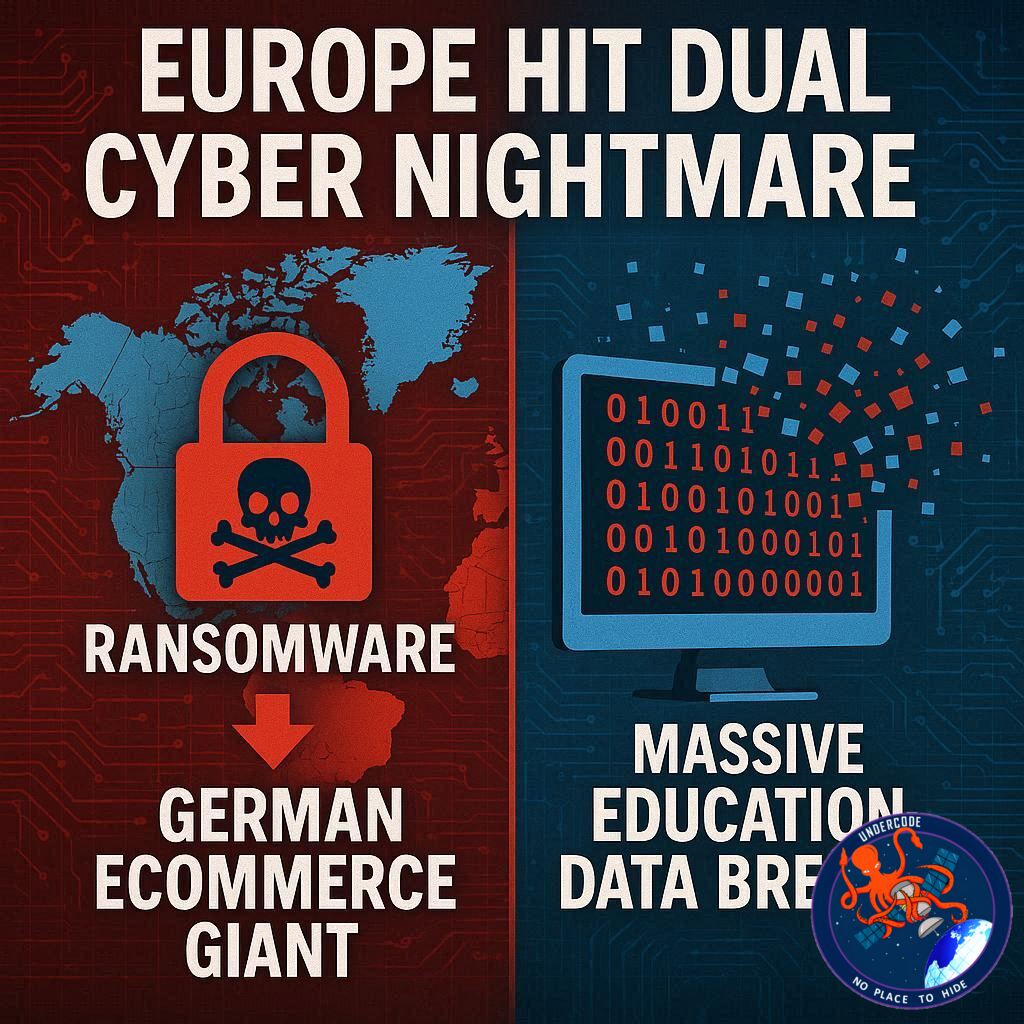
Cybersecurity threats continue to escalate across Europe and the United States as two major incidents shake digital infrastructure and expose deep vulnerabilities in critical online systems. A German e-commerce service provider has reportedly been hit by a ransomware attack disrupting hosted webshop operations, while a separate large-scale data breach claim involving education platforms has surfaced, allegedly exposing hundreds of millions of records. Together, these events highlight how both commercial and educational ecosystems remain prime targets for cybercriminal operations in 2026’s increasingly aggressive threat landscape.
30-Line the Incident
On the night of April 30, 2026, a major German e-commerce service provider known as 4SELLERS was struck by a ransomware attack that immediately impacted hosted webshop services and disrupted multiple client operations. The incident was reported the same day, signaling a rapid detection and response effort from affected stakeholders. The attack underscores the growing trend of ransomware groups targeting backend infrastructure providers rather than individual retailers, maximizing disruption across entire digital ecosystems. While technical details remain limited, the attack’s timing and coordination suggest a well-planned intrusion aimed at service interruption and potential data encryption for ransom demands. Clients relying on 4SELLERS infrastructure reportedly experienced downtime and degraded service functionality. The attack adds to a growing list of European SaaS and hosting providers being targeted in 2026. Security analysts note that e-commerce platforms remain highly attractive due to their continuous transaction flows and sensitive customer data. Meanwhile, a separate cybersecurity claim surfaced involving the threat actor group ShinyHunters, which alleges the theft of approximately 280 million records. These records reportedly originate from 8,809 schools, universities, and education platforms using Instructure’s Canvas export system. The compromised data allegedly includes personal identifiers such as names, email addresses, messages, and enrollment information. If verified, this would represent one of the largest education-sector breaches in recent history. The scope of the alleged leak raises concerns about systemic weaknesses in widely used learning management systems. Cybersecurity researchers emphasize that centralized platforms like Canvas create high-value single points of failure. Both incidents highlight the expanding reach of cybercriminal groups across different sectors. The timing of the attacks suggests coordinated or opportunistic exploitation of widely used digital services. Authorities and cybersecurity teams are currently assessing the authenticity and full impact of both incidents.
What Undercode Say:
The Expanding Ransomware Economy Targeting SaaS Infrastructure
The attack on 4SELLERS reflects a broader shift in ransomware strategy toward service providers rather than end-user companies
This model allows attackers to disrupt hundreds or thousands of businesses through a single compromise
E-commerce infrastructure providers are particularly valuable due to their continuous uptime dependency
Downtime in such systems translates directly into financial losses for multiple downstream clients
Attackers increasingly prioritize operational disruption over pure data theft
This increases pressure on victims to pay ransom quickly
The German market has seen a rise in targeted SaaS attacks over the past year
Security maturity varies widely among mid-tier service providers
Many still rely on legacy architecture with limited segmentation
This creates exploitable entry points for ransomware groups
The speed of detection in this incident suggests improved monitoring systems
However, detection does not always equate to containment
Encrypted systems can still halt business operations entirely
Cybercriminal groups are also refining double-extortion tactics
This includes data theft combined with encryption threats
The financial motivation remains the dominant driver of these attacks
Industries tied to digital commerce remain high-value targets
Supply chain dependency amplifies the damage radius
A single compromised provider can cascade disruption across Europe’s retail ecosystem
The trend indicates ransomware is evolving into systemic infrastructure warfare
Education Sector Breaches and Centralized Data Risks
The alleged ShinyHunters breach highlights vulnerabilities in centralized education platforms
Learning management systems aggregate massive volumes of sensitive personal data
This makes them prime targets for large-scale exploitation
If the 280 million record claim is accurate, the exposure is unprecedented
Educational institutions often lack advanced cybersecurity budgets
This creates uneven protection across thousands of connected nodes
Attackers exploit export and API mechanisms as entry vectors
Canvas-like systems rely heavily on integration flexibility
That flexibility can become a security liability
Email addresses and messaging data increase phishing risks significantly
Enrollment records can be used for identity correlation attacks
The education sector remains under-regulated compared to financial services
Cybercriminals are aware of this gap and actively exploit it
Mass breaches often remain undetected for extended periods
Data aggregation amplifies the impact of a single breach
Even partial leaks can fuel long-term fraud campaigns
The reputational damage to institutions is often severe
Students and staff become secondary targets of follow-up attacks
Verification of breach authenticity remains critical in such claims
Nevertheless, threat actors increasingly use exaggerated data dumps for leverage
The psychological impact of scale is often part of the attack strategy
Fact Checker Results
Ransomware Incident Attribution Unverified
The 4SELLERS ransomware attack has been reported but full technical attribution is not publicly confirmed
No confirmed ransomware group has been officially linked at the time of reporting
ShinyHunters Data Breach Claim Requires Validation
The alleged 280 million record breach is based on attacker claims and has not been independently verified
Instructure or affiliated institutions have not publicly confirmed full breach scope
Sector-Wide Risk Trend Is Supported by Historical Data
Both e-commerce and education sectors have repeatedly appeared in global cybersecurity incident reports
This pattern aligns with documented ransomware and data breach trends over recent years
Prediction
Cybersecurity pressure on SaaS providers and education platforms is expected to intensify significantly through 2026 as attackers continue exploiting centralized infrastructure models. Ransomware groups will likely increase focus on multi-client service providers to maximize disruption impact and ransom leverage. Meanwhile, education platforms may face a surge in credential-based and API-targeted attacks due to their large-scale aggregated datasets. Without stronger segmentation and zero-trust enforcement, both sectors remain highly exposed to cascading cyber incidents in the near future.
🕵️📝Let’s dive deep and fact‑check.
References:
Reported By: x.com
Extra Source Hub (Possible Sources for article):
https://www.digitaltrends.com
Wikipedia
OpenAi & Undercode AI
Image Source:
Unsplash
Undercode AI DI v2
Bing
🔐JOIN OUR CYBER WORLD [ CVE News • HackMonitor • UndercodeNews ]
📢 Follow UndercodeNews & Stay Tuned:
𝕏 formerly Twitter 🐦 | @ Threads | 🔗 Linkedin | 🦋BlueSky | 🐘Mastodon


