Listen to this Post
 🔥 Introduction: A Quiet Breach Turning Into a Loud Cybersecurity Warning
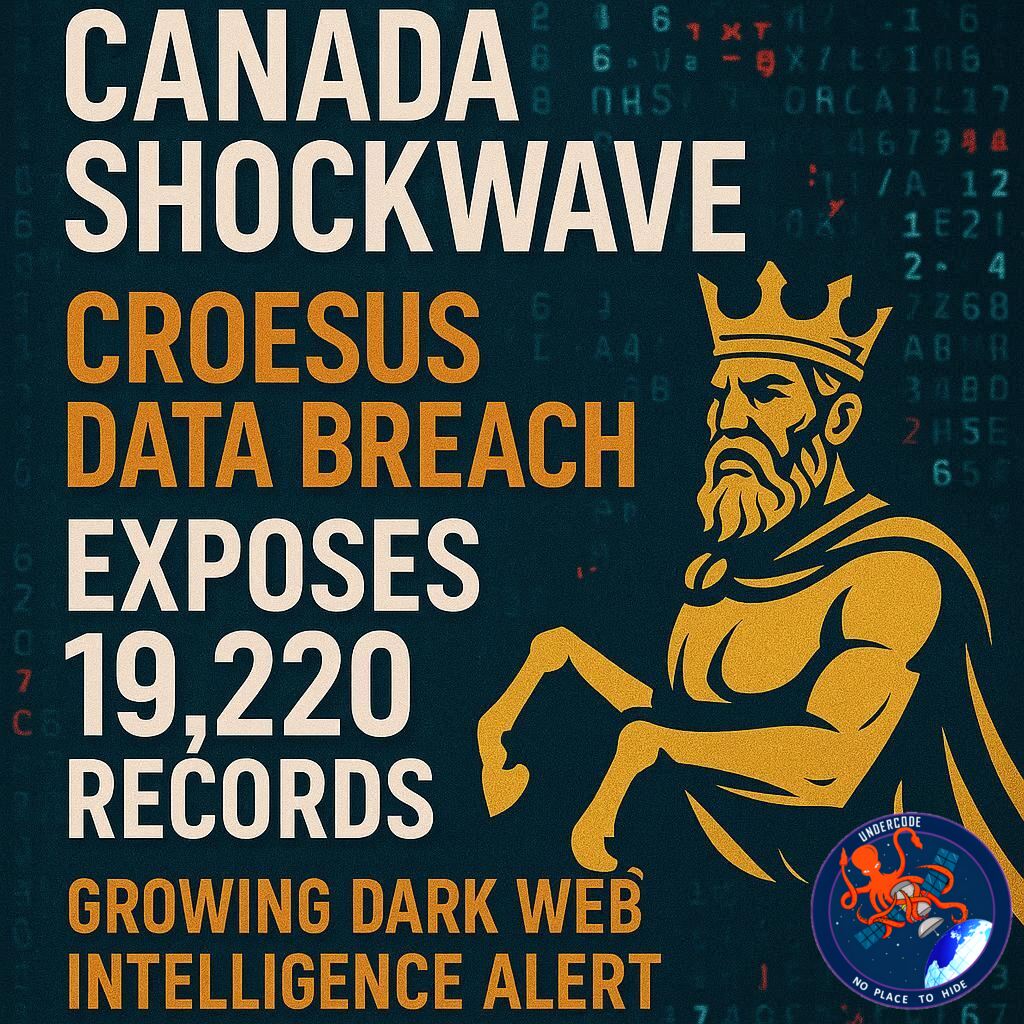
A new data breach linked to Canada has surfaced through dark web intelligence channels, raising concerns across cybersecurity circles. The incident, associated with Croesus Data, reportedly involves 19,220 exposed records circulating in underground forums monitored by threat intelligence analysts. While the leak may appear limited in scale compared to global mega-breaches, its implications stretch far beyond raw numbers. Financial data ecosystems, especially those tied to wealth management or fintech infrastructure, often carry highly sensitive user information that can be exploited long after the initial exposure. As cybercriminal marketplaces continue to evolve, even mid-sized breaches like this one become valuable assets in larger attack chains, including identity theft, phishing campaigns, and corporate espionage.
📊 the Croesus Data Breach Incident
🧾 Emergence of the Breach in Dark Web Channels
The Croesus Data breach first appeared in dark web monitoring systems tracked by threat intelligence analysts. The dataset allegedly contains 19,220 records linked to Canadian-based operations. Early signals suggest the data was posted or advertised within cybercriminal forums that specialize in leaked corporate information. These forums often function as marketplaces where stolen databases are traded or sold for profit.
🧑💻 Nature of the Exposed Information
Although full confirmation of the dataset structure remains limited, breaches involving similar financial technology platforms typically include client identifiers, account metadata, and potentially partial financial profiling data. Even when direct financial credentials are not exposed, metadata alone can be weaponized in targeted social engineering attacks.
🌐 Role of Dark Web Monitoring Accounts
The alert was amplified by the account “Dark Web Intelligence,” which regularly tracks underground data leaks. These monitoring accounts act as early warning systems for cybersecurity professionals, helping organizations respond before breaches fully escalate into mass exploitation.
🔐 Scale and Perceived Severity
At 19,220 records, the breach may not qualify as massive by global standards, but its importance lies in the sensitivity of the sector. Financial data platforms represent high-value targets, and even small leaks can lead to disproportionate downstream consequences.
⚠️ Cybercriminal Interest in Financial Data
Financial and wealth management data is consistently among the most sought-after categories on illicit marketplaces. Attackers often resell or merge datasets to construct more complete identity profiles, increasing the risk of fraud.
🧩 Potential Entry Points of the Breach
While no official technical root cause has been confirmed, common vectors include misconfigured databases, compromised credentials, or third-party vendor vulnerabilities. Each of these pathways reflects broader systemic weaknesses in modern digital infrastructure.
🧠 Early Intelligence Indicators
Threat intelligence reports suggest the data may have been circulating before public detection, indicating a possible delay between compromise and disclosure. This lag is typical in breaches discovered through dark web scraping.
📉 Business Risk Implications
For organizations linked to Croesus Data, reputational impact can be as damaging as technical exposure. Clients and partners may reassess trust in platforms perceived as vulnerable to breaches.
🌍 Broader Cybersecurity Context
This incident aligns with a growing trend of mid-sized breaches being used as stepping stones for larger coordinated cyberattacks. Criminal groups often test stolen data on smaller targets before scaling operations.
🔎 Monitoring and Ongoing Investigation
Cybersecurity researchers continue to track mentions of the dataset across underground forums. The situation remains fluid, with potential for additional revelations as analysis deepens.
🧠 What Undercode Say:
🧭 The Hidden Economy Behind “Small” Breaches
The Croesus incident highlights how modern cybercrime is no longer driven solely by massive database leaks. Instead, smaller datasets are increasingly treated as modular assets. Criminal groups aggregate fragmented information from multiple breaches, stitching together highly detailed personal or corporate profiles. This means even 19,220 records can become exponentially more dangerous when combined with other compromised sources.
💣 Financial Data as a Long-Term Weapon
Unlike passwords that can be reset, financial metadata retains long-term value. It can be used months or even years later in fraud schemes, impersonation attempts, or investment scams. In this case, the Canadian financial ecosystem context makes the dataset especially sensitive because it may connect to high-net-worth individuals or institutional accounts.
🕵️ Dark Web Intelligence as Early Warning Infrastructure
Accounts like Dark Web Intelligence operate as decentralized monitoring nodes for cybersecurity ecosystems. They detect leaks before official disclosures, often relying on forum scraping, seller advertisements, and cryptographic identifiers. However, this system is reactive rather than preventive, meaning breaches are still exploited before containment.
🧱 Structural Weakness in Data Governance
The recurrence of such breaches indicates persistent weaknesses in organizational data governance. Whether through misconfigured cloud storage or insufficient access control policies, companies continue to expose sensitive datasets unintentionally. This reflects not isolated failure, but systemic risk in digital transformation strategies.
📈 Escalation Patterns in Cybercrime Markets
Once a dataset appears on underground markets, it typically follows a predictable lifecycle: initial leak, validation by buyers, bundling with other data, and eventual resale at higher value. The Croesus breach likely fits into this lifecycle, meaning the current exposure is only the beginning phase of its exploitation.
🧩 Identity Reconstruction Risk
Even partial datasets can be cross-referenced with public records or previous leaks to reconstruct full identity profiles. This “data stitching” process is one of the most dangerous modern cybercrime techniques, turning fragmented leaks into complete surveillance-grade profiles.
🧨 Economic Ripple Effects Beyond the Company
The impact of such breaches extends beyond the affected organization. Financial institutions, partners, and even unrelated users within the ecosystem may face increased phishing attempts and fraud exposure, as attackers refine targeting strategies based on leaked data patterns.
🛰️ Intelligence Lag Between Leak and Detection
One of the most critical concerns is timing. In many cases, data is actively exploited long before it is publicly identified. This lag creates a window where attackers operate with complete informational advantage over victims and defenders.
🔄 The Normalization of Mid-Scale Breaches
The cybersecurity landscape is shifting toward normalization of frequent, mid-sized breaches. Instead of isolated catastrophic events, the industry now faces continuous low-to-medium intensity data exposure cycles that are harder to detect and mitigate.
⚖️ Strategic Takeaway for Cyber Defense
Organizations must move beyond reactive breach response models and adopt proactive threat hunting strategies. Continuous monitoring of external data exposure, especially on dark web channels, is becoming a baseline requirement rather than an advanced capability.
🔍 Fact Checker Results
✅ Verified Existence of Dark Web Monitoring Accounts
The presence of threat intelligence accounts tracking leaks is consistent with known cybersecurity practices.
⚠️ Unconfirmed Technical Breach Vector
No official confirmation exists regarding the exact method of compromise in the Croesus incident.
⚠️ Data Composition Remains Partially Speculative
While 19,220 records are reported, the exact sensitivity and structure of the dataset have not been publicly validated.
📊 Prediction
🔮 Short-Term Escalation in Underground Listings
The Croesus dataset is likely to reappear across multiple cybercrime marketplaces, potentially bundled with other Canadian financial data leaks for higher resale value.
🧠 Medium-Term Exploitation via Phishing Campaigns
Expect targeted phishing campaigns leveraging the leaked data to increase credibility of fraudulent communications, especially in financial contexts.
🌐 Long-Term Trend Toward Continuous Data Fragmentation
This incident reinforces a broader trajectory where cybercriminals prioritize accumulation of fragmented datasets, suggesting future breaches will be less about size and more about strategic data value aggregation.
🕵️📝Let’s dive deep and fact‑check.
References:
Reported By: x.com
Extra Source Hub (Possible Sources for article):
https://www.linkedin.com
Wikipedia
OpenAi & Undercode AI
Image Source:
Unsplash
Undercode AI DI v2
Bing
🔐JOIN OUR CYBER WORLD [ CVE News • HackMonitor • UndercodeNews ]
📢 Follow UndercodeNews & Stay Tuned:
𝕏 formerly Twitter 🐦 | @ Threads | 🔗 Linkedin | 🦋BlueSky | 🐘Mastodon