
Listen to this Post
Introduction
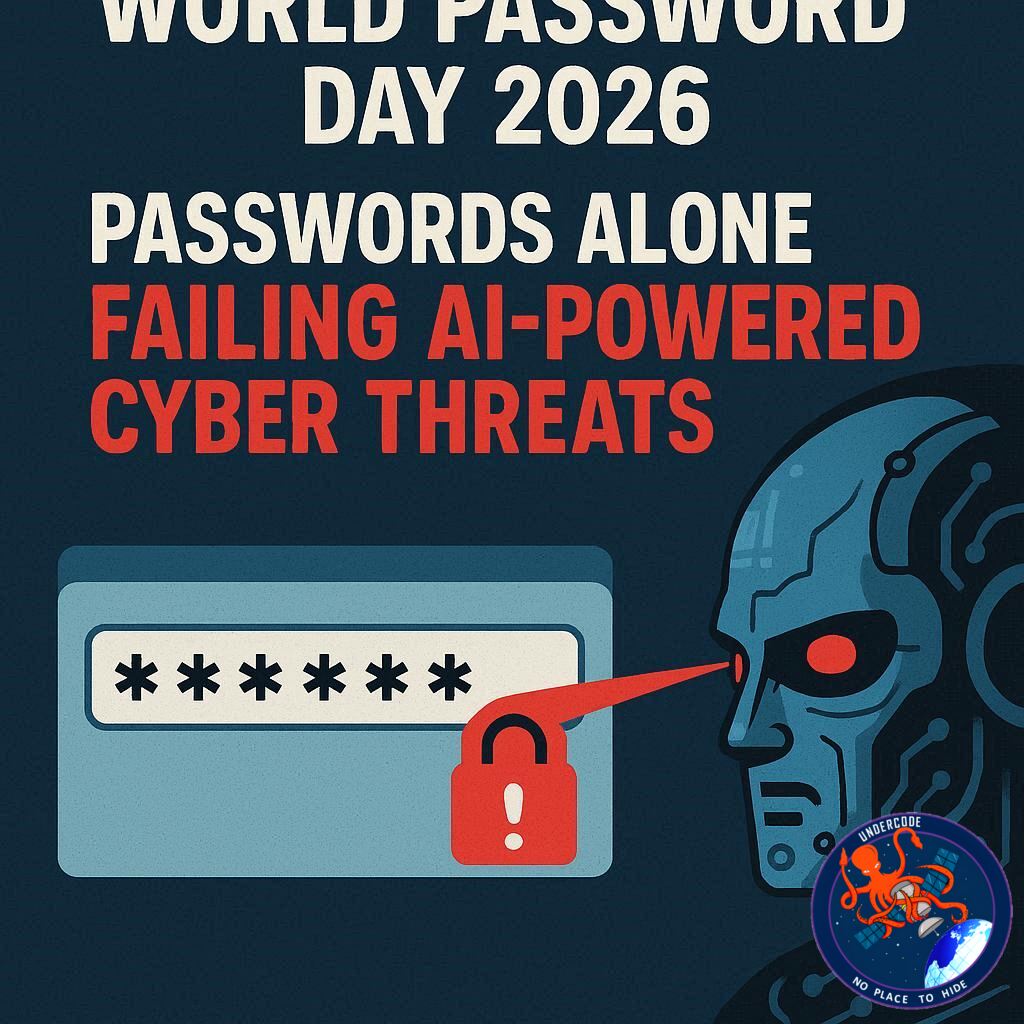
Every year, World Password Day arrives with the same familiar cybersecurity advice: create stronger passwords, avoid reusing them, and enable multi-factor authentication. But in 2026, the cyber threat landscape has evolved far beyond what traditional password practices were designed to handle. Attackers are no longer relying solely on guessing weak passwords. They are using artificial intelligence, automated credential attacks, voice cloning, phishing campaigns, and compromised machine identities to infiltrate systems at unprecedented scale.
At the same time, organizations continue to repeat the same mistakes. Default credentials remain active on exposed services, employees still share passwords through insecure channels, outdated recovery methods stay attached to sensitive accounts, and forgotten systems quietly become entry points for devastating breaches.
Security leaders across the industry now agree on one uncomfortable reality: the password problem was never just about password strength. The real issue lies in governance, visibility, identity management, and human behavior. While passkeys and phishing-resistant authentication are finally gaining momentum, the transition away from passwords is proving slower and more complicated than many expected.
The result is a dangerous hybrid era where passwords still exist everywhere, while attackers have become faster, smarter, and increasingly AI-driven.
The Biggest Credential Threat Isn’t Weak Passwords
One of the most alarming findings highlighted by security researchers in 2026 is that weak passwords are no longer the primary issue. According to offensive security testing data, default credentials remain one of the most common causes of successful compromise.
Many organizations secure their corporate identity systems while ignoring forgotten services buried across their infrastructure. FTP servers, Redis databases, Telnet interfaces, RDP services, and exposed administrative dashboards are frequently left running with factory-default usernames and passwords.
Attackers no longer need advanced hacking techniques when organizations leave the front door wide open. A default credential that shipped with a device years ago can still provide initial access into enterprise networks today.
Security experts warn that these neglected systems often become the perfect launchpad for lateral movement inside organizations. Once attackers gain a foothold, they can pivot across systems, escalate privileges, and eventually compromise entire environments.
The uncomfortable truth is that organizations often focus on highly visible identity layers like email and Single Sign-On while ignoring legacy infrastructure quietly exposed to the internet.
Password Strength Alone Cannot Stop Modern Breaches
Cybersecurity professionals increasingly argue that the real danger lies in how credentials are stored, managed, shared, and monitored.
A strong password means very little if it is copied into spreadsheets, shared over messaging apps, reused across systems, or attached to privileged accounts with excessive permissions.
Privileged Access Management has become a central requirement in modern security strategies. Organizations are being pushed to adopt least-privilege access, continuous credential rotation, temporary permissions, and strict visibility into how accounts are being used.
The traditional mindset of setting up access once and trusting it indefinitely is collapsing under the pressure of modern attacks.
Even companies adopting passkeys still face governance challenges because passwords continue to exist in hybrid environments. Businesses must now secure both legacy credentials and modern authentication systems simultaneously.
Without strict oversight, organizations create dangerous blind spots that attackers are eager to exploit.
AI Has Changed Credential Attacks Forever
Artificial intelligence is transforming cybercrime at industrial scale.
Security experts warn that AI-powered phishing campaigns now produce highly convincing emails capable of bypassing traditional awareness training. Attackers can imitate trusted brands, internal company communication styles, and even executive language patterns with remarkable accuracy.
Voice cloning has become another rapidly growing threat. Help desks and customer support teams increasingly face attackers using AI-generated voices to impersonate legitimate employees or customers.
Credential stuffing attacks have also become massively automated. AI tools allow attackers to test stolen usernames and passwords across countless services at speeds impossible just a few years ago.
At the same time, machine identities are exploding across enterprise environments. Service accounts, AI agents, APIs, cloud workloads, and automation tools all require credentials, and each one represents another potential attack surface.
Security professionals now warn that organizations no longer fully understand who or what has access to critical systems.
The password era may be fading, but the broader credential era is becoming far more dangerous.
Machine Identities Are Becoming the New Battlefield
Cybersecurity discussions traditionally focused on protecting human users. That focus is rapidly shifting toward machines.
Modern organizations rely heavily on machine-to-machine communication, cloud services, APIs, automated workflows, and AI-driven systems. Many of these systems still use long-lived API keys or static passwords that rarely change.
When attackers steal these credentials, they can impersonate trusted systems for extended periods without triggering the usual warning signs associated with compromised human accounts.
This creates persistent, invisible access for attackers.
Security leaders now advocate for short-lived cryptographic identities, temporary authentication tokens, mutual TLS verification, and continuous machine validation.
The future of cybersecurity will depend heavily on securing non-human identities just as aggressively as human accounts.
Social Engineering Has Become Extremely Personal
AI-driven phishing is no longer generic spam filled with obvious grammatical mistakes.
Modern phishing campaigns are deeply personalized. Attackers analyze social media posts, online behavior, leaked datasets, and public company information to craft believable attacks tailored to individual targets.
Something as simple as a pet’s name, birthday, travel post, or casual Instagram update can provide attackers with clues useful for password guessing or identity verification scams.
Security experts emphasize that users should never trust unexpected password reset emails or suspicious login alerts, even if they appear authentic.
Organizations are also being urged to abandon weaker MFA methods like SMS authentication whenever possible. App-based authentication, biometric verification, passkeys, and number-matching systems offer significantly stronger protection against account takeover attempts.
Human Behavior Remains the Weakest Link
Despite advances in security technology, many breaches still occur because of human behavior.
Employees continue to share credentials informally, reuse passwords, ignore security warnings, and bypass official tools for convenience.
Cybersecurity professionals argue that awareness training alone is not enough. Simply teaching users about risks rarely changes behavior during real-world moments of stress or urgency.
Instead, organizations are increasingly focusing on behavioral interventions that occur at the exact moment risky decisions happen.
For example, modern security tools can warn employees when they are about to enter credentials into suspicious websites, share confidential information through unmanaged channels, or upload sensitive data into unsanctioned AI platforms.
This shift toward real-time behavioral security reflects the reality that humans will always make mistakes. Effective security must therefore assume failure and minimize damage when it occurs.
Passkeys Are Gaining Momentum But Adoption Is Slow
Passkeys are now widely viewed as the future of authentication.
Government agencies and cybersecurity authorities increasingly support phishing-resistant authentication aligned with FIDO standards. Consumer trust in passkeys is also rising rapidly because they simplify login experiences while improving security.
However, adoption remains inconsistent.
Many websites and services still do not support passkeys, forcing users into mixed authentication environments where passwords continue to coexist alongside newer technologies.
Experts warn that the transition away from passwords will take years rather than months.
In the meantime, organizations must manage both systems carefully.
The challenge is no longer simply deploying passkeys. Businesses must redesign identity governance, account recovery processes, and access management around a passwordless future while still defending legacy infrastructure.
What Undercode Say:
The most important takeaway from World Password Day 2026 is that cybersecurity has officially entered the identity warfare era. Passwords are no longer isolated security tools. They are now just one component inside a massive ecosystem of human identities, machine identities, AI agents, cloud workloads, APIs, and automated systems.
What makes this shift dangerous is that organizations are still operating with outdated assumptions.
Many companies continue investing heavily in endpoint protection, SIEM platforms, firewalls, and threat intelligence while leaving credential governance fragmented and inconsistent. Attackers understand this imbalance perfectly. They know stealing a credential is often easier than exploiting a zero-day vulnerability.
The article also exposes a major disconnect between security investment and actual security outcomes. Businesses are purchasing password managers, MFA systems, and identity platforms, yet employees still share passwords through email and spreadsheets. This highlights a critical truth: deploying security tools does not automatically create secure behavior.
Another important issue is the explosion of non-human identities. Most organizations still lack mature lifecycle management for service accounts, API keys, AI agents, and cloud automation credentials. These identities often operate silently in the background with excessive privileges and minimal monitoring. Attackers increasingly target these weak points because they provide persistence without attracting attention.
AI is also reshaping cybercrime faster than many organizations can adapt. Traditional phishing awareness programs are becoming less effective because AI-generated phishing campaigns now imitate real communication patterns with frightening accuracy. Attackers can customize scams at scale while reducing the operational effort previously required for social engineering.
The article further demonstrates why passkeys are receiving such strong institutional support. Passwords fundamentally depend on human memory and human judgment, two things attackers manipulate exceptionally well. Passkeys reduce phishing risks by removing shared secrets from the authentication process entirely.
However, the transition toward passkeys introduces new operational complexities. Recovery processes, device dependency, cross-platform compatibility, and enterprise rollout challenges all slow adoption. Many organizations are still stuck in hybrid identity environments where both old and new authentication methods coexist.
One of the strongest points raised throughout the article is the importance of continuous identity governance. Access control can no longer be treated as a static configuration task completed during onboarding. Identities must be constantly reviewed, validated, rotated, monitored, and revoked.
The article also correctly identifies human behavior as a persistent cybersecurity challenge. Employees under pressure often prioritize speed and convenience over security protocols. This creates an environment where attackers can exploit urgency, confusion, and routine workflows.
Zero Trust principles appear repeatedly throughout the discussion because they directly address these realities. Modern security models increasingly assume compromise is inevitable. The goal is no longer simply preventing breaches but minimizing trust, limiting lateral movement, and rapidly detecting abnormal behavior.
Another major concern is recovery infrastructure. Many breaches occur not because attackers crack passwords, but because they exploit forgotten backup emails, outdated phone numbers, or poorly secured recovery processes. These overlooked components often become the easiest path into sensitive accounts.
The article ultimately highlights a broader transformation happening across cybersecurity. Security is no longer about protecting isolated devices or accounts. It is about continuously validating trust across every identity, workload, system, and interaction.
Organizations that fail to modernize identity governance will likely experience increasing compromise rates as AI-driven attacks continue evolving.
The companies most resilient in the coming years will not necessarily be the ones with the most expensive security products. They will be the organizations capable of maintaining disciplined credential governance, strong authentication standards, behavioral visibility, and rapid incident response across both human and machine identities.
Fact Checker Results
✅ Security experts widely agree that default credentials and credential misuse remain major causes of enterprise breaches.
✅ AI-powered phishing, credential stuffing, and voice cloning attacks are rapidly increasing across global cybercrime operations.
✅ Passkeys and phishing-resistant MFA are actively being promoted by cybersecurity authorities as safer alternatives to traditional passwords.
Prediction
🔮 Over the next five years, passkeys and biometric authentication will gradually replace passwords across mainstream consumer platforms and enterprise environments.
🔮 AI-generated phishing campaigns will become nearly indistinguishable from legitimate communications, forcing organizations to rely more heavily on behavioral analytics and Zero Trust security models.
🔮 Machine identities, API credentials, and AI service accounts will become the primary targets in future enterprise breaches as attackers shift away from traditional user-focused attacks.
🕵️📝Let’s dive deep and fact‑check.
References:
Reported By: www.itsecurityguru.org
Extra Source Hub (Possible Sources for article):
https://www.reddit.com/r/AskReddit
Wikipedia
OpenAi & Undercode AI
Image Source:
Unsplash
Undercode AI DI v2
Bing
🔐JOIN OUR CYBER WORLD [ CVE News • HackMonitor • UndercodeNews ]
📢 Follow UndercodeNews & Stay Tuned:
𝕏 formerly Twitter 🐦 | @ Threads | 🔗 Linkedin | 🦋BlueSky | 🐘Mastodon


