
Listen to this Post
Introduction
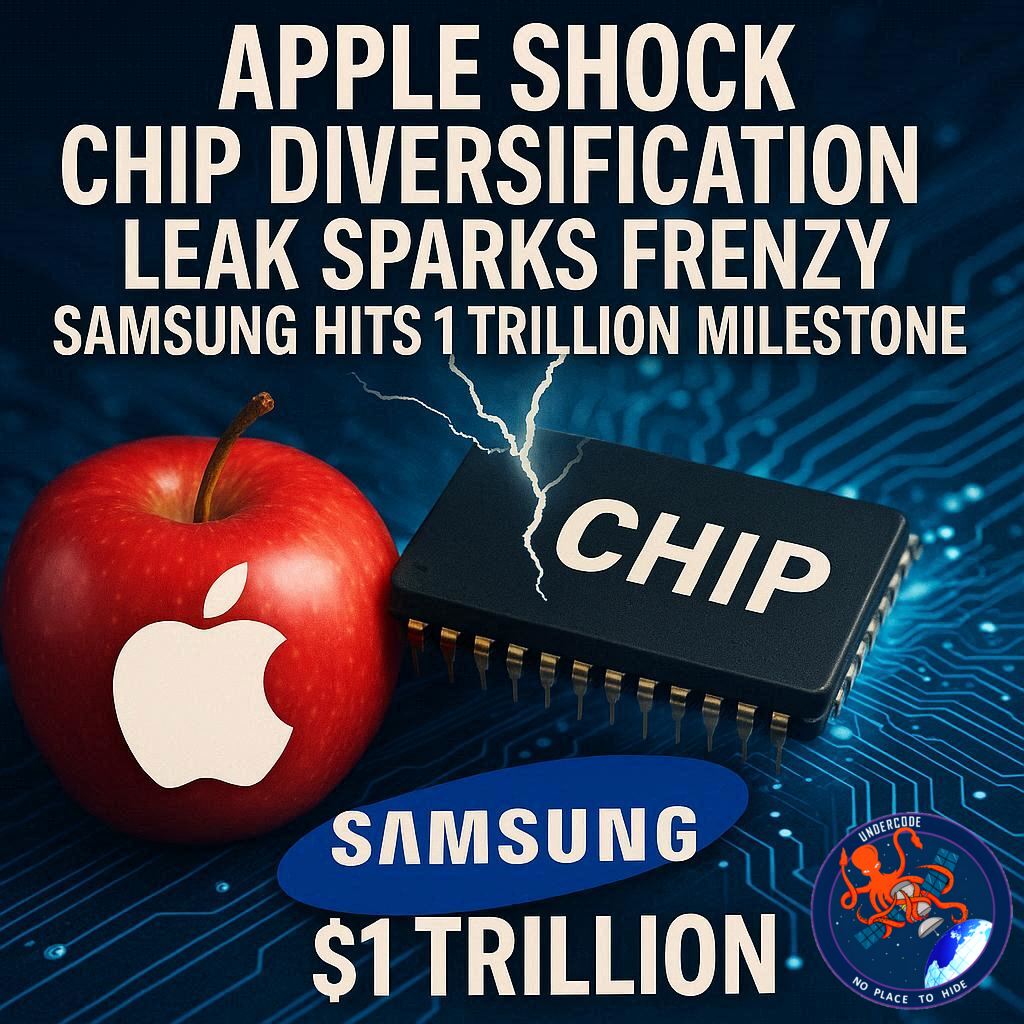
A fresh wave of speculation has shaken the semiconductor and tech markets after reports suggested that Apple may be quietly exploring ways to reduce its long-standing reliance on TSMC for chip production. The news immediately triggered investor excitement, particularly around Samsung, which saw its valuation surge past the symbolic $1 trillion mark. While the idea of Apple diversifying its chip supply chain sounds like a major strategic shift, the reality appears far more limited and cautious than market reactions suggest.
the Report
A recent Bloomberg report revealed that Apple has entered early-stage discussions with both Intel and Samsung regarding potential future chip manufacturing partnerships. These talks, however, are believed to be highly restricted in scope and would likely not involve Apple’s cutting-edge A-series or M-series processors used in its newest iPhones, iPads, and Macs. Instead, any collaboration would probably focus on older-generation chips or less advanced manufacturing nodes, similar to those used in TSMC’s overseas facilities in Arizona. This means Apple would still depend heavily on TSMC for its most advanced and performance-critical silicon.
Despite the limited nature of these discussions, the market reacted aggressively. Samsung’s stock jumped by 14% in a single trading session, contributing to a historic valuation milestone of $1 trillion. The rally was fueled not only by Apple-related speculation but also by broader optimism surrounding AI-driven semiconductor demand, which has significantly boosted memory chip revenues for Samsung. However, analysts also raised concerns that introducing multiple chip suppliers could create performance or efficiency differences across Apple devices if manufacturing standards are not perfectly aligned.
What Undercode Say:
Apple’s Quiet Strategy Shift Toward Multi-Sourcing
Apple has always built its competitive edge on extreme control over hardware design and manufacturing partnerships. Even the suggestion of diversifying chip production indicates a subtle but important strategic evolution. While not a full break from TSMC, Apple appears to be exploring resilience in its supply chain, likely motivated by geopolitical risks, production bottlenecks, and long-term cost optimization.
TSMC Dependency Still Dominates Reality
Despite market excitement, the structural reality remains unchanged. TSMC continues to hold a near-monopoly on Apple’s most advanced chip production. Its leading-edge fabrication nodes are essential for the performance gains seen in Apple’s A-series and M-series chips. Even if Samsung or Intel enter the picture, their role would likely remain secondary for years.
Intel and Samsung Role Limitations
The involvement of Intel and Samsung is far from a direct challenge to TSMC. Their potential contribution is expected to focus on older process technologies, which are less efficient and not suitable for flagship Apple devices. This positions them more as supplementary suppliers rather than strategic replacements, reinforcing TSMC’s central role.
Market Overreaction and Stock Surge
Samsung’s dramatic 14% stock surge reflects how sensitive investors are to Apple-related news. However, the reaction appears exaggerated compared to the actual scale of the potential partnership. Financial markets often price in optimistic long-term scenarios, even when operational realities suggest limited immediate impact.
AI Chip Boom Context
Samsung’s broader valuation milestone is not solely tied to Apple speculation. The global AI boom has significantly increased demand for memory and high-performance chips, directly benefiting Samsung’s semiconductor division. This macro trend is arguably a stronger driver of its trillion-dollar valuation than Apple’s tentative supply chain discussions.
Risk for Apple Device Quality Consistency
A key concern raised by analysts is the potential for inconsistency in chip performance if multiple manufacturers are involved. Even minor variations in fabrication processes could lead to differences in efficiency, heat management, or battery performance across devices. Apple’s tight ecosystem control would make such disparities highly sensitive.
fact checker results
Bloomberg Report Accuracy Confirmed
The report regarding early-stage talks between Apple, Samsung, and Intel originates from Bloomberg, a reputable financial news source.
The claim is consistent with previous supply chain diversification rumors but remains unconfirmed at execution level.
No official statements from Apple, Samsung, or Intel validate production agreements.
Limited Scope of Manufacturing Talks
Industry analysis supports that any potential partnership would likely involve older chip nodes, not advanced A-series or M-series production.
This aligns with existing Apple strategy of reserving cutting-edge chips for TSMC.
Therefore, expectations of major supply chain disruption are overstated.
Market Valuation Reaction Context
Samsung’s $1 trillion valuation milestone is driven largely by AI chip demand, not solely Apple speculation.
The 14% stock jump reflects investor sentiment rather than confirmed business expansion.
Market enthusiasm exceeds confirmed operational developments.
Prediction
The most likely outcome is that Apple will continue its dominant reliance on TSMC for premium chip production while cautiously expanding secondary manufacturing partnerships with Samsung and possibly Intel. These relationships will serve as strategic backup capacity rather than competitive replacements. Over time, Apple may gradually diversify low-end or legacy chip production, but the core performance-driven silicon ecosystem will remain firmly anchored to TSMC for the foreseeable future.
🕵️📝Let’s dive deep and fact‑check.
References:
Reported By: 9to5mac.com
Extra Source Hub (Possible Sources for article):
https://www.pinterest.com
Wikipedia
OpenAi & Undercode AI
Image Source:
Unsplash
Undercode AI DI v2
Bing
🔐JOIN OUR CYBER WORLD [ CVE News • HackMonitor • UndercodeNews ]
📢 Follow UndercodeNews & Stay Tuned:
𝕏 formerly Twitter 🐦 | @ Threads | 🔗 Linkedin | 🦋BlueSky | 🐘Mastodon


