
Listen to this Post
Introduction: A Classroom That Feeds a Cyber War Machine
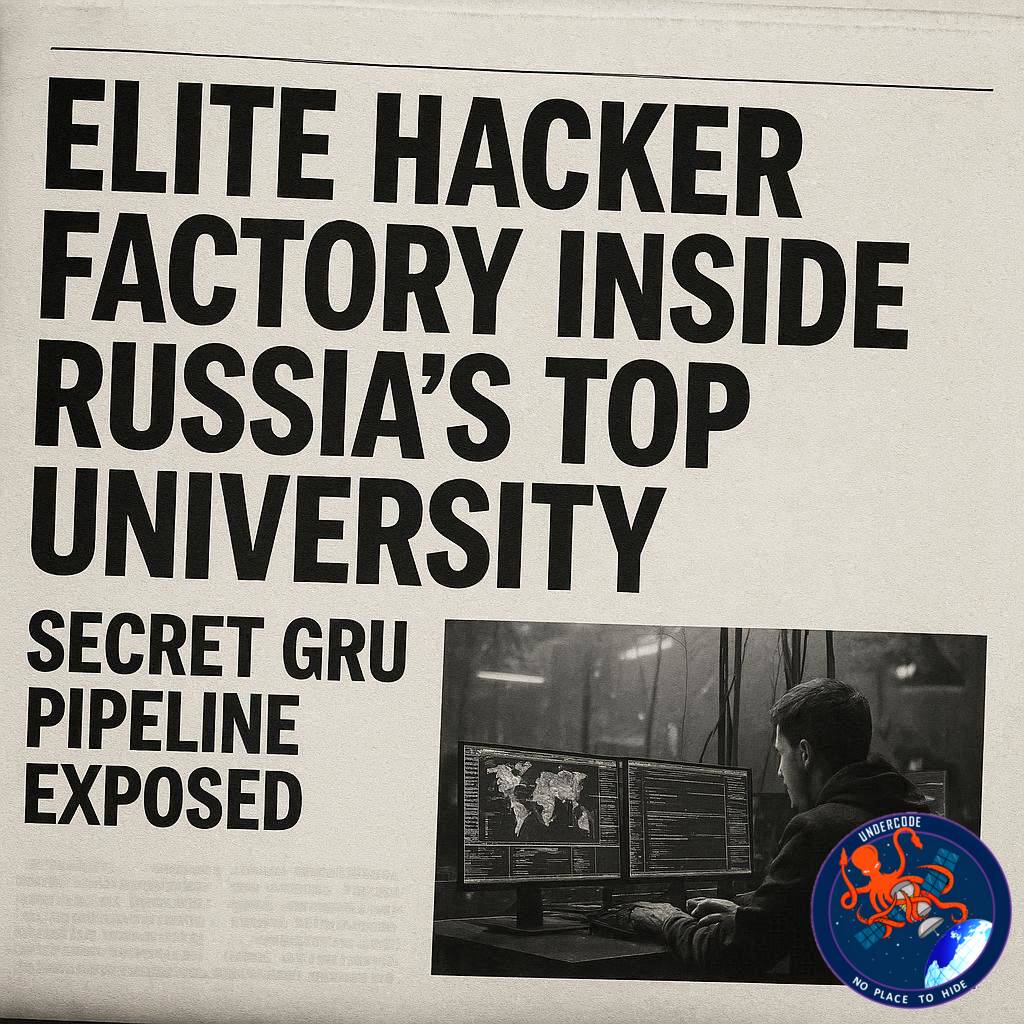
A major international investigation has uncovered what appears to be one of the most structured and state-backed cyber talent pipelines in the world, hidden deep inside Bauman Moscow State Technical University. Far from a typical academic careers fair or corporate recruitment drive, this program reportedly connects elite students directly to Russia’s military intelligence service, the GRU. Through leaked internal documents and journalistic collaboration across several major outlets, a picture emerges of a university department functioning less like an academic institution and more like a controlled training ground for cyber warfare operatives. The revelations suggest that some of the world’s most infamous hacking groups may not only be state-linked but systematically staffed through formal education channels.
the Investigation: A 30-Line Breakdown of the Secret Cyber Pipeline
A consortium of journalists accessed roughly 2,000 internal documents from Bauman Moscow State Technical University.
The material points to a covert structure inside a unit known as “Department 4.”
This department operates under the university’s military training centre.
It is reportedly overseen and influenced directly by Russia’s GRU intelligence service.
The GRU appears to control admissions into the program.
It also plays a role in examinations and final graduate placements.
Some students are reportedly identified and recruited as early as secondary school.
The curriculum focuses heavily on offensive and defensive cyber operations.
A key subject is “Defence against technical reconnaissance.”
Students are trained in password attacks and software vulnerability exploitation.
They also study Trojan horse development and deployment.
Practical assignments include penetration testing exercises.
One module requires students to create functional computer viruses.
Other coursework includes surveillance hardware and espionage tools.
These include disguised recording devices and hidden keyloggers.
Some systems are designed to silently extract screenshots from target machines.
Among graduates in 2024, 69 students reportedly completed the program.
One standout graduate, Daniil Porshin, achieved near-perfect academic performance.
He reportedly spent six years in the program.
Following graduation, he was allegedly assigned to the Fancy Bear hacking group.
Fancy Bear has been linked to the 2016 Democratic National Committee breach.
Another group, Sandworm (Unit 74455), is also connected to graduates.
Sandworm has been blamed for attacks on Ukraine’s power grid.
It has also been linked to disruptions in European political events.
Not all students succeed in the program’s rigorous standards.
Some are rejected for insufficient technical offensive capabilities.
One student reportedly failed due to weak understanding of remote attacks.
A senior GRU officer reportedly evaluates student performance.
One identified instructor is Major General Viktor Netyksho.
He has previously been indicted in connection with cyber operations abroad.
The findings suggest a structured pipeline from classroom to cyber warfare units.
Russia appears to be systematically training state-sponsored hackers.
The system blends academic education with military intelligence objectives.
It produces a steady stream of cyber operatives for deployment.
What Undercode Say: Inside the Architecture of a State-Run Cyber Warfare Pipeline
The leaked structure at Bauman Moscow State Technical University suggests something far beyond traditional cybersecurity education.
What emerges is not just a curriculum, but a controlled production system for cyber operators aligned with state intelligence priorities.
The presence of GRU oversight at every stage—admissions, evaluation, and placement—indicates direct military integration into academic life.
This removes the boundary between education and operational deployment.
Department 4 appears to function as a feeder unit into active cyber warfare groups like Fancy Bear and Sandworm.
Such groups are not loosely affiliated hackers but structured extensions of military intelligence operations.
The inclusion of offensive hacking techniques in core coursework signals intentional weaponization of technical education.
Students are not merely learning defense but actively building malware and attack tools.
This creates graduates who are already operationally ready upon deployment.
The psychological framing of “technical reconnaissance defense” may mask offensive intent.
The dual use of surveillance hardware training suggests hybrid cyber-physical intelligence capabilities.
It reflects a doctrine where cyber warfare and traditional espionage merge seamlessly.
The early recruitment of talent from secondary education resembles elite military scouting programs.
This ensures ideological and technical alignment before higher education begins.
The system also enforces performance filtering, removing students who cannot meet offensive cyber thresholds.
This introduces a competitive elimination structure similar to special forces training.
The involvement of high-ranking officials, including individuals previously indicted in cyber cases, suggests institutional continuity rather than isolated incidents.
The pipeline demonstrates long-term strategic investment in cyber dominance.
It indicates that cyber warfare capability is treated as a national infrastructure priority.
The scale and organization imply sustained funding and centralized coordination.
This reduces the likelihood of independent hacker behavior, reinforcing state control over cyber operations.
It also explains the operational consistency observed in groups like Fancy Bear and Sandworm.
Their attacks often reflect coordinated strategy rather than opportunistic hacking.
The education system effectively standardizes offensive cyber doctrine.
Graduates are not freelancers but trained assets within a broader intelligence framework.
This challenges the assumption that cyber threats are decentralized.
Instead, it suggests industrial-scale production of state-aligned hackers.
The model mirrors military academies but adapted for digital warfare.
Its existence raises questions about future escalation in cyber conflicts globally.
It also complicates attribution in international cyber incidents.
Ultimately, it blurs the line between education, intelligence, and warfare.
Fact Checker Results 🔍
✔ Claims about GRU-linked groups like Fancy Bear and Sandworm are widely supported by Western intelligence assessments.
✔ The existence of Department 4 and its exact structure is based on leaked documents, not officially confirmed by Russia.
⚠ Some operational details of training remain unverified beyond investigative reporting sources.
Prediction 📊
Russia is likely to continue expanding structured cyber recruitment through academic institutions.
Future cyber conflicts may increasingly involve operators trained from early education pipelines.
Attribution of cyberattacks will become more difficult as state training systems mature and scale.
🕵️📝Let’s dive deep and fact‑check.
References:
Reported By: www.bitdefender.com
Extra Source Hub (Possible Sources for article):
https://www.reddit.com/r/AskReddit
Wikipedia
OpenAi & Undercode AI
Image Source:
Unsplash
Undercode AI DI v2
Bing
🔐JOIN OUR CYBER WORLD [ CVE News • HackMonitor • UndercodeNews ]
📢 Follow UndercodeNews & Stay Tuned:
𝕏 formerly Twitter 🐦 | @ Threads | 🔗 Linkedin | 🦋BlueSky | 🐘Mastodon


