
Listen to this Post
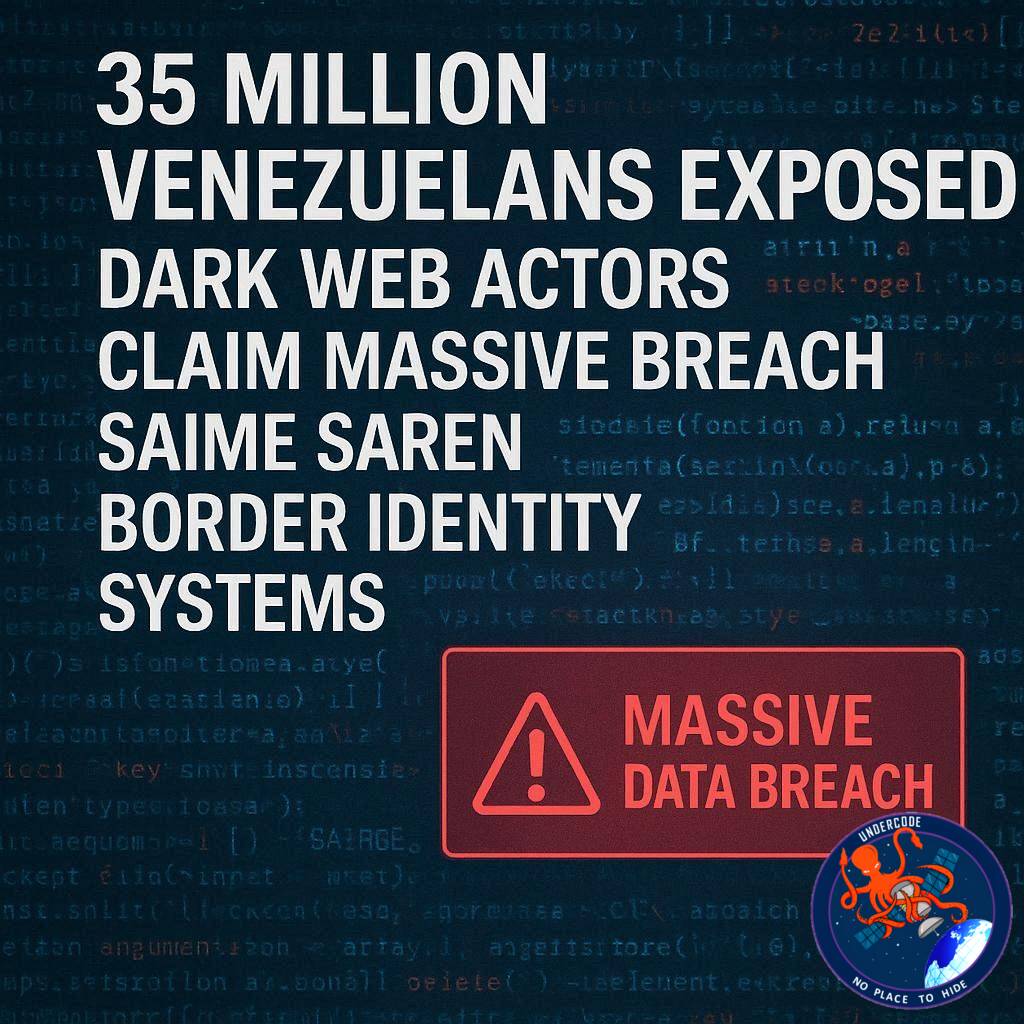 Introduction: A New Cybersecurity Alarm Emerging From the Dark Web
A fresh wave of concern is spreading across cybersecurity communities after a dark web monitoring account claimed that several Venezuelan government-related systems may have been compromised by a threat actor group. According to the allegations, databases connected to citizen identification, migration services, and official registry systems were allegedly accessed and exposed online.
The claims, which surfaced through underground cybercrime channels and were later amplified by the account known as Daily Dark Web, involve some of Venezuela’s most sensitive institutions. These include the country’s passport and migration authority, civil registry services, and border mobility systems that store personal information tied to millions of citizens.
At the moment, none of the claims have been independently verified. However, cybersecurity analysts warn that if even part of the allegations prove true, the consequences could be severe for both Venezuelan citizens and government infrastructure.
Alleged Breach Targets Venezuela’s Core Identity Infrastructure
The threat actors claim they breached systems connected to SAIME, the Venezuelan government agency responsible for passports, national identification, migration records, and foreign residency processes.
According to the post circulating online, the alleged SAIME database may contain approximately 35.2 million records. If authentic, this would represent one of the largest identity-related leaks ever associated with Venezuelan government systems.
The post also references a second alleged dataset tied to SAREN, which reportedly contains around 13.4 million birth certificate records. These systems manage official civil registrations and notarized documents across the country.
A third dataset allegedly involves Carnet Fronterizo services, a border mobility and identification mechanism used for citizen movement and verification near border regions. The claimed dataset reportedly includes nearly 92,000 records.
Threat Actors Claim Systems Were Interconnected
One of the most concerning parts of the allegations is the claim that the targeted systems were interconnected internally. Cybersecurity experts often warn that interconnected government infrastructure can become extremely dangerous when security segmentation is weak.
If attackers successfully infiltrate one government platform and lateral movement protections are poor, multiple databases can become exposed simultaneously. In cases involving identity systems, the damage can rapidly escalate from a single breach into a nationwide security crisis.
The threat actors reportedly claim they gained access to sensitive personal information connected to citizens, identity verification systems, migration records, and official documentation.
No technical proof has yet been publicly released to validate the scale of the claims.
Potential Risks Could Extend Far Beyond Venezuela
If the allegations are confirmed, experts believe the exposure could create long-term risks extending well beyond Venezuela itself.
Identity-related datasets are among the most valuable assets sold on cybercrime forums because they enable multiple forms of fraud simultaneously. Criminal groups frequently use such information for identity theft, passport fraud, financial scams, and sophisticated phishing operations.
Birth certificate records, passport databases, and migration documents are particularly sensitive because they are often used as foundational verification documents for banking, government services, and international travel systems.
Cybercriminals could potentially combine leaked information with social engineering tactics to impersonate citizens, bypass verification systems, or create fraudulent identities.
Passport and Migration Systems Could Become Prime Targets
Migration and passport infrastructures are highly attractive targets for cybercriminals because they contain deeply personal information that usually remains valid for years.
Unlike passwords, identity records cannot easily be changed. A leaked passport number or birth certificate can continue circulating in criminal markets indefinitely.
Attackers may also exploit migration-related data for travel fraud, visa scams, or illegal document replication. In some cases, compromised migration records have historically been linked to transnational criminal activity involving forged identities.
That is why cybersecurity agencies worldwide increasingly classify government identity systems as critical national infrastructure.
Underground Cybercrime Markets Continue Expanding
The incident also highlights the growing sophistication of underground cybercrime ecosystems operating through dark web forums and encrypted communication channels.
Threat actors no longer simply steal databases and disappear. Modern cybercriminal groups frequently advertise datasets publicly to attract buyers, intimidate organizations, or increase their reputation inside underground communities.
In many recent cases, attackers leak small “samples” first before attempting extortion or selling full datasets privately.
Cybersecurity monitoring groups often track these forums closely to identify early warning signs before official confirmations emerge.
Venezuelan Authorities Have Not Issued Confirmation
At the time the claims surfaced online, there was no official confirmation from Venezuelan authorities regarding the authenticity of the alleged breach.
No independent cybersecurity organization has publicly validated the datasets either.
This distinction remains extremely important because dark web actors sometimes exaggerate, recycle old leaks, or fabricate datasets entirely in order to gain attention or financial leverage.
Still, cybersecurity professionals generally treat such claims seriously until proven false, especially when government systems are involved.
Citizens Warned to Stay Alert
Security researchers advise Venezuelan citizens to remain cautious regarding suspicious identity verification requests, unusual migration-related notifications, or unexpected communications involving official documents.
Cybercriminals commonly weaponize leaked personal data through phishing attacks designed to appear legitimate.
Fraudulent emails, fake government portals, and manipulated identity verification requests are among the most common techniques used after large-scale breaches.
Users are generally advised to verify all official communications through trusted government channels only.
What Undercode Says:
Government Identity Systems Are Becoming Cyberwarfare Targets
The alleged Venezuelan breach demonstrates how identity databases are increasingly becoming strategic cyberwarfare assets rather than ordinary hacking targets.
Modern governments rely heavily on centralized digital identity ecosystems. Once compromised, attackers potentially gain access to citizen movement records, legal identities, financial verification pathways, and administrative systems simultaneously.
This transforms identity databases into high-value geopolitical assets.
Centralization Creates Massive Single Points of Failure
One major issue highlighted by this incident is excessive system centralization.
When passport systems, birth registries, migration records, and border identity infrastructures become interconnected without sufficient segmentation, a single compromise can trigger catastrophic exposure across multiple government sectors.
Many developing nations rapidly digitized citizen services over the last decade but failed to modernize cybersecurity architecture at the same pace.
That imbalance is now becoming visible globally.
Dark Web Actors Exploit Public Fear as Much as Data
Another important factor is psychological manipulation.
Threat actors understand that public fear amplifies the value of their claims. Even before verification occurs, headlines involving “millions of leaked citizens” generate panic, uncertainty, and institutional distrust.
This tactic helps cybercriminals build underground credibility while simultaneously pressuring governments into reactive damage control.
In some situations, the fear itself becomes part of the attack.
Latin America Has Become a Growing Cybercrime Hotspot
Latin American institutions have increasingly become targets for ransomware groups, data brokers, and financially motivated hackers.
Government agencies in the region often face challenges including outdated infrastructure, budget limitations, fragmented cybersecurity policies, and shortages of specialized personnel.
This creates attractive conditions for sophisticated threat actors seeking large datasets with relatively weaker defensive barriers.
The region has already witnessed multiple attacks against financial institutions, telecom providers, and public service systems in recent years.
Identity Theft Is Entering a New Era
Traditional identity theft used to focus mainly on banking information. That model is evolving rapidly.
Today’s cybercriminals seek full-spectrum identity profiles including birth certificates, biometric identifiers, migration history, phone numbers, and citizenship documentation.
With enough information, criminals can potentially construct highly convincing synthetic identities capable of bypassing digital verification systems.
Artificial intelligence tools may further accelerate this risk by enabling more realistic impersonation scams.
Governments Often Struggle With Transparency After Breaches
Another recurring issue worldwide is delayed disclosure.
Governments frequently hesitate to acknowledge cyber incidents quickly due to political sensitivity, reputational concerns, or uncertainty during forensic investigations.
Unfortunately, delayed communication can worsen public distrust and leave citizens exposed longer without guidance.
Fast transparency has increasingly become a critical component of modern cybersecurity response strategies.
Verification Remains the Most Important Missing Piece
Despite the alarming nature of the allegations, verification remains essential.
Cybersecurity history contains numerous examples where threat actors exaggerated stolen data volumes or repackaged previously leaked datasets as “new breaches.”
Without forensic evidence, leaked samples, or official confirmation, the claims remain allegations rather than established facts.
That distinction matters enormously.
Global Governments May Quietly Reevaluate Their Systems
Incidents like this often trigger internal reviews far beyond the affected country itself.
Government agencies worldwide closely monitor alleged breaches involving identity infrastructure because similar weaknesses may exist elsewhere.
Many nations are now reassessing database segmentation, zero-trust architecture, access monitoring, and insider threat protections following the rise in state-scale cyber incidents.
The Venezuelan allegations may become another warning sign in a growing global pattern.
🔍 Fact Checker Results
✅ Verified Information
The dark web post discussing the alleged Venezuelan breach was publicly shared online and references SAIME, SAREN, and border-related identity systems.
❌ Unverified Claims
There is currently no independent forensic confirmation proving that 35.2 million SAIME records or 13.4 million SAREN records were genuinely compromised.
✅ Realistic Risk Assessment
Cybersecurity experts widely agree that identity database leaks can enable fraud, phishing, document abuse, and large-scale privacy risks if authentic.
📊 Prediction
Rising Pressure on Venezuelan Cybersecurity Infrastructure
If additional evidence or leaked samples emerge in coming days, Venezuelan authorities could face growing pressure to publicly address the situation and strengthen cybersecurity defenses.
More Government Data Will Likely Appear on Underground Forums
Cybercrime groups are increasingly targeting governments because citizen databases hold long-term financial and strategic value. Similar claims involving national identity systems will likely continue worldwide.
Citizens May Face Increased Scam Attempts
Even unverified breach rumors can trigger waves of phishing campaigns as cybercriminals exploit public confusion. Venezuelan citizens may soon encounter fake verification requests, fraudulent government portals, and impersonation scams tied to the alleged incident.
🕵️📝Let’s dive deep and fact‑check.
References:
Reported By: x.com
Extra Source Hub (Possible Sources for article):
https://www.instagram.com
Wikipedia
OpenAi & Undercode AI
Image Source:
Unsplash
Undercode AI DI v2
Bing
🔐JOIN OUR CYBER WORLD [ CVE News • HackMonitor • UndercodeNews ]
📢 Follow UndercodeNews & Stay Tuned:
𝕏 formerly Twitter 🐦 | @ Threads | 🔗 Linkedin | 🦋BlueSky | 🐘Mastodon


