
Listen to this Post
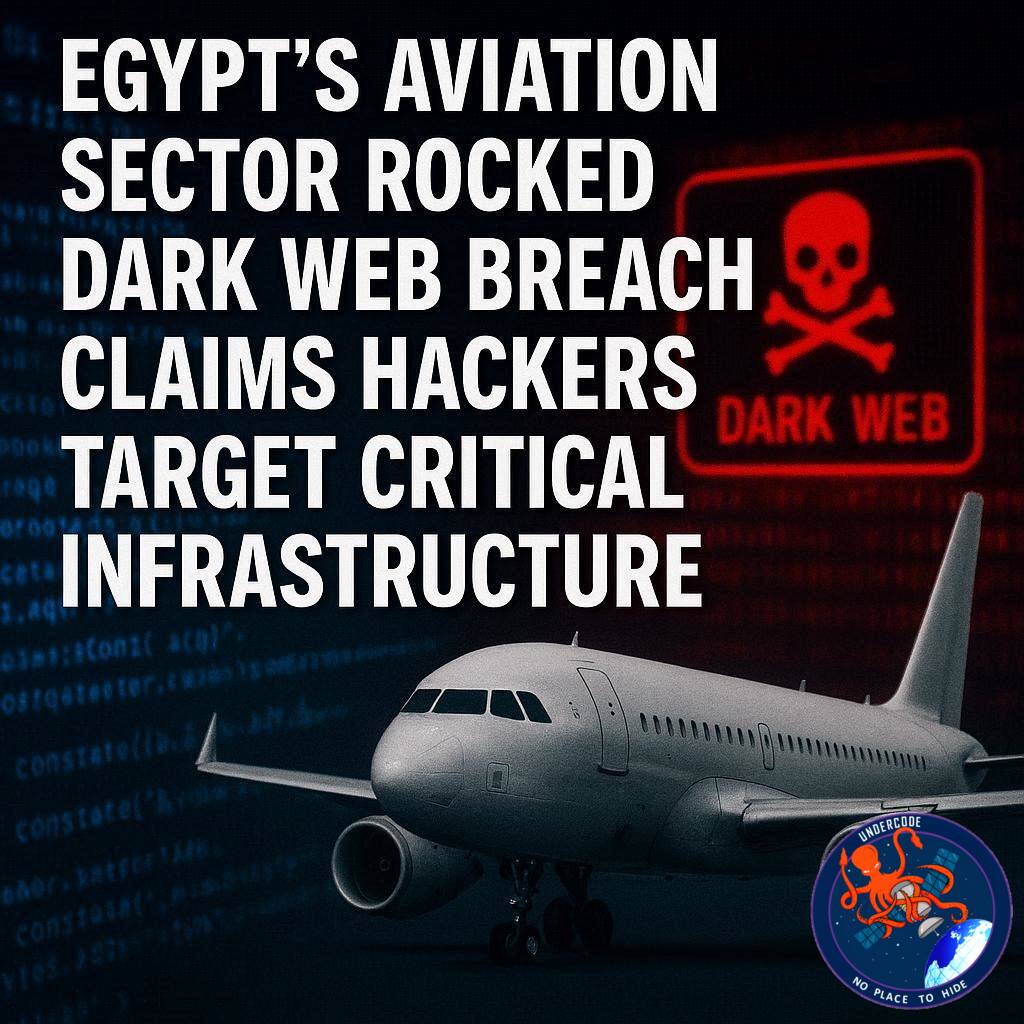 Growing Concerns After Alleged Cyberattack on Egypt’s Civil Aviation Authorities
A new cyber threat claim circulating on underground forums has placed Egypt’s aviation sector under intense scrutiny after a threat actor allegedly breached systems connected to Egypt’s Ministry of Civil Aviation and the Egyptian Civil Aviation Authority (ECAA). The claims were first highlighted by Daily Dark Web, which reported that sensitive aviation-related communications and internal operational documents may have been exposed.
According to the alleged attacker, the breach impacted mailing services, internal communication systems, and operational aviation files. The actor also claimed that this was not the first successful compromise targeting the organization, suggesting that Egyptian aviation infrastructure may have faced repeated cybersecurity weaknesses in recent years.
At this stage, no official confirmation has been issued by Egyptian authorities, and cybersecurity analysts are still unable to independently verify the authenticity of the leaked materials or determine the exact scale of the incident. Despite the uncertainty, the allegations alone have triggered widespread concern because civil aviation systems are considered part of a nation’s most sensitive critical infrastructure.
The reportedly leaked data allegedly contains internal communication materials, aviation service requests, security alerts, and operational protocols tied to air traffic and aviation management. If authentic, such information could become extremely valuable to cybercriminal groups, espionage actors, or state-sponsored threat campaigns seeking intelligence about transportation systems and government operations.
Modern aviation infrastructure relies heavily on interconnected digital ecosystems. From aircraft servicing coordination to communication between airports, airlines, regulators, and logistics providers, nearly every operational layer depends on secure information exchange. A compromise involving internal communication channels could potentially create operational confusion, expose sensitive procedures, or enable sophisticated phishing attacks targeting aviation employees and contractors.
Cybersecurity experts frequently warn that aviation entities are attractive targets because they combine high-value intelligence with complex digital networks that are difficult to secure completely. Unlike ordinary corporate systems, aviation environments often involve legacy technologies, international integrations, and third-party contractors, creating multiple possible entry points for attackers.
The alleged attack also highlights a broader trend in global cybercrime activity: the growing targeting of transportation and critical infrastructure sectors. Over the last few years, threat actors have increasingly focused on airports, airlines, shipping companies, and transportation regulators due to the potential economic disruption and political pressure these attacks can create.
Security professionals note that even unverified breach claims can still create serious consequences. Threat actors sometimes exaggerate or fabricate incidents to gain credibility in underground forums, manipulate cryptocurrency extortion attempts, or trigger panic within targeted organizations. However, when aviation-related institutions are involved, investigators are often forced to treat every claim seriously until proven otherwise.
Analysts also point out that leaked internal communication records can become useful tools for future cyberattacks. Attackers frequently use exposed employee conversations, email structures, or operational terminology to craft highly convincing phishing campaigns capable of bypassing traditional security awareness measures.
The incident has once again renewed discussions around the cybersecurity readiness of government-linked infrastructure across the Middle East and North Africa. Regional aviation sectors continue expanding rapidly through airport modernization projects, international airline partnerships, and digital transformation initiatives. However, many cybersecurity frameworks still struggle to keep pace with the speed of technological adoption.
Industry observers say organizations operating within aviation environments should immediately review access controls, strengthen multi-factor authentication systems, monitor for unusual outbound traffic, and conduct forensic investigations whenever suspicious activity is detected. Monitoring dark web forums has also become an increasingly important component of modern threat intelligence operations, allowing organizations to identify potential leaks before they escalate into larger crises.
The alleged breach comes during a period where cybercriminal marketplaces are becoming more organized and commercialized. Underground actors now routinely advertise stolen databases, internal documents, and unauthorized system access through dedicated cybercrime forums that resemble legitimate online marketplaces. This evolving ecosystem has dramatically increased the speed at which stolen information can spread across criminal networks.
At the same time, cyber espionage concerns remain a major factor whenever aviation infrastructure is discussed. Sensitive transportation systems often contain operational intelligence that could interest foreign intelligence agencies, organized cybercriminal syndicates, or politically motivated hacking groups.
Until official statements or forensic evidence emerge, the claims surrounding Egypt’s aviation authorities remain speculative. Nevertheless, the situation demonstrates how quickly alleged cyber incidents involving critical infrastructure can attract international attention and trigger broader fears about transportation security and national resilience.
What Undercode Says:
The Real Danger May Be Larger Than the Alleged Leak Itself
Even if the breach eventually turns out to be exaggerated or partially fabricated, the psychological impact on public confidence is already significant. Aviation systems operate on trust, coordination, and precision. Any suggestion that internal communications or operational procedures may have been exposed immediately raises concerns about systemic vulnerabilities.
Aviation Has Become One of the Most Attractive Cyber Targets Worldwide
The aviation industry sits at the crossroads of logistics, national security, tourism, and international trade. That makes it an exceptionally valuable target for ransomware gangs, espionage operations, and politically motivated hackers. Unlike financial institutions where attackers primarily seek money, aviation compromises can produce geopolitical leverage and operational disruption simultaneously.
Dark Web Actors Are Increasingly Using Publicity as a Weapon
One major shift in modern cybercrime is the weaponization of media attention. Threat actors no longer operate quietly. They deliberately publish claims online to create fear, pressure organizations into negotiations, and attract reputation within underground communities. In many cases, the announcement itself becomes part of the attack strategy.
Critical Infrastructure Often Suffers From Legacy Technology Problems
Many government-linked aviation systems still rely on outdated infrastructure that was never designed to withstand modern cyber warfare techniques. Legacy mail servers, weak segmentation, poor identity management, and delayed patching remain recurring issues globally, not just in developing regions.
Human Error Continues to Be the Weakest Security Layer
Sophisticated malware is dangerous, but employee compromise remains one of the most common entry points. A single phishing email targeting aviation administrators could potentially provide attackers with access to sensitive operational systems. Internal communication leaks often begin with credential theft rather than direct system exploitation.
Repeated Breach Claims Could Indicate Persistent Threat Activity
The attacker’s claim that this is the “second time” targeting the organization is especially concerning. Whether true or not, repeated incidents usually suggest deeper structural weaknesses. Persistent attackers often revisit previously compromised organizations because they already understand the network architecture and internal procedures.
Governments Are Underestimating Underground Intelligence Markets
Cybercriminal forums are no longer isolated communities filled with amateur hackers. They now function as sophisticated intelligence exchanges where stolen government documents, corporate credentials, and infrastructure access can be bought, sold, or traded rapidly across international networks.
Cybersecurity in Aviation Is No Longer Just an IT Issue
Modern aviation cybersecurity directly affects national stability. Air traffic coordination, airport operations, maintenance systems, passenger logistics, and international communication channels are all interconnected. A successful compromise in one area can create cascading operational risks elsewhere.
Threat Intelligence Monitoring Has Become Essential
Organizations that ignore dark web monitoring are operating blindly. Threat actors frequently leak previews of stolen information weeks before attacks become public. Early detection through underground intelligence monitoring can sometimes prevent a localized compromise from evolving into a full-scale crisis.
Supply Chain Attacks Remain a Hidden Threat
Aviation sectors depend heavily on contractors, maintenance providers, logistics companies, and software vendors. Attackers increasingly target smaller third-party organizations because they often possess weaker defenses while still maintaining privileged access to larger systems.
Public Disclosure Delays Can Create Confusion
Government institutions often avoid rapid public disclosure while investigations are ongoing. While understandable, delayed transparency can fuel speculation and misinformation online. In today’s digital environment, information gaps are quickly filled by rumors, anonymous sources, and threat actors seeking attention.
Cyber Warfare Is Quietly Reshaping National Security Priorities
Traditional warfare focuses on physical infrastructure. Modern cyber warfare targets communication systems, transportation networks, and digital coordination platforms. Aviation infrastructure represents a strategic objective because disruption can create economic instability without requiring physical confrontation.
Attack Surface Expansion Is Accelerating
As aviation organizations adopt cloud systems, remote maintenance technologies, AI-driven operations, and interconnected digital services, the attack surface continues expanding. Every integration point creates another potential vulnerability if not secured properly.
The Incident Reflects a Global Trend Rather Than an Isolated Case
Recent years have shown increasing attacks against airports, airlines, shipping ports, rail systems, and energy providers worldwide. Transportation infrastructure has become one of the defining cyber battlegrounds of the modern era.
Reputation Damage Can Outlast Technical Recovery
Even if systems are restored quickly, public trust can take much longer to recover. Aviation industries rely heavily on perceptions of safety and reliability. Cybersecurity incidents—verified or not—can create lasting reputational harm.
🔍 Fact Checker Results
✅ Verified Information
The alleged breach claims were publicly circulated online by Daily Dark Web, and no official denial or confirmation has yet been issued by Egyptian authorities.
❌ Unverified Claims
There is currently no independently verified evidence confirming that Egypt’s Ministry of Civil Aviation or the Egyptian Civil Aviation Authority suffered a successful cyberattack.
✅ Industry Context
Cybersecurity experts widely recognize aviation infrastructure as a high-risk target sector due to its operational sensitivity and dependence on interconnected digital systems.
📊 Prediction
Aviation Cybersecurity Spending Will Rise Across the Region
This incident will likely accelerate cybersecurity investments within Middle Eastern aviation sectors, particularly in threat monitoring, incident response, and identity protection systems.
Dark Web Monitoring Will Become More Common
Government agencies and transportation regulators are expected to increase monitoring of underground cybercrime forums to identify future leak attempts and threat actor activity earlier.
More Public Infrastructure Will Face Similar Threats
As geopolitical tensions and cybercrime operations continue evolving, transportation and critical infrastructure sectors will remain among the highest-priority targets for both criminal and state-linked threat actors worldwide.
🕵️📝Let’s dive deep and fact‑check.
References:
Reported By: x.com
Extra Source Hub (Possible Sources for article):
https://www.pinterest.com
Wikipedia
OpenAi & Undercode AI
Image Source:
Unsplash
Undercode AI DI v2
Bing
🔐JOIN OUR CYBER WORLD [ CVE News • HackMonitor • UndercodeNews ]
📢 Follow UndercodeNews & Stay Tuned:
𝕏 formerly Twitter 🐦 | @ Threads | 🔗 Linkedin | 🦋BlueSky | 🐘Mastodon


