
Listen to this Post
Introduction
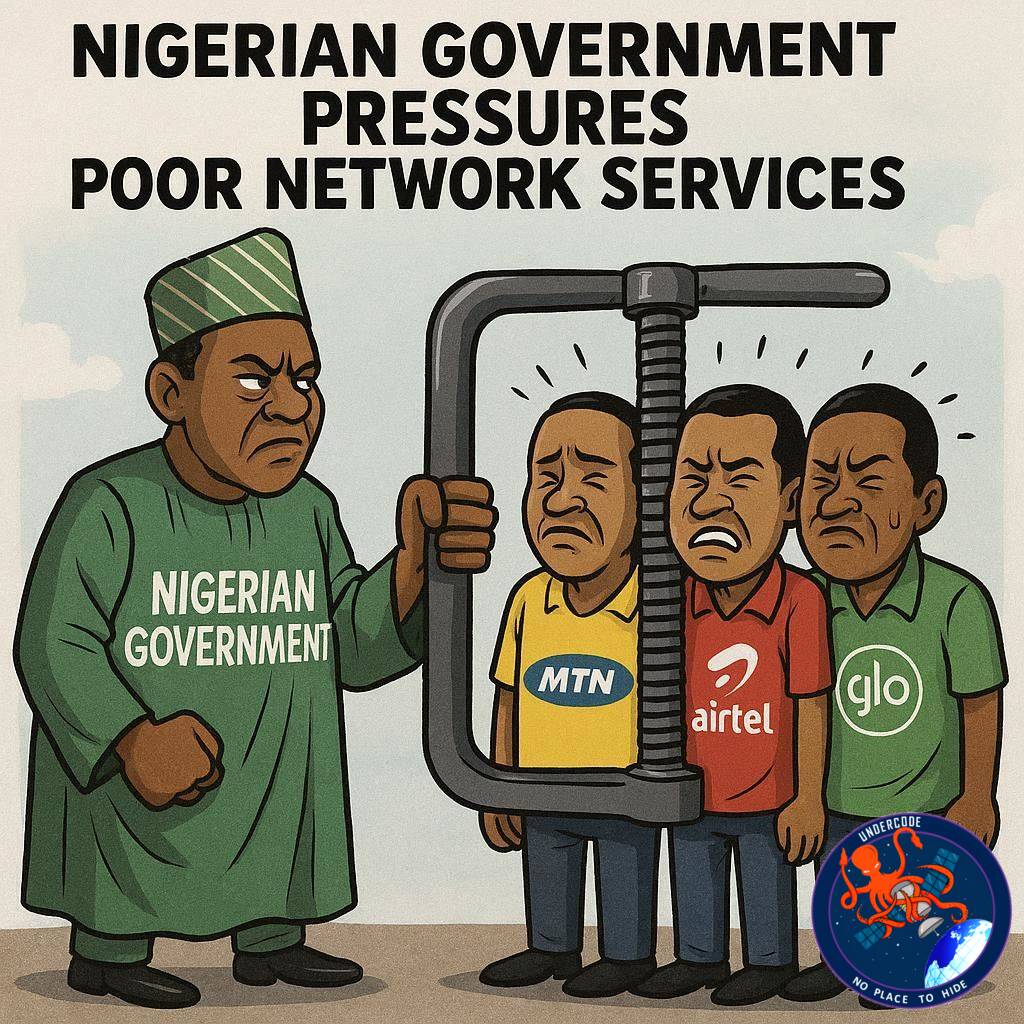
The Nigerian government has renewed its push to improve the country’s struggling telecommunications sector, placing major operators under increasing pressure to fix persistent network problems affecting millions of subscribers nationwide. Years of dropped calls, unstable internet access, slow data speeds, and poor connectivity have frustrated both individuals and businesses, especially as digital services become more critical to Nigeria’s economy.
Minister of Communications, Innovation and Digital Economy, Bosun Tijani, announced that telecom companies including MTN Nigeria
, Airtel Nigeria
, Globacom
, and T2 must now take immediate responsibility for resolving network failures and delivering better services to Nigerians. According to the minister, the government has already implemented reforms designed to stabilize the industry, and operators can no longer blame regulatory or economic uncertainty for declining service quality.
The administration believes Nigerians deserve reliable telecom services that reflect the amount they pay for voice calls, SMS, and internet subscriptions. With rising tariffs and increasing dependence on digital communication, public expectations are now higher than ever.
Government Says Telecom Operators Must Deliver
The Federal Government stated that telecom providers now operate in a more stable business environment after several reforms were introduced to support the sector. Tijani explained that many of the industry’s problems were inherited from years of underinvestment in infrastructure, which created severe limitations across the country’s telecom network.
These infrastructure gaps have contributed to recurring issues such as poor signal strength, unstable mobile internet, congestion during peak hours, and service outages that impact businesses, students, financial institutions, and government operations.
The minister stressed that the government has already done its part by implementing policies aimed at restoring confidence in the telecom sector. These measures include tariff adjustments, harmonized taxation policies, protection of telecom infrastructure as critical national assets, and broader economic reforms designed to improve the investment climate.
According to Tijani, these changes have helped major operators return to profitability and stabilize their operations financially. Because of this, the government now expects telecom companies to reinvest aggressively into infrastructure upgrades and service improvement.
He warned that the excuse of unfavorable operating conditions can no longer justify poor customer experience.
Massive Infrastructure Expansion Planned
One of the government’s major long-term solutions involves expanding Nigeria’s fibre-optic infrastructure nationwide. Tijani revealed that the administration has already secured financial support led by the World Bank to support Project BRIDGE, an initiative aimed at deploying open-access fibre infrastructure across the country.
The project is expected to significantly improve broadband penetration and internet reliability within the next two to five years.
In addition to fibre deployment, the government also plans to increase telecom tower installations through NUCAP while simultaneously expanding satellite connectivity capacity. These investments are expected to close connectivity gaps in underserved rural and urban areas where network coverage remains weak.
The government’s broader vision is to ensure that Nigerians can eventually access stable, high-speed internet directly in their homes, offices, and small businesses without depending solely on unstable mobile data connections.
Tijani specifically highlighted the struggles faced by small business owners who rely heavily on unreliable mobile internet dongles and inconsistent telecom networks to run their daily operations. He stated that modern digital economies cannot function effectively without dependable internet infrastructure.
NCC Given More Enforcement Power
The Nigerian Communications Commission, commonly known as the NCC, has also been empowered to monitor telecom performance more aggressively. The Commission will independently assess network quality, enforce compliance standards, and sanction operators that fail to meet expected service levels.
The minister explained that the government will increasingly rely on data from the NCC alongside complaints from consumers to determine whether telecom companies are genuinely improving their services.
This move signals a stronger regulatory approach toward accountability in the telecom industry. Rather than relying solely on promises from operators, the government intends to use measurable performance indicators to evaluate improvements in call quality, data speed, network uptime, and coverage expansion.
Tijani warned that operators delivering strong performance would receive recognition, while companies that continue to underperform may face regulatory consequences.
For millions of Nigerians frustrated by years of unreliable connectivity, the announcement represents a rare public acknowledgment of widespread dissatisfaction within the telecom sector.
Rising Expectations From Nigerian Consumers
Telecommunications have become one of the most important sectors in Nigeria’s economy. From mobile banking and online education to remote work and e-commerce, stable connectivity is now directly tied to economic productivity and national development.
However, despite Nigeria having one of Africa’s largest telecom markets, subscribers continue to experience major service issues. Many consumers complain about disappearing data balances, inconsistent 4G connectivity, frequent call drops, and slow internet speeds despite increasing subscription costs.
Public frustration intensified in recent years as telecom operators introduced tariff adjustments while service quality remained largely inconsistent.
The government’s latest position suggests authorities are becoming more sensitive to growing consumer dissatisfaction. By publicly pressuring operators and promising regulatory oversight, the administration appears determined to show Nigerians that telecom performance will no longer be ignored.
At the same time, experts believe infrastructure expansion alone may not immediately solve all network problems. Challenges such as vandalism, power shortages, insecurity in remote areas, foreign exchange pressures, and expensive equipment imports continue to affect telecom operations nationwide.
Still, the combination of government-backed infrastructure investment and stricter regulatory enforcement could gradually improve the sector if properly implemented.
What Undercode Say:
Nigeria’s telecom sector is entering a critical transition period where excuses may no longer protect operators from accountability. The government’s tone has shifted from supportive regulation toward performance enforcement, which signals rising political pressure connected to public dissatisfaction over digital infrastructure.
One important detail in Tijani’s statement is the emphasis on profitability. For years, telecom companies argued that unstable economic conditions, multiple taxation systems, inflation, currency instability, and infrastructure vandalism made expansion difficult. By publicly stating that operators have returned to profitability, the government is effectively removing their strongest defense.
This changes the conversation entirely.
The administration now expects visible improvements because it believes telecom firms have both the financial strength and regulatory support necessary to invest aggressively in upgrades. If network quality fails to improve despite these advantages, public blame may shift entirely toward operators.
Project BRIDGE could become one of the most important digital infrastructure projects in Nigeria if executed correctly. Open-access fibre systems have the potential to reduce internet costs, increase competition, and improve broadband penetration nationwide. Countries that successfully expanded fibre infrastructure often experienced accelerated growth in digital services, startups, fintech, education platforms, and remote work adoption.
However, implementation remains the real challenge.
Nigeria has historically struggled with large-scale infrastructure execution due to bureaucracy, funding delays, corruption concerns, inconsistent policy continuity, and security risks affecting physical infrastructure deployment.
Another major issue is electricity reliability. Telecom towers require stable power systems to maintain consistent operations. Because Nigeria’s power grid remains unstable in many regions, operators often depend heavily on generators and fuel logistics, dramatically increasing operational costs.
This means network improvement is not purely a telecom problem. It is also deeply connected to Nigeria’s broader infrastructure ecosystem.
The government’s decision to classify telecom infrastructure as critical national infrastructure is also significant. Telecom sites are frequently damaged through vandalism, theft, and accidental destruction during construction activities. Protecting these assets could reduce service interruptions and maintenance costs over time.
The NCC’s enhanced enforcement role may also reshape industry behavior. Historically, many subscribers felt customer complaints rarely produced meaningful regulatory consequences. If the Commission begins issuing stronger penalties tied directly to measurable service failures, operators may prioritize customer experience more seriously.
Consumer trust remains another major factor.
Many Nigerians have become skeptical of promises involving telecom improvements because similar assurances have been made repeatedly over the years. The public will likely judge success not through government announcements but through daily user experience: faster downloads, fewer dropped calls, stable streaming, and reliable online transactions.
The emphasis on home fibre access also reflects a broader digital evolution happening globally. Mobile data alone cannot sustainably support future digital economies. Businesses increasingly require fixed high-speed broadband for cloud services, remote collaboration, video conferencing, cybersecurity operations, and AI-driven applications.
If Nigeria successfully expands fibre penetration, it could dramatically improve the country’s competitiveness within Africa’s digital economy.
There is also a political dimension behind these reforms. Telecommunications directly affect public perception because almost every Nigerian relies on mobile connectivity daily. Poor networks create immediate frustration that citizens associate with governance failures. Improving telecom quality therefore has both economic and political importance.
Another overlooked factor is investor confidence. International investors often evaluate internet reliability before expanding digital operations into emerging markets. Stronger telecom infrastructure could indirectly attract foreign investment into technology, outsourcing, fintech, and digital services.
Still, expectations should remain realistic.
Infrastructure transformation at a national scale rarely happens overnight. Even with World Bank support, deployment timelines, regulatory coordination, contractor performance, and environmental challenges may slow visible progress.
The next 24 months will likely determine whether these reforms become a genuine turning point or simply another cycle of ambitious promises without lasting impact.
Fact Checker Results
✅ The government confirmed that telecom operators are now expected to improve service quality after recent regulatory and economic reforms.
✅ Project BRIDGE and World Bank-backed infrastructure funding were specifically mentioned as part of Nigeria’s long-term broadband expansion strategy.
❌ There is currently no public evidence that nationwide telecom quality has already significantly improved, as the government’s announcement mainly focuses on future expectations and planned infrastructure development.
Prediction
📶 Nigeria will likely experience gradual improvements in broadband reliability over the next few years, especially in urban centers where fibre deployment expands first.
📡 Telecom operators may face stricter penalties and increased public scrutiny if service quality fails to improve despite higher revenues and government support.
💻 If Project BRIDGE succeeds, Nigeria could become one of Africa’s fastest-growing digital economies by strengthening fintech, remote work, e-commerce, and online education infrastructure.
🕵️📝Let’s dive deep and fact‑check.
References:
Reported By: www.channelstv.com
Extra Source Hub (Possible Sources for article):
https://stackoverflow.com
Wikipedia
OpenAi & Undercode AI
Image Source:
Unsplash
Undercode AI DI v2
Bing
🔐JOIN OUR CYBER WORLD [ CVE News • HackMonitor • UndercodeNews ]
📢 Follow UndercodeNews & Stay Tuned:
𝕏 formerly Twitter 🐦 | @ Threads | 🔗 Linkedin | 🦋BlueSky | 🐘Mastodon


