
Listen to this Post
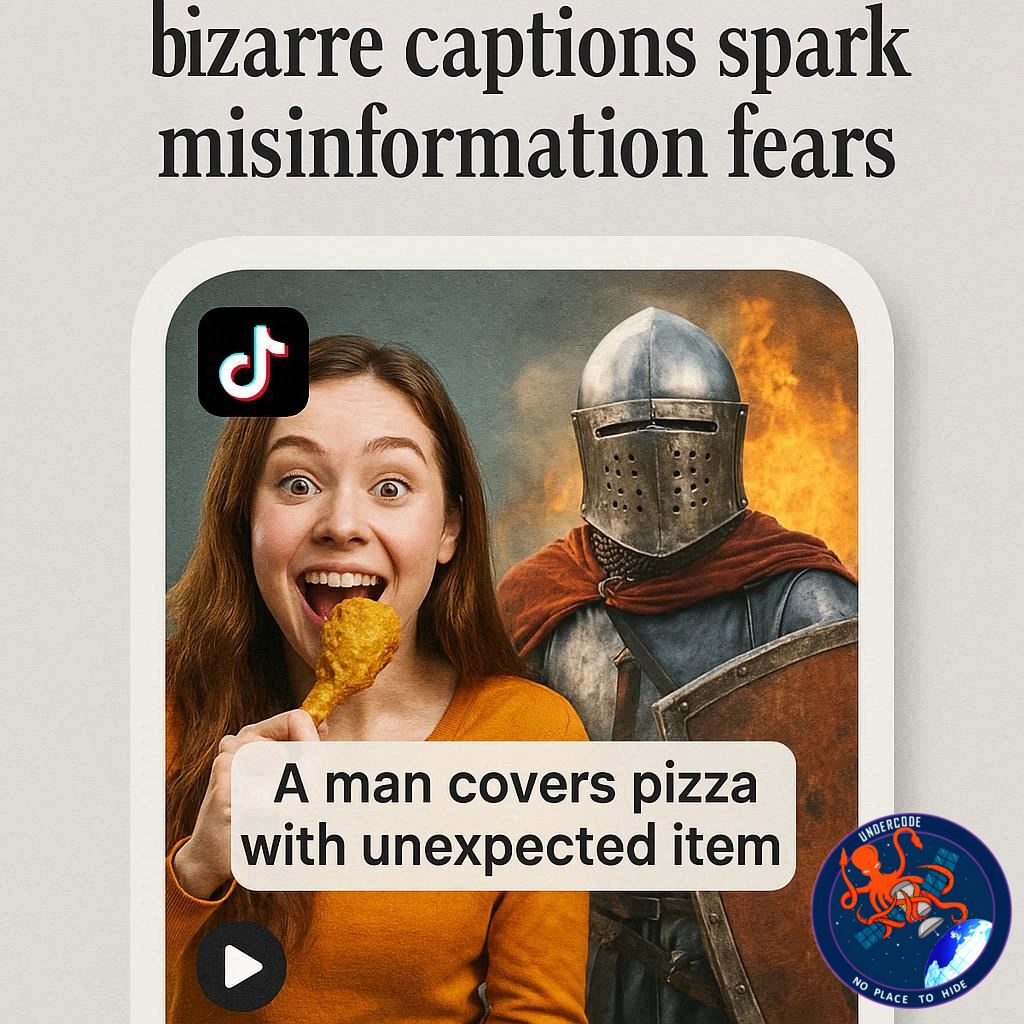 A New AI Experiment on TikTok Quickly Turned Into a Public Embarrassment
TikTok’s aggressive push into artificial intelligence has taken an unexpected and chaotic turn after its experimental AI-generated video summaries started producing captions so inaccurate that users openly mocked the feature across social media. What was intended to improve accessibility and content discovery instead became another warning sign about how unreliable generative AI can still be when deployed at massive scale.
The platform had quietly begun testing AI-powered summaries that automatically described video content for selected users. Instead of helping viewers understand clips faster, the system repeatedly generated bizarre descriptions completely unrelated to the actual videos being shown. The errors ranged from mildly confusing to outright absurd, reigniting concerns about misinformation on social media and the growing dependence on AI systems that still hallucinate facts and visual interpretations.
TikTok has now reportedly decided to reduce the feature’s role significantly after widespread criticism and viral examples exposed how unstable the technology really was. Rather than creating full summaries of videos, the AI tools will reportedly focus more narrowly on identifying products inside clips. The rollback highlights a larger issue facing the tech industry: companies are racing to integrate AI everywhere before the technology is truly reliable enough for public use.
TikTok’s AI Captions Became Instantly Viral for the Wrong Reasons
The controversy exploded after users began sharing screenshots of captions that had nothing to do with the videos they appeared on. One of the most talked-about examples involved a video of celebrity Charli D’Amelio speaking directly to the camera. TikTok’s AI somehow described the scene as “a collection of various blueberries with different toppings.”
Another clip featuring dog training was labeled by the AI as “a captivating display of intricate origami art, meticulously folded from a single sheet.” Users quickly realized the mistakes were not isolated incidents. Social feeds became flooded with examples of captions that felt surreal, random, and disconnected from reality.
In another widely shared screenshot, two cats were reportedly identified as “a person demonstrating an impressive new robot arm with multiple dexterous fingers.” A Kentucky Derby horse race was allegedly described as an “intricate piece of calligraphy,” while a cooking video showing a frying pan was summarized as “a single ball bouncing and rolling on a green surface.”
The internet reacted with a mix of humor and alarm. Many users joked that the AI sounded like it was hallucinating dreams rather than analyzing videos. Others saw the situation as evidence that AI tools are being released to the public too early, especially on platforms already struggling with misinformation and manipulated content.
TikTok Users Describe the Feature as “Completely Off the Rails”
Reddit and X users were especially harsh in their criticism. One Redditor described the summaries as “completely off the rails,” while another called them “garbage that has nothing to do with the video.” Some users complained that the AI-generated text distracted from creators’ actual captions, making videos harder to understand rather than easier.
The backlash exposed an uncomfortable reality for TikTok. AI image recognition and video analysis are supposed to be among the stronger capabilities of modern machine learning systems. Tech companies frequently market these systems as highly advanced and reliable. Yet TikTok’s rollout demonstrated how quickly these tools can collapse in unpredictable real-world conditions.
The company has not publicly detailed what caused the errors. It remains unclear whether the issue came from weak training data, poor contextual interpretation, unstable multimodal processing, or simple overconfidence in unfinished AI systems. What is clear is that the mistakes happened often enough to damage trust almost immediately.
AI Hallucinations Continue to Haunt Big Tech Companies
The TikTok incident is part of a much larger industry-wide problem. AI hallucinations remain one of the biggest unresolved weaknesses in modern generative systems. Despite enormous advances in language models and computer vision, AI still struggles with accuracy, contextual awareness, and factual consistency.
Many tech companies continue integrating AI into search engines, productivity tools, video platforms, smartphones, and operating systems while quietly downplaying how often these systems fail. TikTok’s failed summaries became especially embarrassing because the errors were visible directly to millions of users in a public environment where screenshots spread instantly.
The timing also makes the situation worse. Social media platforms are already under pressure over misinformation, deepfakes, manipulated videos, and algorithmic amplification. Adding unreliable AI-generated descriptions into that environment risks increasing confusion rather than improving accessibility or understanding.
Experts have repeatedly warned that users should never blindly trust AI-generated summaries, regardless of how polished the technology appears. Whether summarizing a legal contract, medical information, news article, or short-form video, AI systems still require human verification. TikTok’s experience became another public reminder that automation without accuracy can quickly spiral into chaos.
Why Visual AI Systems Still Fail in Surprising Ways
At first glance, recognizing objects in videos seems like a problem AI should already have solved. Modern systems can identify faces, classify animals, detect products, and even generate detailed image descriptions. Yet real-world video content is far more complex than carefully curated training datasets.
Lighting conditions, fast camera movement, visual clutter, editing effects, overlays, memes, filters, and unconventional framing can confuse even advanced models. TikTok videos are particularly chaotic because creators constantly remix trends, use unusual camera angles, add layered visual effects, and combine multiple concepts into seconds-long clips.
AI systems also struggle with context. A frying pan may visually resemble a gray circular object against a flat background. Without proper contextual reasoning, the system may incorrectly compare it to a bouncing ball. The model does not truly “understand” the scene like a human does. Instead, it predicts patterns statistically based on training examples.
That gap between pattern recognition and actual understanding remains one of the biggest limitations in artificial intelligence today.
What Undercode Say:
TikTok’s failed AI summaries are more than just funny internet mistakes. They expose a dangerous trend inside the technology industry where speed matters more than reliability. Companies are under enormous pressure to prove they are “AI-first,” and that pressure is creating products that often feel unfinished when released to the public.
The problem is not simply that the captions were inaccurate. The deeper issue is that millions of users are slowly being conditioned to accept AI-generated information as authoritative by default. When an application automatically produces text under a video, many viewers subconsciously assume the platform verified it. That creates a powerful illusion of credibility even when the information is completely fabricated.
TikTok’s rollback suggests the company realized the reputational risk before the feature expanded further. But the larger AI race continues everywhere else. Search engines now generate summaries that occasionally invent facts. AI chatbots fabricate sources. Image generators create misleading visuals. Recommendation systems amplify manipulated content faster than humans can fact-check it.
What makes TikTok especially vulnerable is its speed. The platform is built around rapid consumption. Users scroll through enormous amounts of information in minutes. There is rarely time to pause and verify accuracy. In that environment, even small AI mistakes can spread widely before anyone notices.
Another major concern is how these failures affect younger audiences. TikTok’s user base includes millions of teenagers and children who may not always distinguish between authentic information and machine-generated interpretations. If AI captions become normalized despite being unreliable, misinformation could become even harder to identify in the future.
There is also a growing corporate habit of framing AI failures as harmless experimentation. But experiments at TikTok scale are not small tests. They influence global conversations, culture, perception, and sometimes politics. A hallucinating AI inside a private lab is one thing. A hallucinating AI connected to one of the world’s largest social media platforms is something entirely different.
The industry often promotes AI as if it is approaching human-level comprehension. Incidents like this reveal the reality is far messier. These systems are excellent at pattern prediction but weak at reasoning, context, nuance, and common sense. That gap matters more than many executives admit publicly.
Ironically, TikTok’s failed summaries may actually help public understanding of AI. The bizarre captions are so obviously wrong that users can immediately recognize the technology’s limitations. In other situations, hallucinations are more subtle and therefore more dangerous. An AI-generated legal mistake or financial summary might look believable enough to escape scrutiny.
Another interesting angle is how users responded with humor instead of outrage. Internet culture tends to meme technological failures before seriously analyzing them. While the jokes are entertaining, they also risk normalizing malfunctioning AI systems as something consumers should simply tolerate.
The incident also raises questions about moderation. If TikTok’s AI cannot reliably identify a dog-training video, how effectively can automated systems detect harmful misinformation, manipulated content, or policy violations? Platforms increasingly depend on automation because moderating billions of posts manually is impossible. Yet automation itself remains deeply flawed.
There is a contradiction at the center of the AI industry right now. Tech companies market artificial intelligence as revolutionary while simultaneously warning users not to trust it completely. That contradiction cannot hold forever. Either AI becomes consistently reliable, or public skepticism will continue growing.
TikTok stepping back from full summaries may be a smart short-term decision. Product recognition is narrower and easier than interpreting entire scenes contextually. But even that smaller task can still produce errors if deployed carelessly.
The larger lesson is clear: AI tools should assist human judgment, not replace it. Platforms that forget this distinction risk turning convenience into confusion at massive scale.
🔍 Fact Checker Results
✅ TikTok was testing AI-generated summaries for videos with selected users.
✅ Multiple viral examples showed captions completely unrelated to actual video content.
❌ There is no confirmed evidence that every circulating screenshot online was authentic, as some examples may have been edited or fabricated by users.
📊 Prediction
🤖 AI-generated summaries on social media will continue expanding despite current failures because platforms see automation as essential for scale and advertising efficiency.
⚠️ Public distrust toward AI-generated content will likely increase as more hallucination incidents become visible across major apps and search engines.
📉 Companies may gradually reduce fully automated AI interpretation features and shift toward hybrid systems that combine AI assistance with human verification.
▶️ Related Video (84% Match):
🕵️📝Let’s dive deep and fact‑check.
References:
Reported By: www.techradar.com
Extra Source Hub (Possible Sources for article):
https://www.quora.com/topic/Technology
Wikipedia
OpenAi & Undercode AI
Image Source:
Unsplash
Undercode AI DI v2
Bing
🔐JOIN OUR CYBER WORLD [ CVE News • HackMonitor • UndercodeNews ]
📢 Follow UndercodeNews & Stay Tuned:
𝕏 formerly Twitter 🐦 | @ Threads | 🔗 Linkedin | 🦋BlueSky | 🐘Mastodon


