
Listen to this Post
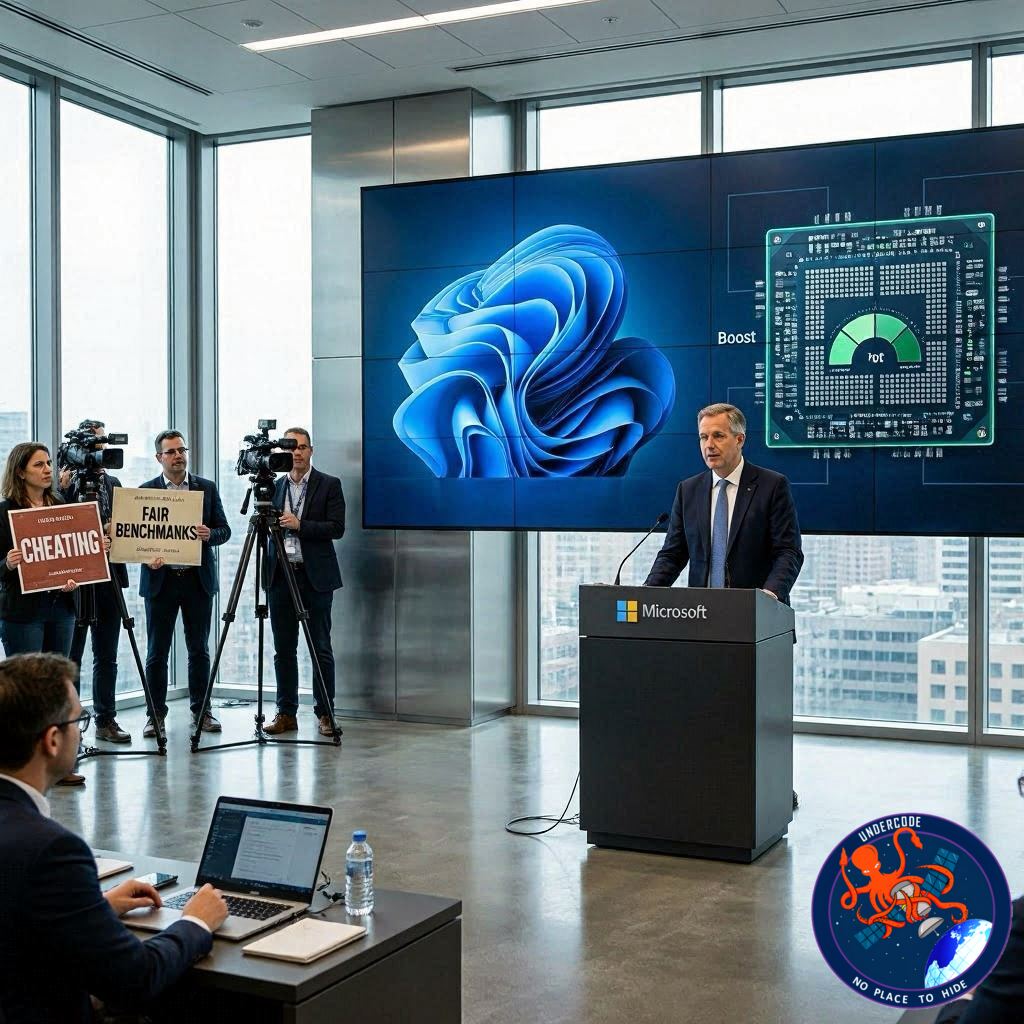 Microsoft’s New Windows 11 Performance Trick Sparks Debate Across the Tech Industry
Microsoft has once again found itself at the center of controversy after introducing a new Windows 11 performance optimization feature designed to make apps and menus feel faster and more responsive. The feature, known internally as “Low Latency Profile,” temporarily boosts CPU speed for a few seconds whenever users open applications, access the Start menu, or interact with core interface elements.
What should have been seen as a technical improvement quickly turned into another online battle between Microsoft supporters and critics. Some users accused the company of “faking” responsiveness rather than solving Windows 11’s deeper performance issues. Others argued that Microsoft was simply using a modern computing technique already common across macOS, Linux, Android, and iPhones.
The backlash became intense enough that Scott Hanselman, Microsoft Vice President and member of the Windows engineering effort, publicly responded to critics on X. His response was direct, technical, and at times sarcastic. According to Hanselman, dynamic CPU boosting is not a cheat or shortcut. Instead, it is a standard mechanism used across modern operating systems to reduce latency and improve perceived responsiveness.
Hanselman emphasized that smartphones already perform this type of optimization constantly. Every touch on a phone screen temporarily wakes processor cores, increases clock speeds, renders animations, and then quickly drops back into low-power states. The same philosophy, he explained, now powers Microsoft’s approach inside Windows 11.
The Low Latency Profile feature works by briefly accelerating processor performance for around one to three seconds during user interactions. Early testing reportedly shows noticeable improvements in responsiveness, particularly when opening applications or navigating Windows menus. Microsoft believes these tiny bursts of speed create a smoother and more polished user experience without significantly affecting battery life.
However, the controversy surrounding this feature reveals a much larger problem for Microsoft. The criticism is not only about CPU boosting. It is also about trust. Many Windows users have spent years complaining about sluggish performance, inconsistent updates, bloated system components, and resource-heavy web-based apps inside Windows 11. Because of this history, even legitimate improvements are now being met with suspicion.
The criticism intensified after some users argued that Microsoft should focus on fixing the operating system’s deeper inefficiencies instead of masking delays with temporary CPU acceleration. Critics described the feature as a “band-aid” solution rather than a genuine architectural improvement. Windows 11 has often been criticized for excessive background activity, memory consumption, and interface lag, especially compared to lightweight versions of Windows from earlier generations.
Despite the backlash, Hanselman maintained that Microsoft is simply applying modern computer science principles already adopted by Apple, Linux distributions, and smartphone manufacturers. He specifically pointed out that Apple devices use similar techniques extensively, yet users rarely criticize the company for doing so. His comments highlighted what he sees as an unfair double standard in public reactions toward Microsoft.
One particularly viral exchange involved a critic mocking the idea of smartphones constantly boosting CPU power for responsiveness. Hanselman responded bluntly, explaining that this behavior already happens continuously on modern phones. Dynamic frequency scaling, temporary performance bursts, and intelligent task prioritization have become essential components of modern computing efficiency. Without them, devices would either feel slow or waste enormous amounts of power by running at maximum speed permanently.
Beyond the public arguments, the feature also raises interesting questions about Windows 11’s development priorities. Many users are asking why Microsoft waited this long to implement a system that competing platforms have reportedly used for years. If this technology is so standard across modern operating systems, why wasn’t it integrated earlier into Windows 11?
The likely answer involves balancing performance against battery efficiency. Aggressive CPU boosting can negatively affect thermals and battery longevity if poorly implemented. Microsoft appears to believe that modern laptop hardware has finally reached a point where these micro-boosts can occur without major power penalties. Internal reports suggest the battery impact should remain minimal, especially on newer devices with advanced power management systems.
Interestingly, Microsoft engineers reportedly expect the feature to perform especially well on ARM-based Windows laptops powered by Snapdragon processors. ARM chips are generally more efficient at switching between power states quickly, making them ideal candidates for rapid burst-performance workloads. This could become another important advantage for the growing Windows-on-ARM ecosystem.
The broader industry context also matters here. Operating systems today are increasingly designed around perceived responsiveness rather than raw benchmark numbers. Users care more about how quickly menus open, how smooth animations feel, and how responsive applications appear during interaction. Tiny delays can psychologically make a device feel outdated even when the hardware itself is powerful. Microsoft’s new feature directly targets that perception gap.
At the same time, Windows users remain cautious. Years of inconsistent updates and controversial design decisions have weakened confidence in Microsoft’s ability to deliver polished experiences. Features like Low Latency Profile may technically make sense, but convincing users emotionally is a completely different challenge. Microsoft now faces the difficult task of rebuilding credibility while simultaneously modernizing Windows for a new era of AI-powered computing and ARM hardware.
What Undercode Say:
Microsoft’s response to criticism reveals something deeper than a simple performance tweak. This entire debate exposes the widening disconnect between modern operating system engineering and public understanding of how computers actually work today.
The reality is that “fake responsiveness” has become one of the foundations of modern UX design. Almost every major operating system manipulates performance states dynamically to create the illusion of instant reaction. Apple mastered this years ago with macOS and iOS. Android manufacturers rely heavily on scheduler optimization and burst-frequency scaling. Linux desktop environments increasingly prioritize interactivity using kernel scheduling tweaks. Microsoft is not inventing anything unusual here.
The reason users are reacting negatively has less to do with technology and more to do with reputation fatigue. Windows users have accumulated years of frustration involving forced updates, telemetry concerns, bloated UI layers, inconsistent performance, and unfinished features. Once trust erodes, even intelligent improvements are interpreted as suspicious behavior.
What makes this situation fascinating is that Microsoft is technically correct while still failing emotionally with its audience. That is a dangerous place for any technology company to exist.
Modern operating systems no longer pursue constant maximum performance because doing so would destroy battery life and generate unnecessary heat. Instead, systems intelligently predict human interaction patterns. Your laptop already “guesses” when you are about to click something important. Your smartphone already boosts clocks before animations begin. Your browser already prioritizes foreground tabs while deprioritizing background tasks. This is not cheating. This is adaptive computing.
The criticism also exposes how benchmark culture has distorted public expectations. Many users still imagine performance as a static number rather than a dynamic behavioral system. But modern CPUs are no longer designed to run at fixed speeds. They constantly move between power states hundreds or thousands of times per second. Burst performance is literally how processors are engineered today.
Another critical factor is Windows 11’s heavy reliance on layered software frameworks. Compared to older Windows versions, the operating system now depends more heavily on web technologies, background services, visual effects, and abstraction layers. That design increases flexibility but also creates responsiveness challenges. Microsoft’s Low Latency Profile appears to be an attempt to compensate for these architectural complexities.
Interestingly, Apple rarely receives backlash for similar behavior because Apple controls both hardware and software. Users perceive optimization as elegance when Apple does it. When Microsoft does something similar across countless hardware configurations from different manufacturers, people interpret it as patchwork engineering. The perception gap is enormous.
There is also a strategic business angle behind this move. Microsoft desperately wants Windows-on-ARM to succeed. Snapdragon-powered devices depend heavily on rapid power-state switching, which aligns perfectly with Low Latency Profile behavior. In many ways, this feature feels like preparation for the next generation of Windows laptops rather than merely a fix for current PCs.
The future of operating systems is increasingly about prediction instead of reaction. AI scheduling, adaptive performance scaling, intelligent caching, and latency prioritization will define next-generation computing experiences. Microsoft is trying to move toward that future while carrying decades of legacy baggage.
One overlooked issue is psychological responsiveness. Humans perceive delays extremely aggressively. Even a delay of 100 milliseconds can make software feel “slow.” Companies spend billions optimizing animations, rendering pipelines, and interaction timing because perceived smoothness influences satisfaction more than raw computational power. Microsoft understands this very well.
Still, critics are not entirely wrong. Temporary CPU boosting does not solve deeper inefficiencies within Windows 11 itself. Heavy system processes, unnecessary background services, and fragmented interface frameworks remain genuine concerns. A smoother Start menu cannot fully hide structural complexity beneath the operating system.
This creates a paradox for Microsoft. The company must improve responsiveness immediately to satisfy users while simultaneously rebuilding Windows architecture for long-term efficiency. Those are two very different engineering battles happening at the same time.
Another important aspect is battery anxiety. Laptop users are extremely sensitive to anything involving CPU boosting because they associate higher clock speeds with overheating and battery drain. Microsoft’s biggest challenge will be proving that the feature remains power-efficient in real-world scenarios.
Hanselman’s aggressive online responses also reveal Microsoft’s growing frustration with public perception. Engineers inside the company likely feel they are being criticized for implementing industry-standard techniques while competitors receive praise for similar strategies. From a technical perspective, that frustration is understandable.
The bigger question is whether Windows 11 can ever fully escape its current reputation cycle. Once users begin expecting disappointment, every new feature becomes politically charged. Even beneficial optimizations become controversial. That may ultimately be Microsoft’s hardest challenge, harder than coding the feature itself.
📊 Prediction
Microsoft will likely expand Low Latency Profile far beyond app launches over the next two years. Future versions of Windows could dynamically predict user behavior using AI-assisted scheduling systems, especially on ARM-based laptops. 🚀
Snapdragon-powered Windows devices may become the primary showcase for these optimizations, giving Microsoft stronger competition against Apple Silicon MacBooks. If battery efficiency remains stable, this feature could quietly become one of Windows 11’s most important under-the-hood improvements. 💻
However, public acceptance will depend less on technical success and more on whether Microsoft finally addresses the deeper performance and trust issues surrounding Windows itself. ⚡
🔍 Fact Checker Results
✅ Modern operating systems including macOS, Linux, Android, and iOS already use dynamic CPU boosting and task prioritization techniques.
✅ Microsoft’s Low Latency Profile temporarily boosts CPU performance for faster responsiveness during interactions.
❌ Claims that Microsoft is “faking” performance are misleading because adaptive frequency scaling is a standard industry-wide computing practice.
🕵️📝Let’s dive deep and fact‑check.
References:
Reported By: www.techradar.com
Extra Source Hub (Possible Sources for article):
https://www.stackexchange.com
Wikipedia
OpenAi & Undercode AI
Image Source:
Unsplash
Undercode AI DI v2
Bing
🔐JOIN OUR CYBER WORLD [ CVE News • HackMonitor • UndercodeNews ]
📢 Follow UndercodeNews & Stay Tuned:
𝕏 formerly Twitter 🐦 | @ Threads | 🔗 Linkedin | 🦋BlueSky | 🐘Mastodon


