
Listen to this Post
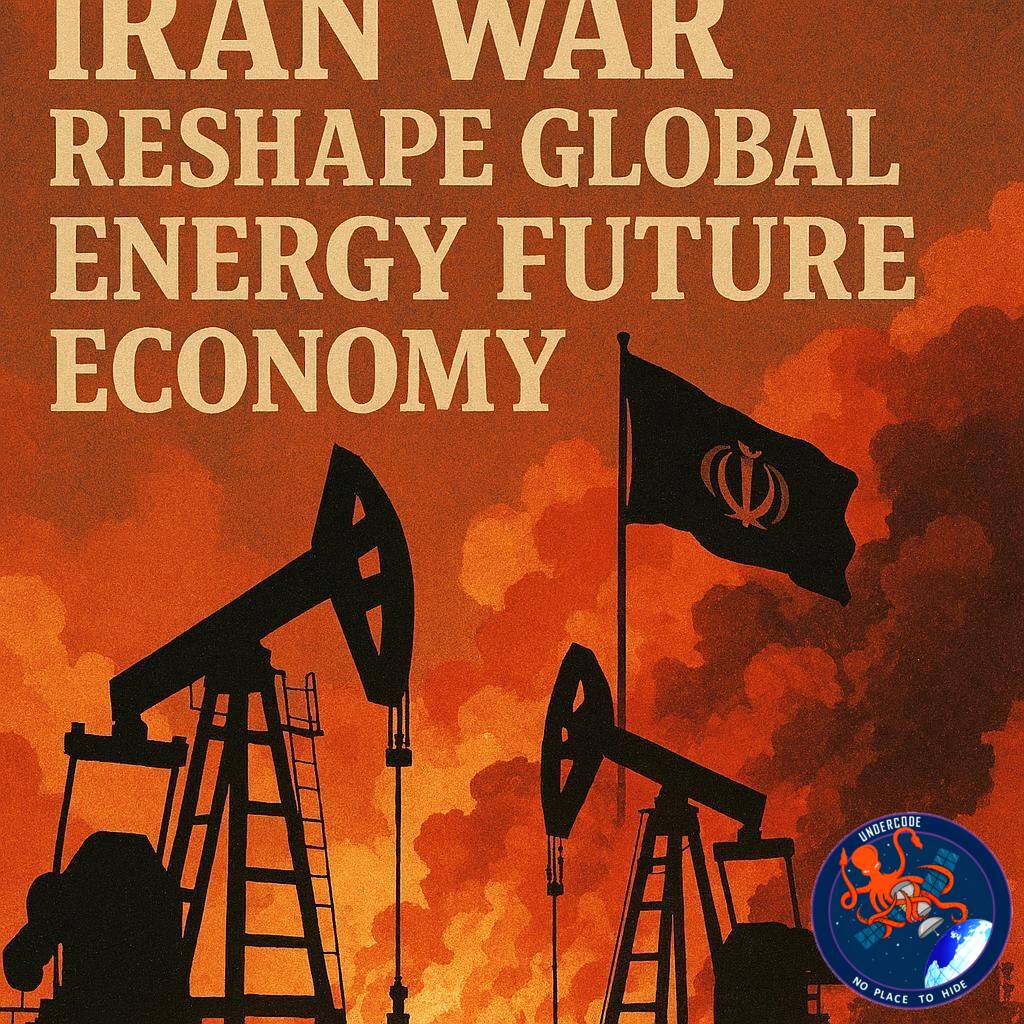 Introduction: A Conflict That May Redraw the World’s Economic Map
Wars are usually measured in destruction, instability, and human suffering, but history also shows that major conflicts often leave behind structural economic shifts that reshape global systems for decades. The ongoing Iran war is no exception. While its immediate consequences are undeniably painful, a growing number of economists argue that its long-term effects could fundamentally transform how the world produces, transports, and consumes energy.
At the center of this debate is a paradox: the longer the conflict disrupts global oil flows—especially through critical chokepoints like the Strait of Hormuz—the stronger the incentive becomes for nations to redesign energy supply chains. This includes reducing dependence on unstable regions, expanding pipeline infrastructure, accelerating renewable energy adoption, and weakening traditional oil cartels. In other words, short-term chaos may be forcing long-term adaptation.
the Original
The Iran war, though devastating in human and economic terms, may unintentionally push the global economy toward long-term structural improvements. One of the most significant vulnerabilities exposed by the conflict is the world’s reliance on narrow maritime chokepoints, particularly the 23-mile-wide Strait of Hormuz, through which a large portion of global oil passes. Iran’s ability to disrupt this route highlights how fragile global energy logistics truly are.
In response, countries are likely to invest heavily in alternative infrastructure, including pipelines running through Saudi Arabia and the United Arab Emirates to bypass the Strait altogether. Experts suggest this would reduce geopolitical risk and lower long-term transportation and insurance costs for oil shipments.
Another expected consequence is the weakening or even fragmentation of OPEC, the oil cartel that has historically controlled supply and helped stabilize high prices. If OPEC’s influence declines, global energy markets could become more competitive and potentially cheaper.
At the same time, the war is accelerating the transition to renewable energy sources. Nations are increasingly investing in solar, wind, and battery technologies to reduce dependence on fossil fuels, especially those sourced from politically unstable regions. China, for instance, has already recorded record exports of clean energy technologies.
The United States may benefit strategically, as its abundant natural gas reserves and export capacity position it as a more reliable supplier in a shifting global energy landscape. However, not all outcomes are positive: disruptions could harm traditional oil-producing regions like Texas, and the collapse of coordinated oil management systems could create new volatility in future crises.
Ultimately, while Iran’s actions and the war’s outcome remain uncertain, economists agree that significant structural changes in global energy systems are already underway, driven by the shock of conflict and the need for greater resilience.
What Undercode Say:
Structural Shock as a Catalyst for Global Energy Rebalancing
The Iran war is not just a geopolitical confrontation; it is functioning as a stress test for the entire global energy architecture. Systems that once appeared stable—oil shipping routes, cartel coordination, and centralized supply chains—are revealing deep structural fragility under pressure. Historically, such shocks rarely go to waste. Instead, they force governments and corporations to redesign systems that had long relied on efficiency over resilience. The Strait of Hormuz, once treated as a permanent fixture of global trade, is now being reconsidered as a strategic liability.
The Decline of Single-Point Energy Vulnerabilities
One of the most important long-term consequences is the global shift away from chokepoint dependency. The idea that a narrow waterway could influence global oil prices and trigger worldwide inflation is no longer acceptable to policymakers. This is pushing massive investment into bypass infrastructure such as alternative pipelines across the Arabian Peninsula. The underlying logic is simple: redundancy is becoming more valuable than efficiency. Energy security is now defined less by cost optimization and more by geopolitical insulation.
OPEC’s Gradual Erosion and Market Fragmentation
OPEC’s influence has already begun weakening, and the Iran war accelerates that trend. As major producers diversify strategies and some members distance themselves from coordinated quotas, the cartel’s ability to stabilize or manipulate prices diminishes. This creates a more fragmented but potentially more transparent global oil market. However, fragmentation also removes a stabilizing mechanism that has historically prevented extreme price volatility during crises.
Renewable Energy Acceleration Driven by Geopolitical Fear
The war indirectly strengthens the case for renewable energy. Solar, wind, and battery technologies are no longer driven solely by climate policy but by national security considerations. Countries now view energy independence as a strategic defense mechanism. This shift is especially visible in Asia and Europe, where governments are rapidly scaling non-fossil infrastructure to avoid exposure to Middle Eastern instability.
United States Strategic Positioning in a Reordered System
The United States stands to gain relative advantage due to its natural gas abundance and export infrastructure. As global buyers seek more politically stable suppliers, U.S. energy exports become increasingly central. However, this advantage is conditional and temporary if global demand shifts heavily toward renewables in the long run. The U.S. may benefit in the transition phase but could face long-term structural decline in fossil fuel dominance.
The Hidden Cost of “Stability Through Disruption”
Although these transformations are often framed as positive, they are born from instability and violence. The economic gains discussed are long-horizon and probabilistic, while the human costs are immediate and irreversible. This creates a moral contradiction: systems may become more efficient and resilient because they were first broken under extreme pressure.
The Risk of New Vulnerabilities Emerging Elsewhere
Even if the Strait of Hormuz becomes less central, geopolitical pressure does not disappear—it shifts. Iran and other actors may redirect leverage toward alternative shipping routes, cyber infrastructure, or energy networks elsewhere. In this sense, vulnerability is not eliminated, only redistributed across the global system.
Long-Term Energy Price Uncertainty
While diversification and increased supply routes may lower costs over time, the transition period is likely to be volatile. Oil prices may swing unpredictably as markets adjust to new supply chains, changing alliances, and evolving demand patterns. Stability, if it arrives, will likely be delayed by a decade or more of restructuring.
What This Means for Global Economic Architecture
The Iran war may ultimately be remembered less for its battlefield outcomes and more for its role in accelerating the end of a centralized fossil-fuel-dominated global economy. In its place, a decentralized, multi-source, geopolitically distributed energy system is emerging—one that prioritizes resilience over optimization and redundancy over efficiency.
Fact Checker Results
Energy System Vulnerability Claim Assessment
✔ The Strait of Hormuz is indeed one of the world’s most critical oil transit chokepoints.
OPEC Influence Trend Verification
✔ OPEC’s market influence has shown signs of fluctuation due to internal divergence among members.
Renewable Energy Acceleration
✔ Global investment in solar and battery technology has increased significantly in recent years.
📊 Prediction
Short-Term Market Volatility and Energy Shockwaves
Energy markets are likely to experience continued instability as supply chains adjust and geopolitical tensions remain unresolved.
Mid-Term Infrastructure Overhaul Across the Middle East
Major pipeline projects and regional energy diversification strategies are expected to expand significantly within 5–10 years.
Long-Term Shift Toward Decentralized Energy Systems
Global dependence on single-region oil supply chains will steadily decline, replaced by a more distributed mix of renewables, gas, and diversified fossil fuel sources.
🕵️📝Let’s dive deep and fact‑check.
References:
Reported By: edition.cnn.com
Extra Source Hub (Possible Sources for article):
https://www.reddit.com
Wikipedia
OpenAi & Undercode AI
Image Source:
Unsplash
Undercode AI DI v2
Bing
🔐JOIN OUR CYBER WORLD [ CVE News • HackMonitor • UndercodeNews ]
📢 Follow UndercodeNews & Stay Tuned:
𝕏 formerly Twitter 🐦 | @ Threads | 🔗 Linkedin | 🦋BlueSky | 🐘Mastodon


