
Listen to this Post
Introduction
Over the past twenty years, cybersecurity has transformed from a niche technical concern into a central pillar of global business strategy and national security. What once lived in server rooms and specialized IT teams now sits at the highest decision-making tables of corporations and governments. The role of the CISO has expanded far beyond technical defense, becoming a symbol of resilience, trust, and risk governance. This transformation did not happen by accident. It was shaped by individuals whose actions, ideas, breakthroughs, and controversies redefined how the digital world understands security.
Comprehensive the Original
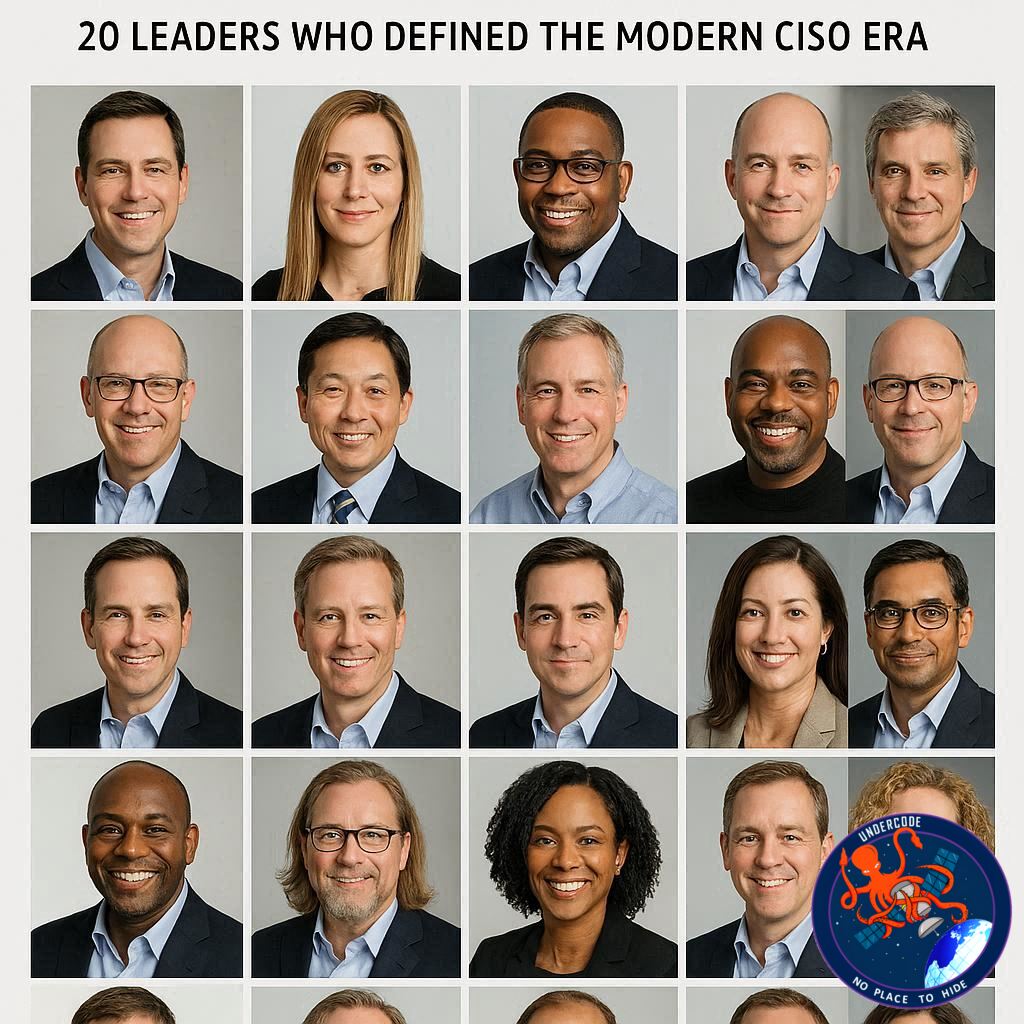
Since its launch in 2006, Dark Reading has documented the evolution of cybersecurity as it unfolded in real time. Its 20th anniversary retrospective highlights how the industry moved from reactive defense to structured, board-level risk management driven by the modern CISO. The article profiles 20 influential figures who shaped this transformation, including pioneers, researchers, policymakers, whistleblowers, and even convicted hackers whose actions forced the industry to evolve. Early figures like Steve Katz and Howard Schmidt helped define cybersecurity as a business and national security function, establishing the foundation of today’s CISO role. Over time, the scope of cybersecurity expanded dramatically, influenced by technological growth, rising cybercrime, and the increasing interconnectedness of systems. Figures such as Dan Kaminsky demonstrated how single vulnerabilities could threaten global infrastructure, while Barnaby Jack exposed the dangers hidden in physical devices like ATMs and medical equipment. Others, such as Troy Hunt, democratized breach awareness through public tools that allow individuals to check if their data has been compromised. The evolution of cybercrime is illustrated through cases like Albert Gonzalez, whose large-scale theft of payment data marked a turning point in understanding cybercrime as an organized, profit-driven industry. At the same time, legal and policy voices like Jennifer Granick fought to protect digital rights and ensure ethical boundaries in security research. The article also highlights Marcus Hutchins, whose role in stopping WannaCry showed the complex duality of hackers as both threats and defenders. Industry-defining tools and frameworks emerged from figures like HD Moore, Katie Moussouris, and Kevin Mandia, who helped formalize vulnerability disclosure, incident response, and threat intelligence practices. Government cybersecurity was shaped by leaders like Chris Krebs and Howard Schmidt, who bridged public and private sector collaboration. Meanwhile, controversial figures such as Edward Snowden exposed the tensions between surveillance, privacy, and national security. The modern CISO role itself was born from Steve Katz’s early recognition that cybersecurity is fundamentally about managing business risk. Across all these stories, a consistent theme emerges: cybersecurity is no longer just about systems and code, but about trust, accountability, and global digital stability. The article ultimately presents a mosaic of individuals whose combined influence created the framework for today’s cyber defense ecosystem.
What Undercode Say:
The evolution of cybersecurity over the last two decades reflects a deeper structural shift in how digital societies function, rather than just a technical upgrade cycle. What stands out most is not the technology itself, but the repeated pattern of crisis-driven innovation. Major breaches, public exploits, and even criminal investigations consistently acted as catalysts that forced institutions to modernize. The emergence of the CISO role is a direct response to this pressure, transforming cybersecurity from a reactive IT function into a strategic governance layer. This shift also reveals a tension between visibility and control. Figures like Troy Hunt made breaches visible to the public, democratizing awareness but also increasing pressure on organizations to respond transparently. Meanwhile, incident responders like Kevin Mandia professionalized crisis handling, turning chaos into structured response systems that now define enterprise resilience. Another key insight is the blurred boundary between attacker and defender. Individuals like Marcus Hutchins and Kevin Mitnick illustrate how expertise often evolves through ethical ambiguity before becoming institutionalized into defensive capability. This duality suggests that cybersecurity progress is not linear but cyclical, driven by adversarial learning loops.
At the policy level, the work of Chris Krebs, Howard Schmidt, and Jennifer Granick shows that cybersecurity cannot exist in isolation from governance and civil liberties. Their contributions highlight that security decisions are inherently political, especially when they intersect with elections, surveillance, and national infrastructure. On the technical side, pioneers like HD Moore and Katie Moussouris institutionalized vulnerability disclosure and exploit research, effectively turning informal hacker knowledge into structured industry frameworks. This formalization of vulnerability ecosystems has significantly reduced the chaos of early internet security, but it has also created new dependencies on coordinated disclosure systems and corporate cooperation.
Another important dimension is the industrialization of cybercrime. The case of Albert Gonzalez represents a turning point where hacking transitioned from curiosity-driven activity into scalable criminal enterprise. This shift forced both law enforcement and corporations to rethink cyber defense as a financial risk model rather than a purely technical problem. Similarly, Barnaby Jack’s physical device research expanded cybersecurity into the physical world, revealing that digital vulnerabilities can directly translate into real-world harm, from financial systems to medical devices.
From a strategic perspective, the most significant transformation is the integration of cybersecurity into business leadership. Steve Katz’s early framing of cybersecurity as business risk management laid the foundation for today’s executive-level security discussions. This evolution continues today with cloud security, identity-centric models, and AI-driven threats, where leaders like Chenxi Wang are shaping the next phase of enterprise security architecture. Overall, the industry has matured into a complex ecosystem where technology, policy, economics, and human behavior intersect continuously.
Fact Checker Results
Cybersecurity has evolved from technical IT concern into executive-level business risk management.
Many key industry frameworks like vulnerability disclosure and incident response were developed between 2000 and 2020.
The article accurately reflects major historical cybersecurity events and figures without major factual inconsistencies.
Prediction
Cybersecurity in the next decade will become even more automated, driven heavily by AI-based threat detection and autonomous defense systems.
The CISO role will likely evolve into a broader “digital risk executive” overseeing not just security but AI governance and data integrity.
Cybercrime will continue to industrialize, pushing governments and enterprises toward deeper global coordination and real-time defense ecosystems.
🕵️📝Let’s dive deep and fact‑check.
References:
Reported By: www.darkreading.com
Extra Source Hub (Possible Sources for article):
https://www.medium.com
Wikipedia
OpenAi & Undercode AI
Image Source:
Unsplash
Undercode AI DI v2
Bing
🔐JOIN OUR CYBER WORLD [ CVE News • HackMonitor • UndercodeNews ]
📢 Follow UndercodeNews & Stay Tuned:
𝕏 formerly Twitter 🐦 | @ Threads | 🔗 Linkedin | 🦋BlueSky | 🐘Mastodon


