
Listen to this Post
🎯 Introduction
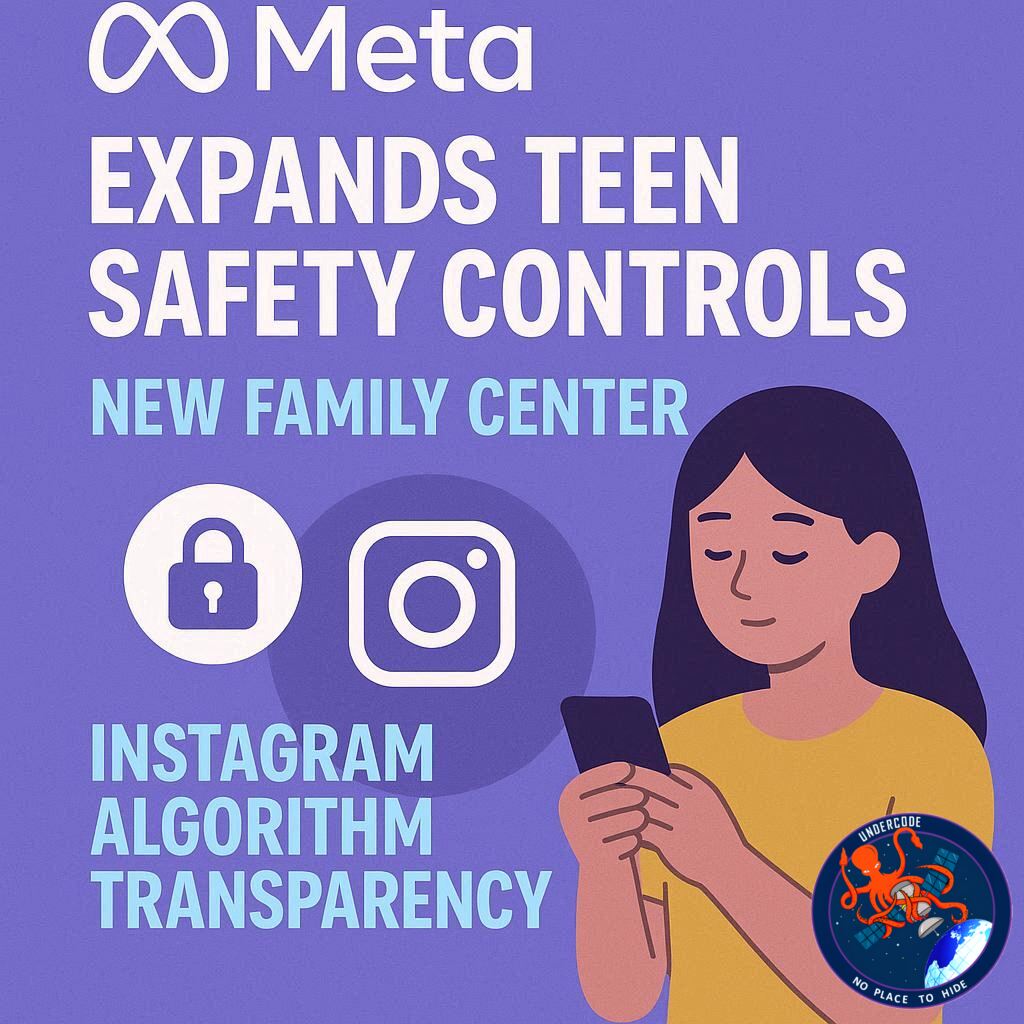
Meta is pushing deeper into digital safety for teenagers by introducing a major upgrade to its parental supervision ecosystem. The company announced a new centralized Family Center that combines supervision tools across Instagram, Facebook, Messenger, and Meta Horizon into a single dashboard. At the same time, Meta is opening part of Instagram’s recommendation system to parents, allowing them to better understand the interests and topics shaping their teen’s algorithm.
The move reflects growing global pressure on social media companies to provide stronger protections for younger users while also giving parents more meaningful oversight. Instead of relying only on screen-time restrictions or privacy settings, Meta is now attempting to create a more transparent environment where parents can see how teen interests influence the content they consume every day.
Meta Introduces a Unified Family Center for Parents
Meta has officially rolled out a redesigned Family Center that acts as a centralized hub for parental supervision across all of the company’s major platforms. Parents no longer need to jump between Instagram, Facebook, Messenger, and Meta Horizon to manage safety settings or monitor activity. Everything is now accessible from one location.
The system is designed to simplify digital parenting. Through a single supervision invitation, guardians can connect and monitor their teen’s activity across multiple Meta apps simultaneously. This significantly reduces friction for families who previously had to configure each application separately.
Meta says the update is part of its broader mission to make online experiences safer and more manageable for teenagers while reducing the complexity faced by parents trying to understand evolving social media environments.
Instagram Algorithm Visibility Becomes More Transparent
One of the most notable additions is Meta’s decision to expose more information about Instagram’s recommendation algorithm to parents. The company is expanding the “Your Algorithm” feature, originally introduced in December, which allows users to customize what types of content they want to see more or less frequently on Reels and Explore.
Now, parents can access broader insight into the categories and interests influencing their teen’s Instagram feed. This includes general topics such as basketball, photography, musicals, fashion, gaming, fitness, and other areas that affect content recommendations.
Meta believes this visibility can help families have more productive discussions about online behavior and digital interests instead of relying purely on restrictions or punishments.
Notifications Will Alert Parents to New Teen Interests
Meta also revealed an upcoming feature that will notify parents when their teen adds a new interest category to Instagram’s algorithm preferences. For example, if a teenager begins engaging heavily with sports content or photography pages, parents may receive a notification explaining why content recommendations are changing.
This approach marks a shift from passive monitoring to contextual supervision. Rather than only seeing usage statistics, parents gain insight into behavioral patterns and evolving digital interests.
The company emphasizes that these insights remain broad rather than invasive. Parents are shown general categories instead of detailed browsing histories or private interactions.
Teen Account Protections Remain Active
The new transparency features operate alongside Meta’s existing Teen Account protections. These protections already include stricter default privacy settings, limitations on who can contact teenagers, and stronger content moderation systems intended to block harmful or age-inappropriate material.
Meta stated that certain sensitive or policy-violating topics will never appear in teen recommendations because of its built-in safety filters and Community Standards enforcement.
The company continues to position Teen Accounts as a foundational safety layer designed specifically for younger audiences navigating social media.
Growing Adoption of Supervision Tools
Meta says usage of its parental supervision features is growing rapidly. According to the company, the number of teenagers in the United States enrolled in Instagram supervision has more than doubled compared to last year.
This increase suggests that parents are becoming more engaged in understanding how recommendation systems and social media habits influence teenage behavior. It also indicates that digital supervision is becoming normalized rather than treated as an emergency-only tool.
The expansion of Family Center globally shows Meta sees parental oversight as a long-term product category rather than a temporary response to criticism.
A Broader Strategy to Rebuild Trust
The latest announcement is not only about safety features. It is also part of Meta’s ongoing effort to rebuild trust with regulators, educators, and families after years of criticism over teen mental health concerns linked to social media.
Governments worldwide have increased pressure on platforms to improve child safety protections, increase algorithm transparency, and reduce exposure to harmful content. By giving parents partial visibility into recommendation systems, Meta appears to be addressing one of the most controversial aspects of modern social media: opaque algorithms that shape user behavior without explanation.
The Family Center initiative positions Meta as a company trying to balance personalization, engagement, and parental control in a more transparent framework.
What Undercode Say:
Meta’s latest move reveals something larger than a simple feature update. The company understands that the future battle over social media will not only be about entertainment or engagement metrics. It will be about trust, especially parental trust.
For years, recommendation algorithms operated like black boxes. Teenagers consumed content endlessly while parents had almost no understanding of why certain videos, posts, or trends suddenly dominated their child’s feed. Meta is now attempting to partially open that box.
This is strategically important because algorithms have become the invisible architects of online behavior. They shape identity, interests, attention spans, and even emotional states. When a teenager starts interacting with specific topics repeatedly, the algorithm reinforces those behaviors aggressively. Over time, that can create powerful digital feedback loops.
By exposing interest categories to parents, Meta is indirectly acknowledging that algorithms themselves are influential behavioral systems, not just neutral content delivery tools.
There is also a strong regulatory angle behind this rollout. Around the world, lawmakers are demanding greater transparency from technology companies. Europe, the United States, and several Asian markets are debating legislation tied to teen safety, addictive platform design, and algorithm accountability.
Meta likely understands that voluntary transparency looks far better than forced compliance later.
Another interesting detail is how carefully Meta frames these parental insights. The company avoids giving parents invasive surveillance capabilities. Instead, it focuses on “general interests” and “conversation starters.” This is intentional.
Too much surveillance would create backlash from teenagers and privacy advocates. Too little visibility would frustrate parents. Meta is trying to sit directly in the middle.
The expansion of Family Center also reveals Meta’s long-term ecosystem strategy. Instagram, Facebook, Messenger, and Horizon are no longer treated as isolated products. Meta wants families to experience them as interconnected environments managed through one control system.
That approach mirrors broader trends in technology ecosystems where companies increasingly centralize account management, privacy controls, subscriptions, and monitoring features into unified dashboards.
There is also a psychological dimension to these tools. Parents often feel technologically outpaced by modern platforms. Many understand screen-time issues but struggle to grasp algorithmic influence. Meta’s new system attempts to simplify a highly technical concept into understandable categories like sports, music, photography, or entertainment.
This could reduce anxiety among parents who previously felt disconnected from their teen’s online life.
However, the system is not without limitations.
Showing interest categories does not necessarily explain the emotional or psychological impact of content exposure. Two teenagers interested in the same topic may encounter vastly different types of material. One photography feed may promote creativity and learning, while another may prioritize unrealistic lifestyles or influencer culture.
Algorithms are not only shaped by interests. They are shaped by engagement intensity, emotional reactions, watch time, peer interaction, and trend momentum.
Meta’s transparency therefore remains partial, not complete.
There is also the broader issue of dependency on platform-based parenting tools. Families increasingly rely on social media companies themselves to provide digital safety mechanisms. That creates an unusual dynamic where the same companies designing addictive engagement systems also position themselves as guardians against those systems.
Critics may argue this represents conflict rather than accountability.
Still, the rollout demonstrates that major platforms can no longer ignore parental expectations. Teen safety has evolved from a public relations issue into a competitive business factor.
The companies that provide the best transparency, moderation, and family controls may eventually gain stronger public trust and regulatory flexibility.
Meta is clearly trying to lead that race before stricter laws force every platform to follow similar standards.
📊 Prediction
Meta will likely continue expanding Family Center into a full behavioral analytics dashboard for parents over the next two years. 📱
Future updates may include emotional wellbeing insights, AI-generated safety summaries, and cross-platform activity patterns that combine Instagram, Messenger, and virtual reality environments. 🔍
Other social media competitors will almost certainly introduce similar algorithm transparency tools as pressure from regulators and families intensifies globally. 🚀
🔍 Fact Checker Results
✅ Meta officially launched centralized supervision tools through Family Center across Instagram, Facebook, Messenger, and Meta Horizon.
✅ Parents can now view broader topic categories influencing their teen’s Instagram algorithm.
❌ Meta has not provided parents direct access to private messages, exact browsing histories, or full algorithmic data streams.
▶️ Related Video (82% Match):
🕵️📝Let’s dive deep and fact‑check.
References:
Reported By: about.fb.com
Extra Source Hub (Possible Sources for article):
https://www.pinterest.com
Wikipedia
OpenAi & Undercode AI
Image Source:
Unsplash
Undercode AI DI v2
Bing
🔐JOIN OUR CYBER WORLD [ CVE News • HackMonitor • UndercodeNews ]
📢 Follow UndercodeNews & Stay Tuned:
𝕏 formerly Twitter 🐦 | @ Threads | 🔗 Linkedin | 🦋BlueSky | 🐘Mastodon


