
Listen to this Post
Introduction
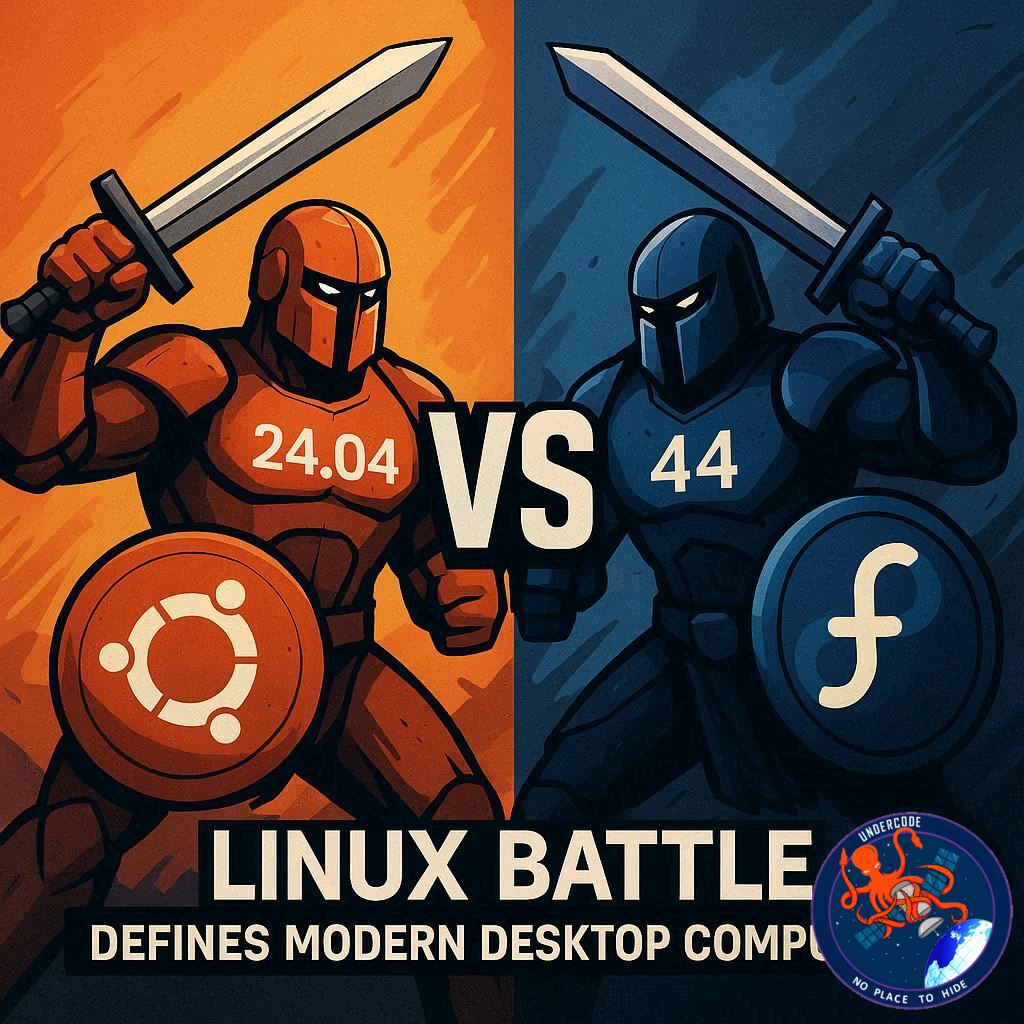
The rivalry between Ubuntu and Fedora has shaped the Linux desktop ecosystem for nearly two decades. Both operating systems are respected, free, open-source, and trusted by millions of users worldwide, yet they represent completely different philosophies about how Linux should feel and evolve. Ubuntu focuses on accessibility, long-term reliability, and familiarity, while Fedora pushes innovation, speed, and a cleaner interpretation of the GNOME desktop experience.
As Linux adoption continues to grow among developers, gamers, creators, and ordinary desktop users, the comparison between Ubuntu 26.04 and Fedora 44 becomes more relevant than ever. These two distributions no longer cater only to programmers or system administrators. They now compete directly as polished desktop operating systems capable of replacing Windows or macOS for daily use.
After extensive testing and long-term usage, the differences become clearer. Ubuntu offers a comfortable and predictable environment designed to welcome newcomers, while Fedora delivers a sharper, faster, and more modern Linux experience that feels remarkably refined without sacrificing stability.
Ubuntu 26.04 Brings Stability and Familiarity to the Forefront
Ubuntu 26.04, known as “Resolute Raccoon,” continues Canonical’s long-standing philosophy of delivering Linux to the masses with simplicity and long-term dependability. Built on Debian and released as a Long-Term Support edition, Ubuntu 26.04 receives updates until April 2031, making it one of the safest choices for users who prefer stability over constant experimentation.
One of Ubuntu’s greatest strengths is consistency. The desktop environment has remained visually recognizable for years, creating a sense of familiarity that reduces the learning curve for returning users. Canonical’s decision to abandon Unity years ago and redesign GNOME to preserve the old Ubuntu workflow turned out to be one of the company’s smartest moves.
The left-side dock remains a defining visual identity of Ubuntu, but the system also offers enough flexibility to adapt. Users can reposition the dock, transform it into a macOS-style launcher, or tweak the interface without needing advanced Linux knowledge. This balance between customization and simplicity is one of Ubuntu’s biggest advantages.
Ubuntu’s software ecosystem is another reason for its widespread popularity. Most Linux tutorials online are written with Ubuntu in mind, which means troubleshooting, installing applications, or configuring drivers is usually easier compared to smaller distributions. Hardware compatibility is also excellent, especially for laptops, Wi-Fi adapters, printers, and NVIDIA GPUs.
Performance on Ubuntu 26.04 feels polished and reliable rather than aggressively optimized. It may not always be the fastest Linux distribution available, but it rarely surprises users with instability. The operating system prioritizes predictability, which matters greatly for professionals, students, and business environments.
Security updates are streamlined and largely invisible to casual users. Canonical’s enterprise influence gives Ubuntu a professional edge that appeals to organizations deploying Linux across hundreds or thousands of machines.
The Ubuntu Software Center has also matured considerably. Modern Linux users no longer need to rely heavily on terminal commands because graphical application management has become accessible and clean. Snap packages remain controversial among advanced Linux users due to performance criticisms, but for average desktop users, they simplify software installation significantly.
Ubuntu 26.04 ultimately succeeds because it removes fear from Linux. It transforms an operating system once considered intimidating into something approachable and dependable.
Fedora 44 Delivers a Faster and Cleaner Linux Experience
Fedora 44 takes a very different approach. Instead of prioritizing familiarity, Fedora emphasizes modern Linux innovation while maintaining impressive stability. For years, Fedora carried the “bleeding edge” label, but that reputation no longer fully describes the project. Fedora today feels more like a carefully balanced showcase of future Linux technologies delivered in a stable environment.
The first thing many users notice is speed. Fedora 44 feels exceptionally responsive on modern hardware. Boot times are fast, animations are smooth, and application launches feel immediate. The combination of Fedora and vanilla GNOME creates an experience that is minimalist yet highly efficient.
Unlike Ubuntu, Fedora does not heavily customize GNOME. Users receive the desktop environment largely as the GNOME developers intended. This creates a cleaner aesthetic and a workflow centered around productivity instead of traditional desktop metaphors.
The GNOME overview system replaces the classic taskbar-oriented workflow used by Windows and older Linux environments. Initially, this can feel unfamiliar, but after adaptation, many users discover it improves multitasking efficiency considerably.
Fedora’s package management system, DNF, has also matured significantly. Older criticisms about Fedora being harder for beginners have weakened over time because graphical software management tools now handle most tasks elegantly. Terminal usage is no longer mandatory for everyday users.
Another major advantage is software freshness. Fedora ships newer kernels, updated drivers, and modern desktop packages faster than Ubuntu LTS releases. This makes Fedora particularly attractive for developers, gamers, and hardware enthusiasts who want newer technologies without sacrificing reliability.
Fedora also benefits from its close relationship with Red Hat. Many technologies that eventually shape enterprise Linux ecosystems first appear in Fedora. Users often experience tomorrow’s Linux innovations earlier through Fedora than through conservative distributions.
Gaming performance on Fedora has improved dramatically in recent years. Proton, Steam compatibility layers, updated Mesa graphics drivers, and Wayland improvements help Fedora become an increasingly powerful gaming platform.
Fedora’s security model also deserves attention. SELinux remains one of the strongest mandatory access control systems in Linux, giving Fedora an advanced security advantage that many users underestimate.
Despite its modern philosophy, Fedora no longer feels experimental in a dangerous way. It feels mature, polished, and increasingly user-friendly.
The Desktop Experience Defines the Real Difference
Technically, both Ubuntu 26.04 and Fedora 44 use GNOME. Yet emotionally and practically, they feel completely different.
Ubuntu attempts to reduce friction. It guides users gently into Linux with visual familiarity and accessible defaults. Fedora, meanwhile, embraces the modern GNOME philosophy more aggressively, encouraging users to adapt to a cleaner and more workflow-focused environment.
Ubuntu behaves like a carefully managed operating system designed for maximum compatibility and comfort. Fedora behaves like a modern workstation optimized for speed, simplicity, and current technology.
For beginners transitioning from Windows, Ubuntu may feel safer because it preserves recognizable desktop behaviors. Fedora may initially feel unusual, but many users eventually discover that GNOME’s workflow improves productivity once mastered.
The difference is psychological as much as technical. Ubuntu asks users to feel at home immediately. Fedora asks users to rethink how desktop computing should work.
Why Both Linux Distributions Continue to Dominate
The reason Ubuntu and Fedora remain dominant is because both distributions solved major Linux problems differently.
Ubuntu solved Linux accessibility. It introduced millions of users to Linux by simplifying installation, hardware support, and software management.
Fedora solved Linux modernization. It helped push the Linux desktop forward by embracing new technologies, better security systems, and cleaner desktop workflows.
This is why the Linux ecosystem benefits from both existing simultaneously. One attracts cautious users seeking reliability, while the other attracts users excited about innovation.
The competition between them has indirectly improved Linux itself.
What Undercode Say:
Ubuntu 26.04 and Fedora 44 reveal a deeper truth about the Linux ecosystem: modern Linux is no longer fighting for survival, it is fighting for identity.
Years ago, choosing Linux meant accepting compromise. Hardware support was inconsistent, gaming was weak, software installation was complicated, and desktop environments often felt fragmented. That era is disappearing rapidly. What remains now is a battle over philosophy rather than functionality.
Ubuntu understands mainstream psychology better than almost any Linux distribution. Most users do not want to “learn an operating system.” They want predictability. They want familiarity. They want something that behaves consistently for years without demanding technical attention. Canonical recognized this early and built Ubuntu around reducing anxiety.
Fedora represents the opposite philosophy. It assumes users are willing to evolve their workflow in exchange for cleaner design and faster innovation. Fedora’s adoption of modern Linux technologies often feels more confident and less constrained by legacy habits.
What becomes fascinating is how GNOME itself changes depending on which distribution ships it. Ubuntu transforms GNOME into something more traditional and approachable. Fedora preserves GNOME’s minimalist vision almost untouched. The same desktop environment becomes two entirely different experiences.
There is also an important industry angle hidden beneath this comparison. Ubuntu dominates tutorials, beginner documentation, cloud infrastructure, and commercial Linux visibility. Fedora dominates developer enthusiasm, Linux innovation discussions, and cutting-edge workstation deployments.
That divide matters because Linux adoption is expanding beyond programmers. Students, creators, AI developers, cybersecurity analysts, and gamers are entering the ecosystem faster than before. Their expectations are different from traditional Linux veterans.
Ubuntu remains strategically stronger for mass adoption because ecosystem familiarity matters enormously. When users search for Linux solutions online, Ubuntu-based instructions dominate search engines. That network effect becomes self-reinforcing.
However, Fedora is becoming increasingly influential among advanced desktop users because performance and freshness matter more in modern computing. Developers using AI tools, container systems, and new hardware often benefit from Fedora’s newer software stack.
Another overlooked factor is psychological design. Ubuntu feels emotionally safe. Fedora feels intellectually exciting. Those are two entirely different emotional experiences when interacting with technology daily.
Gaming could become a major battlefield between the two. Linux gaming is improving at a historic pace due to Valve’s Proton ecosystem and Steam Deck momentum. Fedora’s newer graphics stack gives it technical advantages for enthusiasts, while Ubuntu’s larger support ecosystem remains attractive for less technical gamers.
The Wayland transition also plays an important role here. Fedora embraced Wayland aggressively years earlier, while Ubuntu moved more cautiously. That difference reflects the core personalities of both projects. Fedora prefers technological progression. Ubuntu prioritizes broad compatibility.
Security philosophies differ too. Fedora’s SELinux integration offers stronger default protections, but Ubuntu focuses more on convenience and smoother user experience. This demonstrates how Linux distributions constantly balance power against accessibility.
There is also a branding difference. Ubuntu markets itself almost like a consumer operating system. Fedora feels more community-driven and technically oriented. That perception influences adoption patterns significantly.
Interestingly, many long-term Linux users eventually rotate between both distributions repeatedly. Ubuntu offers stability during work-heavy periods, while Fedora attracts users during phases where experimentation and optimization become more appealing.
This comparison also highlights how Linux desktop competition has matured. Modern Linux discussions are no longer about “which distro works.” Nearly all major distributions work well today. The conversation now revolves around workflow philosophy, update cadence, ecosystem design, and user psychology.
Fedora arguably delivers the cleaner Linux desktop experience in 2026. Ubuntu arguably delivers the safer and more practical experience. Which one feels superior depends heavily on whether a user values familiarity or progression more deeply.
The most important conclusion is that Linux itself has reached a level of polish where either choice can realistically replace proprietary operating systems for millions of people. That alone would have sounded unrealistic a decade ago.
The real winner in the Ubuntu vs Fedora rivalry is Linux desktop computing itself.
📊 Prediction
🚀 Fedora will continue gaining popularity among developers, gamers, and AI-focused users because of its faster adoption of modern Linux technologies and updated software ecosystem.
💻 Ubuntu will remain the dominant beginner-friendly Linux distribution due to its massive community support, enterprise partnerships, and long-term stability model.
🔥 The growing success of Linux gaming and AI workloads could push both distributions into mainstream desktop relevance far beyond traditional developer audiences over the next few years.
🔍 Fact Checker Results
✅ Ubuntu 26.04 is an LTS release with long-term support extending to 2031.
✅ Fedora 44 uses a largely vanilla GNOME desktop environment with minimal customization.
❌ Fedora is no longer accurately described as an unstable “bleeding-edge” Linux distribution, as modern releases prioritize stability alongside innovation.
🕵️📝Let’s dive deep and fact‑check.
References:
Reported By: www.zdnet.com
Extra Source Hub (Possible Sources for article):
https://www.instagram.com
Wikipedia
OpenAi & Undercode AI
Image Source:
Unsplash
Undercode AI DI v2
Bing
🔐JOIN OUR CYBER WORLD [ CVE News • HackMonitor • UndercodeNews ]
📢 Follow UndercodeNews & Stay Tuned:
𝕏 formerly Twitter 🐦 | @ Threads | 🔗 Linkedin | 🦋BlueSky | 🐘Mastodon


