
Listen to this Post
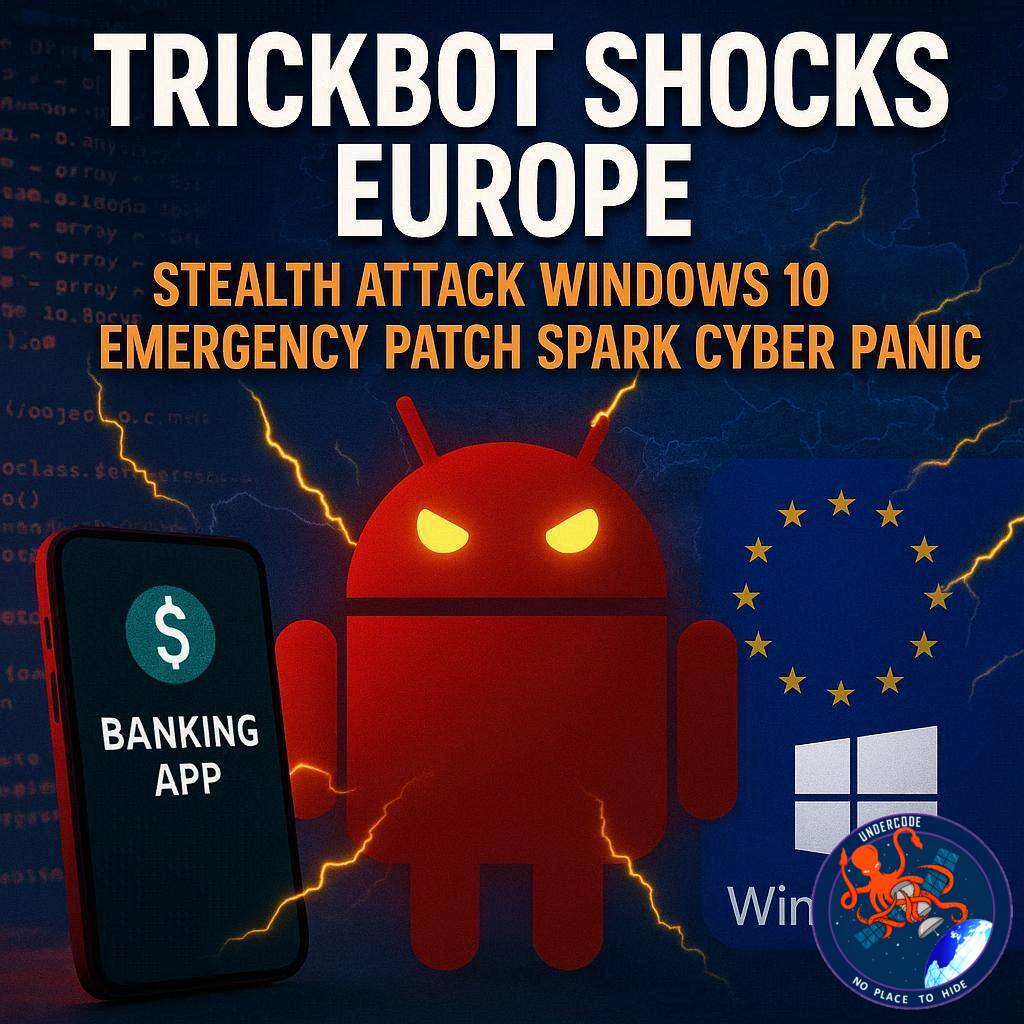
Shocking New Cyber Threat Emerges Across Europe
A new wave of cyberattacks is shaking the European financial cybersecurity landscape as researchers uncover a highly advanced Android banking trojan known as TrickMo. This malware is not just another routine banking threat; it introduces a sophisticated command-and-control (C2) system that leverages the TON (The Open Network) blockchain infrastructure to stay hidden from traditional detection systems. By exploiting decentralized communication channels, attackers are significantly increasing their resilience against takedowns and monitoring efforts.
The campaign is actively targeting users in France, Italy, and Austria, focusing heavily on individuals with banking apps and cryptocurrency wallets installed on their mobile devices. Security analysts warn that the combination of financial malware and blockchain-based stealth communication marks a dangerous evolution in mobile cybercrime.
At the same time, Microsoft has issued an urgent update for Windows 10 users through KB5087544, addressing multiple security vulnerabilities, Remote Desktop display issues, Secure Boot enhancements, and regional system corrections such as Egypt’s daylight saving time adjustment. The timing of both developments highlights an increasingly volatile cybersecurity environment where both mobile and desktop ecosystems are under continuous pressure.
Massive the Cybersecurity Incident (TrickMo + Windows Patch Wave)
Cybersecurity researchers have identified a new Android banking trojan named TrickMo operating with unusually advanced evasion techniques across Europe
The malware is designed to steal banking credentials and cryptocurrency wallet access from infected Android devices
It primarily targets users in France, Italy, and Austria, regions with high digital banking adoption
Attackers have integrated TON blockchain infrastructure into the malware’s command-and-control system
This use of TON allows communication between infected devices and attackers without relying on traditional servers
The decentralized structure makes tracking and shutting down the malware infrastructure significantly more difficult
TrickMo uses SSH tunneling to securely route malicious traffic through encrypted channels
The malware also employs SOCKS5 pivoting to redirect and anonymize its network connections
These techniques allow attackers to mask their real geographic location and infrastructure
Security analysts describe the malware as highly modular and adaptable
The campaign focuses on financial theft, including banking credentials and crypto wallet data
Mobile users are the primary target due to weaker endpoint protection compared to desktops
The malware is distributed through malicious apps and phishing-based installation methods
Once installed, it silently operates in the background collecting sensitive data
Stolen data is transmitted through encrypted and decentralized communication layers
The use of blockchain-based infrastructure makes detection through traditional cybersecurity tools harder
At the same time, Microsoft released Windows 10 KB5087544 update for ESU and LTSC systems
The update addresses multiple security flaws discovered in recent months
It improves Remote Desktop warning display functionality to reduce user confusion
Secure Boot performance and reliability improvements are included in the patch
The update also fixes system-level regional configuration issues including Egypt daylight saving time
The timing of this patch suggests increasing exploitation pressure on legacy systems
Cybersecurity experts warn that both mobile and desktop environments are currently under active threat
Financial malware campaigns continue to expand in complexity and reach
Attackers are blending traditional malware techniques with blockchain infrastructure
The goal is to increase persistence and avoid centralized takedown efforts
Users are advised to remain cautious of app downloads outside official stores
Security updates remain critical in preventing exploitation of known vulnerabilities
The convergence of banking malware and decentralized infrastructure marks a major escalation in cybercrime strategy
Experts believe similar attacks may expand beyond Europe in future campaigns
The cybersecurity landscape is becoming increasingly fragmented and difficult to monitor
What Undercode Say: Strategic Breakdown of TrickMo’s Next-Generation Cyber Warfare Design
Blockchain Integration as a New Malware Backbone
The use of TON as a command-and-control layer represents a structural shift in malware design. Instead of relying on centralized servers that can be taken down, TrickMo leverages decentralized blockchain communication, making its infrastructure resistant to traditional disruption methods. This approach reflects a broader trend where cybercriminals adopt legitimate technologies to enhance anonymity and persistence.
SSH Tunneling and SOCKS5 Pivoting as Evasion Layers
TrickMo’s reliance on SSH tunneling and SOCKS5 pivoting demonstrates a multi-layered obfuscation strategy. These techniques are typically associated with legitimate network administration but are being repurposed to disguise malicious traffic. By chaining encrypted tunnels and proxy layers, attackers reduce the likelihood of detection by network monitoring tools, especially in mobile environments.
Targeting Financial Behavior in High-Trust Regions
The selection of France, Italy, and Austria is not random; these regions have strong digital banking adoption and high trust in mobile financial applications. This makes users more susceptible to phishing and malicious app installations. The malware’s success depends on exploiting user convenience and the normalization of mobile banking behavior.
Windows 10 KB5087544 as a Parallel Security Pressure Indicator
While TrickMo represents an offensive escalation, Microsoft’s KB5087544 update highlights defensive strain across legacy systems. The inclusion of Secure Boot improvements and Remote Desktop fixes suggests that attackers are actively probing these weaknesses. This parallel between mobile malware evolution and desktop patch cycles indicates a synchronized increase in global cyber pressure.
The Rise of Hybrid Cybercrime Architecture
The combination of blockchain infrastructure, encrypted tunneling, and credential theft tools signals the rise of hybrid cybercrime frameworks. These are no longer simple malware campaigns but multi-domain systems integrating financial theft, anonymity networks, and decentralized command structures. This evolution significantly raises the barrier for cybersecurity defense strategies.
Mobile Devices as the Primary Weak Link
Android remains a dominant target due to fragmented security enforcement and user installation behavior. TrickMo exploits this weakness by embedding itself deeply within system permissions and leveraging background processes that evade casual detection. Mobile-first attacks are becoming more profitable than traditional desktop-focused intrusions.
Future Escalation Risks in Decentralized Malware Networks
If blockchain-based malware infrastructure becomes standard, cybersecurity firms may struggle to map or dismantle attack networks. The decentralized nature removes a single point of failure, forcing defenders to rely on behavioral detection rather than infrastructure blocking. This marks a major turning point in cyber defense strategy.
Fact Checker Results
✔ TrickMo-style banking trojans are consistent with known Android malware families targeting financial apps
✔ TON blockchain can theoretically be used for decentralized communication channels in cyber operations
✔ Windows 10 security updates regularly address Remote Desktop, Secure Boot, and system vulnerability issues
Prediction: The Next Phase of Blockchain-Powered Cyber Attacks
Cybersecurity threats are expected to evolve further toward decentralized infrastructure models, where attackers increasingly rely on blockchain networks to hide command-and-control operations. Future malware campaigns may expand beyond Android banking trojans into cross-platform ecosystems targeting desktops, IoT devices, and cloud services simultaneously. Financially motivated cybercrime will likely intensify, with crypto wallet exploitation becoming a dominant objective. As defensive systems adapt, attackers will continue shifting toward automation, encryption layering, and distributed coordination, making detection slower and containment more complex.
🕵️📝Let’s dive deep and fact‑check.
References:
Reported By: x.com
Extra Source Hub (Possible Sources for article):
https://www.quora.com/topic/Technology
Wikipedia
OpenAi & Undercode AI
Image Source:
Unsplash
Undercode AI DI v2
Bing
🔐JOIN OUR CYBER WORLD [ CVE News • HackMonitor • UndercodeNews ]
📢 Follow UndercodeNews & Stay Tuned:
𝕏 formerly Twitter 🐦 | @ Threads | 🔗 Linkedin | 🦋BlueSky | 🐘Mastodon


