Listen to this Post
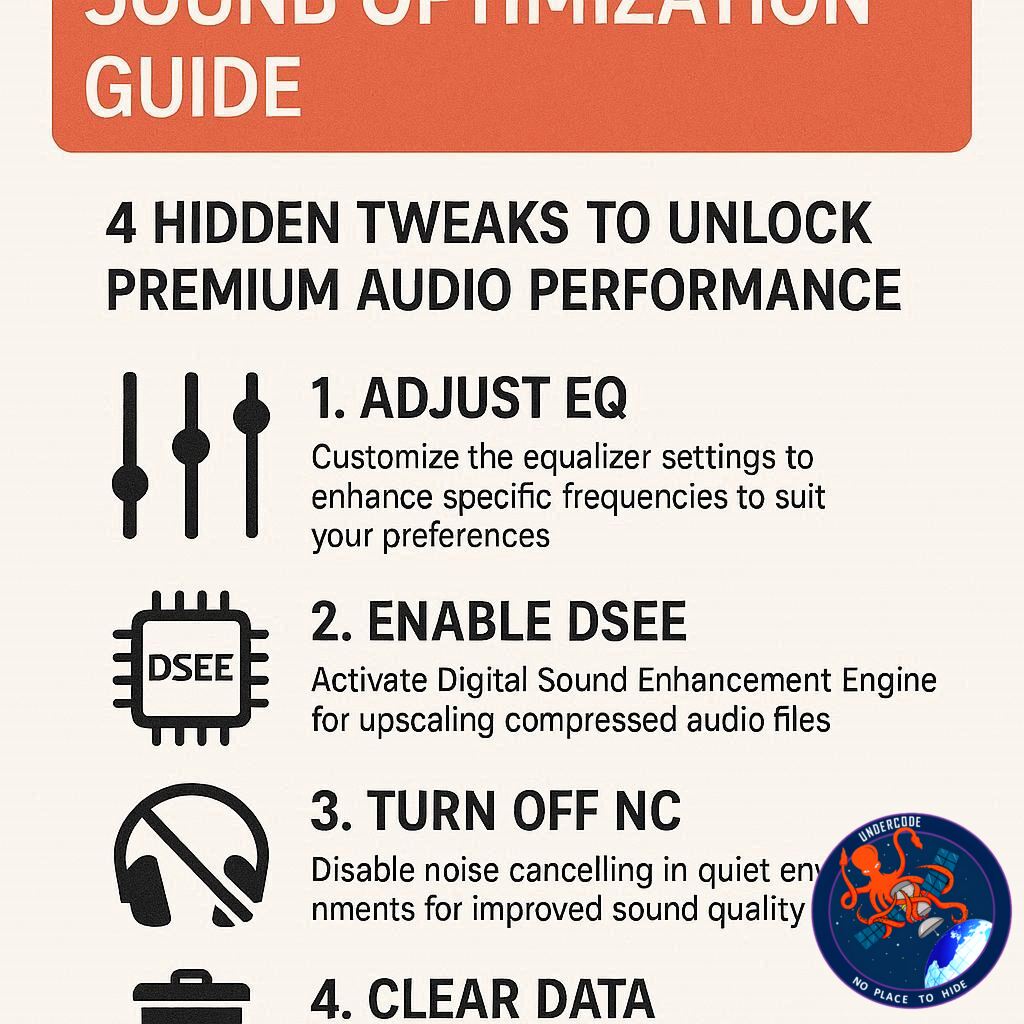
The Secret Behind Sony’s Best Audio Experience
Sony has spent years dominating the premium headphone market with devices that balance powerful sound, industry-leading noise cancellation, and deeply customizable software. Models like the Sony WH-1000XM6 and the WF-series earbuds have become favorites among audiophiles, commuters, students, and remote workers alike. Yet many users never experience the full capabilities of these expensive headphones because the most important settings are buried beneath layers of menus and technical jargon.
What makes Sony products different from competitors is not simply their hardware. The company gives users unusual control over audio codecs, ambient sound behavior, processing systems, and listening profiles. That flexibility is powerful, but also confusing. Features such as LDAC, LC3, LE Audio, Adaptive Noise Cancellation, and Digital Signal Processing can sound intimidating to anyone who simply wants better music quality.
After testing countless Sony headphones and earbuds, several practical adjustments stand out as game changers. These tweaks do not require advanced technical knowledge, yet they can dramatically improve clarity, bass response, soundstage depth, wireless stability, and overall comfort. In many cases, users paying more than $400 for flagship headphones unknowingly leave premium features disabled.
One of the most overlooked tricks involves using Sony headphones in wired mode correctly. Many users assume plugging in the cable automatically guarantees superior audio quality. In reality, Sony headphones sound noticeably weaker when powered off during wired playback. The internal digital signal processing system remains inactive unless the headphones are turned on, causing the audio to feel thin, distant, and lifeless. Simply powering the headphones before connecting the cable restores fullness, dynamic range, and the rich tuning Sony intended.
Bluetooth codec selection is another critical factor, especially for Android users. While both Android and iPhone devices support AAC, Apple’s ecosystem handles the codec far more efficiently. Android’s fragmented implementation often leads to inconsistent audio quality and weaker wireless performance. Sony counters this issue with LDAC, its proprietary high-resolution Bluetooth codec capable of transmitting significantly more audio data than standard SBC or AAC connections.
When conditions are stable, enabling LDAC can dramatically improve wireless listening. Music gains additional detail, cleaner instrument separation, and more natural vocal reproduction. However, LDAC requires stronger wireless stability and consumes more power, meaning crowded environments can sometimes introduce connection drops. Sony therefore allows users to prioritize sound quality directly through the Sound Connect application.
For listeners seeking better efficiency instead of maximum fidelity, Sony’s support for LC3 and LE Audio introduces another advantage. These newer Bluetooth technologies reduce latency while preserving strong sound quality and improving battery life. Compared to older codecs, LC3 maintains a more stable connection in difficult wireless environments, making it ideal for daily commuting or office use where signal congestion is common.
Comfort also plays a major role in perceived sound quality. Sony’s foam ear tips, included with several flagship earbuds, divide opinion among users. Although designed to improve passive isolation and bass response, foam materials absorb sweat, earwax, and moisture over time. Cleaning them is difficult, and repeated use can quickly degrade both hygiene and structural integrity.
Many users now replace Sony’s stock foam tips with silicone alternatives. Silicone ear tips offer easier cleaning, better long-term durability, and a more hygienic experience while still preserving effective noise isolation. Some listeners even prefer the slightly brighter and cleaner sound profile silicone creates compared to memory foam materials. This small hardware swap can improve both daily comfort and confidence during long listening sessions.
Sony’s ambient sound controls are another underrated feature. Most users either enable full noise cancellation or disable it entirely, but Sony provides granular control over how much outside noise enters the listening experience. In environments such as libraries, coffee shops, airports, or shared offices, adjusting ambient sound manually creates a balanced middle ground.
Instead of completely isolating the listener, ambient mode allows important environmental sounds to pass through while still reducing distracting background noise. This makes headphones feel more natural and less fatiguing during extended use. Sony’s adaptive optimizer attempts to automate these adjustments, but manual tuning often produces better real-world results because every environment behaves differently.
These subtle changes collectively transform the listening experience. Better codec management improves fidelity and stability. Correct wired usage restores audio richness. Silicone ear tips improve comfort and cleanliness. Ambient adjustments create smarter everyday usability. Together, they help justify the premium price tag attached to Sony’s flagship audio lineup.
Many headphone buyers focus entirely on hardware specifications while ignoring software optimization. Yet modern premium headphones function more like miniature computers than simple speakers. Understanding how to customize them properly unlocks performance levels most casual users never hear.
Sony’s ecosystem rewards experimentation. Users willing to spend a few minutes exploring settings often discover their headphones are capable of much more than the default configuration suggests. In a market where audio brands compete aggressively on features, Sony’s greatest strength may be the depth of control it quietly places in the hands of its users.
What Undercode Say:
Sony’s Real Advantage Is Software Intelligence
The premium headphone market has become brutally competitive. Companies like Apple, Bose, and Bowers & Wilkins all produce excellent hardware. But Sony’s true advantage is not necessarily superior drivers or stronger materials. It is software flexibility.
Most consumers buy expensive headphones expecting perfection immediately after unboxing. Sony instead assumes users are willing to customize. That philosophy creates a strange divide in user experiences. Casual listeners sometimes feel underwhelmed at first, while enthusiasts who tweak settings often describe Sony headphones as unmatched.
This is a fascinating strategy because it mirrors the gaming PC market more than traditional consumer electronics. Sony essentially ships powerful audio hardware with multiple “performance modes” hidden beneath software layers. Users who understand codecs, processing, and acoustic tuning gain access to dramatically better sound.
LDAC Is Powerful, But Not Always Practical
Sony aggressively markets LDAC as a high-resolution wireless audio solution, and technically it delivers impressive bandwidth. Yet the reality is more complicated. LDAC performs best in controlled environments with strong signal stability. In crowded cities, airports, or office buildings filled with wireless interference, its weaknesses become obvious.
Many users unknowingly experience stuttering audio and battery drain because they prioritize maximum bitrate at all times. In practice, adaptive codec switching is often smarter than locking devices into permanent high-quality transmission modes.
This highlights a broader truth in modern audio technology: specifications alone do not guarantee better experiences. Stability, latency, and consistency matter just as much as raw fidelity. Sony’s newer LC3 implementation may eventually become more important than LDAC itself because it balances efficiency and quality more realistically for everyday life.
Sony Understands Psychological Audio Design
One underrated aspect of Sony headphones is how they shape listener perception psychologically. Features like ambient sound control are not merely technical conveniences. They influence how users emotionally experience environments.
Complete noise isolation can become mentally exhausting over time. Human brains naturally rely on environmental cues for comfort and awareness. Sony’s adjustable ambient system works well because it gives listeners control over psychological isolation, not just acoustic isolation.
That distinction matters. Premium headphones are no longer just sound devices. They are lifestyle interfaces controlling how people interact with public spaces, workplaces, and even social situations.
Comfort Is Becoming More Important Than Raw Sound
The discussion around foam versus silicone ear tips reveals a major industry shift. Audio companies once focused almost exclusively on sound signatures. Today, long-term comfort and hygiene increasingly influence consumer loyalty.
Remote work, online classes, and extended streaming sessions mean users wear headphones for far longer periods than before. An earbud that sounds incredible but becomes uncomfortable after two hours may ultimately fail in real-world use.
Sony’s foam tips represent an attempt to maximize passive isolation and bass depth, but many consumers now prioritize maintainability and cleanliness. Apple recognized this trend early by favoring silicone in the AirPods Pro lineup.
Sony may eventually need to redesign its flagship ear tip strategy entirely if comfort-focused preferences continue dominating the market.
The Premium Audio Industry Is Quietly Changing
There is another important trend hidden beneath this article: software ecosystems are becoming more valuable than hardware improvements. The gap in raw sound quality between flagship headphones has narrowed significantly across major brands.
What separates products now is ecosystem intelligence:
Adaptive controls
Spatial audio integration
Codec optimization
Multi-device switching
Personalized tuning
Environmental awareness systems
Sony understands this evolution extremely well. Its headphones increasingly resemble smart wearable devices rather than passive listening tools.
The companies that dominate the next decade of audio technology will likely be those that master contextual intelligence instead of simply increasing bass or adding louder drivers.
Why Many Users Never Hear True Flagship Performance
A large percentage of consumers use expensive headphones exactly like cheap ones. They never open companion apps, never change codecs, never tune ambient controls, and never experiment with fit optimization.
That creates an unusual market phenomenon where users own premium hardware without ever experiencing premium performance.
Sony’s products especially suffer from this because their best features are hidden beneath technical menus that intimidate average buyers. Simplicity is where Apple still dominates. Sony provides deeper control, but Apple provides immediate accessibility.
The future challenge for Sony is clear: maintain enthusiast-level customization while simplifying the user experience for mainstream audiences.
Sony’s Strength Remains Engineering Depth
Despite growing competition, Sony still demonstrates extraordinary engineering depth across its audio products. The company rarely chases gimmicks blindly. Instead, it builds layered systems that reward deeper usage over time.
That approach creates stronger long-term satisfaction among experienced users. Once optimized correctly, Sony headphones often feel significantly more advanced than their competitors.
The downside is complexity. The upside is potential.
And in premium audio, potential may be the feature enthusiasts value most.
📊 Prediction
Sony’s future headphone releases will likely focus heavily on AI-driven personalization, automatic codec adaptation, and smarter environmental awareness systems. 🎧
LE Audio and LC3 could eventually replace LDAC as the preferred everyday wireless standard due to efficiency and stability improvements. 📶
The next major battle in premium audio will not center on louder sound or stronger bass, but on intelligent software ecosystems that adapt seamlessly to user behavior. 🚀
🔍 Fact Checker Results
✅ Sony headphones do sound noticeably weaker in wired mode when powered off because digital signal processing becomes inactive.
✅ LDAC generally offers higher-quality wireless audio than SBC and AAC when signal conditions are stable.
❌ Premium sound quality alone does not guarantee the best user experience, as comfort, latency, and software optimization matter equally.
🕵️📝Let’s dive deep and fact‑check.
References:
Reported By: www.zdnet.com
Extra Source Hub (Possible Sources for article):
https://www.quora.com/topic/Technology
Wikipedia
OpenAi & Undercode AI
Image Source:
Unsplash
Undercode AI DI v2
Bing
🔐JOIN OUR CYBER WORLD [ CVE News • HackMonitor • UndercodeNews ]
📢 Follow UndercodeNews & Stay Tuned:
𝕏 formerly Twitter 🐦 | @ Threads | 🔗 Linkedin | 🦋BlueSky | 🐘Mastodon