
Listen to this Post
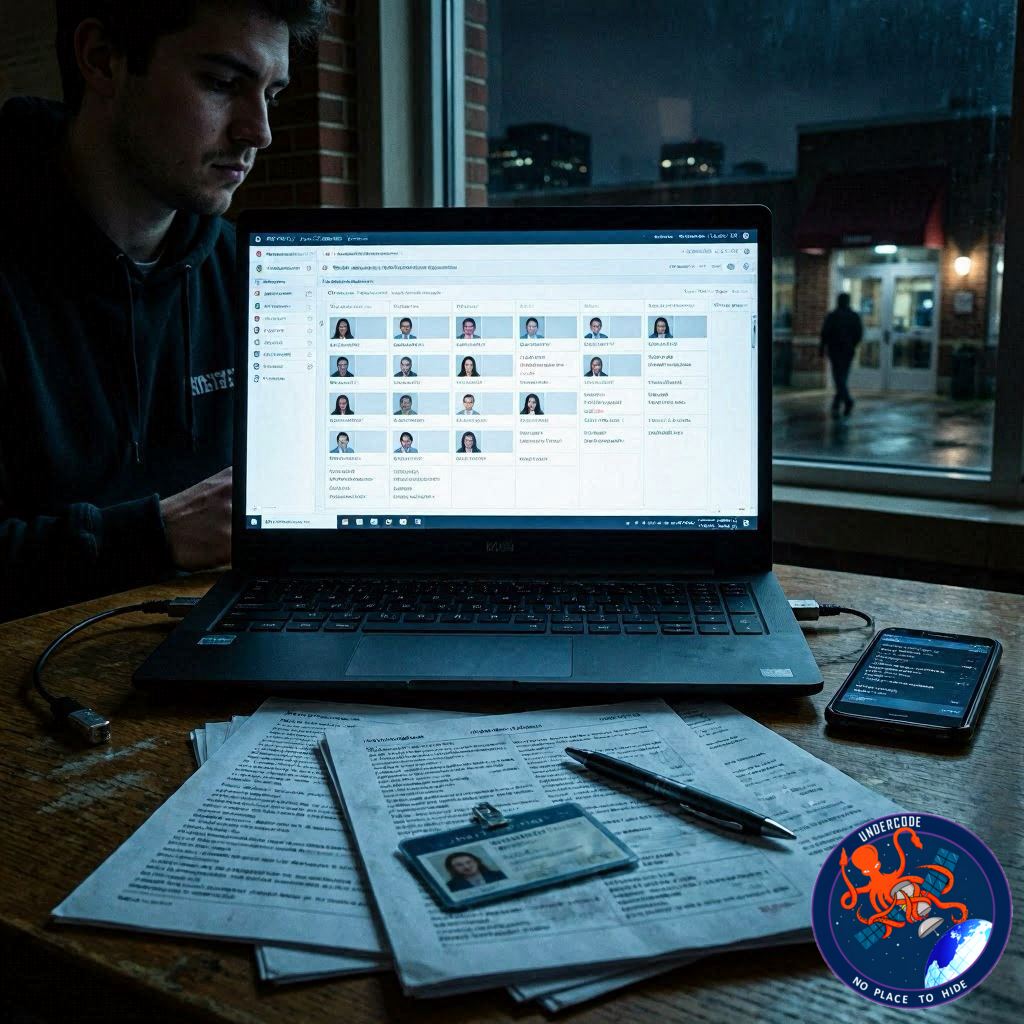 Rising Fear Over One of the Largest Education Platform Breaches in Recent Years
The cybersecurity crisis surrounding Instructure and its widely used Canvas learning management platform has escalated into a national concern after the company confirmed a major data breach tied to the notorious cybercrime group known as ShinyHunters. The attack has shaken schools, colleges, and universities across the United States because Canvas is deeply integrated into modern education systems, powering assignments, communication, exams, and online learning for millions of users globally.
Instructure revealed that attackers managed to access sensitive user-related information and later threatened to publicly leak the stolen data. The company admitted that the breach exposed identifying information connected to users at affected educational institutions. While passwords, financial records, and government identifiers were reportedly not compromised, the scale of the intrusion still raised serious alarm among cybersecurity experts and educational administrators.
Canvas has become one of the most important digital infrastructures in education. From elementary schools to major universities, instructors and students rely on the platform daily for coursework, discussions, grading systems, and academic collaboration. Because of this central role, any compromise involving Canvas instantly affects a massive network of institutions and individuals.
Following the intrusion, Instructure initiated emergency security measures designed to contain the incident and prevent further damage. The company revoked privileged credentials, invalidated access tokens, deployed additional patches, rotated sensitive keys, and increased monitoring activity across its systems. According to the company, these actions were taken even in situations where there was no direct evidence of misuse, demonstrating the seriousness of the threat environment.
Initial reports suggested the exposed data primarily included names, email addresses, student identification numbers, enrollment information, and messages exchanged among users. Although course content, passwords, and assignment submissions were reportedly not accessed, the stolen information still presents significant risks. Cybersecurity analysts warned that attackers can weaponize such information in highly targeted phishing campaigns capable of deceiving students, parents, teachers, and administrative staff.
The situation intensified after ShinyHunters publicly claimed responsibility for the breach and listed Instructure on its dark web leak portal. The group has gained notoriety in recent years for conducting aggressive extortion operations against major companies and institutions. Their attacks often involve stealing large volumes of sensitive information before threatening victims with public exposure unless demands are met.
In a surprising development, Instructure later confirmed that it had reached an agreement with the attackers. The company explained that the decision was made to reduce the risk of public exposure and minimize potential harm to affected institutions and users. According to Instructure, the stolen data was returned and assurances were provided that the information had been destroyed. The company also stated it was informed that customers would not face additional extortion attempts related to this incident.
Despite these assurances, cybersecurity professionals remain skeptical. Criminal organizations rarely provide guarantees that can be independently verified. Even if copies of the data were deleted, experts warn there is no definitive way to confirm whether duplicates still exist elsewhere or whether portions of the information were already distributed among other cybercriminal networks.
Investigators believe the attackers exploited weaknesses associated with the Canvas Free-for-Teacher environment. This entry point allegedly allowed the group to extract enormous amounts of data from the system. Reports estimate that approximately 3.65 terabytes of information may have been stolen, potentially affecting nearly 9,000 organizations connected to the platform.
The incident reportedly unfolded in multiple stages. After the initial compromise, a second wave of malicious activity appeared across numerous educational institutions. Some Canvas login pages were allegedly defaced with extortion-related messages displayed directly to users, creating panic during one of the busiest periods of the academic calendar. The timing proved especially disruptive because many schools were in the middle of final examinations and end-of-semester activities.
To reduce ongoing risks, Instructure temporarily disabled Free-for-Teacher accounts and tightened access controls across the platform. The company also continued working with external cybersecurity specialists to conduct forensic investigations, identify the root cause, and strengthen defensive measures against future intrusions.
Government attention quickly followed. The U.S. House Committee on Homeland Security launched an investigation into the incident and requested testimony from Instructure executives. Committee Chairman Andrew R. Garbarino described the breach as a matter of national concern because of the platform’s massive reach and the educational disruption caused during critical academic periods.
Lawmakers pointed out that ShinyHunters allegedly breached Instructure twice within a single week. The first attack reportedly occurred on May 1, exposing student and faculty data across thousands of institutions. A second incident followed on May 7, during which Canvas login pages were defaced and ransom messages appeared nationwide. The scale and frequency of these attacks raised difficult questions about the resilience of educational technology infrastructure in the United States.
The breach also exposed a broader issue affecting schools worldwide. Educational institutions often manage enormous amounts of personal data but frequently lack the cybersecurity budgets and expertise available to large financial or technology companies. Attackers increasingly view schools and universities as attractive targets because educational systems depend heavily on continuous digital access while maintaining large populations of vulnerable users.
Students are particularly exposed in incidents like this because they are less likely to recognize sophisticated phishing attempts. Attackers armed with real names, course information, and institutional context can create convincing fake emails or login pages that appear legitimate. This increases the likelihood of credential theft and secondary compromises even after the original breach is contained.
Instructure leadership announced plans for a large webinar across multiple time zones to address customer concerns, explain ongoing remediation efforts, and discuss security improvements moving forward. The company also promised to release further details regarding lessons learned from the incident so that other educational technology providers can strengthen their defenses against similar attacks.
The breach has become another example of how cybercrime is evolving from isolated technical intrusions into large-scale operations capable of disrupting essential public infrastructure. Educational systems, once considered lower-priority targets, are now increasingly at the center of modern cyber warfare and organized digital extortion campaigns.
What Undercode Say:
The Education Sector Has Quietly Become a Prime Cybersecurity Battlefield
The Instructure breach is not just another data leak story. It represents a dangerous transformation in how cybercriminals now view educational infrastructure. For years, attackers mainly focused on banks, healthcare providers, and government systems because those sectors stored obvious financial or classified value. But modern education platforms now hold something equally powerful: identity ecosystems.
Canvas is not merely a website where students upload homework. It is a living digital network connecting millions of students, teachers, administrators, parents, and institutional systems. That means attackers are no longer targeting “school software.” They are targeting entire academic populations with interconnected trust relationships.
One of the most concerning details is not the absence of passwords in the leaked dataset. It is the presence of contextual information. Names, emails, course details, internal messages, and enrollment records create highly valuable intelligence for social engineering campaigns. Attackers no longer need passwords when they can manipulate people directly.
This incident also highlights the growing weakness of centralized educational technology. Schools increasingly rely on a handful of cloud platforms for daily operations. While this improves efficiency and accessibility, it also creates massive concentration risk. One successful breach can instantly affect thousands of institutions simultaneously.
The reported 3.65TB theft suggests attackers had extensive access and enough time to conduct large-scale extraction operations without immediate detection. That raises uncomfortable questions about visibility, anomaly detection, and internal segmentation controls inside the affected systems.
The decision by Instructure to negotiate with attackers will likely trigger major debate within the cybersecurity community. Some experts will argue the agreement reduced immediate harm and prevented widespread public exposure. Others will claim that paying or negotiating with extortion groups encourages future attacks by proving that pressure tactics work.
There is also a psychological dimension to this attack that deserves attention. The second wave involving defaced login pages during final exams was strategically timed for maximum emotional disruption. Cybercriminals increasingly understand human behavior and institutional stress cycles. Modern ransomware and extortion campaigns are becoming behavioral warfare operations rather than simple technical hacks.
Another overlooked issue is long-term trust erosion. Educational technology platforms operate on confidence. Students and teachers must believe their coursework, communications, and identities are protected. Once that trust weakens, institutions face pressure not only from cybersecurity concerns but also from reputational damage and parental fear.
The congressional investigation could become a turning point for cybersecurity regulation in education technology. Lawmakers may begin demanding stricter incident reporting timelines, mandatory third-party security audits, and stronger protections for student data ecosystems.
The breach also exposes how difficult it is to verify claims made by cybercriminals. Instructure says the stolen data was returned and destroyed, but digital information does not behave like physical property. Once copied, it can spread infinitely. Even if one group deletes its copies, others may already possess fragments of the dataset.
Another major concern involves supply chain exposure. Educational platforms integrate with countless external tools, plugins, authentication systems, and cloud services. Attackers only need one overlooked weakness to compromise broader infrastructure. This interconnectedness dramatically expands the attack surface.
The Free-for-Teacher environment allegedly used in the breach may become a case study in cybersecurity segmentation failures. Often, “free” or secondary environments receive weaker oversight than enterprise-grade systems. Attackers know this and deliberately search for the least protected entry point.
The incident also reflects a larger global trend: cybercriminal groups are increasingly acting like corporations. ShinyHunters appears to operate with coordination, branding, extortion processes, negotiation strategies, and public pressure tactics. These are no longer isolated hackers operating randomly from bedrooms. Many modern cybercrime groups function like organized digital enterprises.
Educational institutions now face a difficult reality. Traditional cybersecurity models focused mainly on perimeter defense are becoming obsolete. Future protection will require continuous monitoring, behavioral analytics, identity verification layers, rapid containment systems, and stronger human awareness programs.
Students themselves may become the next wave of targets after this incident. Attackers could exploit leaked information to launch fake scholarship offers, fraudulent financial aid emails, phishing campaigns disguised as faculty messages, or impersonation attacks against parents and administrators.
The timing of the attack during exam season also reveals how cybercriminals exploit operational dependence. Attackers understand that schools cannot easily shut down platforms during finals. This creates leverage because institutions are more likely to prioritize rapid stabilization over prolonged technical disputes.
The biggest lesson from this breach may be that education is now critical infrastructure. Society increasingly depends on digital learning systems in the same way it depends on transportation networks, banking systems, and healthcare technology. Yet cybersecurity investment in education still lags far behind other sectors.
If institutions fail to modernize security practices after this event, similar attacks will likely become more aggressive, more coordinated, and far more destructive in the coming years.
📊 Prediction
Cyberattacks against education platforms will likely increase dramatically over the next two years as criminals recognize how deeply schools depend on centralized digital ecosystems. 🎯
Governments may introduce stricter cybersecurity compliance rules for educational technology providers, including mandatory breach disclosure requirements and independent security audits. 🔐
Large universities and school districts are expected to invest heavily in identity protection, phishing resistance training, and AI-driven threat detection systems after the Canvas incident. 📈
🔍 Fact Checker Results
✅ Instructure confirmed a cybersecurity incident involving Canvas-related user information exposure.
✅ ShinyHunters publicly claimed responsibility and allegedly stole massive amounts of educational data.
❌ There is currently no independent public verification proving all stolen data was permanently destroyed after the reported agreement.
▶️ Related Video (82% Match):
🕵️📝Let’s dive deep and fact‑check.
References:
Reported By: securityaffairs.com
Extra Source Hub (Possible Sources for article):
https://www.reddit.com/r/AskReddit
Wikipedia
OpenAi & Undercode AI
Image Source:
Unsplash
Undercode AI DI v2
Bing
🔐JOIN OUR CYBER WORLD [ CVE News • HackMonitor • UndercodeNews ]
📢 Follow UndercodeNews & Stay Tuned:
𝕏 formerly Twitter 🐦 | @ Threads | 🔗 Linkedin | 🦋BlueSky | 🐘Mastodon


