
Listen to this Post
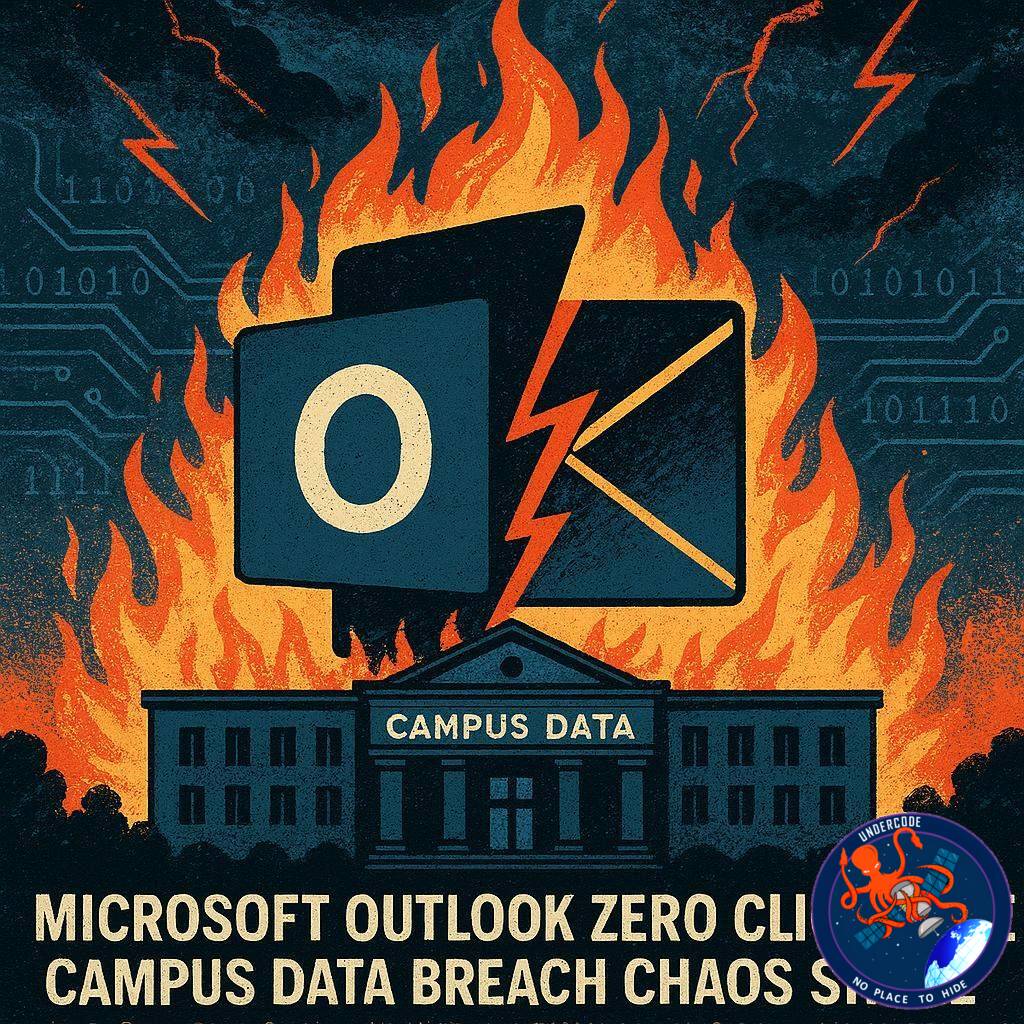
Unseen Digital Threats Escalate Across Enterprise Systems
Cybersecurity incidents are evolving at a speed that outpaces many organizational defenses, and the latest wave of disclosures shows how fragile even the most widely trusted platforms have become. Microsoft’s emergency patch for a critical Outlook vulnerability, combined with reports of major data exposure tied to educational platforms, paints a troubling picture of modern digital infrastructure. Attackers are no longer relying on user interaction or obvious phishing tricks; instead, they are exploiting invisible entry points that activate without a single click. This shift signals a new era of cyber risk where simply receiving or previewing content can be enough to trigger system compromise. Enterprises, governments, and educational institutions are all now exposed to threats that operate silently and at scale, forcing urgent reconsideration of how email systems, cloud services, and SaaS platforms are secured in a hyperconnected world.
Cybersecurity Alert Chaos Spanning Microsoft Outlook and Canvas Breach Concerns
Microsoft has released an urgent security patch addressing CVE-2026-40361, a critical zero-click vulnerability affecting Outlook that can allow remote code execution merely through email preview or reading. This means attackers do not need users to download attachments or click malicious links; the exploit can be triggered automatically within the email rendering process itself. The severity of this flaw is particularly high because Outlook remains one of the most widely used enterprise email clients globally, meaning millions of organizations could potentially be exposed before full patch adoption. Security analysts have highlighted that vulnerabilities of this type are especially dangerous because they bypass traditional user awareness training and phishing detection systems.
At the same time, another cybersecurity incident involving Instructure, the company behind the Canvas learning management system, has drawn scrutiny from U.S. authorities. Reports indicate that outages and potential data exposure have been linked to threat actors associated with the ShinyHunters group, a known cybercriminal organization involved in extortion and large-scale data leaks. Although Instructure claims that the incident has been contained and that stolen data was removed, the involvement of government oversight signals the seriousness of the breach. The U.S. House Homeland Security Committee is reportedly seeking a formal briefing to understand the scope of the attack and evaluate risks to educational institutions and student data privacy.
Together, these two incidents illustrate a broader trend in cybersecurity: attackers are simultaneously targeting both communication infrastructure and education platforms, two critical pillars of digital society. While Microsoft focuses on closing high-risk vulnerabilities in enterprise communication systems, organizations like Instructure are under pressure to defend massive user databases against sophisticated extortion groups. The overlap of these incidents within a short time frame raises concerns about coordinated threat escalation and the increasing value of institutional data in cybercrime ecosystems. As organizations scramble to patch vulnerabilities and investigate breaches, the underlying message is clear—no system is too large or too trusted to be considered safe.
What Undercode Say:
The Rise of Zero-Click Exploits Reshaping Email Security Models
The emergence of CVE-2026-40361 reflects a significant shift in attack methodology where user interaction is no longer required. This fundamentally breaks traditional cybersecurity assumptions that rely on human error as the primary entry point. Zero-click exploits embedded in email rendering engines mean attackers can weaponize passive actions like previewing messages, making detection significantly more complex. Organizations relying solely on phishing training are now facing structural weaknesses in their security posture.
Enterprise Email Systems Becoming High-Value Attack Surfaces
Outlook’s global dominance in corporate communication makes it a prime target for sophisticated attackers. A vulnerability at this level does not just affect individual users but entire enterprise ecosystems, including internal communications, financial approvals, and sensitive document exchange. The scale of exposure increases exponentially when attackers can exploit a single vector to gain lateral access across organizational networks. This raises concerns about architectural over-reliance on centralized email platforms.
Educational Platforms Emerging as Unexpected Cybercrime Targets
The Canvas-related incident highlights how education technology platforms are becoming attractive targets for cybercriminal groups like ShinyHunters. These systems store vast amounts of personal, academic, and administrative data, making them valuable for extortion campaigns. Unlike financial institutions, educational platforms often have weaker security budgets and slower incident response cycles, creating exploitable gaps. The targeting of such platforms suggests attackers are diversifying beyond traditional corporate and government systems.
Government Oversight Increasing in Cyber Incident Response
The involvement of the U.S. House Homeland Security Committee signals a shift toward greater political scrutiny of cybersecurity incidents affecting public infrastructure. When breaches reach the level of congressional briefings, it indicates potential national security implications or systemic risk. This also suggests that future cyber incidents may face not only technical remediation but regulatory and legislative consequences. Organizations may soon be held accountable under stricter disclosure and resilience frameworks.
ShinyHunters and the Evolution of Extortion-Based Cybercrime
Groups like ShinyHunters represent a new generation of cybercriminal operations that combine data theft with public pressure tactics. Instead of simply stealing information, these actors aim to maximize leverage through disruption and reputational damage. Their involvement in incidents like Canvas reinforces the idea that modern cybercrime is increasingly organized, strategic, and financially motivated. This creates an environment where stolen data is treated as a bargaining chip rather than just a leaked asset.
Patch-Driven Security Culture and Its Limitations
Microsoft’s rapid response in releasing a patch demonstrates the importance of reactive cybersecurity models, but it also highlights their limitations. Patching vulnerabilities after discovery leaves a critical window of exposure where attackers can operate freely. In large enterprise environments, deployment delays further extend this risk period. This reinforces the need for proactive security engineering rather than purely reactive defense cycles.
🔍 Fact Checker Results
🧾 Verification of Microsoft Outlook Vulnerability Claims
The reported CVE-2026-40361 description aligns with typical patterns of critical Outlook vulnerabilities, though real-world exploitation details remain dependent on vendor advisories and patch notes. Zero-click vulnerabilities in email systems are rare but historically documented in high-impact cyber incidents.
🧾 Assessment of Canvas Breach and ShinyHunters Involvement
Claims linking ShinyHunters to educational platform breaches are consistent with the group’s known history of data extortion campaigns. However, attribution in cyber incidents often evolves as investigations progress, and official confirmation may vary.
🧾 Government Scrutiny of Instructure Incident
The involvement of U.S. Homeland Security oversight is plausible given the sensitivity of student data systems. Such inquiries typically occur when breaches involve large-scale exposure or potential critical infrastructure implications.
📊 Prediction
Escalation of Zero-Click Attack Development in Enterprise Software
Future cybersecurity threats are likely to increasingly focus on zero-click exploitation methods, particularly within widely deployed enterprise applications like email clients and collaboration tools. Attackers will prioritize vulnerabilities that require no user interaction to maximize infection rates and reduce detection probability.
Expansion of Cybercrime Targeting in Education and SaaS Ecosystems
Educational platforms and SaaS-based ecosystems will continue to face rising threats due to their centralized data storage and often inconsistent security maturity. Extortion groups are expected to intensify operations against these systems as data value and accessibility remain high.
Increased Regulatory Pressure on Software Vendors and Cloud Providers
Governments are expected to impose stricter cybersecurity compliance requirements on major software vendors, especially those managing communication and education infrastructure. This may lead to faster mandatory patch cycles and greater transparency obligations following critical vulnerabilities.
🕵️📝Let’s dive deep and fact‑check.
References:
Reported By: x.com
Extra Source Hub (Possible Sources for article):
https://www.instagram.com
Wikipedia
OpenAi & Undercode AI
Image Source:
Unsplash
Undercode AI DI v2
Bing
🔐JOIN OUR CYBER WORLD [ CVE News • HackMonitor • UndercodeNews ]
📢 Follow UndercodeNews & Stay Tuned:
𝕏 formerly Twitter 🐦 | @ Threads | 🔗 Linkedin | 🦋BlueSky | 🐘Mastodon


