
Listen to this Post
A New Supply Chain Threat Quietly Emerges
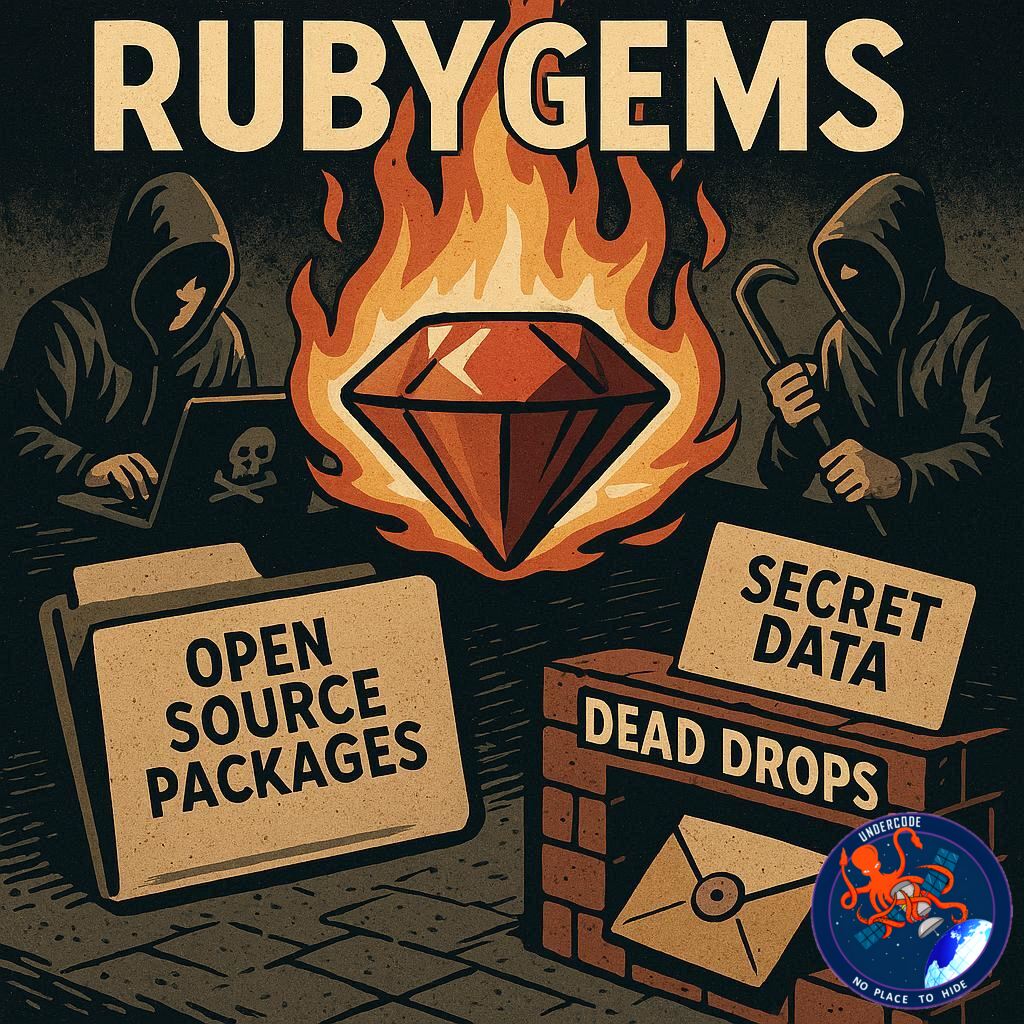
Cybersecurity researchers have uncovered a disturbing campaign targeting the open source ecosystem, but this time the objective is far more unusual than traditional malware delivery. Threat actors are abusing the RubyGems package registry not to infect developers directly, but to secretly store and transport stolen data. The campaign, now known as “GemStuffer,” reveals how attackers are evolving beyond conventional cyberattacks and experimenting with stealthier infrastructure hidden inside trusted software repositories.
Security researchers from Socket discovered more than 100 suspicious Ruby packages containing automated scraping scripts aimed at publicly accessible UK government portals. The packages were uploaded to RubyGems with embedded API credentials, allowing attackers to continuously upload collected information back into the registry itself. Instead of communicating with a standard command-and-control server, the attackers simply downloaded the modified packages later and extracted the data manually.
The revelation has alarmed software supply chain experts because it demonstrates a completely different use of package repositories. Traditionally, malicious packages attempt to infect developers, steal credentials, or execute malware on systems. GemStuffer, however, transforms RubyGems into a covert storage network. The attackers effectively turned a trusted developer platform into a hidden transportation layer for exfiltrated information.
Researchers observed that the malicious gems targeted public-facing government websites associated with London boroughs including Lambeth, Wandsworth, and Southwark. The scraping activity focused on collecting publicly available council data such as calendar schedules, committee agendas, and meeting links. While the information itself may not appear highly sensitive, the structure of the campaign suggests the attackers were testing methods rather than targeting the data itself.
Many of the uploaded packages appeared chaotic, repetitive, and poorly disguised. According to researchers, the operation lacked the stealth and precision normally associated with mature cybercrime groups. Instead, the behavior resembled experimentation, automation testing, or proof-of-concept malware development. Yet beneath the messy execution lies an important warning sign for the cybersecurity industry.
The malicious scripts reportedly created temporary credential environments inside Linux /tmp directories, built new gem archives locally, and automatically pushed them to RubyGems using hardcoded credentials. Some variants bypassed standard RubyGem publishing tools entirely and directly communicated with the RubyGems API through POST requests. This indicates the attackers understood the registry infrastructure deeply enough to automate abuse at scale.
One particularly concerning aspect is the timing. The GemStuffer activity reportedly coincided with a broader spam-publishing attack against RubyGems, suggesting attackers may be stress-testing the ecosystem for weaknesses. Although researchers stopped short of directly linking the campaigns, the overlap in behavior raised suspicions that larger operations could be in development.
The campaign also demonstrates how modern threat actors increasingly blur the lines between malware distribution, automation frameworks, and legitimate developer workflows. Since these packages did not contain classic ransomware or credential-stealing payloads, they may initially evade conventional malware detection systems. Security tools designed to scan for obvious malicious code may overlook repositories being abused for covert storage and communication.
Another unusual detail is that the malicious gems received little to no legitimate downloads. This suggests the attackers were never attempting mass infection. Instead, the packages themselves served as containers for harvested information. The RubyGems platform effectively became a cloud-based dead drop, similar to techniques historically used in espionage operations where hidden locations are used to exchange sensitive material anonymously.
Cybersecurity experts warn that the true danger may not lie in the current campaign itself, but in what attackers are learning from it. If public package registries can function as stealth communication channels, future malware operations could leverage the same techniques for more dangerous objectives, including exfiltrating proprietary corporate data, staging ransomware payloads, or distributing commands between compromised systems.
The rise of supply chain attacks across ecosystems like npm, PyPI, and Packagist has already placed software developers on high alert. GemStuffer now adds another layer of concern by proving attackers are willing to weaponize the publishing process itself, not just package installation. That distinction matters because many organizations heavily monitor downloaded dependencies while paying far less attention to who is publishing packages and how publishing privileges are managed internally.
Researchers urged organizations using Ruby-based environments to audit temporary directories, investigate unauthorized gem publishing activity, and restrict outbound publishing permissions within CI/CD pipelines. Security teams are also being advised to carefully track which developer accounts and automated systems are authorized to publish packages to public registries.
Although the immediate impact appears limited, the campaign highlights a broader evolution in cyberattack strategy. Threat actors no longer need sophisticated infrastructure when trusted developer ecosystems can be manipulated into performing the same function. Open source platforms remain one of the most trusted pillars of modern software development, and attackers clearly understand the enormous value of exploiting that trust.
What Undercode Say:
The Real Story Behind GemStuffer Is Much Bigger Than RubyGems
The GemStuffer campaign looks messy on the surface, but dismissing it as amateur experimentation would be a serious mistake. Cybersecurity history repeatedly shows that attackers often test disruptive ideas in noisy environments before refining them into highly effective weapons. Early ransomware campaigns were clumsy. Initial cryptojacking malware was unsophisticated. Supply chain attacks themselves were once considered niche threats before incidents like SolarWinds changed the global security conversation forever.
What makes this campaign fascinating is the strategic shift in attacker thinking. Instead of focusing on infecting victims directly, the attackers explored how trusted infrastructure can become invisible transport systems. That changes the entire defensive equation. Most enterprise security tools inspect inbound traffic aggressively, but outbound publishing behavior often receives minimal scrutiny. Attackers know defenders traditionally concentrate on malicious downloads rather than suspicious uploads.
The use of RubyGems as a “dead drop” reflects espionage-style operational design. Intelligence agencies historically relied on hidden drop locations to exchange information without direct communication. Translating that concept into software repositories is both creative and dangerous because developer ecosystems naturally blend high volumes of automated traffic with implicit trust relationships.
Another critical insight is the choice of target data. The attackers scraped public government pages rather than confidential databases. That strongly suggests the operation was testing workflow mechanics, persistence methods, and automation reliability instead of pursuing immediate financial gain. Public data minimized legal and operational risks while still allowing attackers to validate their infrastructure.
The hardcoded API keys embedded in packages also reveal something important. Mature threat actors typically avoid exposing credentials so openly. The visible nature of these operations indicates either rapid prototyping or intentionally disposable infrastructure. In cybersecurity, disposable infrastructure often appears during experimentation phases before attackers migrate successful techniques into hardened frameworks.
This campaign also exposes a blind spot in software supply chain security discussions. Most conversations focus on malicious dependencies entering developer environments. Very few organizations monitor whether internal systems are secretly publishing data outward to package registries. That oversight creates a potentially massive attack surface.
Continuous integration pipelines are especially vulnerable here. CI/CD systems frequently possess automated publishing permissions, API tokens, and elevated repository access. If attackers compromise these environments, package registries become ideal covert communication channels because outbound traffic to developer services is often considered legitimate and trusted by default.
The broader implication extends beyond RubyGems entirely. There is nothing preventing similar techniques from appearing across npm, PyPI, Maven Central, Docker Hub, or even AI model repositories. Any platform allowing automated uploads can theoretically become a transport layer for covert operations. Attackers increasingly seek to hide malicious behavior within normal developer workflows because that traffic blends naturally into enterprise environments.
There is also a psychological advantage for attackers. Security teams often hesitate to aggressively restrict developer tools because doing so can disrupt productivity. Threat actors understand this tension well. By operating within platforms developers rely on daily, attackers exploit organizational reluctance to impose strict controls on engineering workflows.
The cybersecurity industry may need to rethink how package registries are monitored entirely. Traditional malware scanning is no longer enough. Behavioral analysis of publishing activity, anomaly detection for automated uploads, and strict validation of package creation workflows will become increasingly important.
Another overlooked issue is attribution. Because package registries are global and public, attackers can rapidly rotate accounts, automate uploads, and hide behind disposable identities. Tracking operations becomes significantly harder when malicious infrastructure is embedded inside legitimate cloud-hosted ecosystems rather than private attacker-controlled servers.
The campaign also highlights how open source ecosystems unintentionally create asymmetric advantages for attackers. Developers value openness, automation, and ease of publishing because these principles accelerate innovation. Attackers exploit those same principles for scalability and anonymity. Security often becomes secondary until abuse reaches crisis levels.
The future risk is not necessarily malware hidden inside gems. The real danger is attackers transforming trusted ecosystems into invisible communication layers for broader cyber operations. Imagine ransomware gangs using package registries for encrypted payload exchanges, or espionage groups using software repositories to coordinate implants globally without maintaining dedicated command infrastructure.
GemStuffer may ultimately be remembered less for what it stole and more for what it demonstrated. The campaign proved that software ecosystems themselves can become covert operational infrastructure. That concept fundamentally changes how defenders must think about supply chain security.
Organizations that still view package registries as passive download libraries are operating with an outdated threat model. Modern attackers see them as programmable cloud platforms capable of storage, automation, persistence, and stealth communication. The security industry now faces the difficult challenge of defending ecosystems specifically designed to remain open and collaborative.
📊 Prediction
Cybersecurity researchers will likely uncover similar “dead drop” techniques across multiple package ecosystems within the next 12 months. 🔍 Attackers are increasingly prioritizing stealth infrastructure over direct malware delivery, especially as traditional command-and-control detection improves. Large enterprises may soon introduce strict publishing governance policies for CI/CD systems, including outbound package monitoring and registry-specific anomaly detection. 🚨
🔍 Fact Checker Results
✅ Researchers from Socket did identify more than 100 suspicious RubyGems packages linked to the GemStuffer campaign.
✅ The malicious packages primarily scraped publicly accessible UK government data and re-uploaded it through RubyGems infrastructure.
❌ There is currently no confirmed evidence that the campaign successfully deployed traditional malware or caused large-scale developer compromise.
🕵️📝Let’s dive deep and fact‑check.
References:
Reported By: www.darkreading.com
Extra Source Hub (Possible Sources for article):
https://stackoverflow.com
Wikipedia
OpenAi & Undercode AI
Image Source:
Unsplash
Undercode AI DI v2
Bing
🔐JOIN OUR CYBER WORLD [ CVE News • HackMonitor • UndercodeNews ]
📢 Follow UndercodeNews & Stay Tuned:
𝕏 formerly Twitter 🐦 | @ Threads | 🔗 Linkedin | 🦋BlueSky | 🐘Mastodon


