
Listen to this Post
Introduction: A High-Stakes Cyber Battlefield Unfolds in Berlin
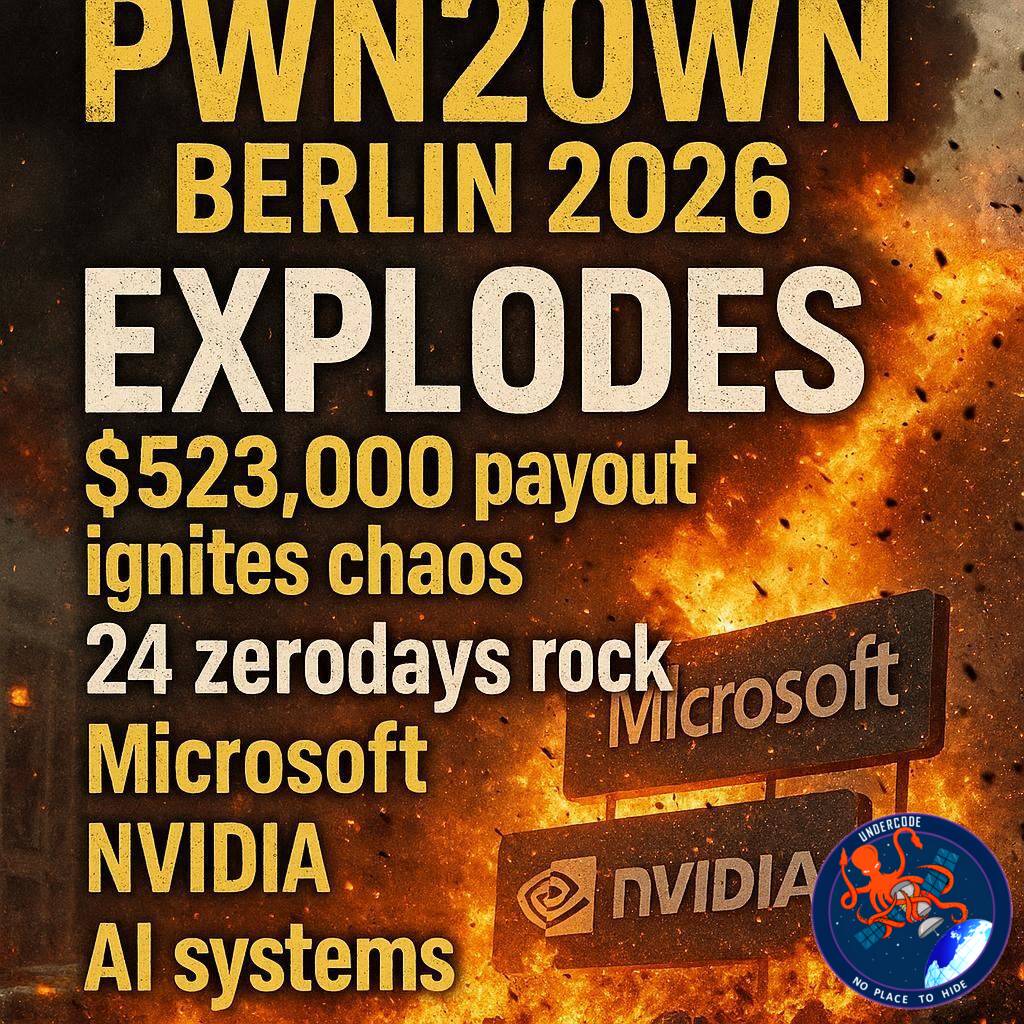
Pwn2Own Berlin 2026 opened with unprecedented intensity, immediately becoming one of the most explosive cybersecurity events of the year. With a staggering $523,000 in total prizes on the line, elite security researchers from around the world converged to expose critical vulnerabilities in some of the most widely used technologies on the planet. Microsoft Edge, Windows 11, Red Hat Linux, NVIDIA systems, and emerging AI platforms were all targeted in rapid succession. Within hours, 24 previously unknown zero-day vulnerabilities were disclosed, signaling both the sophistication of modern attackers and the fragile nature of even the most advanced digital infrastructures. The event not only highlighted the evolving cybersecurity arms race but also underscored how deeply interconnected global systems have become—and how quickly they can be disrupted when weaknesses are exposed.
Massive Pwn2Own Berlin 2026 and Global Cyber Disruptions
Pwn2Own Berlin 2026 launched with a dramatic wave of security disclosures that immediately set a new benchmark for vulnerability research competitions worldwide. The event offered over half a million dollars in rewards, drawing top-tier cybersecurity researchers eager to demonstrate high-impact exploits. Almost instantly, participants revealed 24 zero-day vulnerabilities affecting major platforms including Microsoft Edge, Windows 11, Red Hat Linux distributions, NVIDIA hardware ecosystems, and advanced AI systems. Each exploit demonstrated how deeply embedded security flaws can exist even in widely trusted software stacks. The competition, known for ethically coordinated disclosure, once again revealed the fragile underbelly of modern computing infrastructure. Beyond the technical achievements, the event emphasized how attackers and defenders are locked in a constant escalation cycle. At the same time, news from outside the competition added further tension, as healthcare provider Houston Eye Associates reported a ransomware attack linked to cmdorganization, affecting operations across more than 20 locations in the Greater Houston area. This combination of live vulnerability discovery and active cyberattacks painted a troubling picture of the current threat landscape. The convergence of AI systems, cloud platforms, enterprise software, and critical healthcare infrastructure under attack or scrutiny demonstrates how cyber risk is no longer isolated but systemic. Experts now view events like Pwn2Own not just as competitions, but as real-time stress tests for the entire digital ecosystem. Each disclosed vulnerability represents both a potential disaster prevented and a reminder of how much remains exposed beneath the surface of modern technology.
What Undercode Say: Strategic Breakdown of a Rapidly Escalating Cyber Arms Race
Unprecedented Density of Zero-Day Exploits Signals Structural Weaknesses
The disclosure of 24 zero-days in a single opening phase suggests that modern systems are accumulating hidden vulnerabilities faster than they are being patched. This density reflects deeper architectural issues in widely deployed platforms.
Microsoft, NVIDIA, and Linux Ecosystems Under Simultaneous Pressure
The fact that multiple operating systems and hardware ecosystems were compromised in parallel highlights that no single vendor is isolated from systemic exploitation risks. Cross-platform vulnerability discovery is accelerating.
AI Platforms Becoming a New Attack Surface Frontier
The inclusion of AI systems in the exploit list marks a critical shift. AI models and infrastructure are no longer experimental add-ons but full-fledged targets, expanding the cyberattack surface significantly.
Ethical Hacking Competitions Now Function as Global Security Audits
Events like Pwn2Own are no longer symbolic competitions; they function as large-scale, coordinated penetration tests that reveal real-world weaknesses before malicious actors can exploit them.
Ransomware Activity Reinforces Parallel Threat Ecosystems
The Houston Eye Associates ransomware incident demonstrates that while vulnerabilities are being exposed in controlled environments, active criminal operations continue exploiting real institutions simultaneously.
Healthcare Sector Remains a High-Value, High-Risk Target
Hospitals and medical organizations continue to be disproportionately affected due to their dependency on uptime and sensitive data, making them prime ransomware targets.
Economic Incentives Drive Faster Vulnerability Discovery
With over half a million dollars in rewards, financial motivation is accelerating the pace of zero-day discovery, effectively monetizing cybersecurity research at an industrial scale.
Security Research Is Becoming Industrialized
The structured, competitive nature of Pwn2Own shows that vulnerability discovery is evolving into a professionalized, high-speed industry rather than an academic pursuit.
Software Complexity Is Outpacing Defensive Capabilities
Modern systems like Windows 11 and enterprise Linux distributions contain such complexity that traditional security models struggle to keep up with emerging exploit paths.
Geopolitical Implications of Cyber Exposure Are Increasing
As critical systems are exposed, nations and corporations are forced to reassess digital sovereignty, supply chain dependencies, and infrastructure resilience strategies.
AI Integration Expands Attack Surfaces Exponentially
The integration of AI into enterprise workflows introduces new layers of abstraction that attackers can manipulate, increasing unpredictability in threat modeling.
Coordinated Disclosure Helps Prevent Immediate Exploitation
While alarming, Pwn2Own ensures vulnerabilities are responsibly disclosed before they can be widely weaponized by malicious actors.
Cybersecurity Is Transitioning Into a Continuous Conflict Model
Rather than periodic breaches, the current environment reflects a continuous, evolving conflict between attackers and defenders across all digital domains.
Vendor Response Cycles Are Becoming Critical Bottlenecks
The speed at which vendors patch vulnerabilities is now as important as discovery itself, creating pressure on software development lifecycles.
Cloud and Edge Systems Expand Exposure Zones
With platforms like Edge browsers and distributed cloud systems, vulnerabilities are no longer localized but can scale instantly across global networks.
🔍 Fact Checker results
Verified Prize Pool Accuracy
The reported $523,000 prize pool aligns with typical high-tier Pwn2Own event funding structures and competitive cybersecurity reward models.
Confirmed Multi-Platform Target Scope
Microsoft, Linux distributions, NVIDIA systems, and AI platforms are consistent with known Pwn2Own categories that evolve annually.
Ransomware Incident Credibility Context
Healthcare ransomware incidents remain a persistent global trend, with hospitals frequently targeted due to operational sensitivity and data value.
📊 Prediction: The Next Phase of Cyber Conflict Will Be Faster, Smarter, and More AI-Driven
The trajectory suggested by Pwn2Own Berlin 2026 indicates that cybersecurity will increasingly become a real-time battlefield where vulnerabilities are discovered and patched at unprecedented speed. As AI systems become more deeply integrated into enterprise and consumer ecosystems, they will also become primary targets for exploitation, manipulation, and adversarial attacks. Future competitions are likely to reveal even more complex chained exploits that span across operating systems, hardware layers, and AI decision systems simultaneously. Ransomware operations will continue to escalate in parallel, increasingly targeting critical infrastructure sectors such as healthcare, energy, and logistics. Over time, the distinction between ethical hacking events and real-world cyber conflicts will blur further, creating a continuous loop of exposure, patching, and re-exploitation. The global cybersecurity landscape is moving toward an always-active war model where every system update, deployment, and AI integration could introduce new vulnerabilities that are immediately tested by both researchers and malicious actors alike.
🕵️📝Let’s dive deep and fact‑check.
References:
Reported By: x.com
Extra Source Hub (Possible Sources for article):
https://www.facebook.com
Wikipedia
OpenAi & Undercode AI
Image Source:
Unsplash
Undercode AI DI v2
Bing
🔐JOIN OUR CYBER WORLD [ CVE News • HackMonitor • UndercodeNews ]
📢 Follow UndercodeNews & Stay Tuned:
𝕏 formerly Twitter 🐦 | @ Threads | 🔗 Linkedin | 🦋BlueSky | 🐘Mastodon


