
Listen to this Post
Introduction
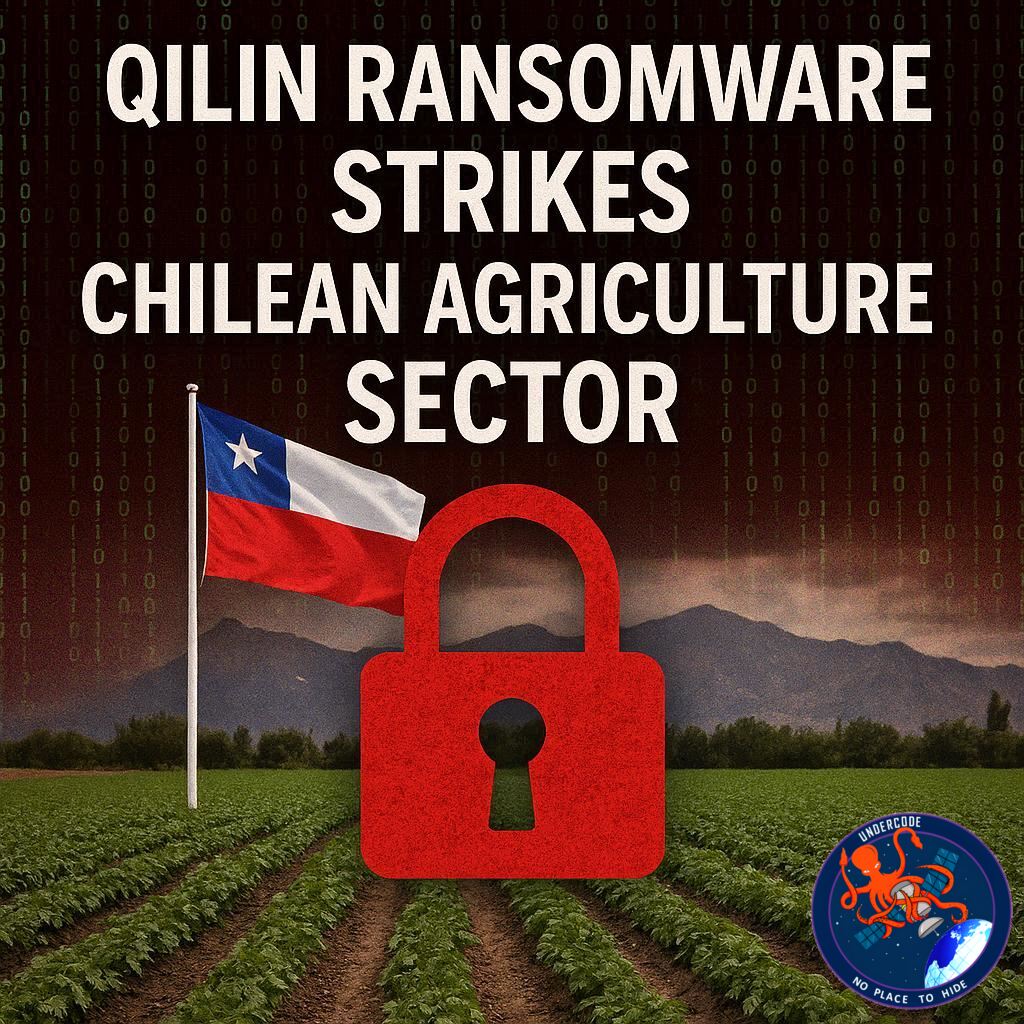
A new ransomware attack linked to the notorious Qilin Ransomware Group gang has reportedly disrupted operations in Chile’s agriculture and food production industry. The victim, Comercial Echave Turri Limitada, suffered unauthorized access to internal systems followed by widespread file encryption, according to cybersecurity monitoring reports shared online by cybersecurity tracking accounts.
The incident once again highlights how ransomware gangs are increasingly targeting essential industries rather than only large technology firms or financial institutions. Agriculture, food logistics, and production companies have quietly become high-value targets because of their dependence on uninterrupted operations, digital inventory systems, and supply-chain connectivity.
Ransomware Attack Hits Chilean Food and Agriculture Company
Reports circulating on cybersecurity monitoring platforms indicate that Comercial Echave Turri Limitada became the latest victim of the Qilin ransomware operation. Attackers allegedly gained unauthorized access to company systems before encrypting files, a common tactic used to pressure victims into paying ransom demands.
The breach reportedly impacted the agriculture and food production sector in Chile, raising concerns about operational downtime, potential supply-chain interruptions, and possible exposure of internal corporate data.
While technical details remain limited, ransomware attacks of this nature typically involve several stages. Threat actors often begin with credential theft, phishing emails, vulnerable remote desktop services, or exploitation of unpatched systems. Once inside the network, attackers escalate privileges, move laterally across systems, exfiltrate sensitive data, and finally deploy encryption payloads to lock critical files.
The Qilin group has rapidly become one of the most discussed ransomware operations in underground cybercrime communities. Security researchers have connected the gang to multiple high-profile incidents targeting enterprises worldwide. Their attacks frequently combine file encryption with data theft, increasing pressure on victims by threatening public leaks of confidential information.
Why Agriculture Companies Are Becoming Prime Targets
Cybercriminals increasingly view agriculture and food production companies as easy yet profitable targets. Unlike financial institutions or major tech firms, many agricultural businesses still operate with weaker cybersecurity infrastructure despite relying heavily on digital systems.
Modern agriculture depends on connected logistics, automated production tracking, warehouse management software, cloud communications, and digital supplier coordination. Even a short disruption can create serious financial consequences.
For ransomware groups, this creates leverage. Companies handling food production cannot afford extended downtime because delays affect deliveries, inventory freshness, export schedules, and supplier relationships.
Additionally, many agriculture-focused businesses work with older operational technology systems that were never designed with modern cybersecurity protections in mind. Legacy software, outdated authentication methods, and limited IT staffing often create ideal entry points for attackers.
The Growing Global Reach of Qilin Ransomware
The Qilin ransomware operation has gained attention due to its aggressive targeting strategy and professionalized attack infrastructure. Analysts describe the group as part of the broader ransomware-as-a-service ecosystem, where developers provide ransomware tools to affiliates in exchange for a share of profits.
This business-like structure allows cybercriminal operations to scale rapidly across multiple countries and industries.
Qilin-linked attacks have reportedly impacted healthcare organizations, manufacturing companies, legal firms, logistics providers, and government-related entities. Their expansion into the agricultural sector demonstrates how ransomware gangs continue diversifying targets beyond traditional enterprise victims.
The group is also known for using double-extortion tactics. In these attacks, victims not only lose access to encrypted systems but also face threats of public data exposure if ransom demands are ignored.
That strategy significantly increases pressure because companies fear reputational damage, regulatory scrutiny, and customer distrust even more than temporary technical disruption.
Operational Consequences Could Be Severe
Even when companies recover systems quickly, ransomware attacks can create lasting operational consequences. Agriculture and food production environments depend heavily on timing, coordination, and inventory visibility.
A ransomware event can interrupt:
Distribution scheduling
Inventory management
Supplier communications
Transportation logistics
Financial processing
Production monitoring systems
If backups are compromised or restoration processes are delayed, recovery costs can escalate dramatically.
There is also the possibility of sensitive business information being stolen before encryption occurred. Threat actors frequently extract contracts, financial records, internal communications, and employee information before locking systems.
In modern ransomware operations, data theft is often as valuable to attackers as the encryption itself.
What Undercode Says:
Cybercriminals Are Targeting the “Invisible Backbone” of Economies
This incident may appear small compared to attacks on multinational corporations, but its significance is much larger than headlines suggest. Agriculture companies form part of the invisible infrastructure supporting national economies. When ransomware operators target food production chains, the effects can ripple far beyond a single business.
Cybercriminal groups understand this reality extremely well.
Ransomware gangs no longer chase only massive enterprises because smaller industrial companies often offer weaker defenses and faster ransom negotiations. Attackers now prioritize industries where downtime directly translates into financial panic.
Food production is one of those sectors.
A delayed shipment in agriculture can destroy inventory value within hours. That creates urgency, and urgency increases the likelihood of ransom payments.
Latin America Is Facing Increasing Cybersecurity Pressure
Latin America has become a growing hotspot for ransomware activity over the past few years. Many regional organizations are undergoing rapid digital transformation while cybersecurity maturity struggles to keep pace.
This imbalance creates opportunity for attackers.
Companies modernize operations with cloud services, remote access tools, and digital supply-chain systems, yet security investments often remain secondary priorities. Threat actors exploit this gap aggressively.
Chile, in particular, has experienced rising cybersecurity incidents as its business sector becomes increasingly digitized and internationally connected.
Cybercriminal organizations do not distinguish between local firms and global corporations anymore. If a company handles valuable operations and lacks adequate defenses, it becomes a viable target.
Ransomware Has Evolved Into a Full Corporate Criminal Industry
The modern ransomware ecosystem now resembles a commercial software industry more than traditional hacking groups.
There are developers, affiliates, negotiators, leak-site managers, infrastructure providers, and even customer-service-style support channels within some ransomware operations.
Groups like Qilin operate strategically rather than randomly. They analyze sectors, identify weak points, and deploy attacks based on maximum financial leverage.
This professionalization explains why ransomware attacks continue increasing globally despite law-enforcement crackdowns.
Even when one group disappears, another quickly emerges to fill the gap.
Small and Mid-Sized Companies Remain the Weakest Link
Large corporations typically maintain dedicated security teams, advanced monitoring systems, and incident-response frameworks. Mid-sized regional businesses often lack those protections.
That imbalance is becoming a major cybersecurity crisis.
Attackers know smaller organizations frequently depend on outsourced IT support, outdated systems, and reactive rather than proactive security strategies.
Unfortunately, many businesses still view cybersecurity as a technical expense instead of operational survival infrastructure.
Incidents like this demonstrate why that mindset is becoming dangerous.
Supply Chain Disruption Could Become the Next Major Risk
The real danger of ransomware attacks against agriculture companies is not merely data encryption. The larger threat is systemic disruption.
Food production depends on interconnected networks involving farms, transport companies, storage facilities, wholesalers, exporters, and retailers.
If ransomware campaigns increasingly target these sectors, supply-chain instability could become a recurring economic problem rather than isolated cybersecurity events.
Governments worldwide may eventually classify agricultural cybersecurity as part of national critical infrastructure protection.
That transition already appears underway in several countries.
Double Extortion Makes Recovery More Complicated
In older ransomware incidents, companies could sometimes restore operations from backups and avoid paying attackers.
Modern ransomware groups changed the equation.
By stealing data before encryption, attackers create reputational, legal, and regulatory pressure even when technical recovery is possible.
For businesses handling supplier contracts, employee records, or customer information, data leaks can become more damaging than operational downtime itself.
This evolution explains why ransomware remains profitable despite improved backup technologies.
Cybersecurity Investment Is No Longer Optional
Many organizations still underestimate how vulnerable operational industries remain.
Agriculture, manufacturing, logistics, healthcare, and food production sectors increasingly rely on connected digital systems while continuing to operate with security models designed for older eras.
That mismatch creates a dangerous environment.
Cybersecurity is no longer only about protecting information. It now directly affects operational continuity, revenue stability, and business survival.
Companies failing to adapt may eventually discover that ransomware attacks are not isolated IT problems but existential operational threats.
🔍 Fact Checker Results
✅ Verified Attack Claims
Cybersecurity monitoring accounts did report that Comercial Echave Turri Limitada in Chile was allegedly targeted by the Qilin ransomware operation involving unauthorized access and encrypted files.
✅ Qilin Is a Known Ransomware Operation
Qilin has been widely identified by cybersecurity researchers as an active ransomware group involved in multiple attacks globally using extortion-based tactics.
⚠️ Full Technical Details Remain Limited
As of now, no official technical forensic report or public confirmation from the affected company has fully detailed the extent of data theft, financial damage, or operational disruption.
📊 Prediction
Ransomware Groups Will Intensify Attacks on Essential Industries
Cybercriminal organizations are likely to continue expanding attacks against food production, logistics, healthcare, and manufacturing sectors because these industries cannot tolerate prolonged downtime.
Latin American Companies Could Face Escalating Threat Levels
As digital transformation accelerates across Latin America, ransomware actors may increasingly target regional businesses that lack enterprise-grade security infrastructure.
Governments May Introduce Stricter Cybersecurity Regulations
Critical industries such as agriculture and food production could eventually face mandatory cybersecurity compliance requirements as governments recognize the national risks posed by ransomware disruption.
🕵️📝Let’s dive deep and fact‑check.
References:
Reported By: x.com
Extra Source Hub (Possible Sources for article):
https://www.quora.com/topic/Technology
Wikipedia
OpenAi & Undercode AI
Image Source:
Unsplash
Undercode AI DI v2
Bing
🔐JOIN OUR CYBER WORLD [ CVE News • HackMonitor • UndercodeNews ]
📢 Follow UndercodeNews & Stay Tuned:
𝕏 formerly Twitter 🐦 | @ Threads | 🔗 Linkedin | 🦋BlueSky | 🐘Mastodon


