
Listen to this Post
Introduction: A City on the Edge of a Commuter Breakdown
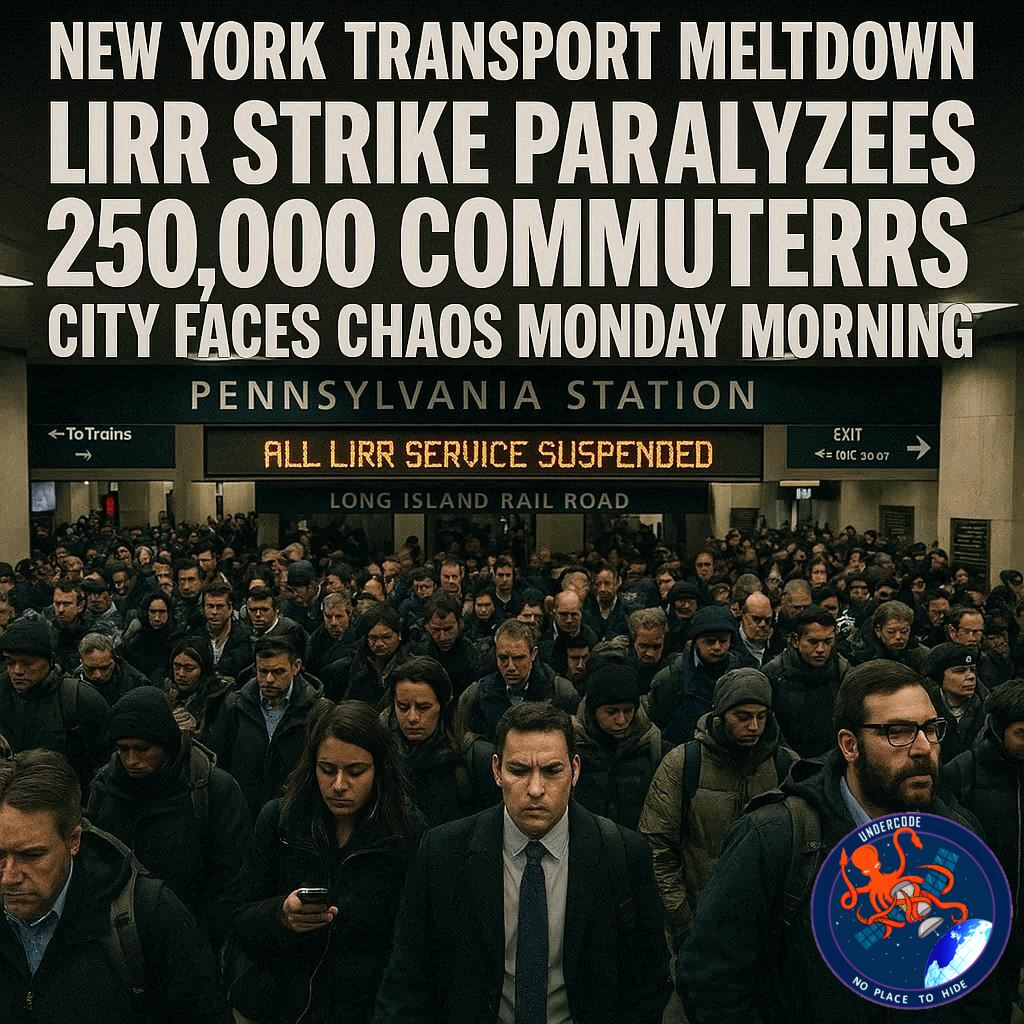
New York City is heading into one of its most disruptive workweek openings in years as a historic strike brings the Long Island Rail Road (LIRR) to a complete standstill. With hundreds of thousands of daily commuters suddenly stripped of their primary transit lifeline, officials are warning of severe traffic congestion, extended travel delays, and widespread logistical strain across the metropolitan area. The labor standoff—centered on wages and working conditions—has escalated into a full-scale transit emergency, forcing both state and city authorities into urgent response mode as negotiations continue without resolution.
Chaos: How the LIRR Strike Crippled a Major Transit Network
The Long Island Rail Road, the busiest commuter rail system in North America, has been fully suspended following a breakdown in negotiations between five labor unions and the Metropolitan Transportation Authority (MTA). The strike, involving approximately 3,500 workers including engineers, signal operators, and machinists, marks the first shutdown of the network since 1994.
The disruption impacts around 250,000 daily commuters who rely on 947 scheduled trains to travel between Long Island and New York City. With services halted, officials have advised residents to work from home if possible, while emergency shuttle buses are being deployed from Long Island starting early Monday morning.
Mayor Zohran Mamdani warned residents that the city should expect heavier-than-usual traffic and significant delays throughout the day. Governor Kathy Hochul confirmed contingency plans, including shuttle services aimed at essential workers.
Negotiations between the MTA and unions collapsed after marathon discussions that stretched into early Monday morning without agreement. Workers are demanding a wage increase of roughly 4–5%, citing stagnant compensation since 2022 and rising living costs.
Federal mediators from the National Mediation Board intervened, bringing both sides into extended overnight talks. While no deal was reached, both parties agreed to resume negotiations immediately on Monday.
The strike has also created indirect complications, as conductors—though not striking—are respecting union picket lines, further limiting operational flexibility. With commuter alternatives strained, commuters are now expected to rely heavily on road travel, intensifying concerns about congestion and fuel costs.
Officials have further warned that increased vehicle use may collide with already elevated gas prices and newly implemented tolls for entering Manhattan’s business district. The result is expected to be a ripple effect across the entire regional economy.
What Undercode Say: Systemic Fragility Exposed in New York’s Transit Backbone
A Transport System Operating on Thin Structural Ice
The LIRR shutdown exposes how dependent New York’s economic rhythm is on a single rail artery. With one disruption, half a million lives shift instantly into uncertainty, showing a fragile backbone disguised as a robust system.
Labor Conflict Reflects a Deeper Wage Pressure Crisis
The strike is not an isolated labor dispute but a symptom of wider inflationary pressure. Workers demanding 4–5% raises are reacting to post-pandemic cost-of-living spikes that have outpaced wage adjustments in public transit sectors.
Political Pressure Intensifies Between City and State Authorities
With Mayor and Governor both issuing urgent advisories, the strike is becoming a political stress test. The inability to quickly resolve the dispute reflects institutional friction between transit authorities and government oversight.
Commuter Dependency Creates Urban Vulnerability
The reliance of 250,000 daily commuters on a single rail network highlights structural vulnerability. When that system fails, the city’s road infrastructure cannot absorb the overflow, leading to cascading congestion.
Emergency Measures Reveal Reactive Governance
The deployment of shuttle buses and work-from-home advisories shows a reactive rather than preventive system. The lack of long-term redundancy planning suggests that contingency frameworks are underdeveloped.
Economic Cost Extends Beyond Transportation Alone
Delays, fuel consumption, toll burdens, and lost productivity combine into a wider economic shock. The strike is not just a transport issue but a short-term drag on metropolitan economic efficiency.
Negotiation Breakdown Signals Institutional Stalemate
Repeated failure to reach an agreement even after federal mediation indicates deep mistrust between unions and management, suggesting that resolution may require structural reform rather than incremental bargaining.
🔍 Fact Checker Results: What Is Confirmed and What Remains Fluid
Confirmed Shutdown of LIRR Operations
It is verified that the Long Island Rail Road has fully suspended service due to the strike action by multiple unions.
Verified Scope of Workforce Participation
Approximately 3,500 workers are participating in the strike, while conductors are not officially striking but are respecting picket lines.
Ongoing Negotiations Still Unresolved
Talks between the MTA and unions have resumed but no agreement has yet been reached, leaving service disruption ongoing.
📊 Prediction: What Happens Next for New York’s Transit Crisis
A short-term resolution is possible if federal mediation pressures both sides toward compromise, particularly around wage adjustments. However, if negotiations continue to stall, the city may face a prolonged disruption extending beyond initial weekday recovery plans.
Traffic congestion across bridges and tunnels is expected to worsen significantly as commuters shift to road travel. Economic productivity losses will likely accumulate rapidly, particularly in sectors dependent on timely workforce mobility.
If the strike persists beyond a few days, political pressure will intensify on both state leadership and transit authorities, potentially forcing emergency legislative or funding interventions to restore partial service.
🕵️📝Let’s dive deep and fact‑check.
References:
Reported By: edition.cnn.com
Extra Source Hub (Possible Sources for article):
https://www.linkedin.com
Wikipedia
OpenAi & Undercode AI
Image Source:
Unsplash
Undercode AI DI v2
Bing
🔐JOIN OUR CYBER WORLD [ CVE News • HackMonitor • UndercodeNews ]
📢 Follow UndercodeNews & Stay Tuned:
𝕏 formerly Twitter 🐦 | @ Threads | 🔗 Linkedin | 🦋BlueSky | 🐘Mastodon


