
Listen to this Post
Introduction
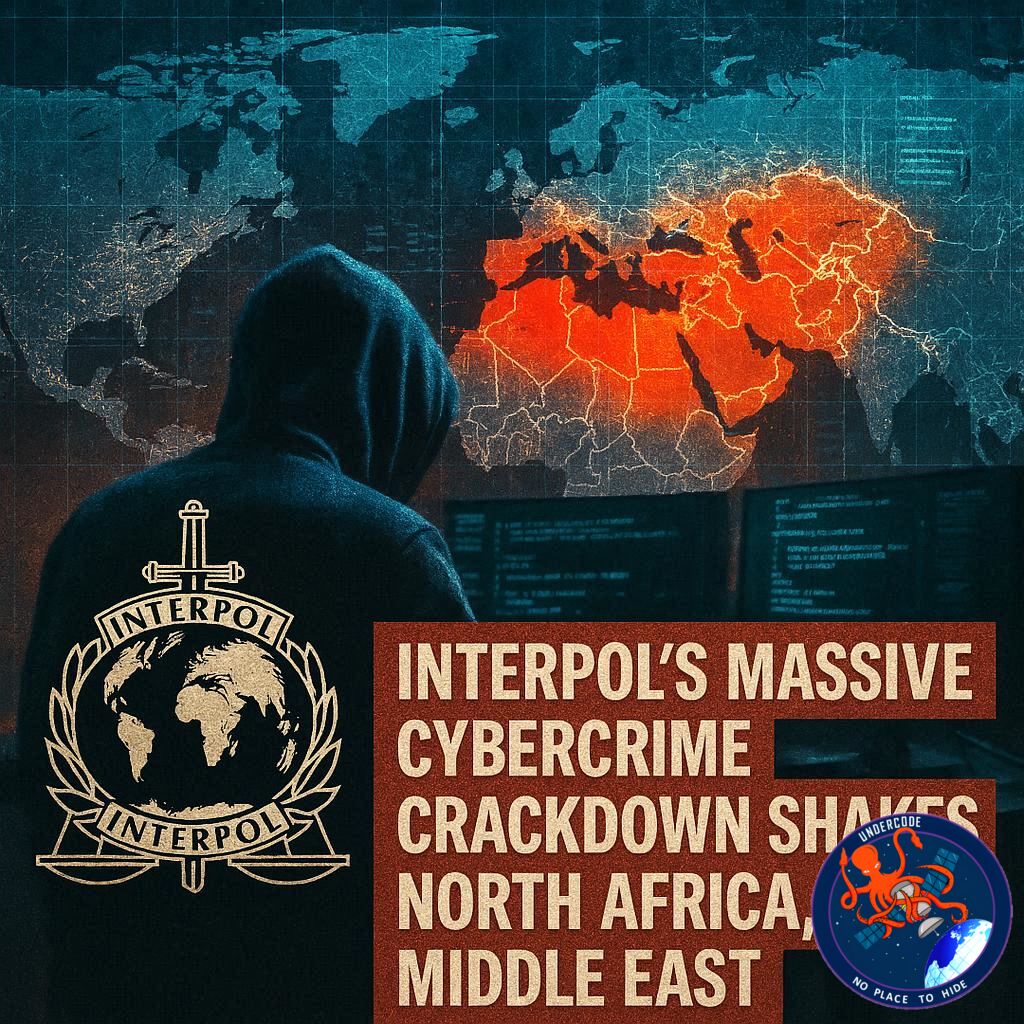
A sweeping international cybercrime operation led by Interpol has exposed just how deeply organized scam networks have embedded themselves across North Africa and the Middle East. The operation, known as “Operation Ramz,” resulted in hundreds of arrests, server seizures, and the identification of thousands of victims tied to sophisticated online fraud campaigns.
At the same time, the cybersecurity landscape continues to worsen globally, with ransomware groups aggressively targeting businesses of every size. One of the latest reported victims is Printroom.co.uk
, a long-established British printing company allegedly impacted by the Safepay ransomware group.
These incidents highlight a growing reality: cybercrime is no longer isolated to underground hacker forums. It has evolved into a global criminal economy capable of disrupting governments, businesses, and ordinary internet users simultaneously.
Operation Ramz Delivers a Major Blow to Cybercrime Networks
Interpol announced that Operation Ramz successfully dismantled several scam networks operating across the Middle East and North Africa region. Authorities confirmed that 201 individuals were arrested during the coordinated operation.
Investigators also seized 53 servers believed to be connected to fraudulent online activity, financial scams, phishing infrastructure, and digital impersonation campaigns. The operation further identified 3,867 victims who were allegedly targeted through these cyber-enabled criminal schemes.
The crackdown involved collaboration between multiple law enforcement agencies across the region, demonstrating the increasing international cooperation required to combat modern cybercrime organizations.
Scam Operations Continue Expanding Across Borders
The scale of Operation Ramz reveals how cybercriminal networks have evolved into highly organized enterprises. These groups often operate across multiple countries simultaneously, making enforcement extremely difficult for local authorities acting alone.
Many of these scam campaigns rely on fake investment platforms, romance scams, business email compromise attacks, and social engineering tactics designed to manipulate victims emotionally and financially.
Unlike traditional hacking groups focused purely on technical exploits, scam syndicates frequently combine psychological manipulation with advanced digital infrastructure. This hybrid approach allows them to target thousands of victims at scale while hiding behind anonymized servers and cross-border payment systems.
The Role of Seized Servers in Criminal Investigations
The seizure of 53 servers may ultimately prove more valuable than the arrests themselves. Cybercrime investigations often rely heavily on digital evidence stored within backend infrastructure.
Servers can contain:
Victim databases
Phishing templates
Cryptocurrency wallet information
Internal communications
Malware deployment tools
Financial transaction records
If investigators successfully extract and analyze the seized infrastructure, authorities could uncover broader criminal ecosystems extending far beyond the initial arrests.
In many modern cybercrime cases, servers function as the operational backbone of criminal organizations. Taking them offline can immediately disrupt ongoing attacks and prevent additional victims from being targeted.
Thousands of Victims Highlight the Human Cost
The identification of 3,867 victims underscores the enormous human impact of cyber-enabled fraud.
Many victims of online scams suffer severe financial losses, identity theft, emotional trauma, and long-term reputational damage. In romance scam cases especially, victims can lose life savings after prolonged manipulation by organized criminal groups.
Cybercrime statistics often fail to capture the emotional consequences experienced by victims. Shame and embarrassment frequently discourage individuals from reporting incidents, meaning the true number of affected people may be significantly higher than official figures suggest.
Ransomware Threats Continue Escalating Worldwide
While Operation Ramz focused primarily on scam networks, another growing threat continues to dominate the cybersecurity landscape: ransomware.
According to reports circulating on cybersecurity monitoring accounts, Printroom.co.uk
, a UK-based print services company established in 1977, was reportedly targeted by the Safepay ransomware group.
The alleged attack may have caused operational disruptions and potential data exposure, although full details remain limited.
Ransomware attacks have increasingly shifted toward mid-sized and legacy businesses that may lack enterprise-grade cybersecurity defenses. Criminal groups often view older organizations as attractive targets because they may operate outdated systems or insufficient backup strategies.
Legacy Businesses Are Becoming Prime Targets
The reported attack against Printroom reflects a broader trend affecting traditional industries.
Manufacturing, logistics, printing services, healthcare, and local government institutions are all experiencing growing ransomware pressure. Many of these sectors rely on aging infrastructure that was never designed to withstand modern cyber threats.
Attackers typically exploit:
Weak remote access systems
Unpatched software
Stolen employee credentials
Phishing emails
Misconfigured cloud services
Once inside a network, ransomware operators move laterally through systems before encrypting files and demanding payment.
What Undercode Says:
Cybercrime Has Become an Industrialized Economy
The events surrounding Operation Ramz reveal that cybercrime is no longer driven by isolated hackers operating from bedrooms. What law enforcement agencies are now facing resembles multinational criminal corporations with layered operations, technical specialists, financial handlers, and recruitment pipelines.
The seizure of infrastructure is especially important because cybercriminal ecosystems depend heavily on scalability. A single phishing server can target tens of thousands of users simultaneously. Removing infrastructure creates operational disruption that arrests alone cannot achieve.
Regional Cooperation Is Becoming the Only Effective Defense
The Middle East and North Africa have increasingly become both targets and operational zones for digital fraud networks. Criminal groups exploit jurisdictional gaps between countries, moving money and infrastructure faster than investigations can keep up.
Operation Ramz demonstrates that regional cooperation is becoming mandatory rather than optional. Without intelligence sharing between countries, most cross-border cybercrime cases collapse before reaching meaningful prosecution.
The operation may also signal a growing strategic shift where international agencies prioritize coordinated takedowns over isolated domestic arrests.
Scam Networks Are Using Corporate Techniques
Modern scam organizations increasingly resemble legitimate technology startups in structure. Some maintain customer-service-style scam centers, multilingual communication teams, and technical departments dedicated to bypassing security controls.
This industrialization explains why online scams have scaled so aggressively over the past decade. Criminals now automate targeting, credential theft, and payment processing at extraordinary levels.
The identification of nearly 4,000 victims in a single operation strongly suggests that the overall ecosystem may involve far larger hidden victim pools.
Ransomware Continues Targeting Operational Weakness
The reported Safepay ransomware incident highlights a separate but connected issue within global cybersecurity: operational vulnerability.
Attackers no longer focus exclusively on giant multinational corporations. Mid-sized businesses with weaker defenses are now frequently preferred because they offer easier access and faster ransom negotiations.
Legacy industries are especially exposed because many organizations still underestimate ransomware preparedness. Backup systems, incident response planning, and employee phishing awareness remain dangerously inconsistent across traditional sectors.
The Psychological Dimension of Cybercrime Is Growing
One overlooked aspect of scam operations is their increasing reliance on emotional engineering rather than technical sophistication alone.
Criminals manipulate fear, loneliness, urgency, greed, and trust to bypass rational decision-making. This makes cybercrime partially a psychological battlefield rather than purely a technical one.
Even advanced users can become victims when attacks are personalized and emotionally convincing.
Governments Are Under Pressure to Modernize Cyber Defense
Operations like Ramz create political pressure on governments to invest more heavily in cyber defense infrastructure, digital forensic capabilities, and real-time intelligence sharing.
Many countries still lack specialized cybercrime prosecution units or sufficient digital evidence frameworks. Criminals exploit these weaknesses aggressively.
Future cyber enforcement will likely depend on AI-assisted threat intelligence, automated detection systems, and stronger international legal coordination.
The Cybersecurity Industry Will Continue Expanding Rapidly
As attacks increase, cybersecurity spending will continue accelerating worldwide. Organizations are now realizing that cyber resilience is not a luxury expense but an operational survival requirement.
Incident response firms, managed detection providers, cloud security vendors, and cyber insurance markets are all expected to grow significantly over the next several years.
The problem is that defenders must protect every vulnerability, while attackers only need one successful entry point.
🔍 Fact Checker Results
✅ Verified Interpol Operation Details
Reports confirm that Operation Ramz involved coordinated international action resulting in 201 arrests, 53 seized servers, and thousands of identified victims connected to cyber-enabled fraud operations.
✅ Ransomware Threats Against Traditional Industries Are Increasing
Cybersecurity reporting consistently shows that ransomware groups increasingly target mid-sized and legacy-sector businesses due to weaker defenses and operational dependency on uninterrupted services.
❌ No Public Confirmation Yet on Full Printroom Damage
While reports claim Printroom.co.uk was targeted by the Safepay ransomware group, complete public confirmation regarding the scale of data exposure or operational impact remains limited at this stage.
📊 Prediction
Cybercrime Takedowns Will Become Larger and More Aggressive
International law enforcement agencies will likely launch more multinational operations similar to Operation Ramz over the next few years. As cybercrime organizations expand globally, authorities will increasingly prioritize infrastructure seizures and coordinated arrests.
AI-Powered Scams Could Trigger a New Wave of Fraud
Artificial intelligence tools may dramatically increase the sophistication of phishing campaigns, voice impersonation scams, and automated fraud systems. Criminals are expected to adopt AI technologies rapidly due to their low cost and high scalability.
Ransomware Pressure on Traditional Businesses Will Intensify
Legacy businesses operating outdated infrastructure will remain prime ransomware targets. Organizations that delay modernization or fail to implement proper cyber hygiene may face increasing financial and operational risks in the coming years.
🕵️📝Let’s dive deep and fact‑check.
References:
Reported By: x.com
Extra Source Hub (Possible Sources for article):
https://www.instagram.com
Wikipedia
OpenAi & Undercode AI
Image Source:
Unsplash
Undercode AI DI v2
Bing
🔐JOIN OUR CYBER WORLD [ CVE News • HackMonitor • UndercodeNews ]
📢 Follow UndercodeNews & Stay Tuned:
𝕏 formerly Twitter 🐦 | @ Threads | 🔗 Linkedin | 🦋BlueSky | 🐘Mastodon


