
Listen to this Post
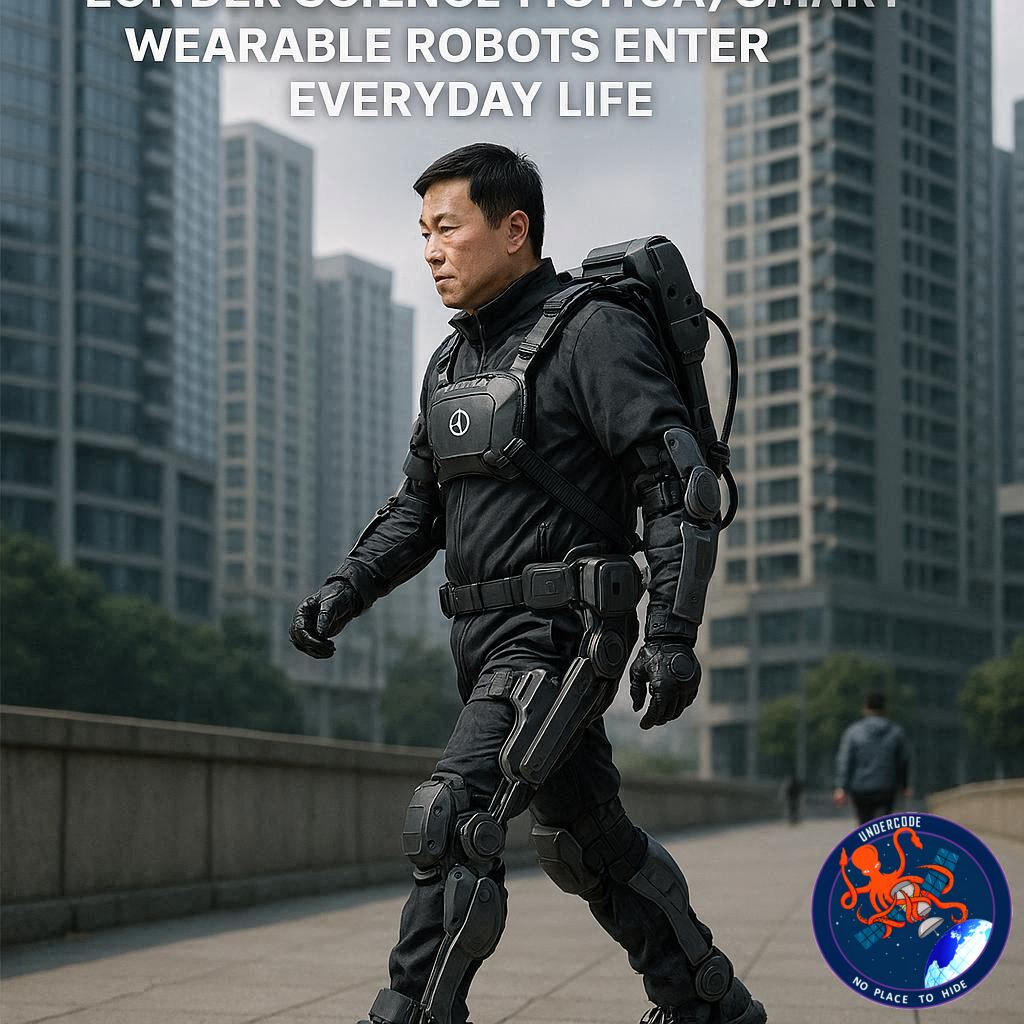
A New Era of Human Mobility Begins in China
For decades, exoskeleton technology was treated like something from futuristic movies or military laboratories. Bulky robotic suits were mostly associated with elite soldiers, high-tech research centers, or billion-dollar industrial projects. That image is now rapidly changing in China. What once looked experimental is becoming surprisingly ordinary.
At tourist hotspots like the Great Wall of China, visitors are beginning to rent lightweight robotic exoskeletons that help reduce fatigue while climbing steep stairs and rugged terrain. The concept sounds futuristic, yet it is already becoming part of daily life. Behind this transformation is a combination of aggressive government subsidies, rapid domestic innovation, and a demographic reality China can no longer ignore: the country is aging fast.
China’s push into wearable robotics is no longer just about technological prestige. It is increasingly tied to healthcare, elder support, labor productivity, rehabilitation, and even tourism. The country appears determined to dominate another major technology sector before much of the world fully realizes how quickly the market is evolving.
Exoskeletons Move Beyond Military and Industrial Use
Exoskeleton systems were originally designed for heavy industrial lifting, medical rehabilitation, and military enhancement. Traditional models were expensive, heavy, and difficult for ordinary people to use. China’s latest generation of wearable robotic gear is changing that equation completely.
The new exoskeletons being introduced in public spaces are lightweight, portable, and significantly cheaper than earlier models. Tourists using them at the Great Wall report reduced strain on knees and leg muscles while climbing large staircases. Some models actively assist movement by sensing the user’s walking rhythm and adding mechanical support to each step.
This transition from specialized equipment to consumer accessibility is a major milestone. It signals that China is trying to commercialize robotics not only for factories but also for everyday public use.
Government Subsidies Are Accelerating Adoption
One of the biggest reasons for the rapid spread of exoskeleton technology in China is direct government support. Subsidies have helped manufacturers reduce prices while encouraging local governments and businesses to experiment with public deployment.
China has repeatedly shown a pattern in emerging technologies. The government identifies a strategic sector, injects funding, supports local manufacturing, and scales production rapidly. The same formula helped the country dominate electric vehicles, solar panels, and battery manufacturing. Exoskeleton technology now appears to be entering that same pipeline.
By reducing costs, China is turning exoskeletons from luxury medical devices into practical mobility tools. This is especially important for elderly citizens who may struggle with walking long distances or climbing stairs.
China’s Aging Population Is Creating Urgent Demand
The country’s demographic crisis is impossible to ignore. China’s population is aging at one of the fastest rates in modern history. Millions of elderly citizens require mobility assistance, rehabilitation support, and healthcare solutions.
Exoskeleton technology offers a potential answer to several of these challenges simultaneously. Instead of relying entirely on human caregivers, wearable robotic systems can help seniors maintain independence for longer periods. This could reduce pressure on hospitals, nursing homes, and younger family members.
Some experts believe wearable robotics may become as common as mobility scooters or walking aids within the next decade. China is positioning itself to lead that market before global demand explodes.
Tourism Is Becoming a Testing Ground
The decision to introduce exoskeleton rentals at the Great Wall is more strategic than it appears. Tourist destinations create ideal testing environments because they involve large numbers of users, repetitive movement patterns, and highly visible public demonstrations.
Visitors using the devices become unofficial marketers. Social media videos showing tourists climbing historic landmarks with robotic assistance spread rapidly online, generating curiosity and public acceptance.
China understands the power of visual technology adoption. If people see ordinary tourists comfortably using exoskeletons, the technology immediately feels less intimidating and more practical.
Lightweight Design Changes Public Perception
Older exoskeleton systems often looked intimidating. Many resembled industrial machinery strapped to the body. China’s newer models are intentionally designed to appear minimal and wearable.
Modern versions are lighter, more flexible, and less visually aggressive. Some resemble sports equipment more than robotic suits. This matters because consumer acceptance depends heavily on appearance and comfort.
If wearable robotics feel natural and convenient, mass adoption becomes far more realistic.
Domestic Robotics Companies Are Racing Ahead
China’s robotics sector has become intensely competitive. Startups and major technology firms are now racing to dominate the wearable robotics market.
The competition is producing faster innovation cycles and lower manufacturing costs. Chinese firms are leveraging advantages in battery production, AI integration, and supply chain efficiency to accelerate development.
Many of these companies are also experimenting with healthcare partnerships, rehabilitation centers, and elderly assistance programs. The result is a rapidly expanding ecosystem rather than isolated technological experiments.
Healthcare Applications Could Be Massive
Medical rehabilitation may become the most important long-term use case for exoskeletons. Patients recovering from strokes, spinal injuries, or surgeries often require repetitive physical therapy. Robotic assistance can improve movement consistency while reducing strain on healthcare workers.
China’s healthcare system faces growing pressure due to population aging and urbanization. Wearable robotics could help fill labor shortages while improving patient recovery outcomes.
Some hospitals are already experimenting with robotic rehabilitation systems that assist patients in relearning how to walk.
Factories and Logistics Still Remain Important
Although public attention focuses on tourism and elderly care, industrial applications remain critical. Chinese factories continue testing exoskeletons for warehouse workers, construction teams, and heavy manufacturing.
These systems reduce physical strain and potentially lower workplace injuries. In sectors facing labor shortages, wearable robotics may help older workers remain productive longer.
China’s manufacturing economy has a strong incentive to invest heavily in this technology.
What Undercode Say:
China Is Following the Same Playbook That Worked for EVs
The most interesting part of this story is not the exoskeleton itself. It is the strategy behind it. China rarely approaches emerging technologies casually. The country tends to move with long-term industrial planning that combines state funding, public exposure, infrastructure support, and aggressive manufacturing scale.
This pattern already transformed the global electric vehicle market. At first, many foreign observers underestimated Chinese EV companies. Today, several Chinese automakers are among the world’s largest producers. The exoskeleton industry may follow a similar trajectory.
The Real Goal Is Healthcare Dominance
Tourism demonstrations are flashy, but healthcare is probably the true target market. China knows its aging population could become an enormous economic burden. Wearable robotics offer a way to offset labor shortages in elderly care while improving mobility for millions of citizens.
If exoskeletons become affordable enough, they may eventually be prescribed like wheelchairs or orthopedic braces. That possibility would create an enormous domestic market.
Public Acceptance Matters More Than Technology
The biggest obstacle for wearable robotics has never been engineering alone. It has been psychology. Many people feel uncomfortable wearing robotic assistance devices because they associate them with disability or weakness.
China appears to understand this problem. By introducing exoskeletons in tourism settings, the technology becomes associated with convenience and innovation rather than medical limitation.
That shift in perception could be one of the smartest aspects of the entire strategy.
Western Countries May Be Moving Too Slowly
Many Western nations continue treating exoskeletons primarily as medical or military tools. China is commercializing them faster and normalizing public use earlier.
If China achieves scale first, it could dominate global manufacturing standards and export markets before competitors fully react. This is especially likely because wearable robotics depend heavily on batteries, sensors, AI software, and efficient manufacturing supply chains, all areas where China already holds strong positions.
Ethical Questions Will Eventually Appear
As exoskeletons become smarter, questions about dependency, surveillance, workplace expectations, and physical enhancement will emerge.
Could employers pressure workers to wear robotic assistance for higher productivity? Could elderly people become dependent on subscription-based mobility systems? Could wearable robotics collect biometric movement data on users?
These discussions are still in early stages, but they will become unavoidable as adoption increases.
The Technology Is Closer Than Most People Think
Many people still imagine exoskeletons as rare experimental gadgets. In reality, the commercialization phase has already begun. Once devices become lightweight, affordable, and socially accepted, adoption curves can accelerate extremely quickly.
Smartphones looked niche at first. Electric cars once seemed impractical. AI assistants were initially dismissed as gimmicks. Wearable robotics may follow the same pattern.
China Understands Symbolic Technology Moments
Allowing tourists to climb the Great Wall using robotic assistance is symbolically powerful. The Great Wall represents ancient Chinese civilization. Exoskeletons represent advanced technological ambition. Combining the two creates a visual narrative about China connecting history with futuristic innovation.
That symbolism is unlikely to be accidental.
Fact Checker Results
✅ China is actively expanding exoskeleton technology into public and healthcare applications.
✅ Government subsidies and aging population concerns are driving real commercial demand.
❌ Mass consumer adoption worldwide is not guaranteed yet, as affordability and long-term usability still face challenges.
Prediction
🔮 Within the next decade, lightweight exoskeletons could become common in hospitals, airports, tourism sites, and elderly care centers across Asia.
🔮 China is likely to emerge as one of the world’s dominant exporters of wearable robotic mobility systems.
🔮 The global debate around human enhancement technology will intensify as robotic assistance becomes more socially normalized.
▶️ Related Video (78% Match):
🕵️📝Let’s dive deep and fact‑check.
References:
Reported By: www.dw.com
Extra Source Hub (Possible Sources for article):
https://www.github.com
Wikipedia
OpenAi & Undercode AI
Image Source:
Unsplash
Undercode AI DI v2
Bing
🔐JOIN OUR CYBER WORLD [ CVE News • HackMonitor • UndercodeNews ]
📢 Follow UndercodeNews & Stay Tuned:
𝕏 formerly Twitter 🐦 | @ Threads | 🔗 Linkedin | 🦋BlueSky | 🐘Mastodon


