
Listen to this Post
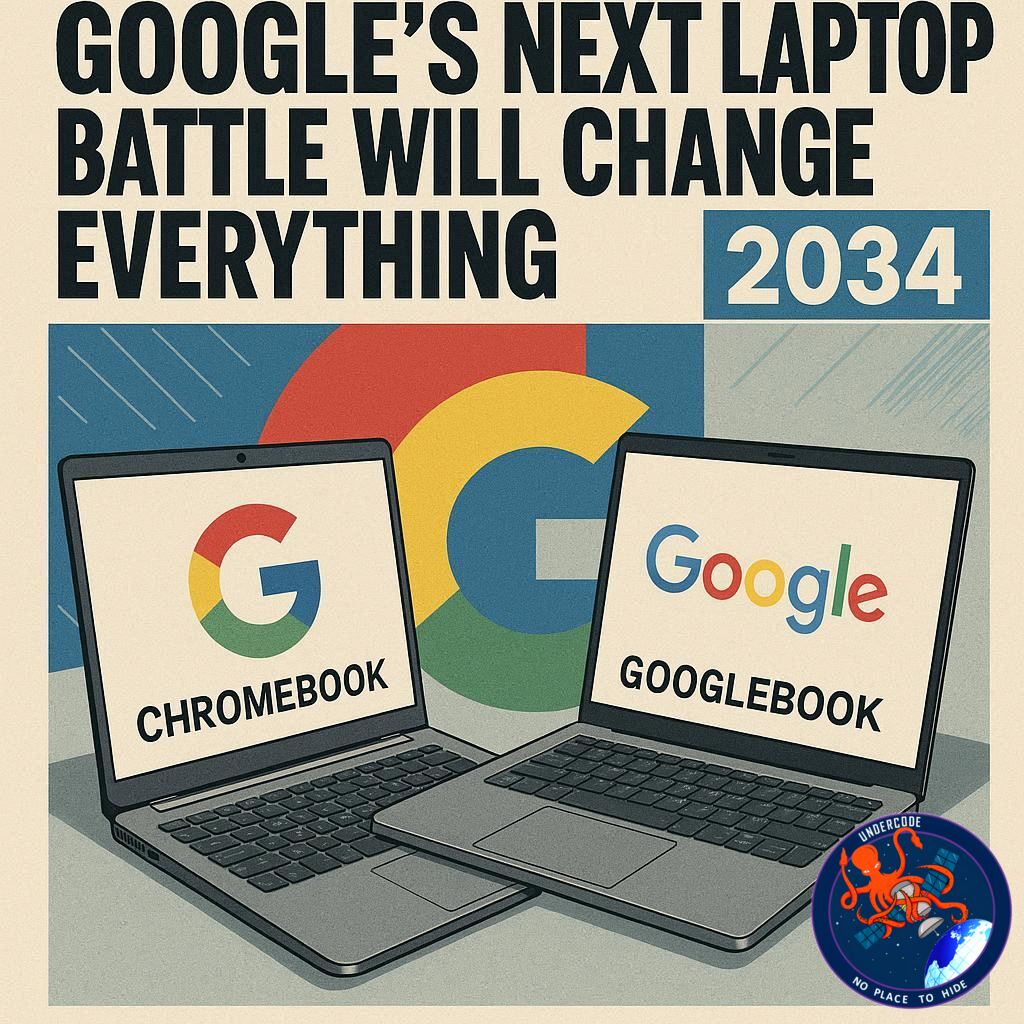
Google’s Laptop Strategy Is Entering a New Era
Google has officially introduced a brand-new laptop category called the Googlebook, and the announcement has immediately sparked confusion, excitement, and concern among Chromebook users worldwide. For years, Chromebooks have dominated classrooms, budget offices, and casual consumer markets because of their affordability and simplicity. Now, Google appears ready to move into premium territory with a more advanced ecosystem-focused machine.
The biggest talking point is not just the hardware itself. It is the software direction behind it. Googlebook reportedly combines ChromeOS and Android into a more unified operating system experience, creating something that feels closer to Apple’s tightly connected MacBook and iPhone ecosystem.
Naturally, this has created one major question across the tech industry: Is Google slowly preparing to replace Chromebooks?
Google says no. At least for now.
Google Confirms Chromebooks Are Staying Alive
During a virtual media roundtable ahead of Google I/O, company executives made it very clear that Chromebooks are not disappearing anytime soon. Google executives emphasized that ChromeOS devices remain deeply integrated into education systems, businesses, and consumer markets around the world.
That statement matters because Chromebooks are no small side project anymore. Over the past fifteen years, they have become one of Google’s most successful hardware ecosystems. Schools especially rely heavily on them because they are inexpensive, easy to manage, secure, and lightweight.
Google understands that suddenly abandoning Chromebooks would create enormous backlash from schools, companies, and millions of users who depend on them daily.
Executives also highlighted
That reassurance gives consumers confidence, but it does not completely erase concerns about Google’s long-term direction.
The Core Difference Between Chromebook and Googlebook
The biggest distinction between the two product categories comes down to market positioning.
Chromebooks are designed primarily for everyday users. They focus on affordability, battery life, cloud computing, and lightweight productivity tasks. Most Chromebook buyers are students, casual users, or businesses seeking cost-effective devices.
Googlebooks, however, appear aimed at premium consumers and power users.
Google wants the Googlebook to become an ecosystem device, particularly for Android smartphone users. One of its standout features is reportedly the seamless integration between Android phones and the laptop itself. Instead of treating smartphones and laptops as separate devices, Googlebook aims to blur the line between them.
This mirrors
The message from Google is becoming increasingly obvious. Chromebooks handle affordability and accessibility, while Googlebooks target users wanting a polished premium experience.
Why Chromebooks Still Have an Important Role
Even with the arrival of Googlebook, Chromebooks still hold several advantages that Google cannot ignore.
The education market alone remains massive. Schools across the United States and other countries rely on Chromebooks because they are cheap to deploy at scale and simple to maintain.
Businesses also appreciate Chromebooks for their security and cloud-first approach. Many companies no longer require expensive high-performance machines for basic office tasks. ChromeOS fits perfectly into that modern workplace philosophy.
Another key factor is familiarity. Consumers already understand what a Chromebook is. Building a completely new product identity like Googlebook will take years.
Googlebooks may generate excitement among enthusiasts, but widespread adoption will not happen overnight.
Google’s History Creates Suspicion
One reason many users remain skeptical is
The famous “Google Graveyard” contains hundreds of discontinued services and hardware projects. Google has repeatedly shown that it is willing to kill products that no longer align with its future vision.
Because of that history, some users fear that Chromebooks may eventually follow the same path.
Right now, Google insists ChromeOS remains critical to its strategy. Yet the creation of a merged Android and ChromeOS experience suggests the company is already thinking beyond traditional Chromebooks.
It may not happen tomorrow. It may not happen within five years. But the possibility exists.
The Future Could Become More Complicated
A major possibility is that Google eventually expands the Googlebook lineup into multiple pricing categories.
Right now, Googlebooks are described as premium devices. But technology companies rarely stay in one segment forever. Once Google establishes the brand, it could eventually release cheaper midrange Googlebooks targeting mainstream consumers.
That is where things could become complicated.
If affordable Googlebooks begin competing directly with Chromebooks, Google may eventually see little reason to maintain two overlapping product lines. At that stage, Chromebook branding could slowly fade away while Googlebook becomes the unified laptop ecosystem.
This would follow a pattern seen repeatedly in tech history where companies consolidate platforms to simplify development and marketing.
ChromeOS Flex Reveals Google’s Current Priorities
Despite all the speculation, Google continues investing heavily in ChromeOS technology today.
One interesting example is ChromeOS Flex. Google is still distributing ChromeOS Flex USB drives through BackMarket, allowing users to install ChromeOS onto older Windows laptops and aging MacBooks.
This initiative shows Google still sees value in lightweight cloud-focused computing.
ChromeOS Flex also serves another strategic purpose. It keeps older hardware relevant, expands ChromeOS adoption, and introduces more users into Google’s software ecosystem without requiring them to buy new devices.
That is not something a company does when it plans to immediately abandon a platform.
Googlebook Represents More Than Just Hardware
The Googlebook announcement is really about ecosystem competition.
Apple dominates premium ecosystem integration with macOS and iPhone connectivity. Microsoft continues pushing Windows alongside Android integrations. Google has long lacked a truly unified premium laptop identity.
Chromebooks succeeded financially, but they never achieved the same premium reputation as MacBooks.
Googlebook appears designed to change that perception.
By merging Android and ChromeOS functionality more deeply, Google hopes to create a seamless computing experience that finally rivals Apple’s ecosystem strength.
The hardware itself matters less than the strategic direction behind it.
What Undercode Say:
Google’s move into the Googlebook category feels less like a hardware launch and more like the beginning of a long-term operating system transition. The company may publicly support Chromebooks today, but the direction is becoming increasingly obvious.
The real story here is Android.
For years, Google maintained separate experiences across phones, tablets, Chromebooks, and desktop environments. That separation created fragmentation which Apple successfully avoided through tight ecosystem integration.
Googlebook looks like
The merged operating system strategy could become one of the most important changes in Google’s hardware history. If executed properly, Google could finally create a serious premium ecosystem capable of competing directly against Apple.
Chromebooks were always practical devices, but they rarely felt aspirational. Most consumers viewed them as budget machines or school laptops. That reputation limited Google’s ability to enter the premium productivity market.
Googlebook changes the branding conversation completely.
The name itself sounds intentionally premium and simplified. It mirrors branding psychology used successfully by companies like Apple.
Another important factor is artificial intelligence.
By 2030, AI integration will likely define operating systems far more than traditional specifications like RAM or storage. Googlebook devices may become Google’s primary AI-powered productivity machines, deeply integrated with Gemini AI and Android services.
Chromebooks could eventually become too limited for that long-term vision.
There is also a business incentive behind consolidation. Maintaining separate ecosystems costs money and development resources. If Google can merge ChromeOS and Android into one scalable platform, it simplifies software development, app compatibility, and ecosystem expansion.
That strategy makes sense technically and financially.
However, Google faces one major obstacle: trust.
Consumers know
This is especially dangerous in the premium laptop market where buyers expect devices to remain relevant for many years.
Apple succeeds partly because consumers trust ecosystem continuity. Google still struggles in that area.
Education markets create another challenge. Schools depend on affordability above all else. If Googlebook devices become more expensive and premium-focused, Chromebooks may still survive simply because schools need ultra-cheap hardware.
That means Chromebooks might not disappear entirely. Instead, they could evolve into Google’s “budget education” line while Googlebooks dominate mainstream consumer and professional markets.
The timing is also important.
Google promising support until 2034 buys the company flexibility. It gives Google nearly a decade to refine the Googlebook ecosystem before making any drastic decisions about ChromeOS branding.
In reality, the future probably looks hybrid rather than abrupt.
Chromebooks will likely continue existing for years, but Googlebook could slowly become the company’s flagship computing identity. Over time, consumers may naturally migrate toward the newer ecosystem without Google needing to formally “kill” Chromebooks overnight.
That softer transition strategy would reduce backlash while still achieving Google’s broader vision.
The biggest winner in this situation could actually be Android users.
For years, Android lacked a premium desktop companion experience equal to Apple’s MacBook ecosystem. If Googlebook delivers true cross-device synchronization, app continuity, instant phone access, and AI-powered workflows, Android users may finally receive a cohesive premium computing platform.
That would be a major shift in the laptop industry.
Right now, Googlebook feels experimental. But history shows ecosystem experiments from major tech companies often become the foundation for future industry standards.
Google may not be replacing Chromebooks today.
But it definitely feels like the company is preparing for a world after them.
Fact Checker Results
✅ Google officially confirmed Chromebook support will continue through 2034.
✅ Googlebook is positioned as a premium ecosystem-focused laptop category.
❌ There is currently no official confirmation that Chromebooks will eventually be discontinued.
Prediction
🔮 Googlebook will eventually become
🔮 ChromeOS and Android will continue merging until the distinction between mobile and desktop devices becomes minimal.
🔮 Chromebooks may survive mainly in education and low-cost markets while Googlebooks dominate premium consumers and professionals.
🕵️📝Let’s dive deep and fact‑check.
References:
Reported By: www.zdnet.com
Extra Source Hub (Possible Sources for article):
https://www.github.com
Wikipedia
OpenAi & Undercode AI
Image Source:
Unsplash
Undercode AI DI v2
Bing
🔐JOIN OUR CYBER WORLD [ CVE News • HackMonitor • UndercodeNews ]
📢 Follow UndercodeNews & Stay Tuned:
𝕏 formerly Twitter 🐦 | @ Threads | 🔗 Linkedin | 🦋BlueSky | 🐘Mastodon | 📺Youtube


