
Listen to this Post
Introduction
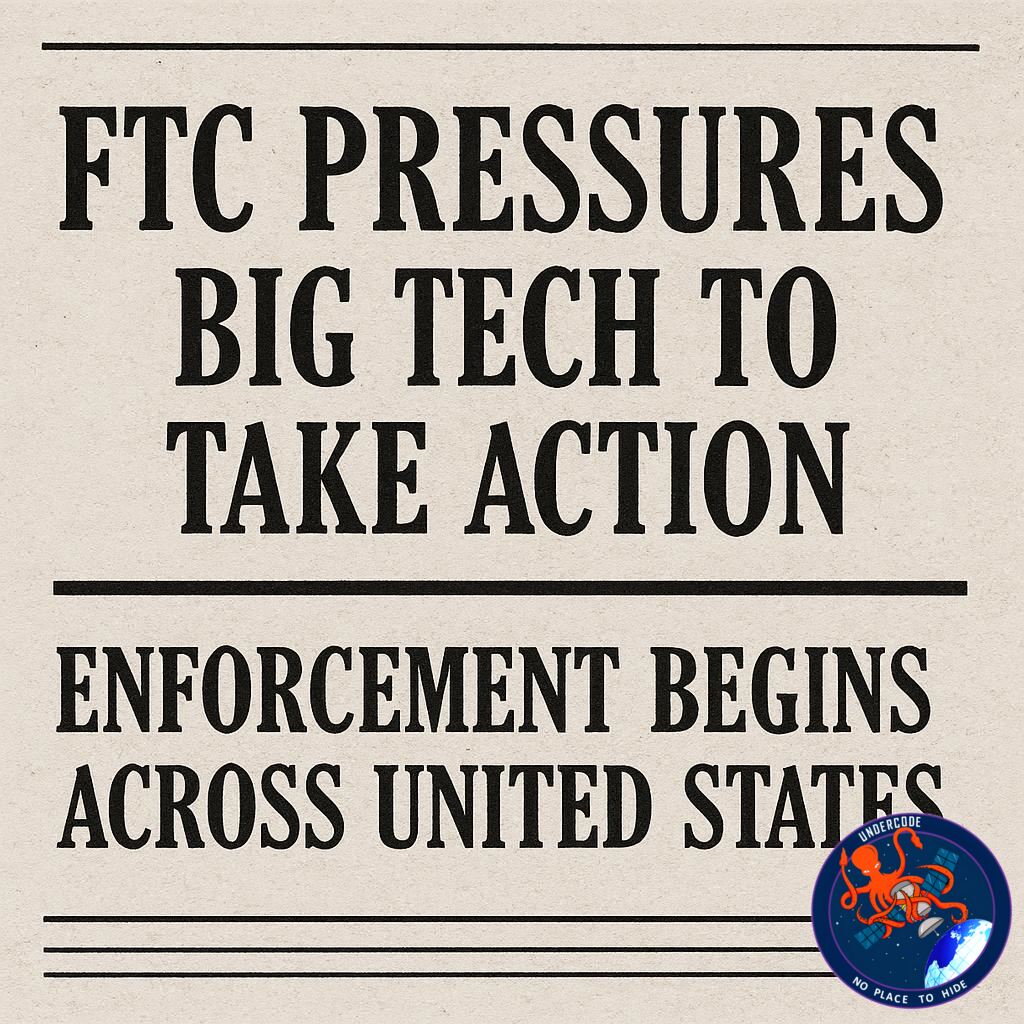
A new wave of online safety regulation is beginning to shake the technology industry after the U.S. Federal Trade Commission warned several major tech companies that they are still failing to comply with the newly enforced Take It Down Act. The law focuses on the rapid removal of nonconsensual intimate images, including AI-generated deepfake content, and introduces strict requirements for platforms to block reuploads of harmful material within a short timeframe.
The warning arrives at a moment when digital abuse, synthetic media, and AI-generated impersonation are becoming increasingly difficult to control. Regulators now appear determined to force social media platforms, hosting services, and major technology companies into faster action. At the same time, cybersecurity researchers are raising alarms over another growing crisis: software vulnerabilities are exploding at a pace that defenders can barely manage.
Together, these developments highlight a broader transformation in cybersecurity and online governance, where governments are demanding faster responses while threat actors continue scaling their attacks through automation and artificial intelligence.
FTC Warns 12 Major Tech Companies
According to reports shared by cybersecurity monitoring accounts online, the Federal Trade Commission has warned 12 major technology firms that they are not yet fully compliant with the Take It Down Act. The legislation requires platforms to remove nonconsensual intimate imagery within 48 hours after receiving valid reports.
The law also introduces another important obligation: companies must deploy systems capable of preventing duplicate uploads of the same harmful material. This means platforms are expected to use advanced detection tools, digital fingerprinting systems, and AI-powered moderation technologies to stop abusive content from spreading again after removal.
The regulation is closely connected to efforts from organizations such as the National Center for Missing & Exploited Children, which has long advocated stronger online protections for victims of exploitation and abuse.
The Take It Down Act represents one of the strongest legal pushes yet against revenge pornography, AI-generated explicit deepfakes, and image-based abuse. Companies that fail to comply could face regulatory penalties, lawsuits, and mounting public pressure.
AI-Generated Abuse Is Becoming a Massive Challenge
One reason lawmakers accelerated this legislation is the rapid rise of generative AI tools capable of creating realistic fake images. Deepfake technology has evolved dramatically during the past two years, making it easier for malicious actors to create fabricated explicit content using publicly available photos.
Victims often struggle to remove such content quickly enough before it spreads across multiple websites, social media platforms, encrypted channels, and forums. Even when a single upload is removed, copies can rapidly appear elsewhere.
The Take It Down Act attempts to address this problem by requiring duplicate detection systems rather than relying only on manual moderation. This shifts responsibility toward the platforms themselves, forcing them to actively prevent redistribution.
For many tech firms, implementing these systems at scale may require enormous investments in infrastructure, AI moderation tools, and human review teams.
Cybersecurity Industry Faces Another Growing Crisis
At the same time, cybersecurity researchers are warning about severe stress across the software supply chain ecosystem. New reports indicate that more than 48,000 Common Vulnerabilities and Exposures (CVEs) were recorded during 2025.
Security experts also warned that attackers are now exploiting vulnerabilities faster than organizations can patch them. Despite the huge number of reported flaws, only a small fraction were labeled high-priority by security tracking systems.
This imbalance creates dangerous conditions where defenders face alert fatigue while threat actors continue automating reconnaissance and exploitation techniques.
Researchers noted that weak visibility, poor asset management, and AI-assisted attack methods are amplifying the overall risk environment.
Several cybersecurity companies, including Black Kite and Mandiant, have repeatedly warned organizations that traditional vulnerability management approaches may no longer be sufficient in the modern threat landscape.
Why Governments Are Moving Faster Now
Governments around the world are increasingly frustrated by the speed at which online abuse spreads compared to the slower response times from technology platforms.
For years, critics argued that many companies relied heavily on reactive moderation systems instead of proactive detection. The rise of AI-generated media appears to have accelerated political urgency around digital safety regulation.
Lawmakers are also aware that synthetic media technology is becoming cheaper and more accessible. Tools once limited to advanced researchers are now available to ordinary users through mobile apps and online services.
This creates fears that harassment campaigns, impersonation attacks, and digital extortion could become far more common over the next several years.
The FTC’s warning signals that regulators may now begin aggressively enforcing compliance instead of simply encouraging voluntary cooperation.
What Undercode Says:
The Take It Down Act Could Redefine Platform Responsibility
The most important aspect of this story is not simply the FTC warning itself, but the broader shift in how governments are redefining accountability for online platforms. For years, companies could often argue that they were neutral hosts of user-generated content. Laws like the Take It Down Act weaken that position significantly by requiring active prevention systems instead of passive moderation.
This changes the legal and operational landscape for social media companies, cloud providers, messaging services, and even smaller online communities.
The duplicate-blocking requirement is especially significant because it forces platforms into a much more aggressive moderation role. Detecting identical or slightly modified copies of explicit material requires advanced hashing technologies, AI image recognition systems, and large-scale database coordination.
Smaller companies may struggle to meet these requirements due to limited technical resources.
Another major issue is false positives. Automated systems designed to detect intimate imagery can sometimes incorrectly flag harmless or legitimate content. Companies will need to balance victim protection with concerns surrounding free expression and moderation transparency.
The FTC’s involvement also suggests stronger federal oversight is coming for digital safety matters. Historically, many online abuse issues were handled inconsistently across states or through civil litigation. Federal enforcement introduces a much more serious compliance environment.
At the same time, the cybersecurity industry’s warning about exploding CVE numbers reveals another uncomfortable truth: defenders are overwhelmed.
Forty-eight thousand vulnerabilities in a single year is an extraordinary figure. Security teams already struggle with patch prioritization, staffing shortages, and incomplete visibility into their infrastructure. Attackers understand this imbalance and increasingly exploit it.
AI is becoming a force multiplier on both sides.
Defenders are using AI for threat detection, anomaly analysis, and automated response. Meanwhile, attackers are using the same technology to accelerate phishing campaigns, vulnerability discovery, malware development, and social engineering.
This creates a dangerous asymmetry where automation benefits offensive actors faster than defensive teams can adapt.
The mention that exploitation is outpacing patching is particularly alarming. It means organizations are no longer operating in a preventive security model. Instead, many are functioning in a continuous damage-control environment where breaches are expected rather than prevented.
The overlap between online safety regulation and cybersecurity enforcement is also becoming clearer. Governments increasingly view both issues as connected parts of national digital resilience.
Deepfake abuse, ransomware, supply chain compromise, identity theft, and platform exploitation are all symptoms of a rapidly evolving digital ecosystem where trust is deteriorating.
Technology companies now face pressure from multiple directions simultaneously:
Governments demanding compliance
Users demanding safety
Investors demanding profitability
Attackers exploiting scale and automation
That combination could reshape the internet economy over the next decade.
Another important factor is reputational risk. Companies publicly identified as noncompliant with abuse prevention laws may face long-term trust damage, especially as consumers become more aware of digital exploitation issues.
This story also demonstrates how cybersecurity conversations are shifting away from purely technical discussions into legal, ethical, and societal territory.
Future regulations may become even stricter, especially if AI-generated abuse continues growing at its current pace.
Ultimately, the FTC warning may be remembered as an early signal that governments are entering a much more interventionist era regarding platform governance and digital safety enforcement.
🔍 Fact Checker Results
✅ The Take It Down Act is designed to address nonconsensual intimate imagery and deepfake abuse with rapid removal requirements.
✅ Cybersecurity researchers have repeatedly warned that vulnerability growth is exceeding many organizations’ ability to patch systems effectively.
❌ There is currently limited publicly verified information identifying all 12 companies reportedly warned by the FTC in the referenced social media post.
📊 Prediction
The next 12 to 24 months will likely bring aggressive expansion of AI-content moderation systems across major online platforms. Governments may introduce additional laws requiring faster automated detection of harmful synthetic media, while companies invest heavily in digital fingerprinting and AI-based trust-and-safety infrastructure.
At the same time, cybersecurity operations centers will increasingly depend on AI-assisted prioritization because human teams alone will not be capable of handling the growing volume of vulnerabilities and attack activity. Organizations that fail to modernize visibility and incident response capabilities could experience a significant rise in successful breaches and compliance penalties.
🕵️📝Let’s dive deep and fact‑check.
References:
Reported By: x.com
Extra Source Hub (Possible Sources for article):
https://www.medium.com
Wikipedia
OpenAi & Undercode AI
Image Source:
Unsplash
Undercode AI DI v2
Bing
🔐JOIN OUR CYBER WORLD [ CVE News • HackMonitor • UndercodeNews ]
📢 Follow UndercodeNews & Stay Tuned:
𝕏 formerly Twitter 🐦 | @ Threads | 🔗 Linkedin | 🦋BlueSky | 🐘Mastodon | 📺Youtube


