
Listen to this Post
Introduction
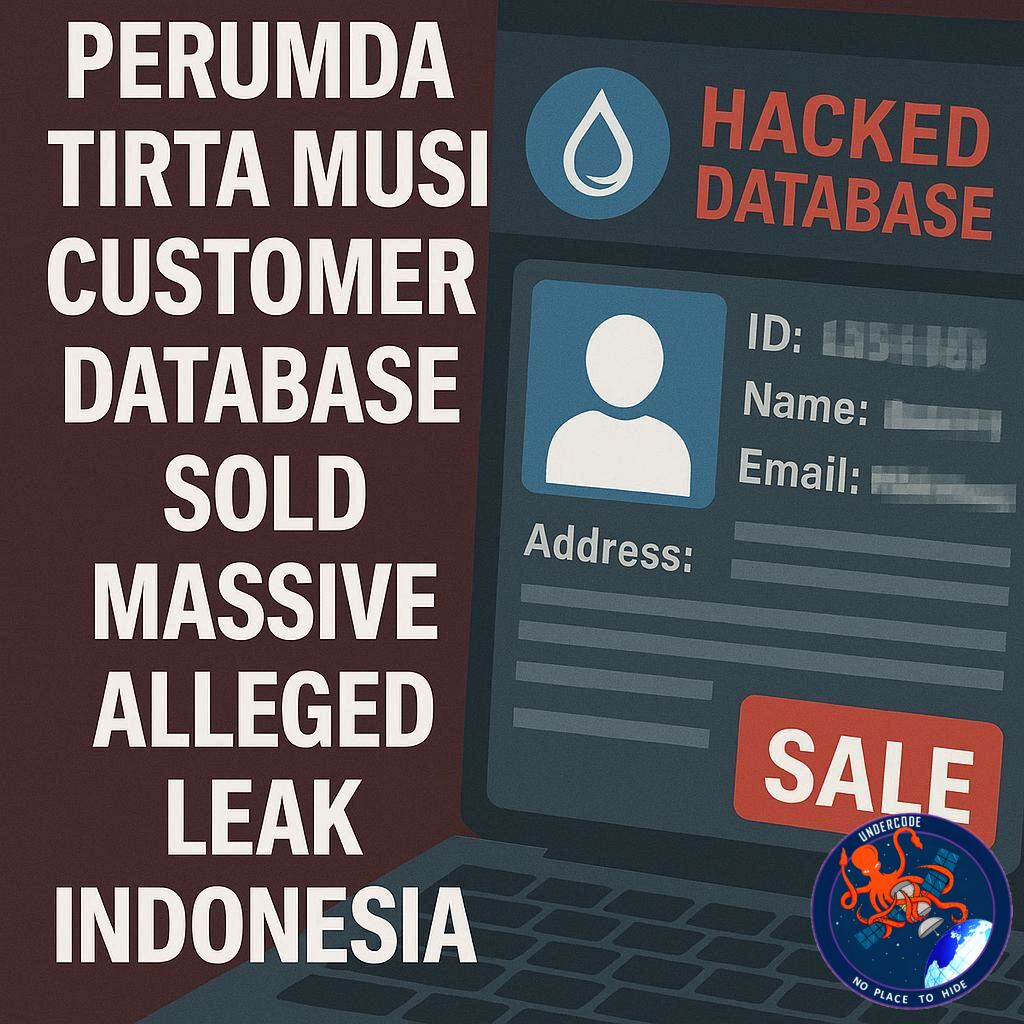
Concerns over public-sector cybersecurity in Indonesia intensified after claims surfaced online alleging that a massive database connected to Perumda Tirta Musi Palembang had been exposed and put up for sale. The incident reportedly involves hundreds of thousands of customer records, including personal information, phone numbers, addresses, tariff classifications, and account references. While the authenticity and scale of the leak have not yet been officially confirmed by authorities, the claims rapidly attracted attention across cybersecurity monitoring communities on X and dark web tracking channels.
The alleged breach highlights a growing global problem: regional utility providers and municipal organizations are increasingly becoming attractive targets for cybercriminals. These institutions often manage large volumes of sensitive citizen data while operating with limited cybersecurity budgets, outdated infrastructure, or fragmented digital systems. If verified, the incident could represent another warning sign that critical public services remain vulnerable to data exposure and underground data trading networks.
Alleged Sale of 437K+ Customer Records Raises Alarm
According to posts circulating on X by cybersecurity monitoring accounts, Perumda Tirta Musi Palembang is allegedly linked to the exposure and sale of more than 437,000 customer records. The claims also mention approximately 257,000 phone numbers reportedly included in the dataset. The leaked information is said to contain customer names, physical addresses, tariff codes, and account reference numbers associated with the water utility provider in Palembang, Indonesia.
The information began spreading through cybersecurity-focused social media channels and monitoring communities that frequently track ransomware activity, data leaks, and underground marketplace activity. Screenshots and summaries of the alleged database sale were shared publicly, increasing concerns about whether attackers successfully infiltrated internal systems or obtained the information through third-party exposure.
At the time the claims emerged, there was no widely published official confirmation from Perumda Tirta Musi regarding the validity of the leak. Nevertheless, the scale of the alleged exposure triggered discussions among cybersecurity professionals about the security posture of public utility infrastructures across Southeast Asia.
The timing of the incident also coincides with broader concerns in the cybersecurity industry regarding supply chain risks and vulnerability management. Additional posts referenced reports showing that more than 48,000 CVEs were recorded in 2025, with exploitation rates now exceeding patching efforts in many organizations. Researchers warned that companies increasingly struggle to maintain visibility over digital assets, especially as artificial intelligence tools accelerate attack automation and reconnaissance activities.
Experts have repeatedly emphasized that public service organizations often store highly valuable citizen information while lacking the advanced defensive capabilities seen in larger financial or technology enterprises. This imbalance makes utility providers frequent targets for credential theft, ransomware operations, insider threats, and database misconfigurations.
If the exposed records are authentic, affected individuals could face multiple downstream risks. Attackers may use leaked names, phone numbers, and addresses for phishing attacks, identity fraud, scam campaigns, or social engineering operations. Even partial datasets can become dangerous when combined with other previously leaked databases circulating online.
The alleged inclusion of tariff codes and account references may also provide attackers with insights into customer segmentation or billing systems. Cybercriminal groups frequently monetize such data by selling it in underground forums where fraud operators and spammers purchase bulk datasets for targeted campaigns.
The incident further demonstrates how cyber threats are evolving beyond large multinational corporations. Regional infrastructure operators, municipal services, and public administration platforms are increasingly under attack due to weak visibility, outdated systems, and inconsistent patch management practices.
What Undercode Says:
Public Utilities Are Becoming Prime Cyber Targets
The alleged Perumda Tirta Musi leak reflects a larger global pattern where utility providers are rapidly becoming high-value cybercrime targets. Water companies, electricity providers, transportation networks, and healthcare institutions now represent critical infrastructure environments containing both operational systems and massive amounts of personal information.
Attackers understand that these organizations often prioritize service continuity over cybersecurity modernization. Many municipal providers continue operating legacy software, aging databases, and fragmented internal networks that were never designed to withstand modern cyber threats.
Data Leaks Are No Longer Isolated Incidents
What makes modern breaches especially dangerous is not just the initial exposure itself, but how leaked information becomes part of a much larger underground ecosystem. Databases from different breaches are frequently merged together, allowing criminals to create detailed profiles on individuals.
A leaked phone number combined with a physical address and billing identifier can significantly increase the success rate of phishing and impersonation scams. Cybercriminals now rely heavily on automation and AI-assisted targeting to exploit leaked datasets at scale.
Weak Visibility Is the Real Crisis
The cybersecurity industry is currently facing an overwhelming vulnerability management problem. Tens of thousands of new vulnerabilities are disclosed annually, but only a small percentage receive immediate prioritization from organizations. Many public-sector institutions lack the resources to maintain real-time visibility across all systems, cloud assets, APIs, and third-party integrations.
This creates dangerous blind spots where attackers can remain undetected for long periods.
AI Is Accelerating Both Defense and Attacks
Artificial intelligence is transforming cybersecurity at an unprecedented pace. Defensive teams use AI for threat detection, anomaly analysis, and automated response systems. However, attackers are also using AI to accelerate vulnerability discovery, phishing personalization, malware obfuscation, and credential harvesting.
The result is a rapidly escalating digital arms race where organizations with slow modernization efforts become increasingly exposed.
Public Trust Can Collapse Quickly
For public utilities, cybersecurity incidents create more than technical damage. Citizens trust these institutions with essential services tied directly to daily life. A breach involving customer records can severely damage public confidence, especially if communication during the incident lacks transparency.
In many cases, the reputational damage lasts far longer than the technical recovery phase.
Southeast Asia Faces Growing Cyber Pressure
Southeast Asia has become a major target region for cybercriminal operations due to rapid digital transformation combined with uneven cybersecurity maturity across industries. As governments expand online public services and smart infrastructure projects, threat actors increasingly focus on exploiting weak points within regional ecosystems.
This makes investment in cybersecurity governance, incident response planning, and staff awareness more critical than ever.
Supply Chain Risks Continue Expanding
Another major concern highlighted indirectly by the discussions surrounding this case is supply chain security. Organizations increasingly depend on external vendors, cloud services, and third-party software providers. A single vulnerable partner can create cascading exposure across multiple institutions.
Attackers know this and frequently exploit the weakest available entry point.
The Human Factor Remains Critical
Despite advancements in security technologies, human error continues to play a central role in many breaches. Weak passwords, phishing attacks, accidental exposures, and poor internal security hygiene remain among the most common causes of compromise.
Without continuous cybersecurity education and operational discipline, even advanced organizations remain vulnerable.
🔍 Fact Checker Results
✅ Claims regarding the alleged leak were publicly circulated by cybersecurity monitoring accounts on X.
❌ No full independent verification of the alleged 437K-record dataset was publicly confirmed at the time of reporting.
✅ The broader cybersecurity concerns about rising CVEs, supply chain attacks, and patching delays align with current industry-wide threat trends.
📊 Prediction
The number of cyberattacks targeting regional public utilities and municipal service providers will likely continue rising throughout 2026 and beyond. Threat actors increasingly recognize that smaller infrastructure organizations often possess valuable citizen data but lack enterprise-grade defenses.
Future incidents may involve not only customer data theft, but also operational disruption attempts targeting water distribution systems, billing infrastructure, and connected smart-city technologies. Governments across Southeast Asia will likely face mounting pressure to impose stricter cybersecurity regulations, mandatory breach disclosures, and improved infrastructure security standards for public service operators.
🕵️📝Let’s dive deep and fact‑check.
References:
Reported By: x.com
Extra Source Hub (Possible Sources for article):
https://www.facebook.com
Wikipedia
OpenAi & Undercode AI
Image Source:
Unsplash
Undercode AI DI v2
Bing
🔐JOIN OUR CYBER WORLD [ CVE News • HackMonitor • UndercodeNews ]
📢 Follow UndercodeNews & Stay Tuned:
𝕏 formerly Twitter 🐦 | @ Threads | 🔗 Linkedin | 🦋BlueSky | 🐘Mastodon | 📺Youtube


