
Listen to this Post
Introduction
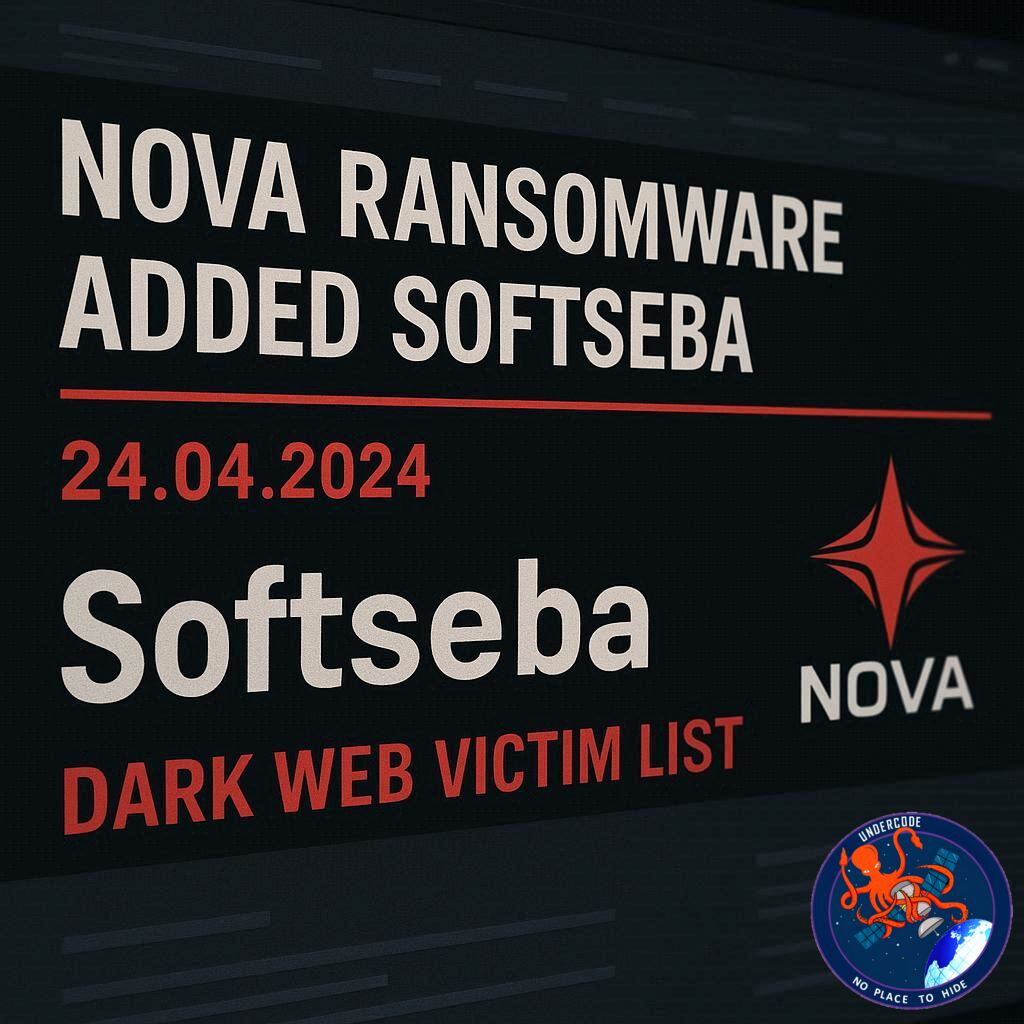
The ransomware ecosystem continues to evolve at an alarming pace, with new threat groups and attack campaigns surfacing almost daily across underground forums and leak sites. On May 21, 2026, cybersecurity monitoring accounts tracking dark web activity reported that the ransomware group known as “Nova” allegedly added a company called Softseba to its growing victim list. The information was initially observed and shared by the ThreatMon Threat Intelligence Team through social media monitoring channels focused on ransomware leak operations.
Although the full technical details behind the alleged compromise remain limited, the incident highlights a broader trend affecting organizations worldwide: ransomware gangs increasingly rely on public leak sites and social media amplification to pressure victims into paying extortion demands. The mention of Softseba joins a rapidly expanding stream of companies being publicly named by cybercriminal groups seeking leverage through reputational damage and potential data exposure.
Softseba Allegedly Targeted by Nova Ransomware
According to reports circulating on X and dark web monitoring feeds, the ransomware operation identified as Nova listed Softseba as a victim on May 21, 2026. The announcement was timestamped at approximately 17:25 UTC+3 and was attributed to ransomware activity observed by ThreatMon’s intelligence team.
The post did not disclose whether files had already been encrypted, whether sensitive information had been stolen, or if negotiations between the attackers and the company were ongoing. Like many ransomware leak announcements, the claim appears designed to create public pressure before technical confirmation becomes available.
Nova itself is still considered a relatively emerging ransomware actor compared to larger established operations such as LockBit, BlackCat, or Qilin. However, newer groups often attempt to build credibility quickly by publishing alleged victim names on leak portals and underground channels. These tactics serve both as marketing inside cybercriminal ecosystems and as psychological pressure against targeted organizations.
The social media post also referenced another ransomware incident involving the Qilin ransomware group and a separate victim, demonstrating how active the ransomware landscape remains across multiple sectors. Threat intelligence accounts increasingly act as real-time observers of these underground activities, documenting leak announcements moments after they appear online.
Cybersecurity analysts often caution that ransomware leak claims should initially be treated carefully until independently verified. Some groups exaggerate the scale of breaches, recycle old datasets, or falsely claim responsibility for attacks in order to gain notoriety. Nonetheless, many published claims eventually prove legitimate after organizations confirm disruptions or leaked data samples appear online.
The alleged targeting of Softseba reflects a continuing pattern in which organizations of varying sizes become exposed to extortion campaigns regardless of industry or geographic region. Modern ransomware attacks are no longer limited to massive enterprises; smaller companies, service providers, logistics firms, and software vendors have increasingly become attractive targets due to weaker security infrastructure and limited incident response resources.
Ransomware groups now commonly use double-extortion tactics. In these attacks, threat actors first exfiltrate sensitive files before deploying encryption malware. Victims are then threatened with public data leaks if they refuse to pay the ransom demand. This model has transformed ransomware from a purely operational disruption into a reputational and legal crisis as well.
The incident also demonstrates the growing role of threat intelligence monitoring services in tracking cybercriminal activity. Platforms such as ThreatMon continuously observe underground forums, ransomware leak sites, command-and-control infrastructure, and dark web communications to identify emerging threats before official disclosures occur.
At the moment, no official public statement from Softseba appears to have been released regarding the alleged attack. Without confirmation from the organization itself, many details remain uncertain, including the scope of the breach, the type of systems impacted, and whether customer or internal data may have been exposed.
What Undercode Says:
The Public Exposure Strategy of Modern Ransomware
The Nova incident reflects a broader shift in ransomware operations where visibility itself becomes a weapon. Years ago, ransomware attacks primarily focused on encrypting systems and demanding payment privately. Today, public humiliation and data exposure are central components of cyber extortion strategies.
Groups now maintain professionally designed leak portals that function almost like underground “press rooms.” Victim names are posted publicly alongside countdown timers, stolen document previews, and threats of full data publication. The goal is simple: maximize pressure on the target organization while attracting attention inside criminal communities.
Why Emerging Ransomware Groups Are Dangerous
Smaller or newer ransomware gangs are often underestimated. In reality, these groups can be extremely aggressive because they are attempting to establish credibility in underground ecosystems. By publicly naming victims rapidly, they try to prove operational capability and attract affiliates.
Many modern ransomware operations function using the Ransomware-as-a-Service (RaaS) model. In this structure, malware developers lease their infrastructure to affiliates who conduct attacks independently. This lowers the barrier of entry for cybercriminals and dramatically increases attack frequency worldwide.
Nova may represent part of this growing trend where emerging actors seek recognition through aggressive leak publication and media amplification.
Social Media as a Cyber Warfare Amplifier
One striking detail about incidents like this is how quickly ransomware activity spreads across social platforms. Threat intelligence accounts now act almost like cyber news agencies, reposting breach claims within minutes.
This creates a secondary layer of pressure for victims. Even before an organization completes internal investigations, screenshots and allegations begin circulating publicly. Customers, partners, and journalists may encounter breach rumors long before official communications are prepared.
The speed of information flow has effectively shortened the crisis response window for organizations under attack.
The Verification Problem
A major issue in ransomware reporting is verification. Threat actors frequently exaggerate or manipulate information. Some publish recycled data from previous breaches. Others bluff entirely in hopes of forcing payment through fear.
This means that every ransomware claim must be treated carefully until forensic evidence or official confirmation becomes available.
However, history shows that many leak-site claims eventually correspond to real compromises. Because of that, cybersecurity teams cannot afford to ignore these alerts even when details are incomplete.
The Business Impact Beyond Encryption
The financial consequences of ransomware now extend far beyond temporary downtime. Organizations face regulatory scrutiny, customer distrust, legal liability, operational disruption, and recovery costs that can persist for months or years.
Even companies that refuse to pay ransom demands may still suffer reputational damage once their name appears publicly on dark web leak sites.
For organizations with weak backup systems or poor network segmentation, recovery becomes significantly more expensive and time-consuming.
Why Attack Frequency Keeps Increasing
Ransomware remains profitable. That is the central reason attacks continue escalating globally.
Cryptocurrency payments, anonymous infrastructure, global affiliate networks, and inconsistent international law enforcement coordination create an environment where cybercriminal groups can operate with relatively low risk.
As long as ransomware generates millions in revenue, new groups like Nova will continue emerging to compete in the underground economy.
Defensive Lessons Organizations Should Learn
The alleged Softseba incident reinforces several critical cybersecurity lessons:
Continuous monitoring of dark web mentions is now essential.
Multi-factor authentication should be mandatory across corporate systems.
Offline backups remain one of the strongest protections against ransomware recovery costs.
Employee phishing awareness training must be continuous, not annual.
Rapid incident response planning is now a business necessity rather than an optional security investment.
The Psychological Dimension of Cyber Extortion
Modern ransomware attacks are carefully engineered psychological operations. Attackers deliberately create panic, urgency, and uncertainty. Leak announcements are timed to maximize stress on executives and IT teams.
The goal is not only technical compromise but emotional exhaustion. Organizations under pressure may make rushed decisions, including paying ransoms without fully assessing alternatives.
Understanding this psychological layer is becoming increasingly important for executive leadership teams managing cyber crises.
🔍 Fact Checker Results
✅ ThreatMon publicly reported that Nova allegedly added Softseba to its victim list on May 21, 2026.
✅ No official confirmation from Softseba was included in the original report.
❌ There is currently no publicly verified evidence confirming the scale, legitimacy, or impact of the alleged breach.
📊 Prediction
The ransomware landscape will likely continue fragmenting into smaller but highly aggressive groups similar to Nova. Over the next year, cybercriminal operations are expected to rely even more heavily on public leak tactics, AI-assisted phishing campaigns, and rapid social media amplification to pressure victims into paying extortion demands. Organizations that fail to modernize their incident response capabilities and backup strategies may face increasing operational and reputational risks as ransomware groups evolve faster than traditional corporate defenses.
🕵️📝Let’s dive deep and fact‑check.
References:
Reported By: x.com
Extra Source Hub (Possible Sources for article):
https://www.twitter.com
Wikipedia
OpenAi & Undercode AI
Image Source:
Unsplash
Undercode AI DI v2
Bing
🔐JOIN OUR CYBER WORLD [ CVE News • HackMonitor • UndercodeNews ]
📢 Follow UndercodeNews & Stay Tuned:
𝕏 formerly Twitter 🐦 | @ Threads | 🔗 Linkedin | 🦋BlueSky | 🐘Mastodon | 📺Youtube


