
Listen to this Post
Introduction
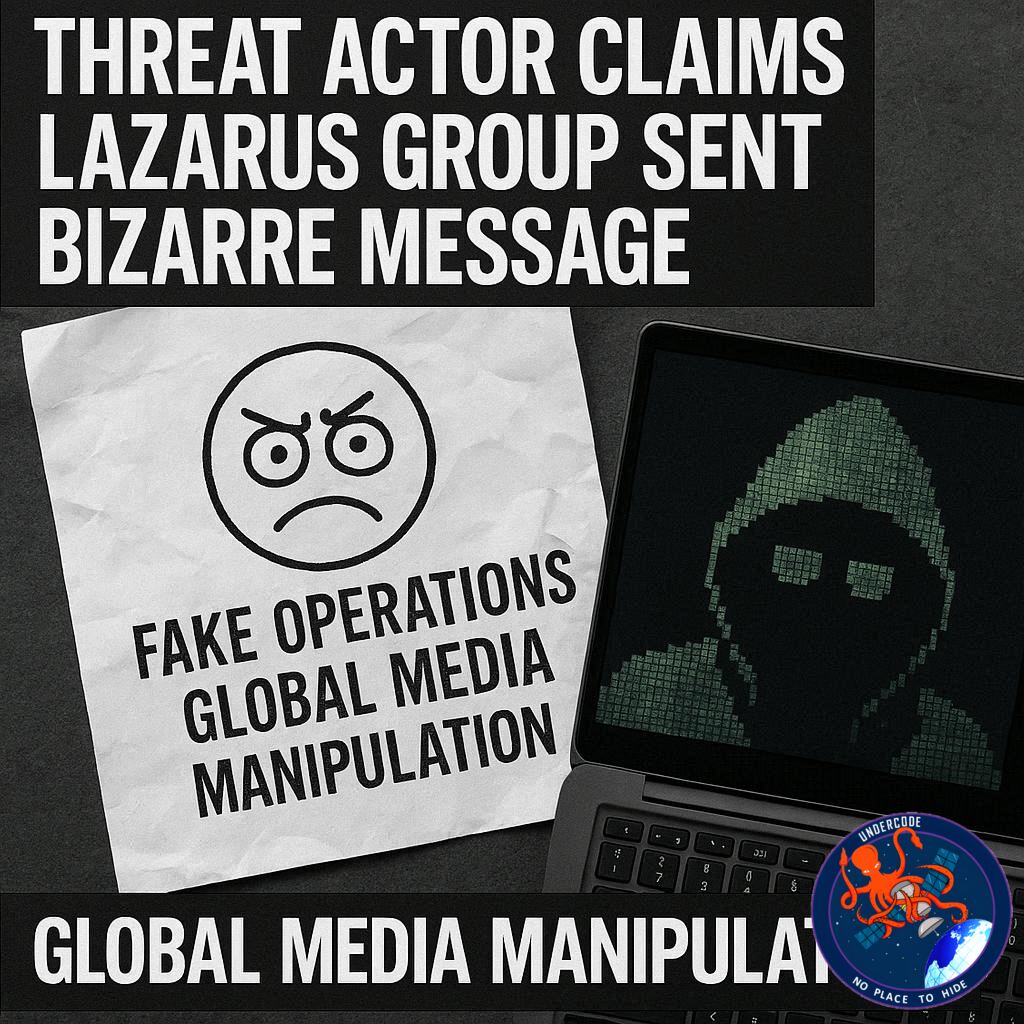
The shadowy world of cyber warfare has once again entered dangerous territory after a strange response allegedly linked to the infamous Lazarus Group surfaced online. According to Daily Dark Web, the group replied to an interview request with an unexpected statement discussing “fake Lazarus” campaigns, media manipulation, psychological warfare, and claims of influence across multiple global cyber groups.
What makes this event especially alarming is not just the content itself, but the possibility that modern cybercriminal organizations are now attempting to shape narratives publicly, almost like intelligence agencies or political actors. Whether the response was authentic, fabricated, or part of a coordinated psychological operation, the incident demonstrates how cyber conflict is rapidly evolving beyond malware and ransomware attacks into the realm of information warfare.
The situation has sparked intense debate across cybersecurity circles, OSINT communities, and threat intelligence analysts who are questioning whether cybercrime organizations are now intentionally building public personas and media influence strategies.
The Strange Response That Raised Questions
The original post published by Daily Dark Web claimed that an alleged response from Lazarus Group contained highly unusual language. Instead of rejecting the interview request directly, the message reportedly included references to “fake Lazarus” operations and broader claims involving international influence and manipulation.
The wording immediately triggered speculation among analysts. Some researchers believe the message may have been crafted to create confusion around attribution. Others suspect it could be an impersonation attempt designed to exploit the reputation of Lazarus for strategic gain.
Cybersecurity experts have long warned that attribution in modern attacks is becoming increasingly unreliable. Threat actors frequently plant misleading evidence, use infrastructure from rival groups, or intentionally imitate known hacking organizations to confuse investigators.
The mention of “fake Lazarus” operations is particularly notable because several cybercriminal gangs have previously attempted to mimic the tactics, malware patterns, and operational structures associated with Lazarus-linked campaigns.
Why Lazarus Group Remains One of the Most Feared Cyber Threats
Lazarus Group has become synonymous with some of the world’s most sophisticated cyberattacks. The organization has been linked by Western intelligence agencies and cybersecurity firms to major financial thefts, cryptocurrency attacks, espionage campaigns, and destructive malware operations.
The group gained worldwide attention after the devastating Sony Pictures attack in 2014 and has since been associated with attacks targeting banks, governments, cryptocurrency exchanges, defense contractors, and infrastructure providers.
What separates Lazarus from ordinary ransomware gangs is its alleged strategic alignment with geopolitical objectives. Many analysts believe the group operates with nation-state backing, giving it resources and operational patience far beyond traditional cybercriminal organizations.
This latest incident adds another layer to the mythology surrounding the group. Instead of remaining silent and anonymous, the alleged message suggests an awareness of public image, media narratives, and influence operations.
Cybercriminals Are Learning the Power of Narrative Warfare
One of the most important aspects of this story is the growing role of psychological operations in cybercrime. Threat actors no longer rely solely on technical capabilities. Increasingly, they are attempting to control perception, manipulate fear, and influence public discussions.
Ransomware gangs already use public leak sites to pressure victims. Some groups issue press-style statements, publish “codes of conduct,” or attempt to justify attacks politically. Others actively communicate with journalists and researchers to shape how their operations are portrayed.
This evolution mirrors tactics historically associated with intelligence agencies and political propaganda campaigns.
Modern cyber warfare now includes:
Media manipulation
Brand building
Reputation management
Psychological intimidation
Information laundering
Strategic misinformation
The alleged Lazarus response appears to fit within this broader trend.
Attribution Is Becoming Nearly Impossible
One of the biggest challenges facing cybersecurity investigators today is determining who is truly behind an attack. Attackers deliberately exploit this confusion.
A sophisticated threat actor can:
Use malware previously associated with another group
Route attacks through compromised infrastructure worldwide
Plant misleading language artifacts
Imitate geopolitical motives
Create fake personas online
Leak manipulated evidence
As a result, modern cyber attribution increasingly involves political interpretation as much as technical analysis.
This ambiguity benefits attackers because confusion delays international response efforts and weakens confidence in intelligence reporting.
The Rise of Cyber Influence Operations
The internet has transformed cybercrime groups into media-aware organizations. Many ransomware operators now behave almost like underground corporations with branding strategies, PR tactics, and carefully managed public images.
Some groups attempt to appear ideological. Others portray themselves as anti-establishment activists. A few deliberately cultivate fear to increase ransom payment pressure.
The alleged message tied to Lazarus suggests that even elite threat actors may now understand the value of controlling narratives publicly rather than remaining hidden entirely.
This represents a major shift in cyber conflict dynamics.
Governments and Intelligence Agencies Are Watching Closely
Incidents like this attract enormous interest from intelligence agencies because they blur the boundaries between cybercrime, espionage, and information warfare.
If state-linked groups begin actively engaging in narrative manipulation online, future cyber conflicts may involve:
Coordinated propaganda campaigns
Fake hacker identities
False-flag operations
Manipulated media leaks
Strategic disinformation during attacks
These tactics could complicate international diplomacy and increase the risk of escalation between nations.
Deep Analysis
The alleged response demonstrates how cyber operations are no longer limited to technical compromise alone. Instead, threat actors are increasingly blending cyber intrusion techniques with psychological manipulation strategies.
One particularly concerning element is the reference to controlling multiple groups worldwide. Whether true or fabricated, the statement itself is strategically useful because it introduces uncertainty into attribution discussions.
Threat actors understand that fear and ambiguity are operational advantages.
From a technical perspective, investigators often analyze:
whois suspicious-domain.com
nslookup attacker-server.com
traceroute malicious-ip

Threat intelligence teams also monitor malware signatures and infrastructure overlap using tools such as:
yara malware_rules.yar suspicious_file.exe
Network analysts frequently inspect suspicious traffic patterns through:
tcpdump -i eth0
wireshark
OSINT researchers may correlate leaked infrastructure using:
theHarvester -d target.com -b all
However, even advanced technical analysis can fail when adversaries intentionally plant deceptive indicators.
The larger issue is psychological influence. By publicly referencing fake operations and media manipulation, the alleged sender may be attempting to shape discourse itself rather than merely conducting attacks.
This tactic resembles classic intelligence tradecraft:
Introduce uncertainty
Disrupt consensus
Encourage conflicting interpretations
Weaken confidence in attribution
Cybersecurity is increasingly becoming an information battle as much as a technical one.
What Undercode Says:
The Psychological Warfare Era Has Officially Arrived
The most dangerous aspect of this incident is not whether the message truly came from Lazarus Group. The real danger lies in the fact that cybercriminal ecosystems now recognize the strategic value of perception control.
For years, cybersecurity discussions focused heavily on malware payloads, vulnerabilities, encryption routines, and infrastructure analysis. That model is now outdated.
Modern threat actors understand that media narratives can amplify operational success far beyond the technical impact of an intrusion.
Fear itself has become a weapon.
A ransomware attack that receives massive media attention creates pressure on victims, shareholders, governments, and even geopolitical relationships. Cybercriminals know this. State-linked actors know this even better.
The alleged references to “fake Lazarus” operations are especially significant because they introduce a layer of plausible deniability into future investigations. If enough confusion exists, attribution becomes politically unstable.
That uncertainty can delay sanctions, weaken diplomatic responses, and fracture international consensus.
Another critical issue is impersonation warfare. Cybercrime ecosystems increasingly feature copycat groups that intentionally borrow branding from elite actors. Some do it for credibility. Others do it for intimidation.
This creates an environment where:
Real attacks may be dismissed as fake
Fake attacks may trigger real geopolitical consequences
Intelligence reporting becomes vulnerable to manipulation
Media organizations become operational targets
The cyber battlefield is no longer hidden inside data centers. It now extends directly into public discourse.
The alleged message also reflects a broader transformation in underground communities. Threat actors are becoming media literate. They understand virality, social amplification, and psychological signaling.
Some ransomware groups already operate leak portals resembling news websites. Others issue public statements with carefully engineered messaging strategies.
This evolution should concern governments because cyber influence campaigns can destabilize trust at scale.
Imagine a future scenario where:
Fake breach claims manipulate stock markets
AI-generated hacker personas spread disinformation
Cyber groups impersonate state actors during geopolitical crises
Fabricated attribution sparks diplomatic conflict
These risks are no longer theoretical.
Another overlooked factor is how social media accelerates cyber narratives before verification occurs. A single viral claim can influence global headlines within minutes, long before forensic validation happens.
This speed benefits attackers.
In many cases, perception forms faster than evidence.
The alleged Lazarus response may ultimately prove authentic, fake, or partially manipulated. But the strategic effect has already succeeded: people are debating narrative control, misinformation, and cyber influence operations globally.
That alone demonstrates operational sophistication.
Cybersecurity professionals must now adapt beyond technical defense. Future resilience will require:
Stronger attribution standards
Media literacy training
Faster intelligence validation
Psychological operations awareness
Cross-border information sharing
The era where hackers operated silently in the background is ending.
Today’s threat actors increasingly want visibility, influence, and narrative dominance.
🔍 Fact Checker Results
✅ Verified Context About Lazarus Group
Multiple international cybersecurity firms and Western intelligence agencies have previously linked Lazarus Group to large-scale cyber espionage and financial attacks.
✅ Authenticity of the Message Remains Unverified
There is currently no independently verified evidence confirming that the alleged response genuinely originated from Lazarus operators themselves.
❌ No Proof of Global Control Claims
Claims regarding control over multiple cyber groups worldwide remain unsupported and should be treated cautiously until credible evidence emerges.
📊 Prediction
Cyber Threat Actors Will Become More Public and Political
Future cybercriminal organizations will likely expand beyond technical attacks into full-scale influence operations involving propaganda, fake personas, media manipulation, and AI-generated disinformation campaigns.
Nation-State Attribution Will Become Increasingly Contested
Governments and cybersecurity firms will face growing difficulty proving responsibility for attacks as adversaries deliberately deploy false-flag tactics and deceptive operational signatures.
Media Platforms Will Become Cyber Battlegrounds
Social media and online intelligence platforms may become central theaters in cyber warfare, where perception management becomes just as valuable as technical compromise itself.
▶️ Related Video (74% Match):
🕵️📝Let’s dive deep and fact‑check.
References:
Reported By: x.com
Extra Source Hub (Possible Sources for article):
https://stackoverflow.com
Wikipedia
OpenAi & Undercode AI
Image Source:
Unsplash
Undercode AI DI v2
Bing
🔐JOIN OUR CYBER WORLD [ CVE News • HackMonitor • UndercodeNews ]
📢 Follow UndercodeNews & Stay Tuned:
𝕏 formerly Twitter 🐦 | @ Threads | 🔗 Linkedin | 🦋BlueSky | 🐘Mastodon | 📺Youtube


