
Listen to this Post
Introduction
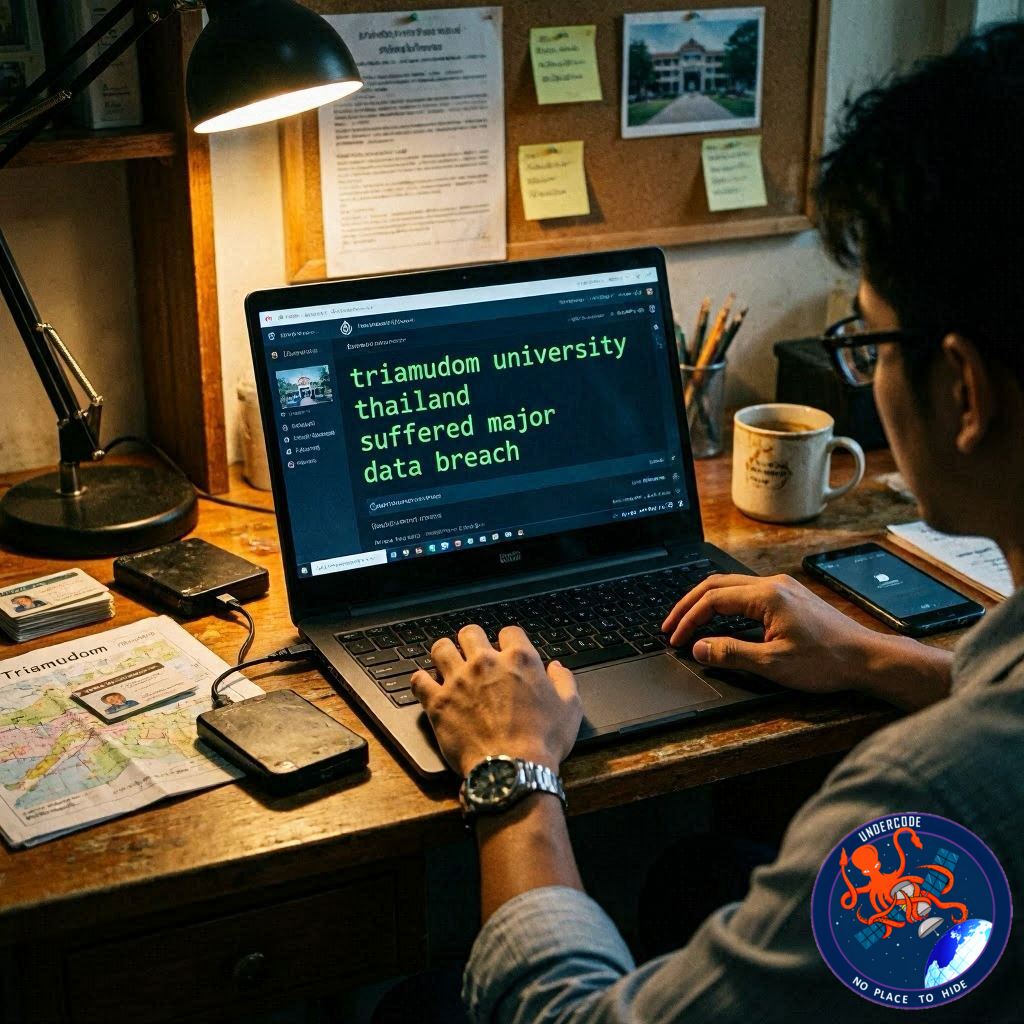
Another educational institution has reportedly appeared on the radar of cybercriminals operating across underground hacking forums and dark web leak platforms. According to a post shared by the account “Dark Web Intelligence” on X, Thailand’s prestigious Triamudom University was allegedly targeted in a data breach incident that surfaced online on May 24, 2026.
While official confirmation from the university has not yet been publicly released, the claim quickly attracted attention within cybersecurity monitoring circles because universities continue to represent highly valuable targets for ransomware gangs, credential harvesters, and data brokers. Educational institutions often store massive volumes of sensitive information including student records, financial data, research documents, faculty credentials, internal communications, and authentication databases.
The alleged breach comes during a period where cyberattacks against the education sector are rising dramatically across Asia. Threat actors increasingly focus on schools and universities due to weaker infrastructure, aging systems, decentralized networks, and limited cybersecurity budgets compared to corporate enterprises.
In the original post, Dark Web Intelligence briefly stated that Triamudom University in Thailand suffered a data exposure incident. Although the post itself did not disclose technical indicators, attack vectors, or ransom demands, the appearance of the university’s name on dark web monitoring feeds suggests that attackers may be attempting to monetize or publicly leak stolen information.
Cybersecurity analysts monitoring underground channels often observe a familiar pattern in these incidents. Threat actors first gain access through phishing emails, vulnerable VPN gateways, exposed RDP services, or compromised administrator credentials. After persistence is established, attackers typically move laterally across networks to extract databases and sensitive files before threatening publication on leak sites.
Universities remain especially vulnerable because their environments combine academic freedom with highly distributed IT infrastructure. Students, faculty, and administrators access systems from multiple devices and locations, creating an enormous attack surface that is difficult to fully secure. In many cases, legacy software and poorly segmented internal networks become easy entry points for attackers.
The alleged compromise involving Triamudom University has not yet been independently verified. However, even unconfirmed dark web claims can create reputational damage, trigger panic among students and staff, and pressure organizations into emergency incident response operations.
If verified, the breach could potentially affect academic records, internal administrative documents, email systems, or authentication credentials. Threat actors commonly attempt to sell such information on underground marketplaces or leverage it for identity theft, phishing campaigns, and follow-up attacks against affiliated organizations.
Educational institutions in Southeast Asia have increasingly become strategic targets because many are rapidly digitizing operations without simultaneously upgrading security controls. The expansion of cloud learning platforms, remote access systems, and hybrid educational environments has created new opportunities for cybercriminal groups looking for easy infiltration points.
At the moment, there is no official evidence confirming the scale of the alleged exposure. Still, the incident highlights the growing cyber risks facing universities worldwide as attackers continue exploiting weak defenses in public and private educational infrastructure.
What Undercode Says:
Universities Are Becoming Prime Cyberwarfare Targets
The alleged targeting of Triamudom University reflects a much larger cybersecurity crisis affecting academic institutions globally. Universities are no longer attacked merely for financial extortion. They are now viewed as high-value intelligence environments containing research data, student identities, diplomatic collaborations, and government-linked academic projects.
Attackers Prefer Educational Networks Because of Complexity
Educational networks are notoriously difficult to secure properly. Thousands of student devices connect daily, often through unmanaged or partially monitored environments. This creates a fragmented security posture where visibility is limited and endpoint control becomes inconsistent. Threat actors understand this weakness very well.
Southeast Asia Is Seeing Increased Threat Activity
Threat intelligence reports throughout 2025 and 2026 show a major rise in ransomware operations targeting Southeast Asian institutions. Attack groups increasingly exploit countries undergoing rapid digital transformation because cybersecurity maturity often lags behind infrastructure expansion. Thailand has become one of the regional hotspots for phishing, credential theft, and ransomware delivery campaigns.
Dark Web Leak Posts Often Serve as Psychological Pressure
Even when attackers do not immediately release stolen files, merely mentioning an organization publicly can create chaos. Leak announcements are frequently used as negotiation tactics designed to force victims into responding quickly. Public exposure pressures institutions from students, parents, regulators, and media outlets simultaneously.
Academic Data Has High Underground Market Value
Student databases may appear harmless at first glance, but they contain valuable intelligence for criminals. Full names, addresses, email accounts, passport scans, financial aid records, and identity documents can be bundled into identity fraud packages sold on cybercrime forums.
Research Departments Are Especially Attractive
Modern universities frequently collaborate with technology companies, healthcare sectors, defense programs, and governmental agencies. This means attackers targeting educational institutions may actually be pursuing intellectual property or research intelligence rather than simple ransomware payments.
Legacy Infrastructure Continues to Be a Major Risk
Many universities still operate outdated servers, unsupported applications, and poorly patched authentication systems. Attackers actively scan the internet searching for these weaknesses because exploitation often requires minimal effort. Once inside, weak network segmentation allows rapid movement across departments.
Human Error Remains the Biggest Weakness
Cybersecurity awareness inside educational environments is often inconsistent. Faculty members and students may unknowingly open phishing attachments, reuse passwords, or connect infected devices to internal systems. One compromised account can provide attackers with a gateway into the broader network.
Incident Response in Universities Is Usually Slower
Unlike large corporations with dedicated SOC teams operating 24/7, many universities rely on smaller IT departments with limited monitoring capabilities. This gives attackers more time to remain undetected, escalate privileges, and exfiltrate information quietly.
Data Extortion Has Replaced Traditional Encryption-Only Attacks
Modern ransomware groups increasingly skip encryption entirely and focus on data theft. By stealing sensitive documents first, attackers maximize leverage even if the victim restores systems from backups. Public leak threats alone can force organizations into crisis management mode.
Cloud Migration Introduces New Security Gaps
Universities rapidly adopted cloud-based platforms after global remote learning expansion. Unfortunately, rushed cloud deployments frequently introduce misconfigured storage buckets, exposed APIs, and weak authentication controls. Attackers heavily target these cloud environments because exposure is often public-facing.
Third-Party Vendors Can Become Entry Points
Educational institutions rely on external learning management systems, payment platforms, and student information software. If a third-party vendor becomes compromised, attackers may gain indirect access into university networks through trusted integrations.
Reputation Damage Can Last for Years
A university associated with a cyberattack may experience declining trust among students and international partners. Parents increasingly evaluate cybersecurity maturity when choosing institutions because data protection is now considered part of educational quality itself.
Governments May Tighten Regulations After Incidents
As attacks increase, governments across Asia are expected to introduce stricter compliance frameworks around educational cybersecurity. Mandatory breach disclosure laws, minimum security standards, and infrastructure audits may become unavoidable in the near future.
AI-Driven Attacks Are Making Defense Harder
Threat actors now use AI-generated phishing emails, automated reconnaissance tools, and deepfake impersonation techniques to improve attack success rates. Universities with limited defensive budgets may struggle to adapt quickly enough against these evolving threats.
Cybersecurity Education Must Become Operational
Ironically, many universities teach cybersecurity theory while failing to implement modern operational defenses internally. Security awareness training, zero-trust architecture, MFA enforcement, endpoint detection systems, and continuous monitoring are no longer optional protections. They are mandatory survival requirements.
Deep analysis :
Example reconnaissance methods commonly used by attackers
nmap -sV target.edu
nmap -p 3389,22,443,445 target.edu
Search for exposed services
shodan search hostname:"target.edu"
Detect vulnerable web technologies
whatweb https://target.edu
Enumerate subdomains
subfinder -d target.edu
Check email exposure
theHarvester -d target.edu -b all
Detect leaked credentials
grep "@target.edu" breached_dump.txt
Monitor suspicious authentication logs
cat /var/log/auth.log | grep failed
Example firewall hardening
ufw deny 3389
ufw allow 443/tcp
Enable multi-factor authentication policies
sudo apt install libpam-google-authenticator
Audit outdated packages
sudo apt update && sudo apt upgrade
🔍 Fact Checker Results
✅ The original X post did mention an alleged data breach involving Triamudom University in Thailand.
⚠️ No public forensic evidence or official confirmation has yet validated the scale of the alleged compromise.
✅ Educational institutions worldwide have experienced a documented rise in ransomware and data theft operations during recent years.
📊 Prediction
🔮 Cybercriminal groups will continue targeting universities throughout 2026 because academic environments provide massive amounts of personal and research data with relatively weaker defenses.
🔮 Southeast Asian educational institutions are likely to face increased ransomware and extortion campaigns as digital infrastructure expands faster than cybersecurity investment.
🔮 Future university attacks will increasingly combine AI-powered phishing, credential theft, and cloud exploitation techniques to bypass traditional security systems.
▶️ Related Video (78% Match):
🕵️📝Let’s dive deep and fact‑check.
References:
Reported By: x.com
Extra Source Hub (Possible Sources for article):
https://www.medium.com
Wikipedia
OpenAi & Undercode AI
Image Source:
Unsplash
Undercode AI DI v2
Bing
🔐JOIN OUR CYBER WORLD [ CVE News • HackMonitor • UndercodeNews ]
📢 Follow UndercodeNews & Stay Tuned:
𝕏 formerly Twitter 🐦 | @ Threads | 🔗 Linkedin | 🦋BlueSky | 🐘Mastodon | 📺Youtube


