
Listen to this Post
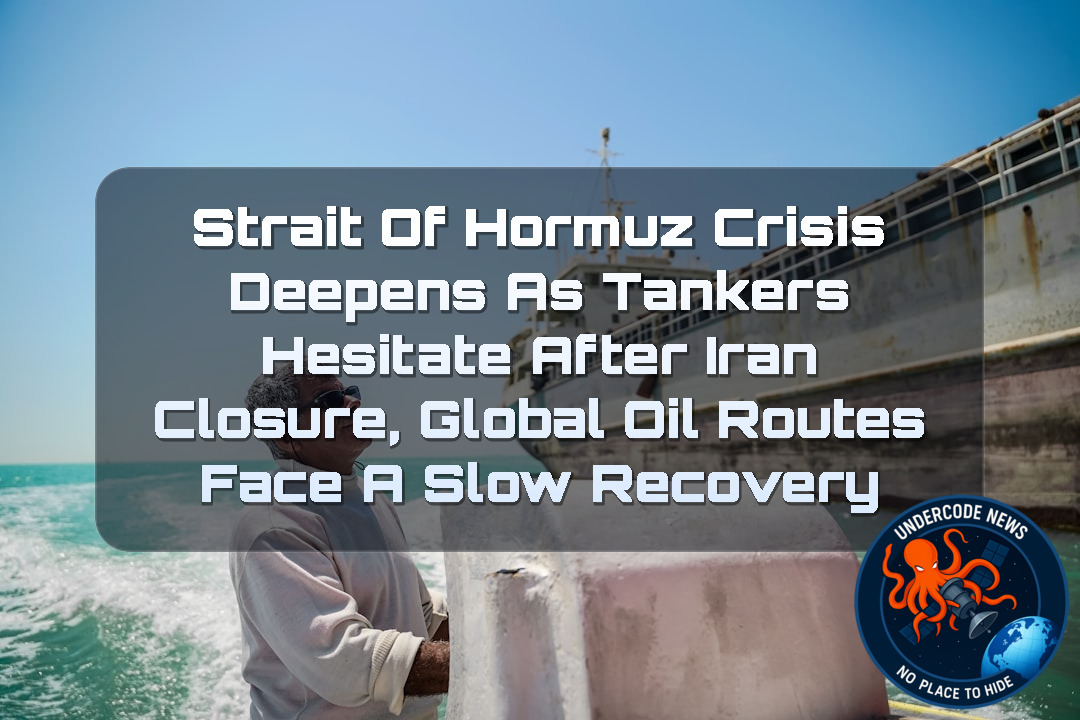 Introduction: A Strategic Waterway Trapped Between Hope and Fear
The Strait of Hormuz remains one of the most important energy corridors in the world, connecting the oil-rich Persian Gulf with global markets. Every day, millions of barrels of crude oil normally pass through this narrow maritime route, making any disruption a major concern for governments, energy companies, shipping operators, and consumers worldwide.
Although Iran and the United States reached an agreement aimed at ending the fighting, the return of normal maritime activity has not happened overnight. The reopening of the waterway has created cautious optimism, but shipping companies remain deeply concerned about security threats, insurance restrictions, damaged confidence, and operational challenges.
The latest developments show that the biggest obstacle is no longer only the physical closure of the Strait of Hormuz. The deeper problem is trust. Ship operators must believe the route is safe, insurers must accept the risks, and energy companies must restart production before global oil flows can truly recover.
Tanker Traffic Returns Slowly as Operators Avoid Risk
Before Iran officially announced that the Strait of Hormuz was closed again, many shipping companies had already reduced their activity through the narrow passage. According to marine intelligence data from Kpler, vessel movements showed a temporary increase before quickly declining.
Around 25 ships passed through the Strait on Thursday, marking the highest traffic level since mid-April when Iran briefly allowed commercial shipping activity. However, tanker movements dropped back into single digits the following day after planned negotiations between Iran and the United States were canceled.
Energy analyst Matt Smith explained that while shipping activity has increased slightly, there has not been a significant return of confidence among operators. The industry is waiting for a company willing to make the first major move before others follow.
The Gap Between Peace Agreements and Real Maritime Recovery
The signing of an agreement to stop fighting does not immediately restore global shipping operations. Before the conflict, approximately 100 to 120 tankers moved through the Strait of Hormuz every day. Current traffic remains only a small fraction of that level.
Nearly 500 vessels, including around 220 oil tankers, have remained trapped inside the Persian Gulf since the beginning of the conflict. Many of these ships are carrying oil, while others are waiting for safer conditions before attempting to leave.
Experts believe restoring normal shipping patterns could take months because maritime industries operate based on calculated risk rather than political announcements. A ceasefire may reduce tensions, but shipping companies need evidence that the environment has genuinely stabilized.
The Security Problem Still Controls the Strait
One of the biggest concerns facing ship operators is the uncertainty surrounding navigation safety. According to Jakob Larsen, chief safety and security officer at Baltic and International Maritime Council, the security environment remains unstable despite diplomatic progress.
The central section of the Strait reportedly remains affected by maritime hazards, including suspected mine risks, forcing vessels to use limited coastal routes near Iran and Oman.
However, these alternative routes are also creating problems. Increased congestion, limited space, and navigational difficulties have introduced new dangers for crews attempting to leave the region.
The situation demonstrates that reopening a major maritime corridor is not simply a matter of removing a blockade. It requires rebuilding an entire safety ecosystem involving military monitoring, navigation systems, insurance approval, and commercial confidence.
Thousands of Seafarers Remain Stuck in Limbo
Behind the economic consequences are thousands of workers who have spent months trapped aboard ships in uncertain conditions.
Approximately 20,000 crew members remain affected by the disruption. Many seafarers want to return home but understand that leaving the Gulf too quickly could expose them to additional danger.
Ben Bailey from Mission to Seafarers described the mood among crews as cautious optimism. Workers hope that the agreement will allow them to leave soon, but many remain aware that the security situation could change rapidly.
For these crews, the crisis is not only about oil markets or shipping statistics. It is about personal safety, family separation, and months spent waiting for a decision they cannot control.
Insurance Companies Become a Hidden Barrier
One of the most overlooked parts of the crisis is the role of maritime insurance companies. Even if ships are technically allowed to sail, many operators cannot move without proper war-risk coverage.
Marine insurers removed much of this protection during the early stages of the conflict. Without insurance approval, many shipping companies are unwilling to send vessels through the region.
Oil analyst Tom Kloza explained that the shutdown was caused not only by Iran’s actions but also by decisions made by major insurance markets, including Lloyd’s of London.
Insurance companies must evaluate whether the risk has truly declined before restoring full coverage. Until that happens, many ship owners will continue waiting.
Months of Waiting Create Technical Problems for Ships
Long periods of inactivity create another challenge. Ships that have remained anchored for months may require inspections, maintenance, fuel supplies, and technical preparation before they can safely continue their journeys.
Marine industry experts warn that vessels may need repairs and cleaning after extended periods without movement. Even natural issues such as marine growth, including barnacles attached to ship surfaces, can affect performance.
The process is not as simple as giving crews permission to restart engines. A large-scale maritime recovery requires preparation, inspections, and coordination across multiple industries.
Oil Production Faces Its Own Slow Recovery
Even if tanker traffic resumes, global energy markets will not immediately return to normal.
Many oil production and refining operations in the Persian Gulf were reduced or stopped because ships could not safely transport supplies. Restarting these facilities requires time, workers, equipment, and reliable transportation routes.
After production resumes, empty tankers must return to collect new shipments. However, ship owners remain cautious about sending vessels back into the region if there is a possibility of another shutdown.
The oil industry depends heavily on confidence. Without long-term stability, companies may continue limiting their exposure to the Persian Gulf.
Deep Analysis: Linux Commands for Tracking Maritime Risk, Energy Data, and Global Disruption
Understanding a geopolitical shipping crisis requires analyzing multiple layers of information, from vessel movement to energy prices and security signals.
Linux systems are widely used by analysts, researchers, and security professionals for monitoring large datasets, processing information, and identifying patterns.
A simple analyst environment can begin by collecting maritime-related datasets:
mkdir maritime-analysis
cd maritime-analysis
Researchers working with large reports can search important terms quickly:
grep -i "Hormuz" shipping_reports.txt
Monitoring repeated mentions of security risks can reveal changing trends:
grep -iE "mine|insurance|tanker|ceasefire" reports.txt
Large datasets containing vessel activity can be filtered using command-line tools:
awk -F',' '{print $3,$5}' tanker_activity.csv
Analysts can organize shipping information by date:
sort -k1 vessel_tracking.csv
Network researchers may monitor publicly available maritime services:
curl -I https://example.com
Historical comparisons can be performed by comparing archived datasets:
diff previous_month.csv current_month.csv
Security teams analyzing regional instability often look for sudden changes:
tail -f maritime_updates.log
The Strait of Hormuz crisis highlights how modern conflicts are no longer limited to military actions. A single geopolitical event can disrupt logistics, insurance markets, energy prices, and global supply chains simultaneously.
The biggest lesson is that infrastructure confidence is fragile. A waterway can reopen physically while remaining closed economically because companies fear future disruption.
The recovery process depends on three factors: security guarantees, insurance confidence, and consistent political stability.
If any one of these elements fails, shipping activity may remain restricted despite diplomatic agreements.
The crisis also shows how invisible systems influence global markets. Insurance companies, navigation rules, and corporate risk models can have as much impact as governments.
Energy markets will continue watching tanker movements because shipping activity will provide the clearest evidence of whether the situation is truly improving.
A successful recovery will likely happen gradually rather than through a sudden return to normal operations.
The first companies willing to sail regularly will become an important signal for the entire industry.
However, operators will continue demanding proof that the Strait is safe before committing billions of dollars in ships and cargo.
The future of global oil stability depends not only on political agreements but also on whether commercial actors believe those agreements will survive.
What Undercode Say:
The Strait of Hormuz crisis reveals a deeper weakness in the global energy system: dependence on a small number of strategic routes.
For decades, international markets have relied on uninterrupted maritime access through narrow passages. The current disruption proves that these routes remain vulnerable despite advances in technology and diplomacy.
The most important factor is not the temporary closure itself. The bigger concern is the psychological impact on companies.
Shipping operates on confidence. A tanker owner does not only ask whether a route is open today. They ask whether that route will remain open tomorrow, next week, or next month.
This explains why traffic remains limited even after political agreements.
The modern economy is built on predictable movement. Oil producers, shipping companies, insurers, and governments all require stability before returning to normal behavior.
Insurance markets are especially important because they determine whether risks can be financially accepted.
Without insurance coverage, even the largest shipping companies may refuse to operate.
The crisis also exposes how interconnected global systems have become.
A conflict between regional powers can influence fuel prices, transportation costs, inflation, and industrial production worldwide.
The trapped vessels represent more than delayed cargo. They represent uncertainty inside the global supply chain.
Another important factor is human impact.
Thousands of crew members remain caught between political decisions and operational realities.
Their situation demonstrates that international crises affect individuals far beyond government negotiations.
The recovery period will likely become a test of trust between governments and private industries.
If companies see continued stability, shipping will gradually return.
If new incidents occur, confidence could disappear immediately.
The energy market may also accelerate efforts to reduce dependence on vulnerable maritime chokepoints.
Countries may increase strategic reserves, develop alternative routes, and invest more heavily in renewable energy.
However, oil will remain a major part of the global economy for years, meaning maritime security will continue to matter.
The Strait of Hormuz is not simply a shipping route. It is a symbol of how fragile global economic networks can become during periods of geopolitical tension.
The next few months will determine whether this crisis becomes a temporary disruption or a long-term transformation of global energy strategy.
✅ The Strait of Hormuz is one of the world’s most important oil shipping routes, connecting the Persian Gulf with international markets.
✅ Shipping companies commonly require war-risk insurance before operating in conflict areas, meaning insurance decisions can directly affect maritime traffic.
❌ A political agreement alone does not guarantee immediate restoration of normal shipping activity because security, technical, and commercial issues remain.
Prediction
(+1) Shipping traffic through the Strait of Hormuz is likely to recover gradually if security conditions remain stable and insurers restore coverage.
(+1) Energy companies may increase investment in alternative supply routes and strategic reserves after experiencing this disruption.
(+1) Maritime monitoring technology and risk-analysis systems will become more important for future crisis management.
(-1) A renewed security incident could quickly reduce tanker traffic again and delay recovery for months.
(-1) Oil markets may remain vulnerable because global energy transportation still depends heavily on a few critical maritime passages.
(-1) Insurance companies may continue restricting coverage until they receive stronger guarantees that the region is permanently stable.
▶️ Related Video (72% Match):
🕵️📝Let’s dive deep and fact‑check.
🎓 Live Courses & Certifications:
Join Undercode Academy for Verified Certifications
🚀 Request a Custom Project:
Secure, high-velocity infrastructure and disruptive technological engineering. Contact our engineering team for high-tier development and proprietary systems:
[email protected]
💎 Smart Architecture | 🛡️ Secure by Design | ⭐ Trusted by Thousands
References:
Reported By: edition.cnn.com
Extra Source Hub (Possible Sources for article):
https://stackoverflow.com
Wikipedia
OpenAi & Undercode AI
Image Source:
Unsplash
Undercode AI DI v2
🔐JOIN OUR CYBER WORLD [ CVE News • HackMonitor • UndercodeNews ]
📢 Follow UndercodeNews & Stay Tuned:
𝕏 formerly Twitter 🐦 | @ Threads | 🔗 Linkedin | 🦋BlueSky | 🐘Mastodon | 📺Youtube


