
Listen to this Post
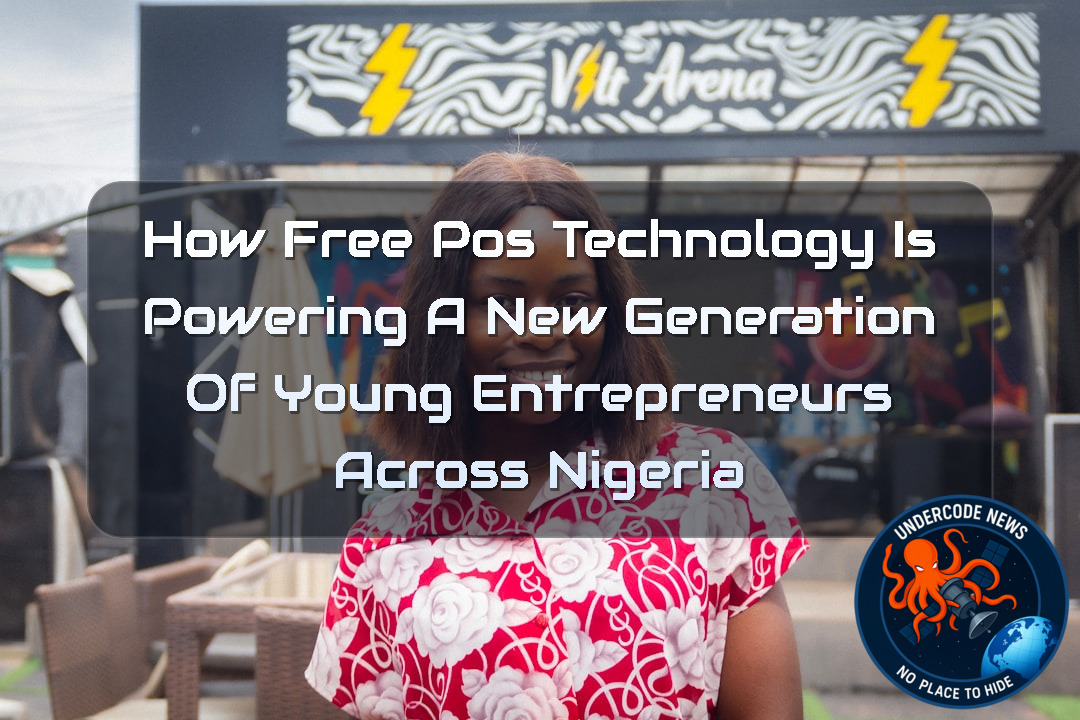
How Free POS Technology Is Powering a New Generation of Young Entrepreneurs Across Nigeria
A New Digital Revolution Is Changing
Nigeria has long struggled with high unemployment and underemployment, leaving millions of young people searching for practical ways to earn a living. While many dream of launching successful businesses, one challenge repeatedly stands in their way: access to startup capital. Without enough money to purchase equipment, rent shops, or buy inventory, countless entrepreneurial ideas never become reality.
However, a quiet technological revolution is beginning to reshape this narrative. Across Nigerian cities, towns, and rural communities, digital financial technology is lowering the barriers to entrepreneurship. Free Point-of-Sale (POS) devices, digital airtime distribution systems, and single-wallet payment platforms are allowing young Nigerians to establish profitable micro-businesses with minimal financial risk.
What was once considered a simple airtime-selling business has evolved into a modern digital retail ecosystem capable of generating sustainable income while contributing to Nigeria’s growing fintech economy.
Technology Is Removing Traditional Barriers to Small Business Ownership
For many years, airtime retailers depended on physical recharge cards purchased in bulk from distributors. This required upfront investment, inventory management, and constant restocking, making it difficult for low-income entrepreneurs to enter the market.
Today, Electronic Voucher Distribution (EVD) and Electronic Airtime Distribution (EAD) technologies have transformed the industry. Instead of carrying physical recharge cards, retailers now process transactions digitally using connected devices.
Companies such as Nairtime, operating through Optasia in Nigeria since 2012, have accelerated this transformation by providing vendors with free GPRS-enabled POS terminals, smartphones, desktop systems, and transaction tools.
By eliminating equipment costs, these platforms allow thousands of aspiring entrepreneurs to start businesses immediately without worrying about purchasing expensive hardware.
This represents a major shift in how entrepreneurship can begin in emerging economies where access to capital remains limited.
The Single-Wallet System Is Making Business Easier Than Ever
One of the most significant innovations introduced into Nigeria’s airtime ecosystem is the single-wallet model.
Traditionally, vendors needed separate balances for each mobile network operator. Managing multiple accounts often tied up scarce capital and complicated daily operations.
The modern digital wallet eliminates these inefficiencies by allowing retailers to sell services for MTN, Airtel, Globacom, and 9mobile from one account.
This streamlined approach improves cash flow management, reduces financial complexity, and enables even the smallest vendors to serve customers across multiple networks without additional investment.
For young entrepreneurs operating with limited resources, such efficiency can determine whether a business survives or fails.
Airtime Has Become More Than Communication
Mobile airtime is no longer simply a tool for making phone calls.
In
The importance of this ecosystem became especially clear during the temporary suspension of emergency airtime and data lending services in April 2026.
Millions of subscribers suddenly found themselves unable to access emergency credit, exposing just how dependent individuals, traders, artisans, and small businesses have become on digital connectivity.
The disruption highlighted that airtime has effectively become part of Nigeria’s informal financial infrastructure.
Airtime Credit Functions Like Microfinance for Everyday Nigerians
Industry experts increasingly view airtime credit as more than a telecommunications service.
According to the Association of Licensed Telecoms Operators of Nigeria (ALTON), airtime lending acts as an informal credit system that supports millions of citizens who may not qualify for traditional banking products.
Small traders often rely on emergency airtime to contact suppliers.
Delivery workers depend on mobile data to receive customer requests.
Freelancers require internet connectivity to complete remote jobs.
Students use data to access online educational resources.
Without affordable access to communication services, economic productivity slows significantly.
Industry estimates place
Millions Felt the Impact When Services Were Suspended
Earlier this year, regulatory concerns surrounding digital lending temporarily interrupted airtime credit services across major mobile operators.
More than 40 million subscribers were reportedly affected.
The situation illustrated how deeply integrated digital credit has become in modern Nigerian society.
Following legal discussions and regulatory engagement, services gradually resumed across several telecommunications providers, bringing relief to millions of individuals and businesses that rely on emergency connectivity.
The episode also emphasized the need for balanced regulation that protects consumers without disrupting essential digital services.
Digital Retailing Is Quietly Creating Thousands of Jobs
Unlike traditional employment programs that require significant government funding, technology-enabled airtime retail grows organically through private sector innovation.
Every new retailer creates another small business capable of generating daily income.
Many operators begin with airtime sales before expanding into bill payments, mobile money, cash withdrawals, utility payments, data subscriptions, and additional financial services.
This gradual business expansion creates stronger local economies while increasing financial inclusion in underserved communities.
Instead of waiting for formal employment opportunities, young Nigerians are increasingly creating work for themselves using digital platforms.
Fintech Companies Are Investing Beyond Technology
Companies supporting airtime distribution contribute to the Nigerian economy in multiple ways beyond retail services.
They employ software developers, cybersecurity specialists, compliance officers, operations managers, customer service representatives, and financial professionals.
Their businesses generate tax revenue, pension contributions, banking activity, and investment within Nigeria’s financial system.
With reported local currency exposure reaching approximately ₦19 billion, fintech firms are becoming important contributors to national digital infrastructure while encouraging broader economic participation.
Small Devices Are Unlocking Big Economic Opportunities
A free POS terminal may appear to be a simple piece of technology.
In reality, it represents access to entrepreneurship.
For many young Nigerians, receiving a digital transaction device means acquiring the ability to earn income independently rather than waiting indefinitely for salaried employment.
Technology is transforming ordinary mobile devices into business tools capable of supporting families, funding education, and improving financial independence.
As digital payments continue expanding across Africa, these opportunities are likely to become even more significant.
The Future of Grassroots Entrepreneurship
Nigeria’s growing digital economy demonstrates that innovation does not always begin inside large corporations.
Sometimes meaningful economic transformation starts in neighborhood kiosks, roadside shops, and local market stalls.
By removing equipment costs, simplifying financial management, and expanding digital payment infrastructure, fintech platforms are empowering thousands of first-time entrepreneurs.
If supported by stable regulations and continued technological investment, this model could become one of Nigeria’s most effective grassroots employment solutions for years to come.
Deep Analysis: Technology Behind Digital Airtime Distribution
Modern airtime distribution platforms operate using secure digital transaction networks that resemble enterprise financial systems. Every transaction is authenticated, logged, encrypted, and synchronized with centralized servers to minimize fraud and ensure real-time balance updates.
Many fintech providers deploy cloud infrastructure capable of handling thousands of simultaneous transactions while maintaining high availability. APIs connect telecom operators with distribution partners, enabling instant airtime delivery across multiple networks.
The widespread use of digital wallets also improves transparency by reducing dependence on physical vouchers and manual reconciliation.
From a cybersecurity perspective, secure authentication, encrypted communication channels, transaction monitoring, and fraud detection algorithms remain essential components of these ecosystems.
Common Linux administration and monitoring commands used within enterprise fintech infrastructure include:
uname -a
hostnamectl
uptime
top
htop
free -h
df -h
lsblk
ip addr
ss -tulpn
netstat -tulpn
journalctl -xe
systemctl status nginx
systemctl restart nginx
systemctl status mysql
systemctl restart mysql
tail -f /var/log/syslog
tail -f /var/log/auth.log
cat /etc/os-release
whoami
id
chmod
chown
crontab -l
ps aux
kill -9 PID
ping
traceroute
curl
wget
openssl version
ssh user@server
scp file server:/backup
rsync -av
tar -czvf backup.tar.gz
gzip
find
grep
awk
sed
iptables -L
ufw status
As
What Undercode Say:
The story illustrates how technology is solving economic problems that governments alone have struggled to address.
Instead of creating temporary employment schemes, fintech companies are enabling self-employment.
Removing startup costs dramatically lowers the barrier to entrepreneurship.
Free POS devices are not merely promotional tools; they are gateways into digital commerce.
The single-wallet approach reduces unnecessary financial friction.
Working capital becomes more efficient.
Small vendors gain access to enterprise-level transaction systems.
Digital inclusion expands beyond urban centers.
Micro-businesses become financially sustainable faster.
Technology democratizes business ownership.
The Nigerian fintech ecosystem continues to mature rapidly.
Private-sector innovation is filling infrastructure gaps.
Digital payments are replacing cash dependency.
Airtime distribution has evolved into a financial service.
Emergency airtime credit functions similarly to microcredit.
Financial inclusion extends beyond banks.
Telecommunications increasingly intersect with fintech.
Regulatory stability will determine long-term growth.
Consumer trust remains essential.
Cybersecurity investment cannot be ignored.
Cloud infrastructure will handle future transaction growth.
Artificial intelligence may improve fraud detection.
Real-time analytics will optimize vendor performance.
Digital identity systems could strengthen compliance.
Small entrepreneurs will increasingly adopt mobile-first business models.
Competition among fintech providers will encourage innovation.
Service quality will become a key differentiator.
Affordable connectivity remains fundamental.
Network uptime directly impacts business continuity.
Government policy should encourage responsible innovation.
Digital entrepreneurship supports economic resilience.
Local employment benefits extend beyond retailers.
Software development demand will continue increasing.
Financial technology has become an economic development tool.
Grassroots entrepreneurship creates community-level prosperity.
The digital economy rewards accessibility over scale.
Lower entry barriers often produce higher innovation.
Nigeria’s youth population represents an enormous entrepreneurial resource.
Technology alone is not enough; supportive regulation and infrastructure must evolve together.
✅ Nigeria continues to face significant youth unemployment and underemployment, making entrepreneurship an increasingly important source of income.
✅ Electronic airtime distribution and digital wallet technologies genuinely reduce startup costs compared with traditional recharge card retailing.
✅ The reported suspension of airtime lending services highlighted how dependent millions of Nigerians have become on digital communication and financial technology, although long-term regulatory outcomes will continue evolving.
Prediction
(+1)
(-1) Increased regulatory complexity or inconsistent fintech policies could discourage investment, slow innovation, and reduce opportunities for small entrepreneurs who rely on these digital platforms. 📉⚠️
▶️ Related Video (80% Match):
https://www.youtube.com/watch?v=iTafWb92F5A
🕵️📝Let’s dive deep and fact‑check.
🎓 Live Courses & Certifications:
Join Undercode Academy for Verified Certifications
🚀 Request a Custom Project:
Secure, high-velocity infrastructure and disruptive technological engineering. Contact our engineering team for high-tier development and proprietary systems:
[email protected]
💎 Smart Architecture | 🛡️ Secure by Design | ⭐ Trusted by Thousands
References:
Reported By: www.legit.ng
Extra Source Hub (Possible Sources for article):
https://www.discord.com
Wikipedia
OpenAi & Undercode AI
Image Source:
Unsplash
Undercode AI DI v2
🔐JOIN OUR CYBER WORLD [ CVE News • HackMonitor • UndercodeNews ]
📢 Follow UndercodeNews & Stay Tuned:
𝕏 formerly Twitter 🐦 | @ Threads | 🔗 Linkedin | 🦋BlueSky | 🐘Mastodon | 📺Youtube


