
Listen to this Post
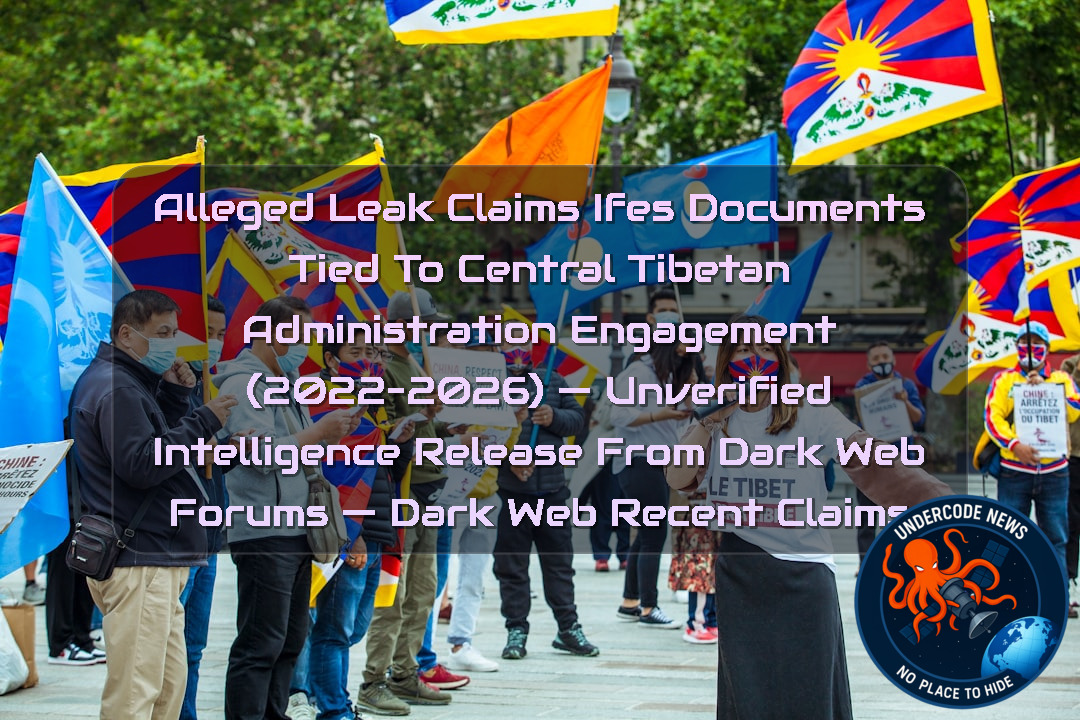 Introduction: Rising Questions Around a Multi-Year Document Exposure Claim
A new set of claims circulating on dark web-aligned intelligence forums has drawn attention after a threat actor allegedly published internal documents said to involve the International Foundation for Electoral Systems (International Foundation for Electoral Systems) and its engagement with the Central Tibetan Administration (Central Tibetan Administration). The material is said to span a wide operational timeline from 2022 to 2026, suggesting a long-term record of institutional cooperation and administrative activity.
At this stage, none of the documents have been independently verified, and no official confirmation has been issued by the organizations involved. However, the nature of the claim, combined with the breadth of the alleged data, has triggered discussions across cybersecurity and geopolitical monitoring communities.
Claim Overview: What the Threat Actor Says They Possess
According to the forum post referenced in the intelligence thread, the actor claims to have obtained internal documentation sets spanning several years of organizational engagement.
The files are allegedly presented as structured records covering activities between 2022 and 2026, potentially including administrative communications, operational coordination, and partnership documentation. The post also reportedly includes download links to the full collection, though their safety, validity, and authenticity remain unverified.
Cyber analysts note that such claims often appear in underground forums where exaggeration, misinformation, and recycled data leaks are common tactics used to attract attention or credibility.
Document Scope Allegations: Multi-Year Institutional Coverage
The most striking element of the claim is the alleged timeline. A four-year span of documents suggests continuous or recurring interaction between involved organizations, rather than a single isolated breach.
If the materials were genuine, they could theoretically contain sensitive insights into operational planning cycles, funding coordination structures, or international partnership frameworks. However, there is no technical validation that confirms the data actually originates from internal systems or whether it is partially fabricated or aggregated from publicly available sources.
Security and Intelligence Implications: Why Analysts Are Watching Closely
From a cybersecurity perspective, even unverified leaks can generate strategic concern. The naming of recognized institutions such as International Foundation for Electoral Systems elevates the visibility of the claim, especially given IFES’s involvement in governance and electoral development programs globally.
Similarly, references to the Central Tibetan Administration add a geopolitical layer, since any alleged compromise involving administrative or diplomatic documentation could be interpreted in multiple political contexts.
Still, analysts emphasize that without forensic confirmation, such claims should be treated as informational noise until proven otherwise.
Authenticity Status: Unverified and Potentially Misleading Release
No evidence has been presented to confirm file integrity, origin authentication, or metadata consistency. In many past incidents involving similar forum leaks, datasets have included:
Publicly accessible documents rebranded as “internal”
Partially fabricated composites of real and fake files
Outdated information repackaged as current intelligence
Given these patterns, experts recommend caution when interpreting such releases, especially when download links are shared without validation frameworks or checksum verification.
Contextual Pattern: Why These Claims Appear Frequently in Dark Web Spaces
Leaks attributed to threat actors often follow a predictable cycle: attention generation, speculative amplification, and partial media redistribution. Even without confirmed technical breaches, the announcement itself can influence perception and trigger investigative interest.
In geopolitical or NGO-related contexts, claims like this can be used to test credibility boundaries or provoke reaction from targeted institutions. The absence of verification mechanisms in underground forums further complicates the ability to separate real compromise from fabricated narratives.
What Undercode Say:
The claim represents a typical early-stage leak announcement pattern seen in underground forums
No cryptographic proof or hash verification has been provided for the alleged files
The 2022–2026 timeline raises suspicion due to future-dated framing inconsistencies
IFES has no publicly confirmed breach associated with this incident
Central Tibetan Administration references may be used to amplify geopolitical attention
Threat actors often recycle public documents and repackage them as internal leaks
Download links in such posts frequently lead to phishing or malware payloads
Lack of technical indicators reduces immediate credibility of the dataset
OSINT tracking shows similar claims previously debunked in other forums
No evidence of lateral movement or intrusion chain has been presented
Metadata absence is a major red flag in document-based breach claims
Document authenticity requires checksum validation which is missing here
Social engineering amplification is likely part of the posting strategy
Claims of multi-year datasets are often exaggerated for impact
No confirmed victim acknowledgment has been issued
IFES operational security posture historically relies on segmented systems
CTA-related data exposure claims are rare and require higher scrutiny
Threat actor identity remains unknown or unverified
File hosting sources are not independently audited
No dark web marketplace corroboration exists for the dataset
Intelligence community has not flagged this as confirmed breach
Attribution cannot be established without forensic artifacts
Possible misinformation campaign cannot be ruled out
Multi-year data claims often include recycled archival materials
Lack of sample file analysis prevents validation
No screenshots of internal systems provided
Claims rely solely on forum text posting
Risk level remains speculative rather than confirmed
No evidence of encryption key leakage or credential dumps
No infrastructure mapping associated with breach reported
Absence of victim system identifiers weakens credibility
No CVE or exploit chain referenced
Potential reputational manipulation scenario exists
Data may be partially derived from public NGO reports
Timeline inconsistency suggests synthetic compilation risk
No independent cybersecurity firm validation exists
Forum amplification suggests attention-seeking motivation
Similar historical claims have been disproven in past cycles
Verification required before any operational conclusions
Current status remains unconfirmed intelligence claim only
❌ No official confirmation from International Foundation for Electoral Systems regarding any breach
❌ No verified forensic evidence supports the alleged dataset authenticity
⚠️ Claims remain unverified and originate from an anonymous threat actor forum post
Prediction:
(+1) Increased monitoring by cybersecurity analysts will likely continue as similar claims emerge across underground forums
(+1) IFES and related organizations may issue clarification statements if public attention grows
(-1) Risk of misinformation spread remains high due to unverified download links and forum amplification
(-1) Possibility that the dataset is partially fabricated or recycled remains significant based on historical leak patterns
(+1) OSINT communities will likely attempt metadata reconstruction to validate or debunk the claim
Deep Analysis: System-Level Intelligence Verification Flow (Linux-Based OSINT Approach)
Check hash integrity if files become available
sha256sum alleged_documents.zip
Extract metadata from documents
exiftool alleged_document.pdf
Scan for malware signatures
clamscan -r ./leak_folder
Analyze network origin traces
tcpdump -i eth0 host suspicious_domain
Search dark web mentions (simulated OSINT query)
grep -r "IFES leak" /darkweb/forums/
Verify timestamps in files
stat alleged_document.pdf
Check compressed archive structure
unzip -l alleged_documents.zip
Sandbox execution environment
firejail –net=none –private bash
Monitor DNS anomalies
dnstracer suspicious-domain.com
Cross-reference OSINT databases
curl -s https://osintframework.com/api/search?q=IFES
Detect duplicate document fingerprints
fdupes -r ./dataset
Validate certificate chains if hosted online
openssl s_client -connect example.com:443
Extract embedded URLs
strings alleged_document.pdf | grep http
Track IP reputation
whois suspicious-ip-address
Memory forensics snapshot
volatility -f memory.dump imageinfo
Packet capture review
wireshark captured_traffic.pcap
Archive entropy analysis
binwalk alleged_documents.zip
Check cron-based persistence (if system involved)
crontab -l
Review system logs
journalctl -xe
Compare document similarity
diff fileA.pdf fileB.pdf
▶️ Related Video (58% Match):
🕵️📝Let’s dive deep and fact‑check.
🎓 Live Courses & Certifications:
Join Undercode Academy for Verified Certifications
🚀 Request a Custom Project:
Secure, high-velocity infrastructure and disruptive technological engineering. Contact our engineering team for high-tier development and proprietary systems:
[email protected]
💎 Smart Architecture | 🛡️ Secure by Design | ⭐ Trusted by Thousands
References:
Reported By: x.com
Extra Source Hub (Possible Sources for article):
https://www.linkedin.com
Wikipedia
OpenAi & Undercode AI
Image Source:
Unsplash
Undercode AI DI v2
🔐JOIN OUR CYBER WORLD [ CVE News • HackMonitor • UndercodeNews ]
📢 Follow UndercodeNews & Stay Tuned:
𝕏 formerly Twitter 🐦 | @ Threads | 🔗 Linkedin | 🦋BlueSky | 🐘Mastodon | 📺Youtube


