
Listen to this Post
Introduction
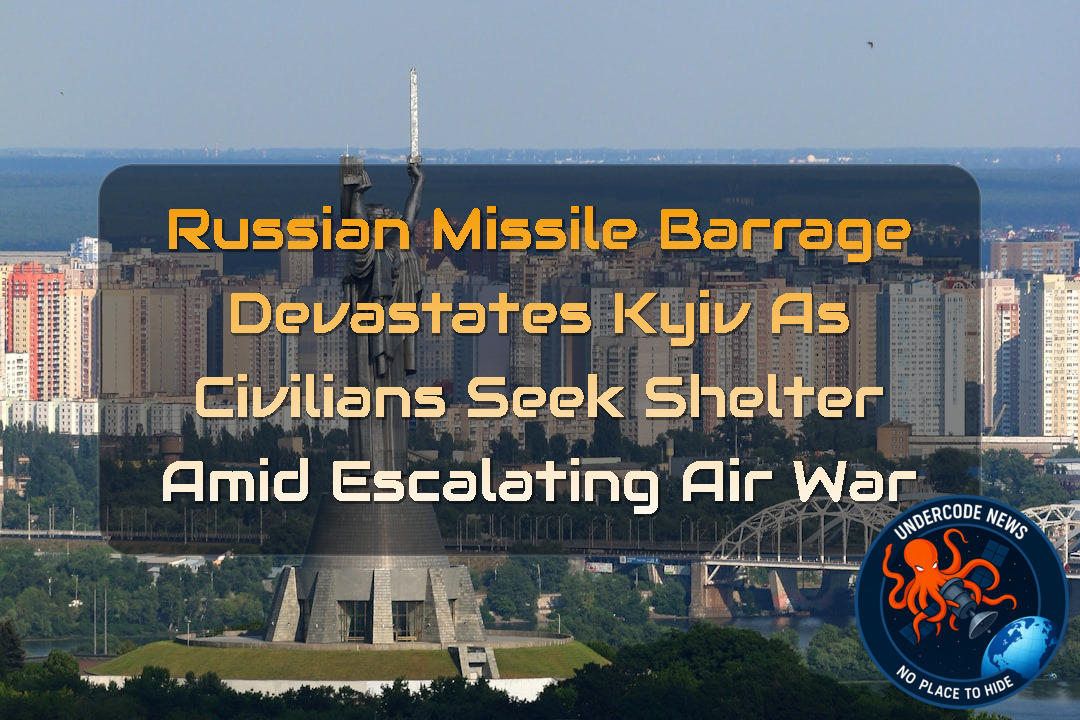
Another devastating night unfolded over Ukraine as Russia launched a massive combination of ballistic missiles, cruise missiles, and attack drones against the capital, Kyiv. The assault, one of the largest in recent days, once again transformed residential neighborhoods into battle zones, leaving civilians trapped beneath collapsed buildings and emergency responders racing against time. As explosions echoed across the city and thousands rushed into underground metro stations for safety, the attack highlighted the increasingly dangerous phase of a conflict that continues to evolve with deeper strikes, advanced weaponry, and mounting civilian casualties.
The renewed offensive demonstrates that the war has entered a prolonged period where both Russia and Ukraine are expanding long-range operations beyond traditional front lines. While Ukraine continues targeting Russian military and energy infrastructure, Moscow appears determined to intensify pressure on Ukrainian cities, placing enormous strain on air defense systems and civilian resilience. The latest strike also revives international debate over military assistance, particularly the urgent need for additional air defense missiles capable of intercepting increasingly sophisticated aerial attacks.
Overnight Missile and Drone Assault Rocks Kyiv
A Night of Continuous Explosions
Kyiv endured another terrifying overnight bombardment after Russia launched successive waves of ballistic missiles, cruise missiles, and drones against the Ukrainian capital. Air raid sirens echoed throughout the city while explosions continued for hours, forcing thousands of residents to abandon their homes and seek refuge inside metro stations and underground shelters.
Emergency services reported that the attack remained active during the early hours of Monday, making rescue operations significantly more dangerous as additional missiles continued entering Ukrainian airspace.
Residential Buildings Become the Primary Victims
Homes Reduced to Rubble
One of the most tragic consequences occurred in Kyiv’s Podilskyi district, where a residential apartment building partially collapsed following the strike. Rescue workers immediately searched the debris for survivors while heavy equipment attempted to remove concrete slabs that trapped residents underneath.
In the Darnytsia district, several multi-story apartment buildings also suffered severe structural damage. Officials warned that numerous civilians were believed to remain trapped beneath collapsed sections of buildings as rescue operations continued throughout the morning.
Authorities emphasized that these were not military installations but ordinary residential neighborhoods where families had been sleeping before the attack.
Civilian Death Toll Continues to Rise
Casualties Highlight Human Cost
Officials confirmed that at least eight people lost their lives during the overnight assault. Seven fatalities were recorded inside Kyiv itself, while another civilian was killed in Bucha district northwest of the capital.
Medical authorities also confirmed that at least thirty-four people suffered injuries ranging from minor wounds to life-threatening trauma. Ambulances transported victims across multiple hospitals while emergency teams continued searching damaged buildings for additional survivors.
The casualty figures remain subject to change as rescue operations progress.
Air Defense Systems Fight Relentlessly
Ukrainian Defenders Attempt to Intercept Incoming Threats
Kyiv Mayor Vitali Klitschko confirmed that Ukrainian air defense units remained fully engaged throughout the attack.
Missile interceptions illuminated the night sky while explosions from destroyed drones and incoming projectiles echoed across different districts. Despite successful interceptions, several missiles penetrated defenses and struck residential infrastructure, illustrating the enormous challenge facing Ukrainian air defense forces against simultaneous multi-directional attacks.
Residents were repeatedly instructed to remain inside shelters until authorities declared the danger had passed.
Russia Intensifies Long-Range Strike Campaign
Growing Scale of Strategic Bombardment
The latest attack marked the second major strike against Kyiv and surrounding regions within less than a week.
Military analysts increasingly describe Russia’s strategy as a campaign designed to exhaust Ukraine’s air defense resources while continuously targeting civilian infrastructure, logistics, and urban centers. The use of mixed attack packages involving drones, cruise missiles, and ballistic missiles complicates interception efforts by forcing defenders to prioritize multiple threats simultaneously.
This evolving strategy reflects the increasingly technological nature of modern warfare.
Ukraine Expands Counterstrikes Inside Russia
Energy Infrastructure Becomes a Key Target
While Russia continues attacking Ukrainian cities, Ukraine has significantly expanded long-range operations inside Russian territory.
Recent Ukrainian strikes have increasingly focused on military logistics, ammunition depots, and energy facilities believed to support Russia’s military operations. Ukrainian forces have also targeted Russian-controlled territories occupied before the current phase of the invasion.
These reciprocal long-range attacks demonstrate how the conflict has evolved beyond traditional front-line combat into an extensive strategic infrastructure campaign.
Zelenskyy Appeals for Additional Air Defense
Patriot Missiles Remain Critical
Before the overnight attack, Ukrainian President Volodymyr Zelenskyy warned that another major Russian strike was likely.
Following the assault, he renewed appeals to
According to Ukrainian leadership, insufficient replenishment of interception capabilities risks encouraging Russia to maintain or even expand large-scale missile operations against civilian population centers.
Civilian Resilience Faces Another Severe Test
Daily Life Continues Under Constant Threat
Despite years of conflict, Ukrainian civilians continue adapting to repeated air raids by relying on underground transport stations, reinforced shelters, emergency alert systems, and volunteer rescue networks.
Each new strike further demonstrates how modern urban warfare affects every aspect of civilian life, from housing and healthcare to education and transportation. Families increasingly live with the expectation that nighttime missile alerts may become routine, creating long-term psychological and humanitarian consequences extending far beyond the immediate destruction.
Deep Analysis
Understanding
Modern missile campaigns increasingly combine several weapon classes into coordinated attack waves. Ballistic missiles arrive at extremely high speeds, cruise missiles travel at low altitude to avoid radar detection, while drones attempt to overwhelm defensive systems through sheer numbers.
From an analytical perspective, layered attacks force defenders to divide radar coverage, interceptor inventories, and command resources simultaneously.
Military analysts often visualize attack sequencing using structured operational planning similar to system diagnostics.
Example Linux-based analytical workflow:
journalctl -xe
dmesg | grep error
netstat -tulnp
ss -tulpn
tcpdump -i eth0
nmap -A target
traceroute target
whois example.com
dig example.com
host example.com
iptables -L
ufw status
top
htop
vmstat
iostat
sar
df -h
free -m
uptime
systemctl status
crontab -l
ps aux
lsblk
lscpu
uname -a
cat /proc/cpuinfo
cat /proc/meminfo
ip addr
ip route
arp -a
curl ifconfig.me
wget URL
sha256sum file
find / -name ".log"
grep -Ri error /var/log
tail -f /var/log/syslog
auditctl -l
fail2ban-client status
Although these Linux commands belong to cybersecurity and infrastructure administration rather than military operations, they demonstrate how professionals investigate complex systems under pressure. Similar layered analytical thinking applies when evaluating missile campaigns, logistics, command structures, radar coverage, communications, and operational resilience.
Another important observation is the increasing reliance on inexpensive drones accompanying significantly more expensive missiles. This creates an economic imbalance where defenders may expend costly interceptor missiles against relatively cheap unmanned aircraft. Such tactics are becoming increasingly common in modern warfare because they strain inventories even when interception rates remain high.
The attack also illustrates how intelligence gathering, satellite surveillance, electronic warfare, and battlefield networking now influence strategic decision-making as much as conventional ground combat. Every successful interception provides valuable operational data, while every missile penetration reveals potential weaknesses that attackers may exploit in future operations.
International military support therefore extends beyond supplying weapons. It includes radar integration, early-warning networks, interceptor production capacity, maintenance logistics, personnel training, and real-time intelligence sharing. Sustaining these capabilities over years rather than months has become one of the defining strategic challenges of the conflict.
What Undercode Say:
Strategic Pressure Continues to Replace Traditional Battlefield Gains
The latest strike reflects a broader transformation in the war, where strategic infrastructure and civilian resilience have become central targets alongside military objectives.
Russia appears to be increasing pressure on Ukrainian cities while attempting to stretch air defense resources through layered missile and drone attacks.
Ukraine, meanwhile, continues demonstrating its ability to conduct long-range strikes against military-related infrastructure inside Russia, suggesting that geographical distance no longer guarantees security.
The repeated use of mixed aerial assaults indicates careful operational planning designed to complicate interception efforts.
Civilian apartment buildings remain highly vulnerable despite improvements in Ukraine’s defensive capabilities.
The humanitarian consequences continue expanding with every major strike.
Psychological warfare now plays nearly as significant a role as physical destruction.
Continuous nighttime attacks gradually erode civilian confidence and increase economic disruption.
Emergency responders have become one of
Rescue operations now occur under the constant threat of secondary strikes.
International military assistance remains closely tied to
Air defense inventories have become strategic resources comparable to ammunition stockpiles.
Interceptor production rates may become increasingly important over the coming years.
Long-range drones are reshaping modern conflict because they provide relatively low-cost offensive capability.
Precision-guided missiles continue demonstrating devastating effectiveness against urban infrastructure.
Infrastructure resilience is becoming just as important as battlefield performance.
Cities increasingly require decentralized emergency systems.
Power networks, communications, hospitals, and transportation hubs remain priority assets.
Every successful interception reduces immediate casualties but also consumes valuable defensive resources.
The conflict illustrates how prolonged wars gradually become competitions of industrial capacity.
Defense manufacturing has become a strategic battlefield of its own.
Technological adaptation continues on both sides.
Electronic warfare capabilities will likely expand further.
Satellite intelligence remains a decisive advantage.
Urban defense strategies will continue evolving.
Civil defense education becomes increasingly valuable.
International diplomacy remains essential despite continued military escalation.
Civilian reconstruction costs continue rising after each attack.
Housing shortages may worsen in heavily targeted regions.
Humanitarian organizations will remain under increasing pressure.
Recovery efforts require long-term financial commitments.
The conflict demonstrates the growing importance of integrated air defense networks.
Modern warfare increasingly rewards adaptability over numerical superiority.
Operational endurance may ultimately determine strategic outcomes.
Political decisions abroad continue influencing battlefield realities.
Military logistics remain one of the
Resilient infrastructure will become increasingly valuable.
Technological innovation will likely continue accelerating throughout the conflict.
✅ Multiple reports confirm that Russia launched another large-scale overnight missile and drone attack targeting Kyiv, resulting in civilian casualties and extensive damage to residential buildings.
✅ Ukrainian authorities publicly reported fatalities, injuries, damaged apartment buildings, and ongoing rescue operations, while air defense systems remained active throughout the assault.
❌ The final casualty count, full extent of structural damage, and long-term military impact cannot be considered definitive while rescue operations and independent assessments remain ongoing.
Prediction
(+1) Western nations are likely to continue strengthening Ukraine’s air defense capabilities through additional interceptor missiles, radar systems, and military assistance aimed at protecting major urban centers.
(-1) Russia and Ukraine will likely continue expanding long-range strike operations, increasing the frequency of missile and drone attacks against infrastructure, logistics, and strategic targets, raising humanitarian and economic costs on both sides.
▶️ Related Video (82% Match):
🕵️📝Let’s dive deep and fact‑check.
🎓 Live Courses & Certifications:
Join Undercode Academy for Verified Certifications
🚀 Request a Custom Project:
Secure, high-velocity infrastructure and disruptive technological engineering. Contact our engineering team for high-tier development and proprietary systems:
[email protected]
💎 Smart Architecture | 🛡️ Secure by Design | ⭐ Trusted by Thousands
References:
Reported By: www.euronews.com
Extra Source Hub (Possible Sources for article):
https://www.github.com
Wikipedia
OpenAi & Undercode AI
Image Source:
Unsplash
Undercode AI DI v2
🔐JOIN OUR CYBER WORLD [ CVE News • HackMonitor • UndercodeNews ]
📢 Follow UndercodeNews & Stay Tuned:
𝕏 formerly Twitter 🐦 | @ Threads | 🔗 Linkedin | 🦋BlueSky | 🐘Mastodon | 📺Youtube


