
Listen to this Post
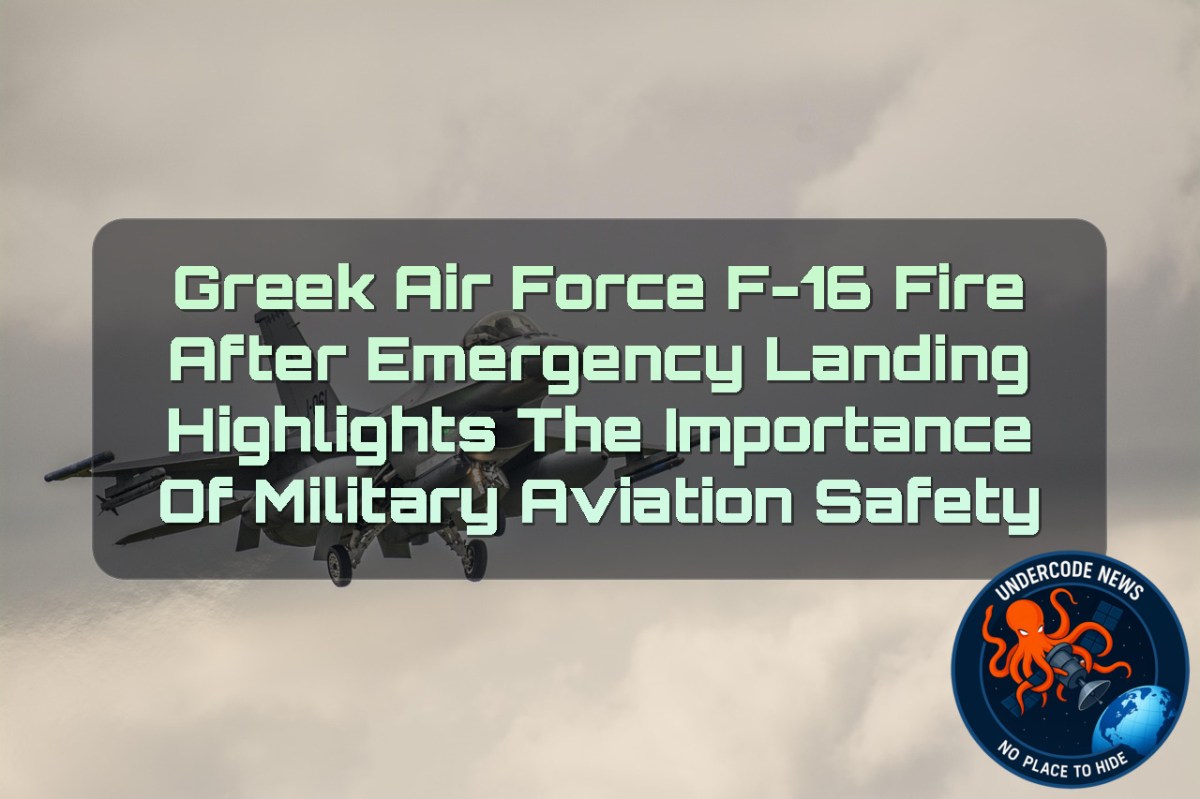 Introduction: A Routine Flight Turns Into a Critical Emergency
A Greek Air Force F-16C Fighting Falcon experienced a serious aviation incident after suffering a technical malfunction during a routine training mission. The aircraft was forced to perform an emergency landing at Zakynthos International Airport, where it caught fire shortly after coming to a stop.
The event, involving an aircraft assigned to the 335th Squadron of the 116th Combat Wing, ended without injuries thanks to the pilot’s response and the rapid intervention of airport emergency crews. While the incident did not result in casualties or major damage beyond the aircraft itself, it highlights the constant risks involved in operating advanced military aircraft and the importance of emergency preparedness.
Greek F-16C Suffers Technical Failure During Training Mission
The incident occurred while the Hellenic Air Force F-16C was conducting a routine training flight. During the mission, the aircraft reportedly encountered a technical malfunction that forced the pilot to abandon the planned operation and return for an emergency landing.
The pilot successfully guided the aircraft to Zakynthos International Airport, demonstrating the effectiveness of military aviation training and emergency procedures. Moments after landing, the aircraft caught fire, creating a potentially dangerous situation on the runway.
The aircraft was operated by the 335th Squadron, part of the 116th Combat Wing, one of the key combat units of the Hellenic Air Force responsible for maintaining Greece’s air defense capabilities.
Rapid Emergency Response Prevents a Larger Disaster
Airport firefighting teams responded immediately after the aircraft caught fire. Their quick action allowed them to contain and extinguish the flames before the situation escalated.
Military aircraft carry highly flammable fuel and advanced systems that can create dangerous conditions during accidents. A delayed response could have resulted in significant damage to airport infrastructure, the aircraft, or nearby personnel.
The successful evacuation of the pilot and the fast reaction from emergency crews show how carefully designed aviation safety protocols can reduce the consequences of unexpected failures.
Pilot Escapes Safely After Emergency Landing
The pilot was able to leave the aircraft safely and was reported to be unharmed. This outcome reflects the importance of pilot training, emergency drills, and the protective systems built into modern fighter aircraft.
F-16 pilots undergo extensive preparation to handle extreme situations, including engine failures, system malfunctions, and emergency landings. The ability to remain calm and execute proper procedures is often the difference between a controlled incident and a catastrophic accident.
Investigation Begins Into Cause of Aircraft Malfunction
The Hellenic Air Force has launched an investigation to determine the exact cause of the technical failure. Investigators will examine aircraft systems, maintenance records, flight data, and possible mechanical issues.
Military aviation investigations are typically detailed and may take significant time because fighter aircraft contain complex electronics, propulsion systems, and specialized equipment.
Understanding the cause of the malfunction will help prevent similar incidents in the future and improve operational safety across the fleet.
Strategic Importance of Greece’s F-16 Fleet
The F-16 Fighting Falcon remains one of the most important aircraft platforms operated by the Hellenic Air Force. Greece uses its F-16 fleet as a central component of its air defense strategy due to the aircraft’s speed, flexibility, and combat capabilities.
The 335th Squadron plays a major role in Greece’s military readiness, conducting training missions designed to maintain pilot skills and ensure rapid response capabilities.
Although individual aircraft incidents occur in military aviation worldwide, they are closely monitored because they can provide valuable lessons for improving aircraft reliability and operational procedures.
Deep Anlysis: Military Aviation Incident Assessment
Command: Incident Overview
EVENT TYPE:
Military aircraft emergency landing followed by fire
AIRCRAFT:
Greek Air Force F-16C Fighting Falcon
UNIT:
335th Squadron, 116th Combat Wing
LOCATION:
Zakynthos International Airport, Greece
STATUS:
Pilot safe, aircraft damaged, investigation ongoing
Command: Risk Evaluation
RISK LEVEL: Medium
PRIMARY RISKS:
– Aircraft system failure
– Fire after landing
– Potential runway damage
– Operational disruption
MITIGATING FACTORS:
– Experienced pilot
– Emergency procedures
– Rapid firefighter response
– Controlled landing
Command: Intelligence Assessment
CURRENT ASSESSMENT:
The incident appears consistent with a technical malfunction
rather than an external attack or security-related event.
No evidence currently indicates:
– Sabotage
– Cyber intrusion
– Hostile action
– Foreign interference
The main focus remains aircraft maintenance
and mechanical investigation.
Command: Military Impact Analysis
OPERATIONAL EFFECT:
LOW TO MODERATE
A single aircraft loss is unlikely to significantly
affect Greek Air Force readiness.
However:
– Maintenance reviews may increase
– Similar aircraft may receive inspections
– Training schedules could be adjusted
What Undercode Say:
The Greek F-16 emergency landing demonstrates how modern military aviation depends on a combination of technology, human skill, and emergency preparation.
The aircraft involved was not lost because of combat operations but because of an unexpected technical problem during a normal training mission. This type of incident is a reminder that even highly advanced military platforms remain vulnerable to mechanical failures.
Fighter aircraft operate under extreme conditions. Engines, electronic systems, hydraulic controls, and flight computers must perform perfectly while aircraft travel at high speeds and experience intense physical stress.
The successful outcome of this incident shows the value of pilot training. A fighter pilot’s ability to recognize a malfunction, make quick decisions, and perform an emergency landing requires years of preparation.
The emergency response at Zakynthos International Airport was another critical factor. Fire crews arriving quickly prevented the aircraft fire from developing into a more dangerous situation.
From an intelligence perspective, this event does not currently show indicators of hostile activity. There are no confirmed signs suggesting sabotage, cyber warfare, or external interference.
However, military aviation incidents are always analyzed carefully because aircraft readiness directly affects national defense capabilities.
The investigation process will likely examine whether the failure came from engine components, electrical systems, maintenance issues, or another technical source.
If investigators identify a recurring problem, similar F-16 aircraft could undergo additional inspections to prevent future accidents.
The incident also highlights the importance of maintaining aging fighter fleets. Many F-16 aircraft worldwide have operated for decades and require continuous upgrades and maintenance programs.
Greece has invested heavily in modernizing its F-16 fleet, including upgrades designed to extend aircraft service life and improve combat effectiveness.
A single aircraft accident does not represent a weakness in an entire air force. Instead, it provides data that can improve future reliability and safety.
Military aviation organizations often learn from incidents rather than simply viewing them as failures.
The combination of pilot survival, rapid emergency response, and an ongoing investigation indicates that safety procedures worked effectively.
From a geopolitical perspective, Greece’s air capabilities remain strategically important in the Eastern Mediterranean region.
Maintaining a strong and reliable fighter fleet is essential for deterrence and national defense planning.
This event will likely receive attention from aviation analysts because every military aircraft incident provides insight into operational challenges.
The most important question now is not only what caused this specific failure but whether lessons from the incident can improve future aircraft safety.
✅ Confirmed: Greek Air Force F-16C experienced an emergency landing and fire.
The reported incident states that an F-16C assigned to the Hellenic Air Force suffered a technical malfunction before landing at Zakynthos International Airport.
✅ Confirmed: Pilot survived without injury.
Available information indicates the pilot successfully evacuated the aircraft and emergency crews controlled the fire.
❌ No evidence of cyberattack, sabotage, or hostile action.
Current reports describe the event as a technical malfunction. There are no verified indicators linking the incident to external threats.
Prediction
(+1) Positive Prediction: Improved Aviation Safety Measures Will Follow
The investigation will likely lead to additional inspections, maintenance improvements, or updated procedures for similar F-16 aircraft. Military organizations commonly use these incidents to strengthen future operations.
(-1) Negative Prediction: Temporary Operational Pressure on Aircraft Availability
If investigators discover a wider technical issue, Greece may temporarily reduce availability of some aircraft while inspections are conducted. However, the impact is expected to remain limited unless a fleet-wide problem is discovered.
▶️ Related Video (78% Match):
🕵️📝Let’s dive deep and fact‑check.
🎓 Live Courses & Certifications:
Join Undercode Academy for Verified Certifications
🚀 Request a Custom Project:
Secure, high-velocity infrastructure and disruptive technological engineering. Contact our engineering team for high-tier development and proprietary systems:
[email protected]
💎 Smart Architecture | 🛡️ Secure by Design | ⭐ Trusted by Thousands
References:
Reported By: x.com
Extra Source Hub (Possible Sources for article):
https://stackoverflow.com
Wikipedia
OpenAi & Undercode AI
Image Source:
Unsplash
Undercode AI DI v2
🔐JOIN OUR CYBER WORLD [ CVE News • HackMonitor • UndercodeNews ]
📢 Follow UndercodeNews & Stay Tuned:
𝕏 formerly Twitter 🐦 | @ Threads | 🔗 Linkedin | 🦋BlueSky | 🐘Mastodon | 📺Youtube


