
Listen to this Post
Introduction: A Warning Emerging from
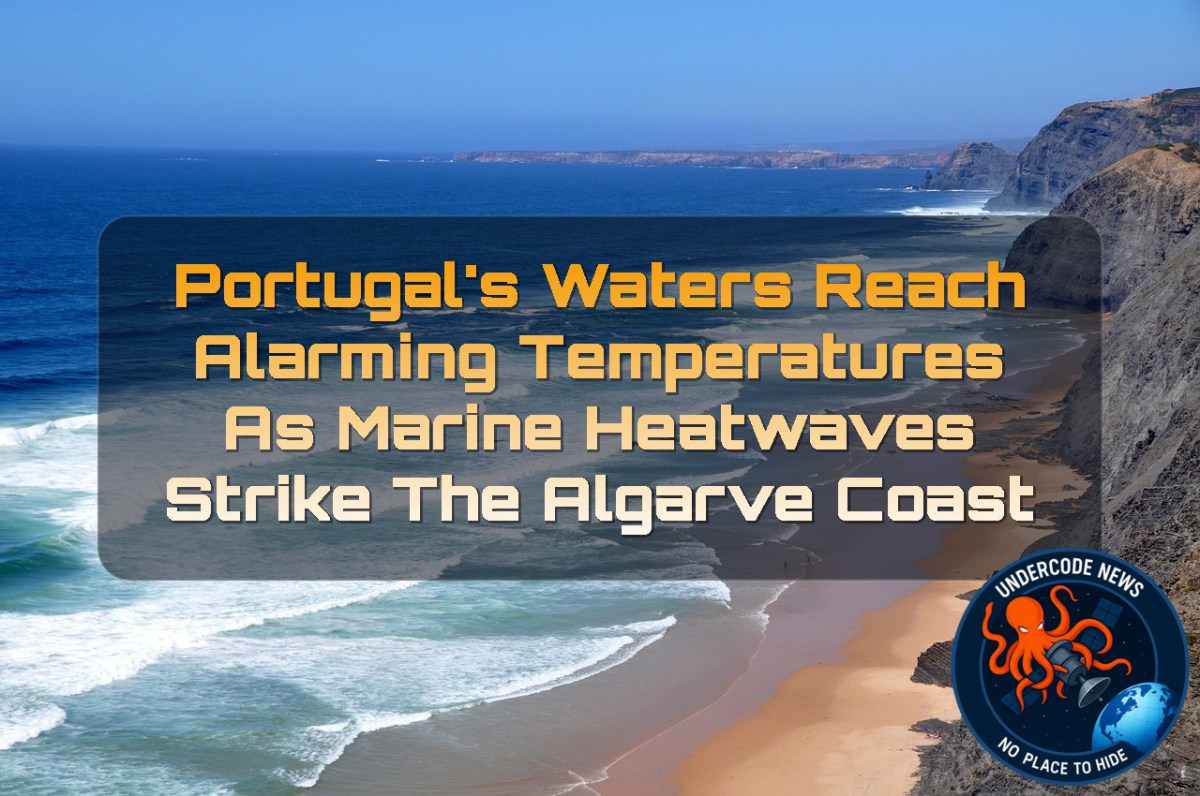
The waters off southern Portugal are sending a clear signal that the climate is changing. Recent monitoring by the Portuguese Navy and the Hydrographic Institute has revealed two significant marine heatwaves near Faro, where sea temperatures climbed to unusually high levels over several weeks. While heatwaves are commonly associated with land, prolonged periods of exceptionally warm ocean temperatures are becoming increasingly frequent worldwide, raising concerns for marine ecosystems, fisheries, tourism, and long-term climate stability.
The latest observations highlight how rapidly coastal waters can warm under favorable atmospheric and oceanic conditions. Scientists emphasize that these events are not isolated anomalies but part of a broader pattern of increasing ocean temperatures observed across many regions of the globe.
Marine Heatwaves Recorded Between June and July
The Portuguese Navy, through its Hydrographic Institute, confirmed that two separate marine heatwaves developed off the coast of Faro between 15 June and 9 July. Data collected by the Faro Coastal Buoy, part of the national MONIZEE coastal monitoring network, showed that sea temperatures remained well above historical averages for an extended period.
Marine heatwaves differ from ordinary warm days because they are defined not only by high temperatures but also by how long the warming persists. Scientists classify these events by comparing current temperatures with long-term historical records, particularly the 90th percentile threshold for each day of the year.
First Heatwave Reached Moderate Intensity
The first marine heatwave was categorized as moderate after sea surface temperatures averaged approximately 23.3°C, around 1.5°C above the historical threshold expected for that period.
Although considered moderate, the event demonstrated that coastal waters had already entered an unusually warm state capable of affecting marine habitats and local ocean dynamics.
Second Event Intensified Into a Strong Marine Heatwave
Conditions worsened as a second marine heatwave developed shortly afterward. This event reached the strong classification, with daily average temperatures climbing to 24.8°C, approximately 2.2°C above the historical threshold used to identify extreme warming.
The prolonged duration of elevated temperatures ultimately placed the event among the more significant marine heatwaves observed in Portuguese coastal waters in recent years.
Sea Surface Temperature Peaked at 26.1°C
Beyond the average daily temperatures used for official classification, monitoring equipment registered an even more remarkable observation.
The Faro Coastal Buoy recorded a maximum sea surface temperature of 26.1°C, illustrating the remarkable amount of heat stored in the coastal waters.
Researchers explained that while this individual reading highlights the intensity of warming, a marine heatwave is officially determined by the persistence of elevated temperatures rather than a single daily maximum.
The Role of the MONIZEE Monitoring Network
Portugal’s MONIZEE coastal monitoring network plays a vital role in observing ocean conditions in real time. Operated by the Hydrographic Institute, the network continuously collects environmental data from coastal buoys positioned around the country.
These measurements allow scientists to identify marine heatwaves early, monitor ocean variability, and provide valuable information for environmental research and operational activities that depend on sea conditions.
Real-time monitoring also improves scientific understanding of how rapidly coastal waters respond to changing weather patterns and broader climatic shifts.
Why Marine Heatwaves Matter
Marine heatwaves have become one of the fastest-growing environmental concerns affecting the world’s oceans. Unlike seasonal warming, these prolonged temperature anomalies can trigger widespread ecological disruptions.
Warmer waters reduce oxygen availability, increase stress on marine organisms, alter fish migration routes, and contribute to coral bleaching in vulnerable ecosystems. Even temperate regions such as Portugal are beginning to experience more frequent thermal extremes that were once considered relatively rare.
For coastal communities, these events may eventually influence fisheries, aquaculture, tourism, and biodiversity conservation.
Climate Change Is Amplifying Ocean Warming
Scientists have repeatedly found that the
The Mediterranean Sea, North Atlantic, and nearby Portuguese waters have all experienced noticeable warming trends over the past several decades. While individual heatwaves are influenced by weather patterns, the underlying increase in ocean temperatures raises the likelihood of future extreme events.
This makes continuous monitoring increasingly important for governments, researchers, and industries that rely on stable marine environments.
Potential Ecological and Economic Consequences
Although no immediate environmental damage has been reported from the Faro events, prolonged warming can produce cascading effects throughout marine ecosystems.
Some potential consequences include:
Increased stress on fish populations.
Changes in plankton communities that support the food chain.
Greater risk of harmful algal blooms.
Reduced oxygen levels in coastal waters.
Altered migration patterns for commercially valuable species.
Increased pressure on shellfish and aquaculture operations.
Long-term shifts in local biodiversity.
As these events become more common, scientists will continue evaluating their cumulative impacts on Portugal’s coastal economy and natural habitats.
Deep Analysis
Command 1: Identifying the Trend
The occurrence of two marine heatwaves within less than a month demonstrates that extreme ocean warming is becoming more persistent rather than appearing as isolated weather anomalies. The increasing frequency of such events aligns with broader observations across the North Atlantic.
Command 2: Understanding Scientific Measurements
Marine heatwave classifications depend on statistical thresholds calculated from decades of historical observations. This methodology allows researchers to distinguish truly exceptional warming events from ordinary seasonal fluctuations.
Command 3: Monitoring Infrastructure
Portugal’s investment in real-time coastal monitoring significantly strengthens its ability to detect environmental changes quickly. Continuous buoy observations provide highly valuable datasets for both scientific research and maritime operations.
Command 4: Climate Implications
Persistent marine warming reflects not only local atmospheric conditions but also larger climatic processes influencing ocean circulation, heat storage, and regional weather systems.
Command 5: Ecological Risk Assessment
Repeated heatwaves may gradually reshape marine ecosystems by favoring warm-water species while placing cold-adapted organisms under increasing stress. Such biological shifts can eventually alter food webs and ecosystem stability.
Command 6: Economic Perspective
Fishing industries, tourism operators, and coastal businesses increasingly depend on accurate environmental forecasting. Improved monitoring can help reduce uncertainty and improve adaptation planning.
What Undercode Say:
Ocean temperatures often receive less public attention than record-breaking air temperatures, yet they are among the strongest indicators of ongoing climate change. The Faro marine heatwaves illustrate how subtle environmental changes can accumulate until they become measurable extreme events.
From an analytical perspective, the persistence of elevated temperatures is far more significant than the isolated peak of 26.1°C. Marine ecosystems generally tolerate short-term fluctuations, but sustained thermal stress can disrupt reproductive cycles, migration behavior, and food availability for numerous species.
Portugal’s monitoring infrastructure deserves recognition because continuous real-time observations provide reliable scientific evidence rather than relying solely on satellite estimates. Accurate buoy measurements improve climate research, weather forecasting, and environmental management.
Another important aspect is the increasing interaction between marine heatwaves and atmospheric heatwaves. Warmer oceans can influence humidity, coastal weather patterns, and even storm development, creating complex feedback mechanisms that deserve closer scientific attention.
The Faro events should therefore be viewed as part of a much broader global pattern rather than an isolated regional anomaly. Similar marine heatwaves have affected Australia, the Mediterranean, North America, and other Atlantic regions during recent years.
If current warming trends continue, sectors such as fisheries, aquaculture, marine conservation, and tourism will likely require greater adaptation strategies. Governments may also need to expand monitoring networks and integrate marine heatwave forecasting into coastal planning.
The long-term significance extends beyond Portugal. Every accurately documented marine heatwave contributes valuable data that help researchers improve climate models and better understand future ocean behavior.
Undercode believes that environmental intelligence should become as important as cybersecurity intelligence. Continuous monitoring, transparent scientific reporting, and international cooperation will become essential tools for managing climate-related marine risks over the coming decades.
✅ Verified: Two Marine Heatwaves Were Officially Recorded
The Portuguese Navy and Hydrographic Institute officially confirmed that two marine heatwaves occurred near Faro between 15 June and 9 July. The events were measured using the MONIZEE coastal monitoring network.
✅ Verified: Peak Temperature Reached 26.1°C
The reported maximum sea surface temperature of 26.1°C comes directly from observations made by the Faro Coastal Buoy. Scientists also clarified that marine heatwave classification depends on persistence rather than a single temperature reading.
✅ Verified: Monitoring Supports Environmental Research
The MONIZEE monitoring network is specifically designed to observe Portugal’s coastal waters in real time, providing valuable information for environmental surveillance, scientific research, and maritime activities.
Prediction
(+1) Improved Ocean Monitoring and Climate Preparedness
Portugal is likely to continue investing in advanced marine monitoring systems as ocean heatwaves become more frequent. Expanded datasets and improved forecasting could strengthen environmental protection, fisheries management, and coastal resilience against future climate-related events.
(-1) Greater Risk of Frequent Marine Heatwaves
If global ocean warming continues at its current pace, southern Portuguese waters may experience stronger and more frequent marine heatwaves in the coming years. This could place increasing pressure on marine biodiversity, fisheries, and coastal ecosystems while requiring long-term adaptation measures across multiple sectors.
▶️ Related Video (84% Match):
🕵️📝Let’s dive deep and fact‑check.
🎓 Live Courses & Certifications:
Join Undercode Academy for Verified Certifications
🚀 Request a Custom Project:
Secure, high-velocity infrastructure and disruptive technological engineering. Contact our engineering team for high-tier development and proprietary systems:
[email protected]
💎 Smart Architecture | 🛡️ Secure by Design | ⭐ Trusted by Thousands
References:
Reported By: www.euronews.com
Extra Source Hub (Possible Sources for article):
https://www.twitter.com
Wikipedia
OpenAi & Undercode AI
Image Source:
Unsplash
Undercode AI DI v2
🔐JOIN OUR CYBER WORLD [ CVE News • HackMonitor • UndercodeNews ]
📢 Follow UndercodeNews & Stay Tuned:
𝕏 formerly Twitter 🐦 | @ Threads | 🔗 Linkedin | 🦋BlueSky | 🐘Mastodon | 📺Youtube


