
Listen to this Post
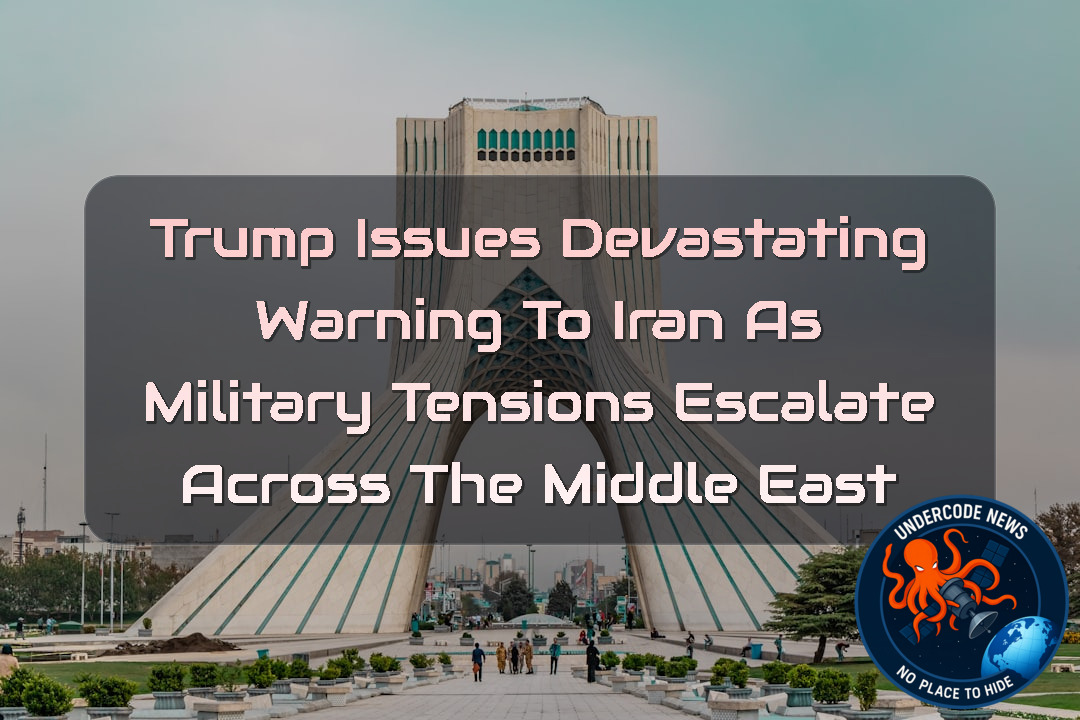
Introduction: A Fragile Ceasefire Edges Toward Collapse
The already fragile relationship between the United States and Iran has entered another dangerous phase after US President Donald Trump issued one of his strongest public warnings yet against Tehran. As military exchanges continue, diplomatic agreements appear increasingly unstable, and strategic waterways remain under pressure, fears of a broader regional conflict are once again dominating international headlines.
The latest developments highlight how quickly diplomatic progress can unravel when military retaliation, political rhetoric, and regional security concerns collide. While negotiations remain technically alive, the growing exchange of threats demonstrates just how close the region may be to another major escalation.
Trump Warns of Overwhelming Military Retaliation
US President Donald Trump declared that the United States would respond with overwhelming force if Iran attempted any assassination plot against him.
Posting on Truth Social, Trump stated that more than 1,000 missiles were already prepared and aimed at the Islamic Republic of Iran, adding that thousands more would immediately follow should Tehran carry out such an attack.
His message represented one of the strongest public military deterrence statements issued during the current crisis, reinforcing Washington’s willingness to retaliate on an unprecedented scale if American leadership were directly targeted.
Trump concluded the statement with the phrase “Praise be to Allah,” similar to wording he previously used during earlier confrontations involving Iran.
Funeral Demonstrations Intensify Political Hostility
The warning came shortly after funeral ceremonies held for former Iranian Supreme Leader Ali Khamenei, whose reported death occurred during the opening stages of the US-Iran conflict earlier this year.
Large crowds attending the ceremonies reportedly carried banners and chanted slogans calling for the deaths of both Donald Trump and Israeli Prime Minister Benjamin Netanyahu.
Although such demonstrations often reflect public anger rather than official government policy, they further inflamed already severe tensions between Washington and Tehran.
Ceasefire Agreement Faces Serious Challenges
Only weeks earlier, both countries had agreed to a provisional memorandum of understanding intended to reduce military confrontation.
The temporary agreement included several major commitments:
Both sides would halt direct hostilities.
The United States would ease its naval blockade around Iran.
Iran would reopen the strategically critical Strait of Hormuz.
Tehran would reaffirm that it would neither develop nor acquire nuclear weapons.
Negotiators would have 60 days to work toward a permanent diplomatic settlement.
Despite these commitments, renewed military exchanges have placed nearly every element of the agreement under significant pressure.
Military Strikes Continue Despite Diplomatic Efforts
According to US Central Command (CENTCOM), American forces recently launched a new series of military operations targeting Iranian air-defense systems and other military infrastructure.
Officials stated that approximately 170 military targets were struck over a two-day period.
Washington argued that these operations were necessary to reduce Iran’s ability to threaten commercial shipping traveling through the Strait of Hormuz, one of the world’s most strategically important energy corridors.
Iran responded by launching attacks against several US military facilities located in Bahrain and Kuwait, demonstrating that both sides remain willing to retaliate despite ongoing diplomatic discussions.
The Strait of Hormuz Remains the Center of the Crisis
Perhaps the most significant strategic issue remains control over the Strait of Hormuz.
The narrow waterway serves as one of the world’s most important oil and liquefied natural gas shipping routes, with a significant portion of global energy exports passing through it every day.
Following the outbreak of hostilities, Iran effectively closed portions of the Strait, disrupting international shipping, increasing insurance costs for commercial vessels, and triggering volatility across global energy markets.
The United States argues that maintaining freedom of navigation is essential not only for regional stability but also for the global economy.
Iran Accuses Washington of Violating the Agreement
Iranian Foreign Minister Abbas Araghchi rejected claims that Tehran had violated the ceasefire.
Instead, he argued that Iran had continued to respect the memorandum while accusing Washington of breaking its own commitments.
His criticism focused on newly announced US sanctions targeting Iranian financial networks and currency exchange operations.
According to Araghchi, the memorandum explicitly prohibited new sanctions while negotiations remained active.
He emphasized that any successful diplomatic process depends upon both parties honoring their obligations equally.
New Diplomatic Talks Continue Despite Rising Violence
Despite ongoing military operations, diplomatic efforts have not completely stopped.
Iran’s foreign minister is expected to participate in discussions in Oman concerning the future of the Strait of Hormuz and broader regional security.
Oman has frequently acted as an intermediary between Washington and Tehran during previous crises, making it one of the few remaining diplomatic channels capable of facilitating communication between both governments.
Whether those negotiations can survive the latest military escalation remains uncertain.
Regional Shipping Faces New Security Risks
The maritime situation has deteriorated further after reports of multiple attacks on commercial tankers navigating the Strait.
Qatar publicly accused Iran of striking one of its vessels, describing the incident as an unacceptable threat to international maritime security and holding Tehran legally responsible for any resulting damages.
Iran denied responsibility for the reported attack.
Meanwhile, Iranian media indicated that a Qatari delegation had traveled to Tehran in an effort to preserve Qatar’s role as a regional mediator and reduce the risk of additional confrontations.
Deep Analysis
Command: Evaluate
Trump’s latest statement is designed primarily as deterrence rather than an immediate declaration of military action. By publicly outlining the scale of potential retaliation, Washington aims to discourage any assassination attempt before it occurs.
Command: Measure Diplomatic Stability
The memorandum of understanding now appears increasingly fragile. Military operations and new sanctions undermine confidence between both parties, making future negotiations considerably more difficult.
Command: Assess Military Escalation
The continued exchange of strikes demonstrates that neither side currently wishes to appear strategically weak. This increases the possibility of miscalculation, where a limited military response could unintentionally trigger a much larger conflict.
Command: Evaluate Energy Security
The Strait of Hormuz remains one of the world’s most sensitive economic chokepoints. Any prolonged disruption could significantly affect oil prices, shipping insurance costs, and energy supplies across Europe and Asia.
Command: Monitor Regional Diplomacy
Countries such as Oman and Qatar continue attempting to preserve communication between opposing sides. Their mediation efforts may become increasingly important as direct dialogue becomes more politically difficult.
Command: Examine Sanctions Impact
Economic sanctions remain one of
Command: Review Military Objectives
US strikes appear focused on reducing
Command: Analyze Iranian Position
Iran continues portraying itself as the party complying with previous agreements while accusing Washington of repeated violations. This narrative is likely intended to strengthen Tehran’s diplomatic position internationally.
Command: Observe Public Messaging
Political messaging from both governments has become increasingly aggressive. Public rhetoric often serves domestic audiences but can also complicate behind-the-scenes negotiations.
Command: Estimate Conflict Probability
Although neither government publicly appears to seek a prolonged regional war, the increasing frequency of retaliation raises the probability that an isolated incident could escalate beyond either side’s original intentions.
What Undercode Say:
The current US-Iran confrontation reflects a dangerous combination of military deterrence, political messaging, and economic pressure. While President Trump’s statement was framed as a warning against assassination attempts, its unusually strong language significantly raises diplomatic tensions.
History shows that direct communication often becomes more difficult once public threats dominate international discourse. Every additional military strike increases the risk of accidental escalation, particularly in contested regions such as the Strait of Hormuz.
From a geopolitical perspective, neither Washington nor Tehran appears eager to engage in a prolonged conventional war. Instead, both sides continue relying on calibrated military responses, sanctions, and strategic signaling to influence negotiations.
The Strait of Hormuz remains the most critical factor in this crisis. Any disruption there immediately affects global oil markets, shipping companies, insurers, and importing nations. As a result, the conflict extends far beyond the Middle East and has worldwide economic implications.
The renewed sanctions announced by the United States also complicate diplomatic efforts. Iran argues that sanctions violate previous understandings, while Washington maintains economic pressure is necessary to influence Iranian behavior. This disagreement creates an environment where trust continues to erode.
Another important factor is the growing role of regional mediators. Countries such as Oman and Qatar have repeatedly served as communication channels between Washington and Tehran. Their ability to facilitate dialogue may become increasingly valuable if direct negotiations continue to deteriorate.
Military operations targeting air-defense systems indicate that the United States is attempting to reduce Iran’s operational capabilities without launching a broader invasion. At the same time, Iran’s retaliatory strikes demonstrate its willingness to respond rather than accept strategic losses without consequence.
Political messaging has also become an important battlefield. Public statements issued through social media now influence diplomatic negotiations almost as much as official meetings. Strong rhetoric may strengthen domestic political support but often narrows diplomatic flexibility.
Energy markets remain highly sensitive to developments around the Strait of Hormuz. Even temporary disruptions can increase transportation costs and create uncertainty across international markets.
Overall, the situation remains highly unstable. Diplomatic channels remain open, but continued military exchanges significantly reduce the margin for error. Preventing further escalation will likely require both sides to prioritize negotiations over symbolic retaliation.
✅ Fact: Donald Trump publicly issued a warning stating that the United States would respond with overwhelming force if an assassination attempt against him were linked to Iran. This is consistent with the reported statement.
✅ Fact: The Strait of Hormuz remains one of the world’s most strategically important maritime chokepoints for global oil and gas transportation. Disruptions there have historically affected international energy markets.
❌ Unverified Claim: Several details presented regarding specific military operations, casualty figures, the reported death of Iran’s Supreme Leader, and elements of the described memorandum of understanding cannot be independently confirmed based solely on the information provided and should be treated as claims unless verified by multiple credible official sources.
Prediction
(+1) Continued Regional Mediation
If Oman, Qatar, and other regional mediators successfully maintain communication between Washington and Tehran, limited diplomatic progress could still prevent a wider military confrontation despite ongoing tensions.
(-1) Higher Risk of Military Escalation
If retaliatory strikes continue alongside increasingly aggressive political rhetoric, the probability of a broader regional conflict involving additional Middle Eastern actors and further disruptions to global energy markets will likely increase considerably.
▶️ Related Video (80% Match):
https://www.youtube.com/watch?v=7xkhf4TA8Ao
🕵️📝Let’s dive deep and fact‑check.
🎓 Live Courses & Certifications:
Join Undercode Academy for Verified Certifications
🚀 Request a Custom Project:
Secure, high-velocity infrastructure and disruptive technological engineering. Contact our engineering team for high-tier development and proprietary systems:
[email protected]
💎 Smart Architecture | 🛡️ Secure by Design | ⭐ Trusted by Thousands
References:
Reported By: www.euronews.com
Extra Source Hub (Possible Sources for article):
https://www.facebook.com
Wikipedia
OpenAi & Undercode AI
Image Source:
Unsplash
Undercode AI DI v2
🔐JOIN OUR CYBER WORLD [ CVE News • HackMonitor • UndercodeNews ]
📢 Follow UndercodeNews & Stay Tuned:
𝕏 formerly Twitter 🐦 | @ Threads | 🔗 Linkedin | 🦋BlueSky | 🐘Mastodon | 📺Youtube


