
Listen to this Post
Introduction
Samsung’s foldable smartphones have consistently pushed the boundaries of mobile innovation, but one challenge has remained difficult to overcome: screen visibility in bright environments. While foldable displays have become stronger, faster, and more durable over the years, reflections and outdoor readability have continued to limit the premium experience many users expect from an ultra-flagship device.
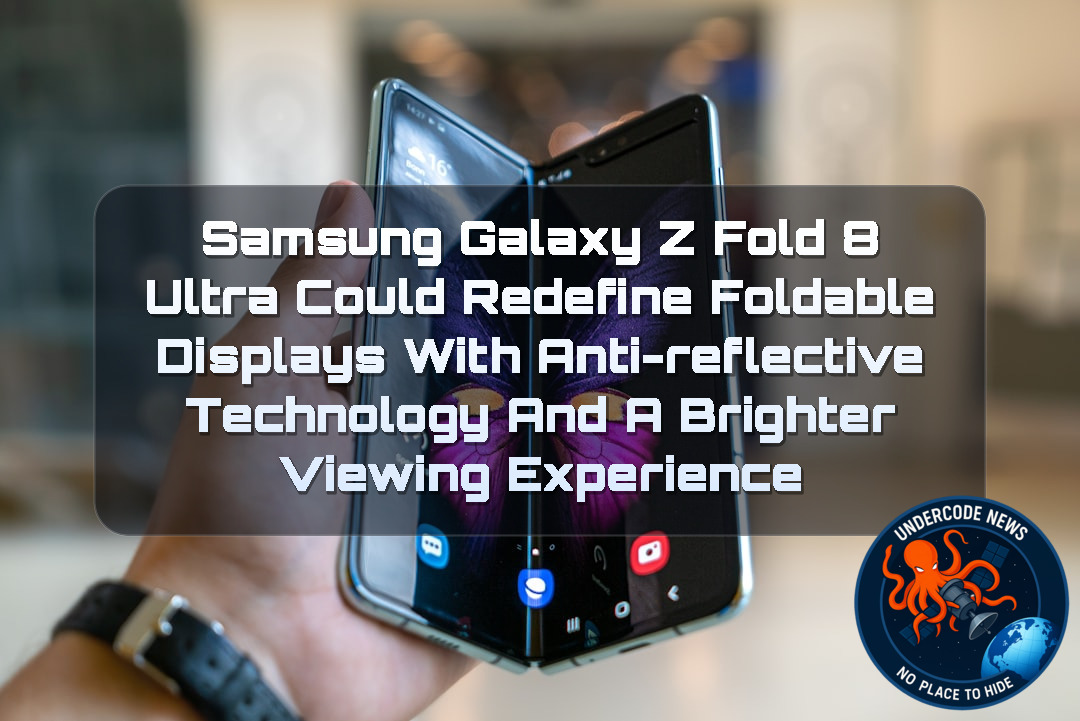
Now, according to the latest industry rumors, Samsung is preparing one of its most meaningful display upgrades yet. The upcoming Galaxy Z Fold 8 Ultra is rumored to introduce an anti-reflective coating directly on its foldable display, a feature previously reserved for Samsung’s flagship Galaxy S Ultra lineup. If these claims prove accurate, users could enjoy significantly better visibility under direct sunlight while also benefiting from a brighter screen, a less noticeable crease, and several additional display refinements.
Although Samsung has not officially confirmed these specifications, the growing number of leaks suggests that the Galaxy Z Fold 8 Ultra may become the company’s most refined foldable smartphone to date.
Samsung Could Finally Solve One of
One of the biggest criticisms surrounding foldable smartphones has never been performance or design. Instead, it has been display usability outdoors. Reflections from sunlight often make foldable screens difficult to read, forcing users to increase brightness while sacrificing battery life.
According to recent reports, Samsung plans to introduce an advanced anti-reflective coating on the Galaxy Z Fold 8 Ultra’s internal foldable display. This would mark the first Samsung foldable to receive the technology that debuted on the Galaxy S24 Ultra.
The coating is designed to reduce glare by minimizing reflected light before it reaches the user’s eyes. Instead of increasing brightness alone, the display becomes naturally easier to read in direct sunlight and brightly lit indoor environments.
If Samsung successfully integrates this technology into its flexible OLED panel without affecting durability, it could represent one of the most practical upgrades introduced to foldable devices in recent years.
A Brighter Display With Better Outdoor Visibility
The anti-reflective coating is only one part of Samsung’s rumored display improvements.
Industry leaks suggest the Galaxy Z Fold 8 Ultra may reach an incredible peak brightness of approximately 3,600 nits on its internal Dynamic AMOLED 2X display.
Combined with adaptive refresh rates reaching 120Hz, users could experience smoother scrolling, more vibrant HDR content, and significantly improved readability regardless of lighting conditions.
This combination of brightness and reduced reflections may offer one of the best viewing experiences ever seen on a foldable smartphone.
Samsung Continues Refining the Folding Display
Another rumored improvement focuses on the display crease.
Each new Fold generation has gradually reduced the visibility of the center crease, and reports indicate the Galaxy Z Fold 8 Ultra will continue that trend.
A less noticeable crease improves immersion while watching videos, gaming, reading documents, or multitasking across multiple applications.
Although completely eliminating the crease remains technically difficult, Samsung appears committed to making it less distracting with every hardware generation.
A Smaller Camera Cutout Could Improve Immersion
Leaks also indicate Samsung may reduce the size of the punch-hole camera located on the inner display.
A smaller cutout creates a cleaner viewing experience, allowing movies, games, and productivity applications to occupy more uninterrupted screen space.
However, there remains one important question.
Reducing the camera opening could potentially impact image quality, sensor size, or field of view depending on the engineering compromises Samsung chooses. Until official testing becomes available, it remains uncertain whether users will notice any reduction in selfie performance.
Large Displays Designed for Productivity
The Galaxy Z Fold 8 Ultra is expected to retain Samsung’s successful large-screen formula.
Rumors currently suggest:
6.5-inch external cover display
8-inch internal foldable Dynamic AMOLED 2X display
Adaptive refresh rate up to 120Hz
Peak brightness reaching approximately 3,600 nits
These specifications would continue positioning the Fold series as one of the most productivity-focused smartphones available.
The larger internal display allows users to comfortably edit documents, manage spreadsheets, browse multiple windows simultaneously, and enjoy tablet-like entertainment without carrying a separate device.
Flagship Hardware Expected Throughout
Beyond the display improvements, the Galaxy Z Fold 8 Ultra is expected to receive Samsung’s latest flagship hardware platform.
Current rumors include:
Snapdragon 8 Elite Gen 5 for Galaxy processor
12GB RAM
256GB base storage
Optional 512GB and 1TB models
5,000mAh battery
45W wired fast charging
15W wireless charging with Qi2 Ready support
These specifications suggest Samsung is focusing not only on display innovation but also maintaining top-tier performance suitable for AI workloads, gaming, multitasking, and professional applications.
Camera Hardware Appears Competitive
Camera rumors point toward another premium imaging package.
Expected specifications include:
200MP primary camera with Optical Image Stabilization
50MP ultrawide camera
10MP telephoto camera offering 3x optical zoom
Dual 10MP selfie cameras
Samsung’s computational photography continues improving with each software generation, meaning image quality may depend just as much on AI processing as the camera hardware itself.
Why Anti-Reflective Displays Matter More Than Many Realize
Many smartphone buyers focus on megapixels, processor speed, or benchmark scores.
However, the display remains the feature users interact with every single day.
An anti-reflective coating can improve nearly every activity:
Reading emails outdoors
Watching HDR movies
Viewing navigation while driving
Editing photos
Gaming under bright lighting
Reducing eye strain caused by reflections
Unlike purely cosmetic upgrades, this enhancement directly improves daily usability.
What Undercode Say:
Samsung appears to be shifting its foldable strategy from introducing revolutionary hardware to refining every detail that affects real-world user experience.
The rumored anti-reflective display is a practical innovation rather than a marketing specification.
Consumers rarely complain that their phone is not bright enough.
Instead, they complain when reflections make that brightness unusable.
Reducing reflections is often more effective than simply increasing brightness.
Samsung already demonstrated this philosophy with the Galaxy S24 Ultra.
Bringing that technology to foldables shows the company is maturing the Fold lineup.
The reduced crease follows the same pattern.
Rather than chasing radical redesigns, Samsung is steadily polishing weaknesses that have existed since the original Galaxy Fold.
This incremental engineering strategy typically produces more reliable products.
Another interesting aspect is battery efficiency.
If reflections decrease, users may not need maximum brightness outdoors.
That indirectly improves battery life.
The Snapdragon 8 Elite Gen 5 should also contribute to greater power efficiency.
The rumored 200MP camera continues
However, camera quality will ultimately depend on image processing algorithms.
The smaller punch-hole camera is another usability improvement.
Even tiny reductions in visual distractions can noticeably improve immersion.
Samsung appears to understand that premium devices are judged by thousands of small details rather than one major feature.
Competition in the foldable market continues to increase.
Chinese manufacturers have significantly reduced fold thickness and weight.
Samsung therefore needs software optimization and display quality to remain competitive.
Anti-reflective technology is difficult to implement on flexible OLED panels.
If Samsung succeeds without compromising durability, it could create a meaningful competitive advantage.
Overall, the rumored upgrades suggest Samsung is focusing less on flashy specifications and more on improving everyday ownership.
That may prove to be the smarter long-term strategy.
Deep Analysis
The engineering challenge extends beyond simply adding an anti-reflective layer. Flexible OLED panels bend thousands of times throughout their lifespan, meaning every additional coating must remain durable without cracking or affecting touch sensitivity.
Security researchers and Android developers often inspect hardware capabilities using ADB and Linux-based tools once new devices become available.
Useful commands include:
adb devices
adb shell getprop
adb shell dumpsys display
adb shell wm size
adb shell dumpsys SurfaceFlinger
adb shell dumpsys battery
adb shell cat /proc/cpuinfo
adb shell cat /proc/meminfo
adb shell getevent
adb shell screencap /sdcard/display.png
adb pull /sdcard/display.png
adb shell settings list system
adb shell dumpsys power
adb bugreport
fastboot devices
fastboot getvar all
These commands help developers inspect display parameters, refresh rates, hardware information, battery behavior, and system configuration during testing. Combined with professional display calibration tools, they provide valuable insight into whether Samsung’s claimed display improvements translate into measurable real-world gains.
✅ Samsung has previously introduced anti-reflective display technology on its Ultra smartphone lineup, making its appearance on a foldable technically plausible.
✅ Most specifications discussed remain based on industry leaks and supply chain reports rather than official Samsung confirmation.
❌ The Galaxy Z Fold 8
Prediction
(+1) Positive Prediction
Samsung is likely to make anti-reflective displays a standard feature across future premium foldable devices if the technology performs well.
Display refinements such as reduced crease visibility and improved outdoor readability could become stronger selling points than raw hardware specifications.
If these rumors prove accurate, the Galaxy Z Fold 8 Ultra may establish a new benchmark for premium foldable display quality, encouraging competitors to invest more heavily in real-world usability rather than headline specifications alone.
▶️ Related Video (72% Match):
🕵️📝Let’s dive deep and fact‑check.
🎓 Live Courses & Certifications:
Join Undercode Academy for Verified Certifications
🚀 Request a Custom Project:
Secure, high-velocity infrastructure and disruptive technological engineering. Contact our engineering team for high-tier development and proprietary systems:
[email protected]
💎 Smart Architecture | 🛡️ Secure by Design | ⭐ Trusted by Thousands
References:
Reported By: www.sammobile.com
Extra Source Hub (Possible Sources for article):
https://www.instagram.com
Wikipedia
OpenAi & Undercode AI
Image Source:
Unsplash
Undercode AI DI v2
🔐JOIN OUR CYBER WORLD [ CVE News • HackMonitor • UndercodeNews ]
📢 Follow UndercodeNews & Stay Tuned:
𝕏 formerly Twitter 🐦 | @ Threads | 🔗 Linkedin | 🦋BlueSky | 🐘Mastodon | 📺Youtube


