
Listen to this Post
 Introduction: A Day Filled With Bold Claims and Even Bigger Ambitions
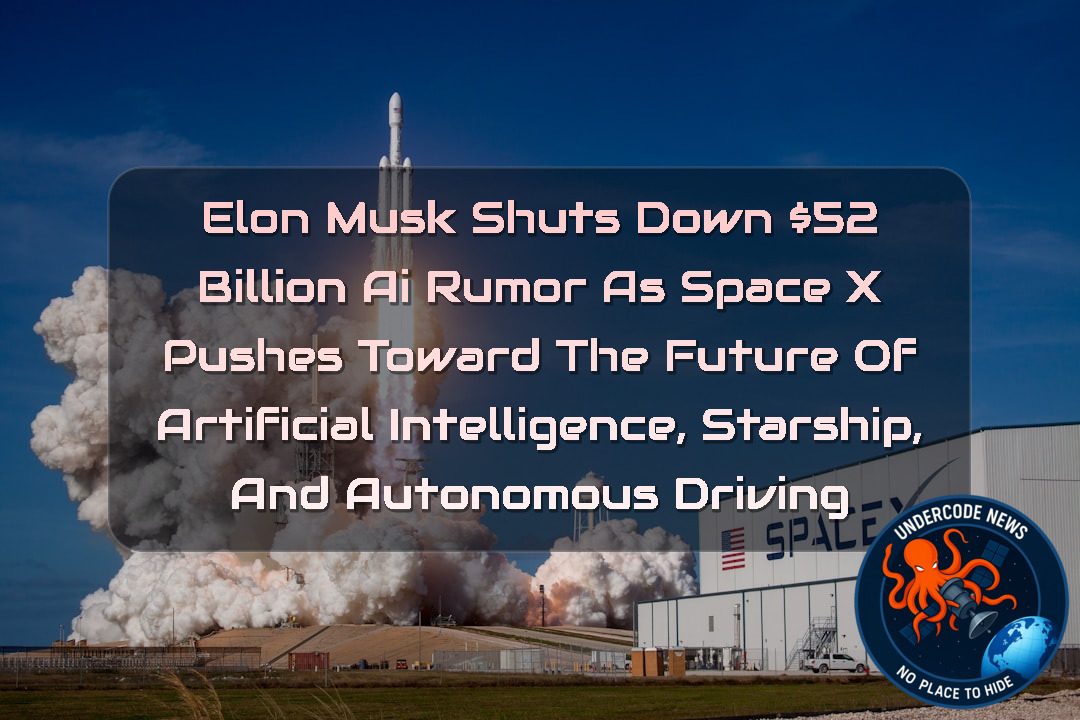
The world surrounding Elon Musk never stays quiet for long. Within just a few hours, headlines claimed that SpaceX was preparing one of the largest artificial intelligence hardware purchases in history, Starship’s next launch date shifted once again, and Tesla revealed more details about how its Full Self-Driving system will soon become far more personalized. While one story was quickly denied by Musk himself, the other announcements continue to paint a picture of a company ecosystem that is expanding far beyond rockets and electric vehicles.
Whether building reusable spacecraft, developing AI supercomputers, or teaching autonomous cars to understand individual driver habits, Musk’s companies continue to blur the boundaries between aerospace, artificial intelligence, and transportation. The latest developments show that although rumors can spread rapidly, the long-term vision behind SpaceX and Tesla remains remarkably ambitious.
SpaceX Rejects Reports of a Massive NVIDIA GPU Purchase
Reports circulated claiming that SpaceX planned to spend approximately $52 billion on NVIDIA AI hardware by purchasing around 13,000 AI server racks containing nearly one million GB300 GPUs manufactured by Foxconn. According to those reports, deliveries could begin in late 2025, representing one of the largest AI infrastructure investments ever announced.
However, Elon Musk quickly dismissed the claim through a direct response on X, effectively denying that such an order existed. His response ended speculation almost immediately, although it did not stop discussions regarding SpaceX’s expanding AI ambitions.
Why the Rumor Sounded Believable
Although the reported deal was denied, many analysts considered it believable because SpaceX has significantly expanded its artificial intelligence capabilities during the past few years.
Modern AI development requires enormous computational resources. NVIDIA’s latest GB300 platform represents one of the industry’s most powerful AI computing systems for both training and inference. A purchase of that scale would have exceeded the AI budgets of most technology companies worldwide.
Even without the rumored order, SpaceX continues investing heavily in large-scale AI infrastructure, supporting both commercial customers and internal development.
SpaceX Is Becoming More Than a Rocket Company
SpaceX has evolved dramatically since its early days as a launch provider.
Today, the company combines reusable launch vehicles, the Starlink satellite network, advanced AI infrastructure, and the technologies inherited through the integration of xAI and Grok development.
Instead of focusing solely on launching payloads into orbit, SpaceX now appears to be positioning itself as a future provider of global computing infrastructure. The company’s vision includes combining terrestrial AI clusters with future orbital computing platforms capable of operating without many of Earth’s traditional limitations, including power availability and physical land requirements.
Starship Flight 13 Receives Another New Target Date
While AI headlines dominated technology news, SpaceX also updated the schedule for Starship Flight 13.
The company now targets Thursday, July 23, for the next integrated flight test from Starbase in South Texas after another schedule adjustment.
Although delays often frustrate observers, they remain a normal part of SpaceX’s rapid development philosophy, where hardware improvements are implemented between nearly every launch attempt.
Learning From Previous Launch Attempts
The previous launch attempt ended before liftoff when several Raptor engines failed to ignite correctly during the startup sequence.
Automatic safety systems immediately aborted the mission, preventing a potentially dangerous launch.
Following the incident, engineers replaced engines, analyzed the ignition sequence, and implemented additional reliability improvements before selecting a new launch opportunity. These iterative corrections have become a defining characteristic of the Starship development program.
Flight 13 Has Important Objectives
This mission is expected to accomplish several major milestones.
The Super Heavy booster aims to complete launch, stage separation, boostback burn, and controlled splashdown.
Meanwhile, Starship itself is expected to deploy twenty Starlink Version 3 satellites, perform another Raptor engine restart in space, evaluate upgraded heat shield technology, and complete a controlled splashdown in the Indian Ocean.
Each successful objective brings SpaceX closer to fully reusable launch systems capable of supporting missions to the Moon, Mars, and beyond.
Tesla Wants Full Self-Driving to Learn Like Its Owner
Tesla also revealed one of the most anticipated improvements coming to Full Self-Driving.
Instead of simply following universal driving behavior, future software updates will allow vehicles to remember how individual owners prefer the car to behave.
According to Musk, Tesla vehicles will begin remembering driver interventions and gradually adapt future driving decisions to match those personal preferences.
Personalized Driving Could Reduce Interventions
Current Full Self-Driving systems often require drivers to take control, not because the vehicle is unsafe, but because it behaves differently than the owner prefers.
Some drivers prefer remaining longer in HOV lanes.
Others dislike how the vehicle selects parking spaces.
Many simply want smoother routing decisions that better match their daily habits.
Instead of treating every intervention as an isolated event, Tesla plans to transform each correction into a learning opportunity, allowing every vehicle to build an increasingly personalized driving profile.
Parking Remains
According to Musk, parking behavior remains one of the most common reasons drivers disengage Full Self-Driving.
The vehicle generally parks successfully, but owners frequently disagree with how it parks.
Drivers may prefer backing into spaces instead of pulling forward, selecting different parking locations, or approaching driveways differently.
Teaching the AI these preferences could significantly improve owner satisfaction while reducing unnecessary manual takeovers.
Autonomous Driving Is Becoming More Human
One of the most interesting aspects of
Human drivers make countless preference-based decisions every day that have nothing to do with safety.
Choosing a preferred lane.
Taking familiar routes.
Selecting favorite parking spaces.
Maintaining certain following distances.
Tesla appears to be moving toward an AI model that understands these individual habits while still maintaining strict safety standards.
What Undercode Say:
The denial of the reported $52 billion GPU purchase demonstrates how rapidly AI rumors can influence technology markets.
Large infrastructure purchases involving NVIDIA hardware immediately attract investor attention because GPU availability has become one of the most valuable strategic resources in AI.
Even though Musk denied this specific report, SpaceX clearly continues expanding computational infrastructure.
The convergence between aerospace and artificial intelligence is accelerating.
Reusable rockets reduce launch costs.
Satellite networks provide global connectivity.
AI requires massive computing power.
Combining all three creates a unique competitive advantage.
Starship remains the physical backbone of this long-term vision.
Every successful launch lowers deployment costs for future satellite constellations.
Tesla follows a similar philosophy.
Rather than chasing perfect autonomy immediately, it is improving practical usability.
Learning driver preferences represents a major shift from generalized AI toward personalized AI.
This mirrors how recommendation systems evolved across the internet.
Instead of identical experiences for everyone, future autonomous vehicles may become customized companions.
From a cybersecurity perspective, personalized AI introduces new challenges.
Driver preference data becomes another valuable dataset requiring strong encryption.
Behavioral profiles could become attractive targets if improperly secured.
Companies developing personalized AI must therefore invest equally in privacy protection.
Deep Analysis
Monitor GPU inventory on Linux:
nvidia-smi
Monitor GPU utilization continuously:
watch -n 1 nvidia-smi
Inspect PCI devices:
lspci | grep -i nvidia
Check available system memory:
free -h
Monitor CPU performance:
htop
Review kernel logs:
dmesg | tail -50
Display storage usage:
df -h
Monitor network throughput:
iftop
Check active TCP connections:
ss -tulpn
Inspect running AI workloads:
ps aux | grep python
Organizations building hyperscale AI infrastructure routinely use similar monitoring tools to ensure maximum performance, identify bottlenecks, and maintain system stability across thousands of compute nodes.
✅ Elon Musk publicly denied reports claiming SpaceX placed a $52 billion NVIDIA GPU order.
✅ SpaceX has officially moved the Starship Flight 13 target date after previous launch delays.
✅ Tesla is actively developing Full Self-Driving features that learn driver preferences to reduce unnecessary interventions.
Prediction
(+1)
Personalized AI will become one of
SpaceX will continue investing aggressively in AI infrastructure, even if reports about individual hardware purchases prove inaccurate.
Starship’s continued testing will accelerate deployment of larger Starlink networks and future AI-enabled space infrastructure.
AI systems across the automotive industry will increasingly adapt to individual user behavior rather than forcing every driver into identical operating models.
▶️ Related Video (66% Match):
🕵️📝Let’s dive deep and fact‑check.
🎓 Live Courses & Certifications:
Join Undercode Academy for Verified Certifications
🚀 Request a Custom Project:
Secure, high-velocity infrastructure and disruptive technological engineering. Contact our engineering team for high-tier development and proprietary systems:
[email protected]
💎 Smart Architecture | 🛡️ Secure by Design | ⭐ Trusted by Thousands
References:
Reported By: www.teslarati.com
Extra Source Hub (Possible Sources for article):
https://www.github.com
Wikipedia
OpenAi & Undercode AI
Image Source:
Unsplash
Undercode AI DI v2
🔐JOIN OUR CYBER WORLD [ CVE News • HackMonitor • UndercodeNews ]
📢 Follow UndercodeNews & Stay Tuned:
𝕏 formerly Twitter 🐦 | @ Threads | 🔗 Linkedin | 🦋BlueSky | 🐘Mastodon | 📺Youtube


