
Listen to this Post
Introduction: A Growing Concern Beyond Statistics
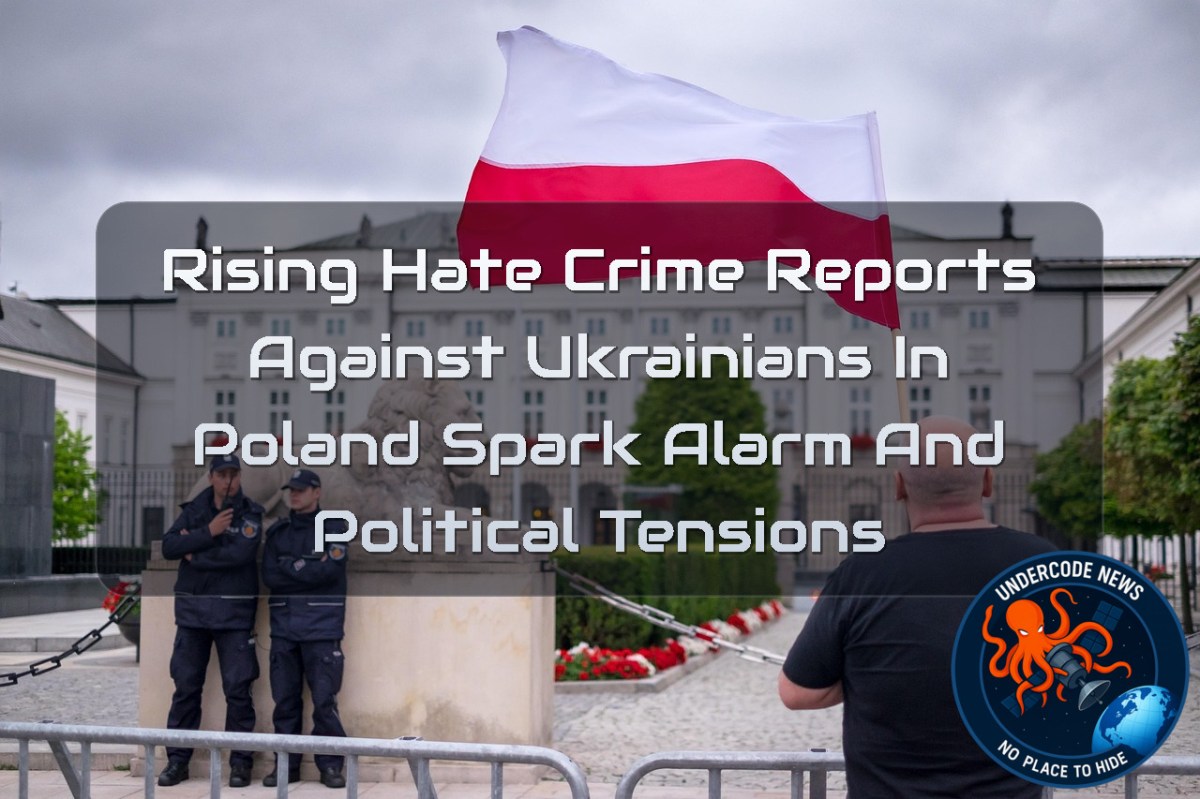
A nation that once became a symbol of solidarity with millions of Ukrainian refugees is now facing an uncomfortable reality. Poland, widely praised for opening its borders and communities after Russia’s invasion of Ukraine, is witnessing a troubling rise in reported hate crimes targeting Ukrainian citizens. While the overwhelming majority of Poles continue to support and peacefully coexist with Ukrainians, recent police statistics suggest that xenophobic incidents are becoming more frequent and more visible.
These incidents are not just isolated acts of intolerance. They reflect deeper social tensions, political disagreements, and the challenges of integrating millions of displaced people into a society already dealing with economic pressures and political polarization. As authorities investigate the increasing number of reports, both government officials and civil society leaders are calling for accountability while urging the public not to allow the actions of a few individuals to define relations between two neighboring nations.
Police Reports Reveal a Significant Rise in Hate Crimes
New figures released by
Authorities received 180 reports of alleged hate crimes against Ukrainian citizens within just six months. Compared to the same period in previous years, this represents an increase of more than 30 percent, indicating that hostility directed toward Ukrainians is growing rather than declining.
Although every reported case does not automatically lead to a conviction, the upward trend itself has become impossible for officials and analysts to ignore. It suggests that incidents involving verbal abuse, threats, harassment, and discrimination are occurring more frequently across different parts of the country.
A Bus Incident That Captured National Attention
One of the most widely discussed cases occurred in the city of Bielsko-Biała, where several Ukrainian teenage girls became victims of verbal abuse while riding a municipal bus.
According to reports, an adult man aggressively insulted and threatened the girls solely because they were speaking Ukrainian. Witnesses described the confrontation as shocking, highlighting how quickly public spaces can become environments of fear for minority communities.
The incident generated widespread media attention because it symbolized a broader trend rather than an isolated confrontation. Many observers viewed it as evidence that anti-Ukrainian sentiment has become increasingly visible in everyday life.
The Numbers Show a Continuing Upward Trend
Historical police statistics demonstrate that reports have steadily increased over the past three years.
During 2024, Ukrainian residents in Poland submitted 267 reports of alleged hate crimes.
In 2025, that number climbed slightly to 275 reports, suggesting that hostility had not disappeared despite continued public support for Ukraine.
However, the most alarming development emerged in 2026, where 180 reports were already recorded during the first six months alone. If this pace continues throughout the remainder of the year, the annual total could significantly exceed previous records.
While statistics alone cannot explain the reasons behind every incident, they clearly indicate that authorities are facing an escalating challenge.
Political Leaders Exchange Blame
The increase in attacks has quickly become part of Poland’s broader political debate.
Interior and Administration Minister Marcin Kierwiński argued that inflammatory political rhetoric contributes to growing hostility. In a message published on X, he accused several prominent conservative politicians of helping spread hatred and extremism while promising that police would maintain a policy of zero tolerance toward hate crimes.
On the opposite side, Rafał Bochenek, spokesperson for the opposition Law and Justice (PiS) party, condemned every form of violence but argued that the current government bears responsibility for allowing aggression to grow in public life.
He claimed that Prime Minister Donald Tusk and Interior Minister Kierwiński had failed to respond effectively to rising social tensions and had underestimated increasing aggression across Polish society.
As a result, the issue has evolved beyond public safety into another deeply contested political dispute.
Civil Society Calls for Calm and Perspective
While politicians exchanged accusations, community leaders attempted to reduce growing tensions.
Natalia Panchenko, a Ukrainian activist representing the organization Stand With Ukraine in Poland, responded publicly after the bus incident by encouraging both Ukrainians and Poles to avoid generalizing the actions of one individual.
She emphasized that Poland remains a country governed by the rule of law, where police, prosecutors, and courts are capable of investigating crimes and holding offenders accountable.
Panchenko also reminded readers that millions of Poles have supported Ukraine for years by welcoming refugees, donating humanitarian aid, and providing long-term assistance.
Her central message was simple but powerful: one hateful individual does not represent an entire nation, just as the criminal actions of individual Ukrainians should never be used to judge all Ukrainians.
Why Social Tensions May Be Increasing
Several factors may be contributing to the rise in hostility.
The prolonged war in Ukraine has placed long-term economic and social pressures on neighboring countries. Inflation, housing shortages, labor market competition, and political polarization can all create frustration that occasionally becomes directed toward minority communities.
Social media has also amplified emotionally charged political messaging, making it easier for isolated incidents to spread rapidly while reinforcing existing biases.
Experts frequently warn that hate speech, when left unchallenged, can gradually normalize discrimination and encourage more serious acts of violence.
For this reason, many researchers argue that preventing escalation requires not only effective policing but also responsible political leadership and public education.
Potential Impact on Polish-Ukrainian Relations
The relationship between Poland and Ukraine has been one of Europe’s strongest strategic partnerships since the Russian invasion began.
Poland has accepted millions of refugees, provided military and humanitarian assistance, and consistently advocated for Ukraine within European institutions.
However, increasing social tensions could complicate that relationship if isolated incidents become widespread enough to influence public perception.
Maintaining trust between both communities will require continued cooperation between governments, local authorities, schools, community organizations, and law enforcement agencies.
Protecting vulnerable communities while preserving social cohesion remains one of the country’s most important challenges.
What Undercode Say:
The increase in reported hate crimes should be analyzed carefully rather than emotionally. Reported incidents indicate that authorities are receiving more complaints, but they do not automatically prove that society as a whole is becoming overwhelmingly hostile. Better reporting mechanisms, greater awareness, and increased confidence in law enforcement can also contribute to higher statistics.
At the same time, dismissing these figures would be equally irresponsible.
Every hate crime carries consequences beyond the immediate victim.
Fear spreads throughout entire communities.
Families begin changing daily routines.
Children may become afraid to speak their native language in public.
Trust between neighboring communities gradually weakens.
Political polarization often accelerates these divisions.
When politicians blame each other instead of jointly condemning hatred, public discourse can become even more divided.
The situation also demonstrates how migration challenges evolve over time.
Emergency humanitarian solidarity is often strongest during the early stages of a crisis.
Years later, economic pressures, political campaigns, and misinformation may reshape public opinion.
Governments therefore need long-term integration strategies rather than emergency responses alone.
Law enforcement agencies should continue investigating every reported incident professionally and transparently.
Educational campaigns remain equally important.
Schools, workplaces, and community organizations can reduce prejudice through direct interaction and cultural understanding.
Media organizations also have significant responsibility.
Reporting individual crimes accurately without portraying entire national groups negatively helps prevent collective blame.
Technology platforms should continue identifying organized hate campaigns while protecting legitimate public discussion.
From a cybersecurity perspective, misinformation campaigns originating from hostile foreign actors may intentionally amplify ethnic divisions to weaken democratic societies.
Monitoring coordinated disinformation should therefore accompany traditional policing efforts.
Healthy societies distinguish between individual criminals and entire communities.
That distinction is essential for preserving democracy.
History repeatedly shows that generalized hatred rarely remains limited to one minority.
Once intolerance becomes normalized, additional groups frequently become targets.
The long-term solution lies in consistent law enforcement, responsible leadership, balanced journalism, community dialogue, and equal protection under the law.
If these principles remain strong, isolated extremists are far less likely to influence broader society.
✅ Official police statistics indicate that reports of alleged hate crimes against Ukrainian citizens increased during the first half of 2026 compared with previous years.
✅ The reported bus incident involving Ukrainian teenage girls in Bielsko-Biała was presented as one example that attracted widespread public attention.
✅ Political leaders and Ukrainian civil society representatives publicly expressed different interpretations of the rising incidents while agreeing that violence and hate crimes should be condemned.
Prediction
(+1) Positive Prediction
Polish authorities are likely to strengthen investigations and public enforcement against hate crimes if reporting continues to increase.
Community organizations and educational initiatives may expand cooperation between Polish and Ukrainian residents to reduce social tensions.
Greater public awareness and faster legal responses could discourage future offenders while reinforcing confidence in the rule of law.
Deep Analysis
The reported increase should be examined using both statistical and investigative methods rather than relying solely on headlines.
Example workflow for analysts:
Search authentication and system logs
grep -Ri "incident" /var/log/
Aggregate reported events by month
awk '{print $1}' incidents.log | sort | uniq -c
Monitor social media datasets for hate speech trends
python3 analyze_sentiment.py
Search archived reports
find /data/reports -type f -iname ".csv"
Compare yearly statistics
diff reports_2025.csv reports_2026.csv
Generate visualization data
python3 generate_trend_graph.py
Identify geographic clusters
sqlite3 incidents.db “SELECT city, COUNT() FROM reports GROUP BY city;”
Archive verified investigation records
tar -czf verified_reports_backup.tar.gz verified_reports/
Combining statistical analysis, law enforcement data, public policy evaluation, and community outreach provides a far more accurate understanding of social trends than isolated viral incidents alone. Continuous monitoring, transparent reporting, and evidence-based policymaking will remain essential to preventing further escalation while protecting the rights and safety of all communities.
▶️ Related Video (82% Match):
🕵️📝Let’s dive deep and fact‑check.
🎓 Live Courses & Certifications:
Join Undercode Academy for Verified Certifications
🚀 Request a Custom Project:
Secure, high-velocity infrastructure and disruptive technological engineering. Contact our engineering team for high-tier development and proprietary systems:
[email protected]
💎 Smart Architecture | 🛡️ Secure by Design | ⭐ Trusted by Thousands
References:
Reported By: www.euronews.com
Extra Source Hub (Possible Sources for article):
https://www.github.com
Wikipedia
OpenAi & Undercode AI
Image Source:
Unsplash
Undercode AI DI v2
🔐JOIN OUR CYBER WORLD [ CVE News • HackMonitor • UndercodeNews ]
📢 Follow UndercodeNews & Stay Tuned:
𝕏 formerly Twitter 🐦 | @ Threads | 🔗 Linkedin | 🦋BlueSky | 🐘Mastodon | 📺Youtube


