
Listen to this Post
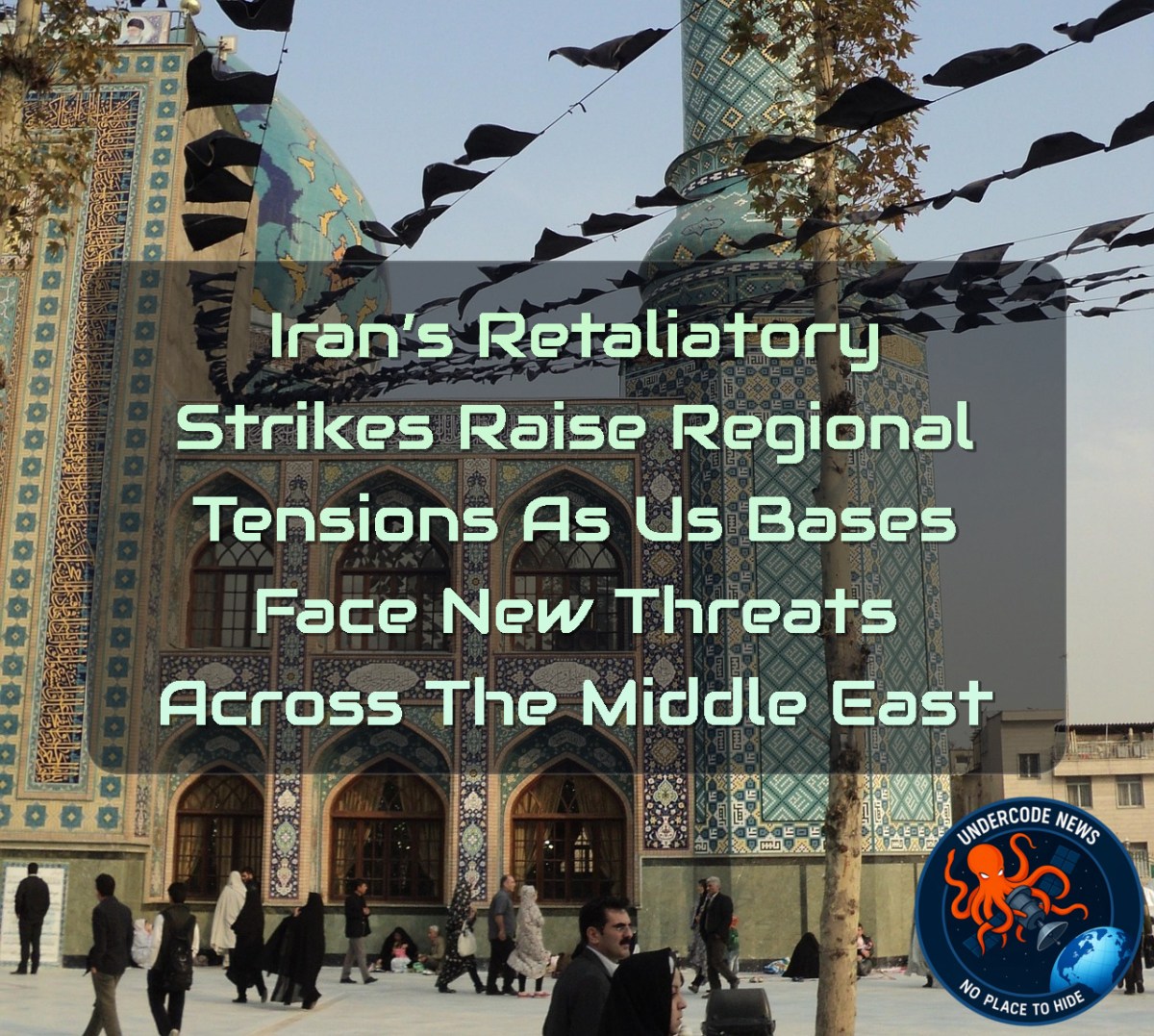 Introduction: A Dangerous New Chapter in US-Iran Confrontation
The conflict between Iran and the United States has entered a highly volatile phase, with Tehran warning that any military facility in the Middle East used to launch attacks against Iran could become a legitimate target. Following recent US strikes on Iranian territory, Iran has responded with claims of retaliatory operations targeting American military positions across Bahrain, Jordan, and Kuwait.
The latest developments highlight how quickly regional tensions can expand beyond direct confrontations between two nations. With US forces operating from multiple strategic locations across the Gulf and surrounding areas, every military base, logistics hub, and technology facility has become part of a wider geopolitical battlefield.
Iran’s military claims that drone attacks were launched against American installations, while several regional governments have reported intercepting missiles and drones. Although some of Iran’s claims remain unverified, the situation has increased fears of a broader conflict involving Gulf nations, foreign military forces, and critical infrastructure.
Iran Claims Drone Attacks Against US Military Bases
Iran’s armed forces announced that they had launched retaliatory strikes against US military locations in Bahrain, Jordan, and Kuwait. According to Iranian state media, the attacks were carried out using drones designed to strike strategic military assets.
Iranian officials stated that the operations were a direct response to recent American attacks on Iran. Tehran emphasized that any location used by US forces to conduct military operations would be considered a legitimate target.
The Iranian military claimed that the attacks targeted fuel storage areas, equipment warehouses, missile-related facilities, and military personnel positions. However, the United States has not publicly confirmed damage to its bases or reported casualties among American forces.
Bahrain Becomes a Major Focus of Iranian Claims
One of the primary locations mentioned by Iran was the Isa Air Base in Bahrain, a facility associated with regional military operations.
Iran’s military claimed that Arash kamikaze drones struck fuel tanks, equipment storage areas, warehouses, and barracks belonging to US forces stationed at the base.
The claims have not been independently verified. Bahrain later announced that it had intercepted and destroyed several Iranian aerial threats, accusing Tehran of launching attacks that endangered civilian areas.
The reported explosions and warning sirens in Bahrain increased concerns that the Gulf kingdom could become one of the central locations affected by escalating US-Iran tensions.
Iran Accuses Amazon Data Center of Being Targeted
In a separate statement, Iran’s Revolutionary Guards claimed that an Amazon data center in Bahrain was targeted during the operation.
The allegation introduces a new dimension to the conflict because it suggests that Iran may view technology infrastructure connected to American companies as part of the broader strategic environment.
Neither Amazon nor Bahraini authorities confirmed the claim. If such infrastructure were intentionally targeted, it could mark a significant expansion of modern warfare tactics, where cloud services, communication networks, and digital infrastructure become potential targets during geopolitical conflicts.
Jordan Reports Intercepting Iranian Missiles and Drones
Iran also claimed that it targeted the Al-Azraq military base in Jordan, describing the operation as an attack against aircraft facilities, maintenance areas, and military buildings.
Jordan’s military confirmed that it intercepted seven missiles and six drones launched from Iran. Officials stated that the defensive operation prevented casualties and avoided material damage.
Jordan’s involvement demonstrates the difficult position faced by countries located between competing regional powers. Many nations in the Middle East host foreign military forces while also attempting to prevent their territory from becoming a battlefield.
Kuwait Faces Additional Iranian Military Claims
Iran’s military also announced drone operations against US facilities in Kuwait, including Camp Udairi, Camp Doha, and Camp Arifjan.
The Iranian Revolutionary Guards separately claimed that Ali Al Salem Air Base was targeted, alleging damage to ammunition storage facilities and claiming casualties among American personnel.
Kuwait has historically served as an important logistics center for US military operations in the region. Any attack affecting American infrastructure there would have significant strategic consequences because Kuwait supports transportation, supply chains, and military readiness throughout the Gulf.
Iran Issues Direct Threats Against US Forces
Ali Abdollahi, commander of Iran’s Khatam al-Anbiya central military command, delivered a strong warning to American forces in the region.
He stated that Iran had prepared retaliation against US personnel and warned that every Iranian death caused by American actions would lead to consequences for American service members.
The statement reflects Tehran’s broader strategy of using deterrence messaging, military demonstrations, and regional pressure campaigns to influence US decision-making.
However, such threats also increase the possibility of miscalculation, where a single attack or misunderstanding could trigger a wider military confrontation.
The Role of Drones in Modern Middle East Warfare
The reported attacks highlight the growing importance of drones in modern conflicts.
Unlike traditional aircraft, drones are cheaper, easier to deploy, and capable of reaching targets across long distances. Iran has invested heavily in drone technology and has used unmanned systems as a central part of its regional military strategy.
Drones allow countries and armed groups to pressure stronger opponents while reducing direct risks to their own forces.
However, drone warfare also creates new challenges because civilian infrastructure, airports, energy facilities, and communication networks can become vulnerable targets.
Cybersecurity and Critical Infrastructure Risks
The mention of a possible Amazon data center attack raises concerns about the relationship between military conflicts and digital infrastructure.
Modern conflicts increasingly involve not only missiles and drones but also cyber operations, cloud systems, telecommunications networks, and data centers.
A military confrontation involving technology infrastructure could affect businesses, governments, and civilians far beyond the immediate battlefield.
Organizations operating in conflict regions must consider stronger monitoring, network segmentation, threat intelligence programs, and incident response capabilities.
Deep Analysis: Security Commands and Defensive Monitoring
Organizations monitoring geopolitical cyber and physical threats can use security tools to identify unusual activity:
Check active network connections
ss -tulpn
Monitor system logs for suspicious activity
journalctl -xe
Search authentication failures
grep "Failed password" /var/log/auth.log
Review firewall activity
iptables -L -v
Check running processes
ps aux
Monitor system resources
top
Scan internal networks
nmap -sV 192.168.1.0/24
Check open ports
netstat -tulnp
Review recent login activity
last
Monitor file changes
find /etc -type f -mtime -1
Military conflicts increasingly overlap with cybersecurity challenges. Governments and companies connected to critical infrastructure should maintain continuous monitoring, improve threat detection, and prepare for hybrid attacks involving both physical and digital methods.
What Undercode Say:
Iran’s latest claims represent more than a simple exchange of military strikes. They demonstrate how modern conflicts are becoming multi-layered battles involving physical attacks, psychological pressure, technology infrastructure, and information warfare.
The Middle East remains one of the most strategically important regions in the world because of energy routes, military bases, and global trade connections.
The United States maintains a large military presence across the Gulf because these locations provide rapid response capabilities.
Iran understands that directly confronting American military power would be extremely risky, which is why asymmetric strategies remain central to Tehran’s approach.
Drone attacks, missile launches, cyber operations, and political messaging allow Iran to create pressure without relying only on conventional warfare.
The reported targeting of Bahrain, Jordan, and Kuwait shows Iran’s ability to reach beyond its borders.
However, these operations also carry significant risks.
Attacking locations connected to American forces could encourage stronger US retaliation.
Regional allies may increase cooperation with Washington if they believe Iran represents a growing threat.
At the same time, Gulf nations face difficult choices because they want security partnerships while avoiding becoming targets in a wider conflict.
The possibility of technology infrastructure being targeted is particularly concerning.
Cloud providers, telecommunications companies, and data centers are becoming strategic assets.
Future conflicts may not only focus on destroying military equipment but also disrupting information systems that support governments and economies.
The battlefield of the future will likely combine drones, artificial intelligence, cyber weapons, satellites, and traditional military forces.
Iran’s statements also serve an information warfare purpose.
By announcing successful strikes, Tehran attempts to demonstrate strength domestically and internationally.
Meanwhile, countries targeted by Iran may attempt to minimize the impact publicly to prevent panic and maintain confidence.
The biggest danger is not only the attacks themselves but the possibility of escalation.
A single incident causing significant casualties could push both sides toward a larger military response.
Diplomatic channels, defensive systems, and communication between military forces remain essential to prevent uncontrolled escalation.
The coming period will test whether regional powers can contain tensions or whether the current confrontation becomes a larger conflict involving multiple countries.
✅ Iran publicly claimed attacks against US-linked facilities in Bahrain, Jordan, and Kuwait.
✅ Bahrain and Jordan reported intercepting Iranian missiles or drones during the escalation.
❌ Claims of destroyed US facilities, casualties, and attacks on specific infrastructure remain unconfirmed without independent verification.
Prediction
(+1) Positive Outlook:
Regional governments may strengthen air defense cooperation to reduce the risk of future drone and missile attacks.
Increased diplomatic pressure could encourage temporary negotiations between Iran and the United States.
Military monitoring systems may improve as countries invest in advanced detection technology.
Negative Outlook:
Continued retaliation could create a cycle of attacks between Iran and US forces.
Civilian infrastructure, including energy and technology systems, could become increasingly exposed.
A major military incident involving casualties could trigger a broader regional conflict.
Final Analysis: A Conflict Moving Beyond Traditional Warfare
The latest US-Iran confrontation shows how modern geopolitical conflicts are no longer limited to armies fighting on traditional battlefields.
Military bases, drone networks, digital infrastructure, and communication systems are now interconnected parts of global security.
Iran’s warnings and claimed retaliatory operations demonstrate its willingness to challenge American influence in the region.
The United States and its allies must balance deterrence with avoiding unnecessary escalation.
The coming weeks will reveal whether this confrontation remains limited or becomes another major crisis reshaping Middle Eastern security.
▶️ Related Video (76% Match):
🕵️📝Let’s dive deep and fact‑check.
🎓 Live Courses & Certifications:
Join Undercode Academy for Verified Certifications
🚀 Request a Custom Project:
Secure, high-velocity infrastructure and disruptive technological engineering. Contact our engineering team for high-tier development and proprietary systems:
[email protected]
💎 Smart Architecture | 🛡️ Secure by Design | ⭐ Trusted by Thousands
References:
Reported By: www.euronews.com
Extra Source Hub (Possible Sources for article):
https://www.reddit.com/r/AskReddit
Wikipedia
OpenAi & Undercode AI
Image Source:
Unsplash
Undercode AI DI v2
🔐JOIN OUR CYBER WORLD [ CVE News • HackMonitor • UndercodeNews ]
📢 Follow UndercodeNews & Stay Tuned:
𝕏 formerly Twitter 🐦 | @ Threads | 🔗 Linkedin | 🦋BlueSky | 🐘Mastodon | 📺Youtube


