
Listen to this Post
 Introduction: A New Warning Sign From the Dark Web
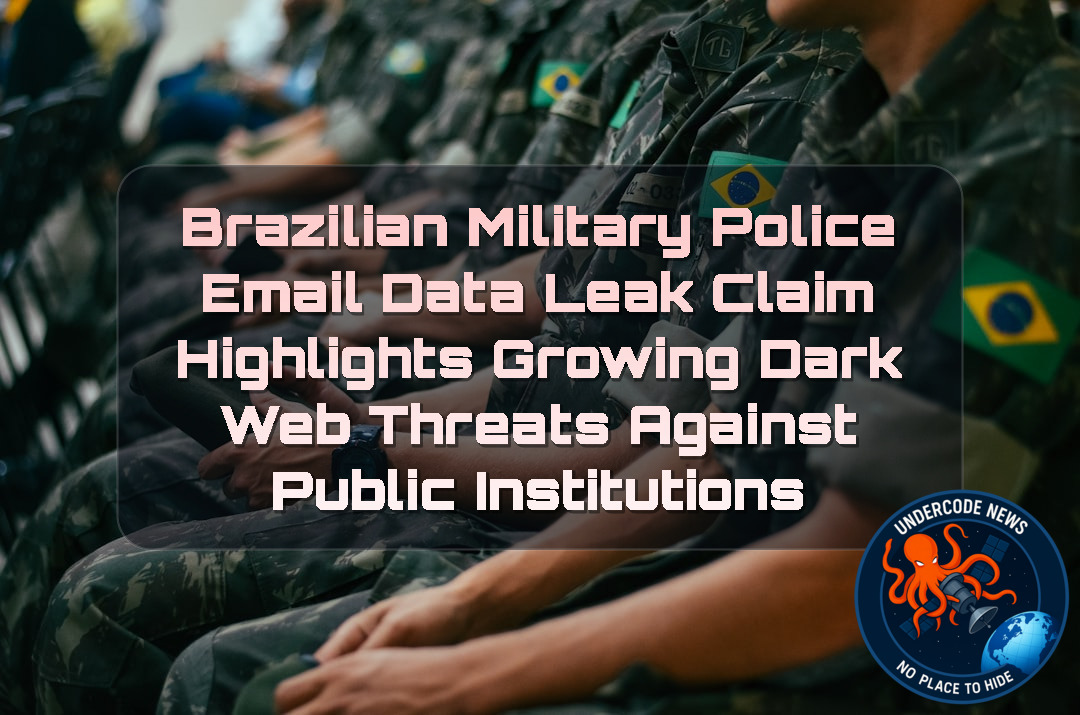
Cybercriminal activity targeting government institutions continues to expand, with public-sector organizations becoming frequent targets for data theft, credential harvesting, and underground data trading. A recent post shared by the dark web monitoring account Dark Web Intelligence claims that Brazilian Military Police email data has appeared in underground channels, raising concerns about the security of official communications and law enforcement infrastructure.
While the post provides limited details and does not independently confirm the authenticity, volume, or origin of the alleged data, such claims represent an important cybersecurity signal. Government email systems contain highly sensitive information, including operational communications, internal documents, employee identities, and potentially confidential law enforcement discussions.
This incident reflects a broader trend: attackers increasingly focus on institutions where compromised accounts can provide long-term access, intelligence value, or opportunities for further attacks.
Dark Web Claim: Brazilian Military Police Emails Allegedly Exposed
Underground Post Claims Government Email Data Is Available
According to a July 28, 2026 post from Dark Web Intelligence, threat actors allegedly shared information connected to Brazilian Military Police email systems. The post itself offers only a brief description, without revealing the size of the dataset, the specific police departments affected, or whether the information represents stolen credentials, internal emails, or another type of data.
At this stage, the claim remains unverified. Dark web advertisements and leak announcements often require additional investigation because threat actors sometimes exaggerate or fabricate claims to gain attention, pressure victims, or attract buyers.
Why Military Email Systems Are Valuable Targets
Government Communications Hold Strategic Information
Military and police email accounts are attractive targets because they often contain valuable operational information. Even basic employee email details can help attackers conduct targeted phishing campaigns, impersonation attacks, and business email compromise operations.
A compromised law enforcement mailbox could potentially expose:
Internal communication patterns
Employee identities and roles
Administrative documents
Operational schedules
Contact networks
Password reset information
Sensitive attachments
For attackers, access to government-related accounts can be more valuable than simple personal data because it may enable additional intrusion attempts.
The Growing Cybersecurity Risk Facing Public Institutions
Government Agencies Remain High-Value Targets
Public institutions worldwide have experienced increasing cyberattacks in recent years. Government networks often operate large, complex environments containing outdated systems, third-party integrations, and thousands of employees who require constant access.
Attackers understand that government organizations face operational pressure. A successful intrusion can create disruption, public concern, and political consequences.
Cybercriminal groups frequently use:
Ransomware attacks
Credential theft campaigns
Data extortion schemes
Malware infections
Social engineering attacks
Supply chain compromises
The alleged Brazilian Military Police email exposure fits into this wider pattern of attackers seeking valuable government-related information.
How Email Compromise Can Become a Larger Security Incident
A Single Account Can Open Multiple Attack Paths
Email systems remain one of the most important entry points for cybercriminal operations. A stolen account does not only expose messages. It can become a gateway into broader networks.
Attackers may use compromised email access to:
Send convincing phishing messages
Reset passwords for connected services
Access cloud platforms
Steal additional credentials
Move deeper into internal networks
Monitor future communications
Government organizations must therefore treat email security as a critical part of national and public safety infrastructure.
Brazil’s Cybersecurity Challenges Continue to Evolve
Public Sector Organizations Face Increasing Pressure
Brazil has experienced a growing number of cybersecurity incidents affecting businesses, government bodies, and public services. The country represents a major digital economy in Latin America, making it an attractive target for financially motivated criminals and intelligence-driven groups.
Law enforcement organizations are particularly sensitive targets because they represent both operational value and symbolic importance.
An attack against police infrastructure can create reputational damage even when the technical impact appears limited.
Dark Web Monitoring Provides Early Warning Signals
Intelligence Gathering Helps Organizations Respond Faster
Dark web monitoring has become an important cybersecurity practice because stolen information often appears for sale or public release before organizations fully understand they have been compromised.
Security teams can use underground intelligence to:
Detect leaked credentials
Identify possible breaches
Reset compromised accounts
Investigate attacker activity
Improve defensive strategies
However, every dark web claim requires verification through technical investigation, forensic analysis, and official confirmation.
Deep Analysis: Understanding the Real Impact of the Alleged Leak
Government Data Has Strategic Importance
The possible exposure of Brazilian Military Police email information demonstrates how cybercriminals increasingly view government data as a strategic asset rather than just a financial opportunity.
Email Remains the Weakest Human Security Layer
Even with advanced security systems, human communication remains vulnerable. Phishing attacks continue to succeed because attackers exploit trust, urgency, and authority.
Attackers Prefer Identity Over Infrastructure
Modern cybercriminal operations often focus less on destroying systems and more on stealing identities. A valid government email account can provide access that bypasses many traditional defenses.
Dark Web Claims Should Trigger Investigation
Organizations should not ignore underground claims, even when evidence is incomplete. Early investigation can prevent a small compromise from becoming a larger breach.
Public Institutions Need Stronger Identity Protection
Multi-factor authentication, privileged access controls, and continuous monitoring are becoming essential requirements for government networks.
The Cost of Government Breaches Goes Beyond Money
A corporate breach may create financial losses, but a government breach can affect public trust, operational security, and national resilience.
Attackers Exploit Security Gaps Between Departments
Large government organizations often contain many connected systems. A weakly protected department can become an entry point into more sensitive environments.
Cybersecurity Must Become a Continuous Process
Security cannot rely only on periodic audits. Threat detection, employee training, and incident response must operate constantly.
Intelligence Sharing Can Reduce Damage
Government agencies, cybersecurity companies, and international partners benefit from sharing threat information quickly.
The Dark Web Has Become a Marketplace for Intelligence
Criminal communities increasingly trade access, credentials, databases, and internal documents rather than only malware tools.
What Undercode Say:
Government Emails Are More Valuable Than Many Organizations Realize
The alleged Brazilian Military Police email leak highlights a major cybersecurity reality: attackers do not always need classified documents to create damage. Basic account information can become the foundation for future attacks.
Dark Web Claims Should Be Treated as Security Indicators
Although the claim has not been independently verified, organizations should consider underground disclosures as potential warning signals. Early detection can dramatically reduce the impact of a real compromise.
Identity Protection Is Now Critical Infrastructure
Passwords alone are no longer enough. Government institutions require strong authentication methods, monitoring systems, and rapid response capabilities.
Public Agencies Are Attractive Because They Cannot Easily Stop Operating
Cybercriminals understand that police and government organizations cannot simply disconnect systems during an attack. Operational requirements create pressure that attackers may exploit.
Email Security Requires More Than Spam Filters
Modern threats involve credential theft, social engineering, and account takeover techniques. Organizations need advanced monitoring that detects unusual behavior after login.
The Future of Cyber Conflict Includes Information Theft
Stealing communications can provide intelligence advantages even without ransomware or visible disruption. Data access itself has become a powerful weapon.
Brazil Represents a Wider Global Pattern
This incident is not isolated. Government organizations worldwide are facing similar threats from ransomware groups, data brokers, and cyber espionage actors.
Verification Remains Essential
Cybersecurity professionals must separate confirmed incidents from unverified claims. Accurate reporting prevents unnecessary panic while still encouraging proper investigation.
Security Investment Must Match Digital Dependence
As governments move more services online, cybersecurity budgets and defensive capabilities must grow accordingly.
Prevention Is Less Expensive Than Recovery
Recovering from compromised government systems can require months of investigation, rebuilding, and public communication efforts.
✅ Claim Status: Unverified Dark Web Report
The available information originates from a dark web monitoring post and does not currently provide independent confirmation of the alleged Brazilian Military Police email exposure.
❌ No Confirmed Breach Details Available
There is no confirmed information about the number of affected accounts, stolen records, attack method, or responsible threat actor.
✅ Threat Assessment Is Realistic
Government email systems are legitimate high-value targets, and similar incidents have occurred globally, making investigation and monitoring necessary.
Prediction: What Could Happen Next
(-1) Possible Increased Targeting of Brazilian Government Systems
If the alleged leak is connected to a genuine compromise, attackers may attempt follow-up operations using exposed email addresses, employee identities, or stolen credentials.
(-1) Potential Phishing Campaigns Using Police Identities
Threat actors may exploit public trust in law enforcement organizations by creating fake emails designed to steal additional information.
(+1) Faster Security Response From Brazilian Authorities
Public exposure of a possible leak may encourage security teams to investigate affected systems, reset credentials, and strengthen defensive controls.
(+1) Greater Adoption of Government Cybersecurity Measures
Incidents like this can accelerate investment in identity protection, threat intelligence monitoring, and stronger authentication systems.
(-1) Dark Web Trading Could Expand
If the information proves legitimate, cybercriminal groups may attempt to sell additional datasets or access related to government networks.
(+1) Increased Awareness of Public Sector Cyber Risks
The incident may encourage governments and organizations worldwide to improve cybersecurity preparation before attacks occur.
▶️ Related Video (78% Match):
🕵️📝Let’s dive deep and fact‑check.
🎓 Live Courses & Certifications:
Join Undercode Academy for Verified Certifications
🚀 Request a Custom Project:
Secure, high-velocity infrastructure and disruptive technological engineering. Contact our engineering team for high-tier development and proprietary systems:
[email protected]
💎 Smart Architecture | 🛡️ Secure by Design | ⭐ Trusted by Thousands
References:
Reported By: x.com
Extra Source Hub (Possible Sources for article):
https://www.quora.com
Wikipedia
OpenAi & Undercode AI
Image Source:
Unsplash
Undercode AI DI v2
🔐JOIN OUR CYBER WORLD [ CVE News • HackMonitor • UndercodeNews ]
📢 Follow UndercodeNews & Stay Tuned:
𝕏 formerly Twitter 🐦 | @ Threads | 🔗 Linkedin | 🦋BlueSky | 🐘Mastodon | 📺Youtube


