
Listen to this Post
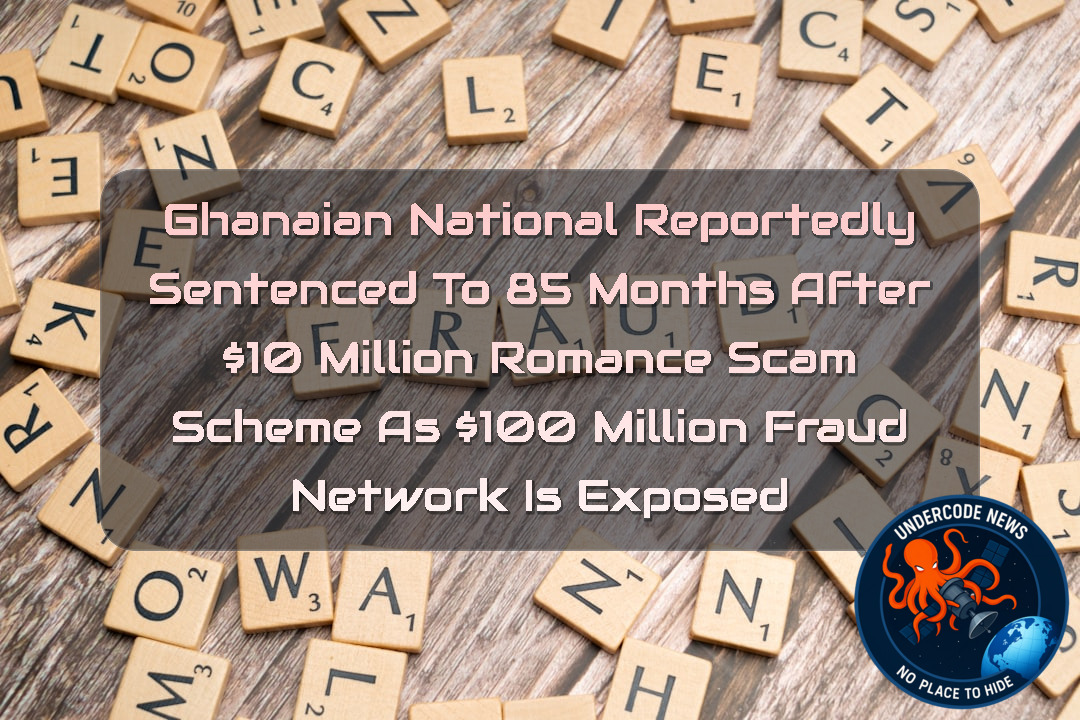 A Digital Love Story That Ended in Financial Ruin
Online romance scams are often described as simple fraud, but the reality can be far more disturbing. Behind a friendly message, a convincing photograph, or months of seemingly genuine conversation can be an organized criminal operation designed to turn human trust into money.
The case of Ghanaian national Derrick Van Yeboah illustrates just how damaging that model can become when social engineering, financial fraud, fake identities, and international money laundering operate together. According to the July 30, 2026 report supplied for this article, Van Yeboah was sentenced to 85 months in prison after being held responsible for more than $10 million in romance-scam losses. The wider Ghana-based criminal network was accused of stealing and laundering more than $100 million from victims.
Federal prosecutors had previously confirmed that Van Yeboah pleaded guilty to conspiracy to commit wire fraud and was held responsible for more than $10 million obtained through romance scams. Prosecutors said the broader organization stole and laundered more than $100 million through romance scams and business email compromise schemes.
The Human Cost Behind the Numbers
A figure such as $100 million can be difficult to understand because it reduces thousands of individual tragedies to a single number. For the victims, however, the losses were personal. Many were older men and women who believed they had developed genuine romantic relationships online.
The alleged criminals did not need to break through sophisticated encryption or exploit an unknown software vulnerability. Instead, they exploited something much more fundamental: trust.
The operation reportedly depended on fake identities and carefully constructed relationships. Criminals would communicate with victims while pretending to be romantic partners, gradually building emotional confidence before introducing requests for money or other financial assistance.
That gradual process is one of the most dangerous characteristics of romance fraud. A victim may not feel as though they are making a suspicious financial transaction. They may believe they are helping someone they love.
Derrick Van
U.S. prosecutors identified Van Yeboah, also known as “Van,” as a member of a criminal organization primarily based in Ghana. Prosecutors said he personally conducted many romance scams by impersonating fictitious romantic partners and was responsible for more than $10 million in stolen funds.
The case was not limited to isolated online conversations. Authorities said the organization operated as a broader criminal enterprise targeting both individuals and businesses across the United States.
That distinction matters because romance fraud and business email compromise can appear to be completely different crimes. In practice, both can rely on the same underlying weapon: deception.
When Romance Fraud Meets Business Email Compromise
The organization was also accused of conducting business email compromise, commonly known as BEC.
In a BEC operation, criminals manipulate employees or executives into transferring money to accounts controlled by the attackers. The technique can involve impersonating executives, vendors, customers, business partners, or other trusted contacts.
This creates an important cybersecurity lesson. Criminal organizations do not necessarily need a sophisticated technical exploit when they can persuade a legitimate employee to authorize the transaction themselves.
The Ghana-based operation allegedly combined these techniques with romance scams, allowing the same broader organization to attack both emotional and commercial trust. Prosecutors said the proceeds were eventually laundered to West Africa.
The $10 Million Question
Van Yeboah agreed to restitution and forfeiture totaling $10,149,429.17, according to the U.S. Department of Justice. That figure represents the financial responsibility attributed to him rather than the total losses associated with the entire organization.
The distinction is crucial.
The broader conspiracy was accused of stealing and laundering more than $100 million from dozens of victims, while Van Yeboah was personally held responsible for more than $10 million.
In other words, the case provides a glimpse into an ecosystem rather than a single scammer working independently.
An International Investigation
The prosecution also demonstrates how difficult modern financial cybercrime can be to contain within national borders.
The victims were located in the United States. The criminal organization was primarily based in Ghana. The stolen funds were reportedly moved through financial channels before being transferred to West Africa.
Investigators therefore needed cooperation across jurisdictions.
The U.S. Department of Justice credited the FBI and assistance from Ghana and the Department of Justice’s Office of International Affairs in the investigation. Van Yeboah and other suspects were extradited from Ghana to the United States in August 2025.
Extradition Changed the Equation
The extradition of suspects demonstrates why international cooperation has become increasingly important in cybercrime investigations.
For years, criminals could assume that operating from another country would make prosecution difficult. Modern investigations are steadily challenging that assumption.
Financial records, online communications, identity information, cryptocurrency transactions, account activity, device evidence, and international intelligence can collectively create a trail that survives national borders.
The Van Yeboah case is therefore significant beyond the sentence itself. It demonstrates that online anonymity is often less permanent than criminals assume.
Why Romance Scams Continue to Work
The technology behind a romance scam can be surprisingly ordinary.
A social media account, a messaging application, stolen photographs, fabricated personal information, and a believable story can be enough to begin the process.
The sophistication comes from the psychological manipulation.
Criminals study what makes their targets respond. They learn their interests, routines, fears, family circumstances, financial situations, and emotional vulnerabilities.
The relationship can then become a long-term psychological operation.
The Victim May Not See the Attack Coming
Traditional cybersecurity advice often tells people to watch for suspicious attachments, malicious links, or strange login pages.
Romance scams operate differently.
The attacker may never send malware. They may never ask the victim to click a dangerous link. They may simply talk.
That makes detection significantly harder.
A victim may even defend the scammer when friends or family members express concern because the relationship has become emotionally meaningful.
The Psychology of Gradual Trust
One of the strongest elements of romance fraud is patience.
A criminal who immediately asks for thousands of dollars is easy to identify. A criminal who spends weeks or months establishing trust is much more difficult to detect.
The
Eventually, a request for money may not feel like a financial transaction at all. It can feel like an act of love, loyalty, compassion, or emergency assistance.
That is precisely why these scams can be devastating.
The Scam Does Not End With the First Payment
Financial fraud operations frequently attempt to extract additional money after the first successful transfer.
A supposed medical emergency can be followed by another emergency. A supposed travel problem can become a legal problem. A supposed investment opportunity can require another payment before funds can supposedly be withdrawn.
The victim can become trapped in a cycle where every new payment is justified by the previous one.
This is one reason the total financial impact of romance fraud can grow dramatically once an attacker establishes credibility.
The Money Laundering Dimension
The theft of money is only one component of a large-scale cybercrime operation.
Criminal organizations also need ways to move, disguise, and ultimately access their proceeds.
According to prosecutors, the network connected to Van Yeboah laundered stolen funds and moved proceeds to West Africa.
That creates a second investigative challenge.
Even if authorities identify the original victim and fraudulent transfer, investigators must determine where the money went next, which accounts were involved, who controlled them, and how the financial network was structured.
Why the $100 Million Figure Matters
The reported losses place the case among the more striking examples of large-scale romance and financial fraud.
More importantly, the figure shows how individual scams can become industrialized.
One criminal impersonating one person can potentially defraud one victim. A coordinated organization with multiple operators, identities, accounts, laundering channels, and targets can multiply that damage enormously.
Cybercrime becomes especially dangerous when criminal organizations turn human deception into a repeatable business process.
The Business Email Compromise Connection
The BEC component also reveals how criminals diversify.
Romance scams depend heavily on emotional manipulation. BEC attacks depend more heavily on organizational trust.
But the underlying principle is nearly identical.
The attacker creates a false reality and persuades the target to make a legitimate-looking decision.
The bank may see an authorized transfer.
The victim may see an emergency.
The employee may see an executive request.
The criminal sees an opportunity.
The Most Dangerous Vulnerability Is Sometimes Human
Cybersecurity teams routinely invest heavily in endpoint protection, firewalls, identity systems, vulnerability management, and threat detection.
Those technologies remain essential.
But none of them can completely prevent a trusted person from voluntarily transferring money after being manipulated.
That is why social engineering remains one of the most persistent problems in cybersecurity.
The attacker does not always need to defeat the security system.
Sometimes the attacker simply convinces the user to operate it on their behalf.
The Case Began Years Before the Guilty Plea
The investigation concerns activity that prosecutors said targeted Americans between 2016 and 2023. Van Yeboah was extradited to the United States in August 2025, and he later pleaded guilty in March 2026.
That timeline is important because it shows how long major financial investigations can take.
Digital evidence may span years.
Bank records may involve numerous institutions.
Suspects may live in different countries.
Victims may initially be reluctant to report what happened.
And investigators must connect individual transactions to a larger criminal structure.
Justice Can Take Time
Cybercrime investigations rarely move at the speed of a social-media post.
The public may learn about an investigation only after arrests, extraditions, indictments, or guilty pleas occur.
Behind the scenes, however, investigators may have spent years tracing communications, financial transfers, identities, and relationships between suspects.
The Van Yeboah case is a reminder that the apparent invisibility of an online criminal can be temporary.
The Broader Warning for Dating Platforms
Dating platforms have become an important environment for social connection, but they have also become valuable hunting grounds for fraudsters.
A profile can be manufactured in minutes.
Photographs can be stolen.
Personal histories can be invented.
Voice and video can increasingly be manipulated with artificial intelligence.
That means users must evaluate online relationships differently from relationships formed through traditional social circles.
AI Could Make the Problem Worse
The case itself does not depend on AI to demonstrate the danger of social engineering.
But the same criminal model could become significantly more powerful when combined with modern generative AI.
Attackers can already automate writing, translate conversations, generate convincing messages, analyze public information, and create highly personalized communication.
The result could be romance scams that are more grammatically convincing, more culturally adaptable, and capable of maintaining conversations with many targets simultaneously.
The threat is therefore not only what criminals did in this case.
It is what the same playbook could become with better automation.
Deep Analysis
Command 1: Treat Unexpected Financial Requests as High Risk
Never allow emotional urgency to override financial verification.
A request for money from an online romantic partner should be treated as a high-risk event regardless of how convincing the relationship appears.
Command 2: Verify Identity Outside the Existing Conversation
Use independent methods to verify who someone actually is.
Do not rely exclusively on information supplied by the person contacting you.
Command 3: Never Let Romance Override Financial Controls
A genuine emotional connection should never be used as proof that a financial request is legitimate.
Love is not identity verification.
Command 4: Create a Mandatory BEC Verification Process
Organizations should require independent confirmation for unusual wire transfers, especially when payment instructions change unexpectedly.
Command 5: Separate Communication From Authorization
The person requesting a transfer should not be the only person responsible for confirming that transfer.
Independent verification creates another opportunity to detect manipulation.
Command 6: Monitor Behavioral Anomalies
Security teams should watch for unusual payment patterns, unfamiliar beneficiaries, sudden account changes, and abnormal executive requests.
Command 7: Protect Older Internet Users
Older adults should receive practical cybersecurity education focused on romance scams, impersonation, investment fraud, and payment manipulation.
Technical terminology is less useful than recognizable real-world examples.
Command 8: Report Suspicious Transactions Quickly
Speed matters after fraud occurs.
Victims should contact their financial institution and relevant authorities as quickly as possible rather than waiting because they feel embarrassed or uncertain.
Command 9: Preserve Evidence
Messages, usernames, email addresses, payment records, photographs, phone numbers, transaction receipts, and account information can help investigators reconstruct the operation.
Deleting the conversation can destroy useful evidence.
Command 10: Assume Criminals Are Patient
A scam does not have to become obvious immediately.
The longer an attacker maintains a false identity, the more credible the relationship may appear.
Command 11: Train Employees Against Social Engineering
Security awareness should include realistic examples of BEC attacks rather than generic warnings about suspicious emails.
Employees need to recognize manipulation, urgency, authority impersonation, and unusual payment instructions.
Command 12: Build Security Around Human Behavior
Organizations should design controls that assume people can be manipulated.
That means requiring verification rather than simply expecting employees to recognize every attack.
Command 13: Watch the Financial Trail
Financial institutions remain a critical part of the defensive ecosystem.
Unusual transfer patterns, rapid movement of funds, suspicious beneficiary relationships, and repeated fraud indicators can provide valuable signals.
Command 14: Improve International Cooperation
Cross-border cybercrime requires cross-border investigations.
The cooperation between U.S. and Ghanaian authorities in this case demonstrates why extradition, evidence sharing, and financial intelligence cooperation matter.
Command 15: Remember That Social Engineering Is Cybercrime
Cybersecurity should not be limited to malware and vulnerabilities.
A criminal who manipulates a person into transferring money has achieved a cyber-enabled financial compromise even without exploiting a software vulnerability.
What Undercode Say:
Trust Has Become an Attack Surface
The most important lesson from the Van Yeboah case is that cybersecurity is no longer just about protecting computers.
It is also about protecting decisions.
A perfectly secured device can still become part of a successful fraud when its owner is psychologically manipulated.
Romance Scams Are Social Engineering at Scale
Romance fraud should be understood as a sophisticated form of social engineering rather than dismissed as a simple dating scam.
The attacker creates trust first and monetizes it later.
That makes the
The $100 Million Figure Reveals Industrialization
A criminal operation allegedly generating more than $100 million in losses cannot reasonably be viewed as a collection of isolated incidents.
It demonstrates scale, organization, financial infrastructure, and repeatable methods.
Simple Techniques Can Produce Extraordinary Damage
The case is particularly important because it does not require an exotic technical vulnerability to explain the losses.
Human beings remained the central target.
That should concern every cybersecurity professional because human behavior is much harder to patch than software.
Business Email Compromise Shares the Same DNA
The combination of romance fraud and BEC demonstrates how criminal groups can reuse the same psychological principles across different targets.
One attack focuses on personal trust.
Another focuses on corporate trust.
Both attempt to make the victim voluntarily perform the final action.
AI Will Increase the Pressure
The next generation of romance fraud will likely become more personalized.
Criminals can use AI to draft messages, translate conversations, create plausible biographies, analyze publicly available information, and maintain multiple conversations.
That does not eliminate the traditional scam model.
It makes the model cheaper and easier to scale.
Identity Verification Must Become More Important
The lesson for users is not to distrust every person they meet online.
It is to avoid treating online identity as automatically authentic.
A profile is not proof of identity.
A photograph is not proof of identity.
A video call is not necessarily proof of identity.
And an emotional connection is certainly not proof of identity.
Financial Friction Can Save Victims
Security systems often try to make transactions faster.
Fraud prevention sometimes requires the opposite.
A short delay before an unusual transfer can give a victim time to reconsider, contact someone they trust, or independently verify the request.
That friction can be enormously valuable.
Families Have a Role in Defense
Romance scams can become difficult to detect because victims may fear judgment.
Family members and friends should therefore approach suspicious relationships carefully rather than simply accusing the victim of being naive.
Shame can push victims closer to scammers.
Support can help pull them away.
Businesses Need the Same Mindset
Companies should treat unusual financial instructions as security events.
A request from a senior executive should not automatically bypass verification.
A familiar supplier name should not automatically mean familiar payment details.
And urgency should never become a substitute for authentication.
Cybersecurity Is Becoming More Psychological
The cybersecurity industry has spent decades thinking about malicious code.
The next major challenge may increasingly involve malicious persuasion.
Attackers can combine technical infrastructure with psychological manipulation, creating campaigns that are difficult to identify through traditional security controls alone.
Law Enforcement Is Becoming More International
The extradition and prosecution surrounding Van Yeboah show that geography is becoming less reliable as a shield for cybercriminals.
Investigators can follow digital and financial evidence across borders.
That does not mean international cybercrime will disappear.
It does mean the cost of operating these networks can increase.
The Real Battlefield Is Trust
Every online interaction contains an implicit question: “Can I trust this person?”
Cybercriminals know how to manipulate that question.
They manufacture credibility through consistency, emotional attention, apparent vulnerability, and fabricated evidence.
The strongest defense is therefore not paranoia.
It is verification.
A Scam Can Look Like a Relationship
That may be the most painful lesson in the entire case.
A victim may genuinely experience affection, companionship, excitement, and emotional attachment even though the person on the other side is manipulating them.
The emotions are real.
The identity is not.
Victims Should Not Be Blamed
Fraudsters deliberately design these operations to exploit predictable human behavior.
Calling victims foolish does nothing to improve cybersecurity.
Understanding how they were manipulated can help prevent the next victim.
The Industry Must Measure More Than Technical Attacks
Security programs often track malware detections, vulnerabilities, phishing clicks, and endpoint incidents.
They should also track financial fraud attempts, suspicious payment requests, impersonation events, and social-engineering incidents.
Otherwise, a major category of cyber risk can remain invisible.
The Future Will Reward Verification
As AI-generated identities become more convincing, verification will become more valuable than appearance.
The question will increasingly shift from “Does this person look real?” to “What independent evidence proves this person is real?”
That is a much stronger security model.
The Van Yeboah Case Is a Warning, Not an Isolated Story
The reported 85-month sentence may close one chapter of this investigation, but it does not close the larger problem.
The criminal techniques involved remain available.
The platforms remain available.
The psychological vulnerabilities remain available.
And the financial incentives remain enormous.
The Biggest Security Lesson Is Uncomfortable
Cybersecurity cannot solve every social-engineering problem with better software.
Technology can identify suspicious behavior, block malicious infrastructure, and detect anomalies.
But people still need processes that help them stop and verify before making irreversible decisions.
What Comes Next
The combination of organized fraud, cross-border operations, financial laundering, social engineering, and artificial intelligence is likely to make online fraud more scalable.
The defenders who understand that combination will be better positioned than those who continue treating romance scams as low-level consumer fraud.
The Final Undercode Assessment
The Van Yeboah case shows what happens when human vulnerability becomes a business model.
The reported losses are enormous, but the deeper warning is even more serious: attackers do not always need to hack the machine when they can manipulate the human operating it.
Cybersecurity’s future will therefore depend not only on stronger encryption, smarter detection, and better identity systems, but also on something much older and more difficult to engineer—healthy skepticism.
✅ The $100 Million Network Figure Is Supported
The U.S. Department of Justice confirms that the criminal organization connected to Van Yeboah stole and laundered more than $100 million through romance scams and business email compromises.
✅ More Than $10 Million Was Attributed to Van Yeboah
Federal prosecutors state that Van Yeboah personally conducted romance scams and was held responsible for more than $10 million in stolen funds, with restitution and forfeiture totaling $10,149,429.17.
⚠️ The 85-Month Sentence Requires Careful Attribution
The July 30, 2026 post supplied for this article reports an 85-month sentence, but the publicly indexed DOJ materials located for verification document his March guilty plea and June 3 sentencing date rather than the 85-month sentence itself. Therefore, the 85-month figure should be attributed to the July 30 report unless the final sentencing record is independently confirmed.
Prediction
(+1) International Fraud Prosecutions Will Become More Aggressive
Cross-border cooperation is likely to increase as governments recognize that organized online fraud can generate enormous financial damage without requiring sophisticated malware.
(+1) Financial Institutions Will Invest More in Behavioral Detection
Banks and payment providers are likely to place greater emphasis on unusual transaction behavior, social-engineering indicators, and rapid intervention before suspicious transfers become irreversible.
(+1) AI Will Become Both a Defensive and Offensive Tool
Artificial intelligence will probably make scams easier to automate, but it will also help defenders identify abnormal communication patterns, detect impersonation, and correlate fraud indicators across large datasets.
(-1) Romance Scams Will Remain Difficult to Eliminate
The underlying vulnerability is human trust, and no software update can completely remove loneliness, emotional attachment, urgency, or the desire to help another person.
(-1) Criminal Networks Will Continue Moving Across Borders
As long as money can move internationally and digital identities can be created remotely, organized fraud groups will continue searching for jurisdictions, platforms, and financial channels that make their operations harder to disrupt.
Final Warning
Trust Should Never Be the Only Authentication Factor
The most powerful lesson from the case is brutally simple: someone can sound sincere, look convincing, behave consistently, and still be completely fraudulent.
Online relationships can be genuine, but financial decisions require independent verification.
When someone you met online asks for money, the safest response is not to become more emotionally convinced. It is to stop, verify the identity independently, and remember that a relationship built through a screen should never become a reason to abandon basic financial security.
▶️ Related Video (68% Match):
🕵️📝Let’s dive deep and fact‑check.
🎓 Live Courses & Certifications:
Join Undercode Academy for Verified Certifications
🚀 Request a Custom Project:
Secure, high-velocity infrastructure and disruptive technological engineering. Contact our engineering team for high-tier development and proprietary systems:
[email protected]
💎 Smart Architecture | 🛡️ Secure by Design | ⭐ Trusted by Thousands
References:
Reported By: x.com
Extra Source Hub (Possible Sources for article):
https://www.linkedin.com
Wikipedia
OpenAi & Undercode AI
Image Source:
Unsplash
Undercode AI DI v2
🔐JOIN OUR CYBER WORLD [ CVE News • HackMonitor • UndercodeNews ]
📢 Follow UndercodeNews & Stay Tuned:
𝕏 formerly Twitter 🐦 | @ Threads | 🔗 Linkedin | 🦋BlueSky | 🐘Mastodon | 📺Youtube


