
Listen to this Post
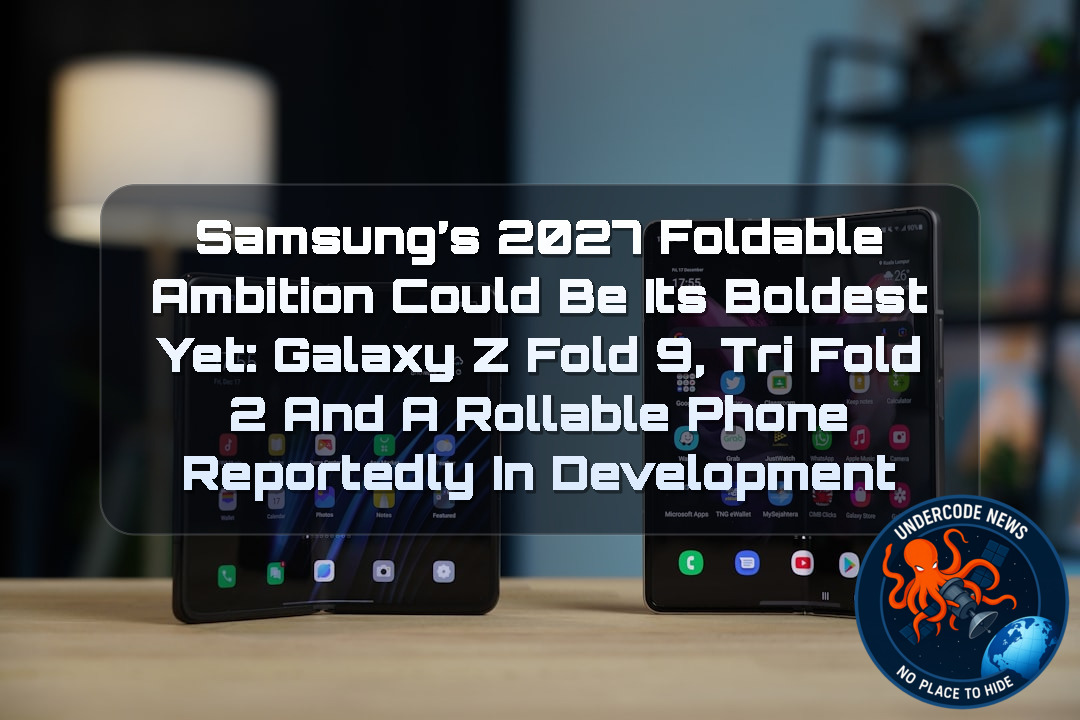 Samsung Is Already Planning Beyond the Galaxy Z Fold 8
Samsung has barely unveiled its latest generation of foldable smartphones, yet the company may already be preparing an even more ambitious lineup for 2027. According to a new report, Samsung could be developing as many as five next-generation foldable or expandable devices, including the Galaxy Z Flip 9, Galaxy Z Fold 9, Galaxy Z Fold 9 Ultra, a second-generation Galaxy Z TriFold, and something potentially much more radical: Samsung’s first smartphone with a rollable OLED display.
The timing is striking. Samsung has only just introduced the Galaxy Z Fold 8, Galaxy Z Fold 8 Ultra and Galaxy Z Flip 8, alongside the Galaxy Watch Ultra 2 and Galaxy Watch 9. Samsung’s own July 2026 announcements confirm that the company is continuing to push foldables as a major part of its premium mobile strategy.
But if the latest leak proves accurate, the current generation could eventually look like a relatively conservative step compared with what Samsung is preparing for 2027.
A Five-Device Foldable Lineup Could Be Coming
The report, originally attributed to GalaxyClub and discussed by SamMobile, points to four internal project codenames: B9, H9, Q9 and Z9. The Q9 project reportedly has two variants, meaning the total number of products associated with the development program could reach five.
The alleged lineup is especially interesting because it would cover several different interpretations of the foldable-phone concept rather than simply producing another generation of the same handset.
The rumored products include the Galaxy Z Flip 9, Galaxy Z Fold 9, Galaxy Z Fold 9 Ultra, a successor to the Galaxy Z TriFold and a completely new rollable-screen device.
If Samsung actually launches all five, 2027 could become one of the company’s most important years for experimental smartphone hardware.
What the B9 Codename Could Mean
According to the report, B9 is believed to correspond to the Galaxy Z Flip 9.
The Galaxy Z Flip has become Samsung’s more compact and fashion-oriented foldable, offering a traditional smartphone when opened while becoming significantly smaller when closed. A ninth-generation model would likely focus on refining that formula rather than radically changing it.
At this stage, however, there are no reliable specifications for the Galaxy Z Flip 9. Display dimensions, cameras, processor, battery capacity, hinge design and pricing remain unknown.
That absence of detail is important. Internal codenames can reveal that a project exists, but they do not guarantee that the final product will launch in its originally envisioned form.
H9 Could Become the Galaxy Z Fold 9
The H9 codename is reportedly associated with the standard Galaxy Z Fold 9.
That would be the natural successor to Samsung’s conventional book-style Fold series. The Galaxy Z Fold concept has gradually moved from an expensive technological showcase toward a more mature productivity device, with Samsung emphasizing multitasking, large displays and increasingly sophisticated software.
The next challenge is therefore not simply making the Fold open and close more times.
Samsung needs to make the device thinner, lighter, more comfortable to carry, more durable and more useful when compared with conventional flagship phones and tablets.
Q9 May Be the Most Interesting Project
The Q9 project is arguably the most intriguing part of the leak because it reportedly has both A and B variants.
The report connects Q9 with the Galaxy Z Fold 9 Ultra, while the two variants are speculated to represent the Fold 9 Ultra and the next-generation TriFold.
If that interpretation is correct, Samsung could be using one underlying development program to explore two radically different premium foldable designs.
That would make sense from an engineering perspective. Foldable phones require expensive components, specialized hinges, flexible OLED panels and extensive mechanical testing. Reusing elements of a platform across multiple form factors could help Samsung control development costs while expanding its product portfolio.
The Galaxy Z TriFold Could Become More Than a Technology Showcase
Samsung’s TriFold strategy could also be entering a new phase.
The first Galaxy Z TriFold was positioned as an extraordinary piece of mobile hardware, but availability was limited. Recent reports indicate that Samsung is developing a second-generation TriFold and may attempt to make it available in more markets.
That change could be more significant than simply improving the hardware.
A limited-production TriFold can demonstrate what Samsung’s engineers are capable of. A broadly available TriFold, however, would represent a genuine attempt to establish a new smartphone category.
Samsung would have to solve manufacturing capacity, durability, pricing, software optimization, repairability and customer support at a completely different scale.
TriFold 2 Could Become Samsung’s Real 2027 Experiment
Reports already suggest that the second-generation TriFold could be thinner and potentially produced in greater quantities than its predecessor.
That would be an important evolution.
The first generation could be viewed as Samsung asking a simple question: Can we build this?
The second generation would ask a much harder question: Can people actually buy and use this as a normal smartphone?
Those are very different challenges.
If Samsung can reduce thickness and weight while improving hinge reliability and manufacturing efficiency, the TriFold could move from an expensive novelty toward a legitimate premium computing platform that fits inside a pocket.
Then There Is the Z9 Rollable Phone
The biggest surprise in the report is the Z9.
GalaxyClub reportedly believes this could be Samsung’s first rollable-screen smartphone, partly because its internal hardware appears to have a more tablet-like character than a conventional smartphone.
Unlike a foldable, a rollable device does not necessarily divide its display into multiple hinged sections.
Instead, the screen can theoretically expand and retract, allowing a compact device to transform into a much larger display.
That idea has been demonstrated by display manufacturers for years, but turning a concept into a reliable consumer smartphone is considerably more difficult.
Rollable Displays Could Solve a Fundamental Foldable Problem
Foldable phones have one unavoidable compromise: they become thicker when folded because the display and supporting layers must occupy space around the hinge.
A rollable design approaches the problem differently.
Instead of folding a large display over itself, the display could remain within the device and expand when needed.
That could potentially produce a phone that behaves like a normal smartphone in its compact state but offers a significantly larger screen when the user needs it.
The concept is incredibly attractive.
The engineering is anything but simple.
Why Samsung Would Want a Rollable Phone
Samsung has invested heavily in flexible OLED technology for years, and Samsung Display has repeatedly demonstrated experimental flexible and rollable display technologies.
Samsung’s own history shows how seriously the company treats flexible displays. It unveiled its Infinity Flex Display technology in 2018, with the first Galaxy Fold reaching consumers in 2019. Samsung now describes foldables as an established part of its mobile strategy rather than a one-off experiment.
A rollable phone would therefore represent a logical next stage.
The company has already learned how consumers react to folding displays. The next step could be removing the hinge from the center of the experience altogether.
The Rollable Phone May Not Replace the Fold
It would be a mistake to assume that Samsung wants to abandon conventional foldables.
The rumored 2027 portfolio suggests almost the opposite.
Samsung could be preparing several different form factors simultaneously: a compact Flip, a conventional Fold, an Ultra Fold, a TriFold and a rollable device.
That strategy would allow Samsung to test which physical format consumers actually prefer.
Instead of betting everything on one design, Samsung could let the market decide.
Samsung’s Foldable Strategy Is Becoming a Portfolio Strategy
This may ultimately be the most important development.
Samsung’s early foldables were about proving that folding smartphones could exist. Today, the company appears to be moving toward a broader portfolio in which different flexible form factors serve different customers.
A Flip can target consumers who want compactness.
A Fold can target productivity users.
An Ultra can target customers who want the highest-end hardware.
A TriFold can target people who want a phone that approaches tablet functionality.
A rollable could target consumers who want a large display without a conventional hinge.
That is no longer simply a foldable-phone strategy.
It is a strategy for redefining the physical shape of mobile computing.
The 2027 Timeline Still Needs a Major Warning
Despite the excitement, none of these rumored products should be treated as confirmed consumer products yet.
The current information comes from reported internal development codenames and industry leaks, not a Samsung product announcement.
Companies regularly cancel prototypes, change product names, merge projects, delay launches or reduce the number of models they ultimately release.
The rumored second half of 2027 launch window should therefore be viewed as a possibility rather than a guaranteed schedule.
Samsung Has Already Signaled That Foldables Are Central to Its Future
What makes the leak more believable is the broader direction of Samsung’s business.
At Galaxy Unpacked in July 2026, Samsung introduced the Galaxy Z Fold 8 Ultra, Galaxy Z Fold 8 and Galaxy Z Flip 8 as part of a larger Galaxy ecosystem strategy involving AI, wearables and intelligent eyewear.
Samsung is not treating foldables as an isolated experiment anymore.
They are becoming one of the
That makes continued investment in additional form factors entirely plausible.
The Real Battle Will Be Thickness
For all the excitement surrounding new shapes, thickness could ultimately determine whether these products succeed.
Consumers may tolerate a thick experimental device once.
They are less likely to tolerate one every day for two or three years.
The industry therefore needs to solve batteries, hinges, displays, structural materials and internal component layouts simultaneously.
Every millimeter matters.
Every gram matters.
And every additional moving component creates another potential reliability challenge.
Durability Could Decide the Rollable’s Fate
A foldable already has a mechanical hinge and a flexible display.
A rollable device could introduce a different set of mechanical stresses because the display must repeatedly move through a controlled path.
Dust, debris, repeated expansion cycles, tension, friction and long-term material fatigue all become important engineering concerns.
Samsung would need to demonstrate that the rollable mechanism can survive years of normal consumer behavior, not merely hundreds of impressive demonstrations at a technology exhibition.
Software Will Matter as Much as Hardware
A giant expandable screen is impressive for a few minutes.
The real test begins after the novelty disappears.
Samsung would need software capable of recognizing different display states and adapting applications intelligently.
A rollable could potentially transition between compact and expanded modes without the user manually rearranging everything.
Imagine starting an email on a narrow display and expanding the screen when a document or spreadsheet becomes important.
That is where the hardware could become genuinely useful.
AI Could Make Flexible Displays More Valuable
Samsung is simultaneously investing heavily in Galaxy AI and agentic experiences.
That creates an interesting opportunity for flexible devices.
An AI assistant could potentially adapt the interface depending on how the screen is being used. A compact state could prioritize communication, while an expanded state could automatically provide a workspace for documents, media or multitasking.
In that sense, the next generation of foldables may not be defined only by mechanical innovation.
They could be defined by the combination of AI + flexible displays + context-aware software.
The Biggest Problem Could Be Price
Advanced hardware comes with advanced manufacturing costs.
The original TriFold already demonstrated how expensive multi-panel foldable technology can become. If Samsung wants a second-generation model to reach a broader audience, it will need to improve manufacturing yields and component economics.
A rollable device could be even more expensive initially.
That creates a familiar problem: the technology becomes exciting precisely because it is difficult to manufacture, but that same manufacturing complexity makes it difficult to sell at mainstream prices.
Samsung Has an Opportunity to Create a New Premium Tier
There is another way to look at the pricing problem.
Samsung does not necessarily need a rollable phone to become a mass-market product immediately.
It could position the device above the regular Fold lineup as a technological flagship.
That would allow Samsung to generate attention, collect real-world user feedback and gradually reduce production costs.
The original Fold followed a similar evolution: what initially looked experimental eventually became a recurring product category.
The same process could happen with rollable smartphones.
Apple Could Increase the Pressure
Samsung is also operating in a market where competitors are increasingly expected to experiment with premium foldable devices.
If major rivals enter the foldable category more aggressively, Samsung’s advantage will no longer simply be having a foldable phone.
It will need to demonstrate why its form factor is better.
That could encourage Samsung to accelerate TriFold and rollable development.
Competition often turns experimental technology into a commercial priority.
Samsung’s Display Business Gives It an Important Advantage
One of
Samsung Display has demonstrated rollable OLED concepts publicly, including flexible display prototypes. The company’s long-term investment in OLED technology gives Samsung Electronics a potential advantage when moving experimental display concepts toward commercial products.
That does not guarantee success.
But it means Samsung is not starting from zero.
The Rollable Could Be the Moment Samsung Moves Beyond the Hinge
Foldables changed smartphones by allowing a display to become larger without dramatically increasing the device’s footprint.
Rollables could push the idea further.
Instead of folding a screen, Samsung could make the display physically transform itself.
That distinction might sound small.
It is not.
Removing the traditional fold line could change everything from industrial design to user interaction.
The Consumer Question Is More Important Than the Engineering Question
Samsung can probably build increasingly complex flexible devices.
The bigger question is whether consumers actually want them.
People care about convenience, reliability, battery life, cameras, software, durability and price.
A technically extraordinary phone can still fail if it makes everyday tasks harder.
That is why the success of
Deep Analysis: What Samsung’s 2027 Foldable Strategy Really Means
What Undercode Says:
- Samsung Is Moving From Experiments to an Ecosystem
The reported five-device roadmap suggests Samsung may no longer view flexible smartphones as a single category.
Instead, the company appears to be exploring an ecosystem of different form factors designed for different users.
2. The Flip Has a Clear Role
The Galaxy Z Flip remains the easiest foldable concept to understand.
Its value is simple: a normal smartphone that becomes dramatically smaller.
That makes the Flip one of
- The Fold Needs More Than Incremental Upgrades
The conventional Fold category is becoming mature.
Samsung cannot rely forever on better processors and slightly thinner bodies.
Future Fold models will need meaningful improvements in ergonomics, battery efficiency, cameras, software and durability.
- The Ultra Could Become Samsung’s Maximum-Performance Fold
The rumored Fold 9 Ultra could represent
That could mean better cameras, a larger battery, stronger materials or additional productivity features.
5. TriFold Is the Wild Card
The TriFold has the potential to blur the boundary between phone and tablet.
But it also introduces more complexity than a traditional Fold.
Three sections mean more engineering challenges, more structural requirements and potentially higher repair costs.
- The Second TriFold Is More Important Than the First
The first TriFold proved that Samsung could build the device.
The second generation could prove whether Samsung can commercialize it.
That is a much more meaningful milestone.
7. Wider Availability Would Change the Conversation
If Samsung expands TriFold availability significantly, consumers will finally be able to compare the concept with ordinary Folds under normal conditions.
That could reveal whether the form factor is genuinely useful or simply spectacular.
8. Rollables Represent a Different Philosophy
A foldable asks consumers to accept a hinge.
A rollable potentially hides the transformation mechanism inside the body.
That could make the experience feel more natural.
- Z9 Is Therefore the Most Interesting Codename
Among the rumored projects, Z9 stands out because it reportedly represents an entirely new form factor.
The Flip 9 and Fold 9 are evolutionary.
The rollable could be transformational.
- The Hardware Will Need to Become Invisible
The best flexible device may ultimately be the one where users stop thinking about its mechanism.
If someone constantly worries about the hinge or display, the technology has failed to disappear into the experience.
11. Samsung Needs Reliability More Than Spectacle
A flashy prototype can generate headlines.
A reliable product generates customers.
Samsung’s next challenge is therefore to make flexible hardware boringly dependable.
12. Battery Technology Will Become Critical
Larger displays consume more energy.
More mechanical hardware can consume internal space.
Samsung must therefore improve energy efficiency and battery technology at the same time that it expands displays.
13. Heat Management Will Also Matter
Foldables increasingly resemble compact computers.
As performance rises, thermal management becomes harder.
A rollable or TriFold device must find room for cooling without sacrificing the very thinness that makes the concept attractive.
14. Cameras Cannot Be Forgotten
Premium customers expect flagship-level cameras.
Samsung will have to balance camera hardware against hinge mechanisms, batteries and flexible display components.
That is an extremely difficult packaging problem.
15. Software Could Be Samsung’s Secret Weapon
Samsung has years of experience optimizing Android for large and flexible displays.
That experience could become a major advantage as the company introduces increasingly unusual form factors.
16. Multitasking Is the Natural Use Case
A larger flexible display makes the most sense when multiple applications can run efficiently side by side.
This is where Fold and TriFold devices have a fundamental advantage over conventional smartphones.
17. AI Could Make That Advantage Stronger
AI could automate window management, summarize documents, reorganize information and adapt interfaces to different screen configurations.
That could turn a larger display from a novelty into a genuine productivity tool.
- The Rollable Could Be Even More Dynamic
A rollable display could theoretically offer several usable screen sizes.
That means the device could adapt physically to the task rather than forcing the user to choose between phone and tablet modes.
- But More Moving Parts Mean More Risk
Every mechanical system eventually faces wear.
Samsung will have to engineer the rollable mechanism for thousands of expansion and contraction cycles while protecting the display from environmental damage.
20. Dust Could Become a Serious Challenge
Traditional hinges already require careful sealing.
A rollable mechanism introduces another pathway through which debris could potentially create problems.
That makes environmental protection a key engineering concern.
21. Repairability Will Become More Important
The more complicated a smartphone becomes, the more difficult it can be to repair.
A broken conventional display is already expensive.
A damaged flexible display combined with a complex mechanical system could be substantially more difficult.
22. Samsung Must Think About Long-Term Ownership
Consumers are increasingly evaluating premium smartphones as multi-year purchases.
A $2,000-plus device must provide confidence that it will remain functional long after the launch excitement disappears.
23. Price Could Create a Two-Tier Market
Foldables may increasingly divide into relatively accessible models and ultra-premium experimental devices.
The rumored lineup could accelerate that segmentation.
- Samsung Could Become the “Form Factor” Company
If the company simultaneously sells Flip, Fold, Ultra, TriFold and rollable devices, Samsung could differentiate itself primarily through hardware design.
That would be difficult for competitors to replicate quickly.
25. Samsung’s Display Expertise Matters
Samsung’s long history with flexible OLED technology gives it an unusually strong foundation for experimentation.
The company has both consumer-electronics experience and access to advanced display development.
26. The Biggest Risk Is Overcomplication
Five different flexible devices could confuse consumers.
Samsung will need extremely clear product positioning.
Customers should immediately understand why each device exists.
27. The Biggest Opportunity Is Choice
On the other hand, five form factors could allow Samsung to serve completely different lifestyles.
That could make Galaxy the broadest premium hardware ecosystem in the smartphone industry.
- The Fold Could Become the Mainstream Work Device
If prices fall and durability improves, Fold devices could increasingly replace the traditional phone-plus-tablet combination for some users.
- The TriFold Could Push That Even Further
A large unfolded display approaching tablet territory would make the TriFold particularly interesting for productivity and media consumption.
30. The Rollable Could Target Simplicity
Instead of giving users multiple folded panels, Samsung could offer one continuously expanding display.
That could potentially make the form factor visually and ergonomically cleaner.
31. 2027 Could Become a Turning Point
If even some of these reports materialize, 2027 could mark the transition from conventional foldables to a much broader category of flexible computing devices.
- The Market Will Decide Which Design Survives
Samsung can launch five concepts.
Consumers will determine which ones become long-term product lines.
33. First-Generation Buyers Will Be Critical
Early adopters will provide Samsung with the real-world information needed to refine these designs.
Their experiences with durability, battery life and software will influence later generations.
34. Enterprise Users Could Matter
Foldable and expandable displays are particularly attractive for professionals who need larger workspaces without carrying tablets.
That could become an important market beyond ordinary consumers.
35. Developers Will Need to Adapt
Every new display format creates another software challenge.
Android developers will need interfaces capable of adapting naturally to different screen states.
36. Samsung’s AI Strategy Could Connect Everything
If Galaxy AI can understand what the user is doing and automatically adapt to different physical display configurations, flexible devices could become significantly more useful.
37. Rollables May Eventually Replace Some Folds
That is not guaranteed, but if rollables become thinner, more reliable and cheaper, consumers may prefer their seamless expansion mechanism.
38. Foldables Are Still the Safer Bet
Despite the excitement surrounding rollables, Samsung has far more real-world experience with folding phones.
The Fold and Flip families therefore remain the safer commercial strategy.
- The Rollable Is the Technology to Watch
Among all the rumored 2027 devices, the rollable deserves the closest attention.
If Samsung can make it reliable, thin and reasonably priced, it could redefine what consumers expect from a smartphone.
- Samsung’s Real Goal May Be Bigger Than Phones
The ultimate objective may not be to create another smartphone category.
It could be to make the smartphone itself increasingly adaptable—small when you need portability, large when you need productivity, and intelligent enough to understand the difference.
✅ Samsung Is Developing More Foldable Concepts
Samsung has publicly established flexible displays and continues to make foldables a major part of its mobile strategy. Current reporting also points to ongoing development of additional foldable products for 2027.
⚠️ The Five-Device 2027 Lineup Is Not Confirmed
The Galaxy Z Flip 9, Fold 9, Fold 9 Ultra, TriFold successor and Z9 rollable are based on reported internal codenames and industry leaks. Samsung has not officially announced this complete 2027 lineup.
⚠️ The Z9 Rollable Phone Remains Speculation
The Z9 project has reportedly been associated with Samsung’s first rollable smartphone, but there are currently no confirmed consumer specifications, final branding or guaranteed launch date. The possibility is compelling, but it should not yet be treated as an announced product.
Prediction
(+1) Samsung Will Continue Expanding Beyond Traditional Foldables
The strongest signal is
(+1) A More Widely Available TriFold Is Likely
Samsung appears increasingly interested in turning advanced foldable concepts into products that reach more customers. If the second-generation TriFold achieves better manufacturing efficiency and a thinner design, broader availability in 2027 is a realistic possibility.
(+1) Rollable Technology Will Become a Major Samsung Research Focus
Even if the rumored Z9 does not launch exactly as currently described, Samsung’s long-term investment in flexible OLED technology makes rollable devices a logical area for continued development.
(-1) The Entire Five-Device Lineup May Not Launch
Five separate high-end flexible devices would create enormous manufacturing, software and marketing complexity. Samsung could cancel, merge or delay some projects before reaching the commercial launch stage.
(-1) Rollable Phones Will Probably Remain Expensive Initially
The mechanical and display technology required for a reliable rollable smartphone will likely keep early models in the premium segment. Mass-market pricing may require several generations of engineering improvements.
(+1) 2027 Could Be Samsung’s Most Important Foldable Year Yet
If even four of the rumored devices reach consumers, Samsung could turn 2027 into a defining year for mobile hardware.
The smartphone may no longer be limited to one shape.
It could fold, flip, unfold twice, expand vertically or horizontally—or eventually do several of those things in the same device.
And that is the most important takeaway from this leak: Samsung may not simply be preparing the next Galaxy Z generation.
It may be preparing for the moment when the shape of a smartphone stops being fixed.
▶️ Related Video (64% Match):
🕵️📝Let’s dive deep and fact‑check.
🎓 Live Courses & Certifications:
Join Undercode Academy for Verified Certifications
🚀 Request a Custom Project:
Secure, high-velocity infrastructure and disruptive technological engineering. Contact our engineering team for high-tier development and proprietary systems:
[email protected]
💎 Smart Architecture | 🛡️ Secure by Design | ⭐ Trusted by Thousands
References:
Reported By: www.sammobile.com
Extra Source Hub (Possible Sources for article):
https://www.twitter.com
Wikipedia
OpenAi & Undercode AI
Image Source:
Unsplash
Undercode AI DI v2
🔐JOIN OUR CYBER WORLD [ CVE News • HackMonitor • UndercodeNews ]
📢 Follow UndercodeNews & Stay Tuned:
𝕏 formerly Twitter 🐦 | @ Threads | 🔗 Linkedin | 🦋BlueSky | 🐘Mastodon | 📺Youtube


