
Listen to this Post
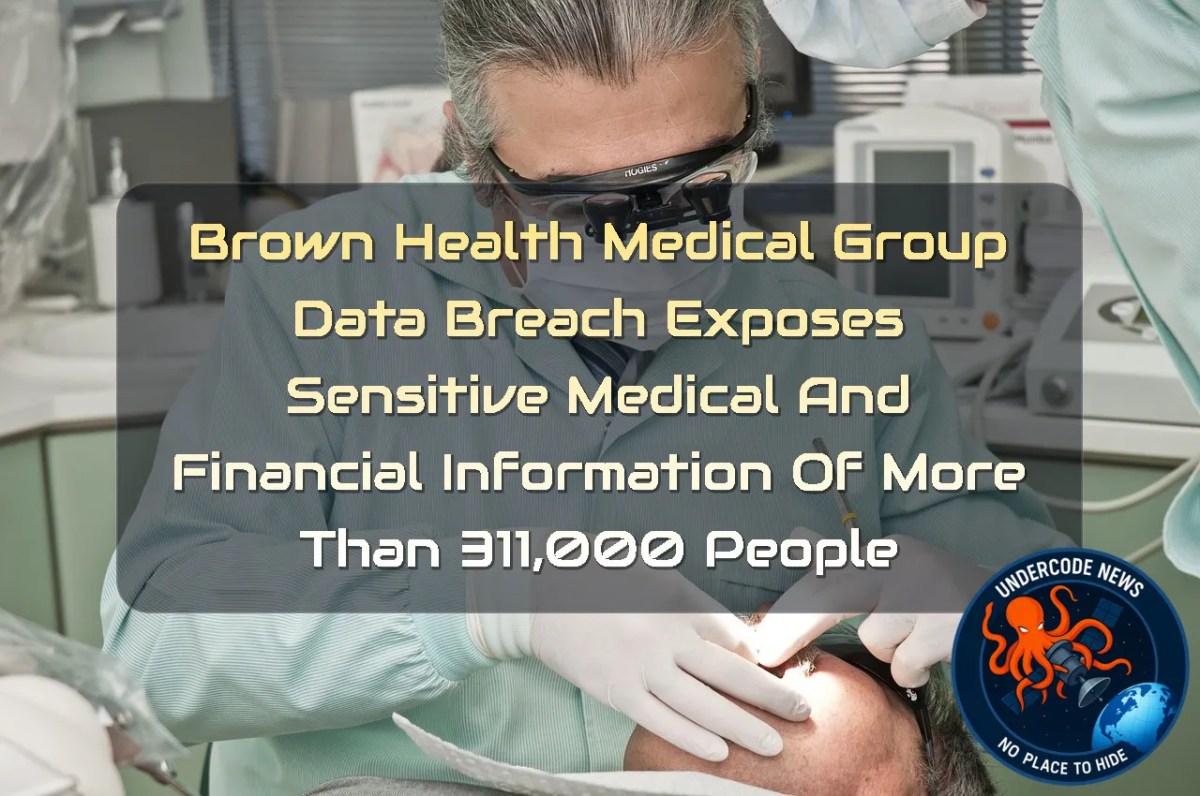 A Healthcare Security Incident That Raises New Questions About Legacy Systems
Healthcare organizations continue to face growing cyber threats as attackers increasingly target not only modern digital platforms but also older systems that may have been overlooked for years. The latest example comes from Brown Health Medical Group-MA, where a security incident involving a historic file server exposed the personal, medical, employment, and financial information of more than 311,000 individuals.
The breach highlights a major challenge facing the healthcare industry: sensitive data does not always reside inside the newest applications or electronic health record platforms. Older storage systems, forgotten servers, and outdated infrastructure can become attractive targets for attackers looking for valuable information.
Brown Health Medical Group-MA discovered unauthorized access to one of its legacy file servers in December 2025. After launching an investigation, the organization determined that attackers accessed the server between December 15 and December 16, 2025. The affected system was immediately isolated, and the organization confirmed that its electronic health record system was not impacted.
However, months later, investigators determined that the compromised server contained a wide range of sensitive information that could affect hundreds of thousands of individuals.
The Breach Discovery and Investigation Timeline
Unauthorized Access Detected in December 2025
Brown Health Medical Group-MA first became aware of suspicious activity involving a historic file server on December 16, 2025. Security teams immediately began investigating the incident and took steps to contain the potential threat.
The organization isolated the affected server to prevent further unauthorized activity while cybersecurity experts analyzed the environment.
The investigation revealed that unauthorized access occurred during a short period between December 15 and December 16, 2025.
Although the access window was limited, the potential impact was significant because the affected server contained archived information collected over many years.
Electronic Health Records Were Not Compromised
A Limited System Impact, But Significant Data Exposure
One important detail from the investigation is that Brown Health Medical Group-MA stated that its electronic health record system was not affected.
This distinction is important because electronic health record platforms usually contain some of the most sensitive patient information, including diagnoses, prescriptions, treatment histories, and clinical notes.
However, cybersecurity experts warn that attackers do not always need access to live medical systems to cause serious damage. Archived files, administrative documents, employee records, and backup servers can contain enough information for identity theft, financial fraud, or targeted scams.
In many healthcare breaches, attackers focus on the weakest connected system rather than the most important system.
Over 311,000 Individuals Potentially Impacted
Large-Scale Exposure Revealed After Months of Review
According to a filing with the U.S. Department of Health and Human Services, Brown Health Medical Group-MA reported that approximately 311,760 individuals were affected by the incident.
The organization determined the possible scope of exposed information on June 22, 2026, several months after the initial intrusion.
Because of the complexity of reviewing historical files, Brown Health stated that it could not immediately determine exactly which information belonged to each affected individual.
The company explained that not every person had the same categories of information exposed.
What Information May Have Been Exposed
Personal, Medical, Employment, and Financial Records at Risk
The compromised server may have contained multiple categories of sensitive data, including:
Personal Identification Information
Potentially exposed information includes:
Names
Dates of birth
Contact information
Government-issued identification numbers
Driver’s license numbers
Social Security numbers
This type of information is highly valuable to cybercriminals because it can be used for identity theft, fraudulent account creation, and social engineering attacks.
Medical and Disability-Related Information
The breach may also have affected:
Medical-related records
Disability information
Healthcare administrative information
Even when direct medical histories are not exposed, information about a person’s healthcare relationship can be exploited for targeted phishing campaigns.
Attackers may use this information to create convincing messages pretending to be healthcare providers, insurance companies, or government agencies.
Employee and Financial Information
The exposed data may also include:
Payroll records
Compensation information
Credentialing records
Employment documents
Payment card information
Financial account details
Financial information creates additional risks because attackers may attempt unauthorized transactions or combine stolen data from multiple breaches to build complete identity profiles.
Brown Health’s Response After the Incident
Security Improvements and Identity Protection Services
Following the discovery, Brown Health Medical Group-MA stated that it has taken several corrective actions.
The organization reported implementing:
Employee cybersecurity retraining
Additional security protections
Cooperation with law enforcement
Enhanced monitoring procedures
Affected individuals were offered two years of free identity protection and fraud monitoring services through Experian IdentityWorks.
The organization also advised individuals to monitor their bank accounts, review financial statements, and remain alert for suspicious activity.
Deep Analysis: How Attackers Target Legacy Healthcare Systems
Why Old Servers Become Major Security Risks
Legacy file servers are often considered low-priority systems because they may not run critical daily operations. However, these systems frequently contain years of accumulated information.
A server that appears outdated may actually contain decades of valuable records.
Attackers understand this weakness. Instead of attacking heavily protected medical systems, they often search for older infrastructure with weaker security controls.
Common Attacker Discovery Techniques
Cybercriminals may begin by scanning networks for exposed services:
nmap -sV -p 1-65535 target-healthcare-network.com
They may search for outdated systems:
nmap --script vuln target-server-ip
Attackers also investigate shared storage locations:
find / -type f | grep -Ei "patient|employee|financial|backup"
Defensive Monitoring Commands
Organizations can monitor unusual file activity using tools such as:
auditctl -w /medical_archive -p wa
Linux administrators can review authentication logs:
grep "Failed password" /var/log/auth.log
Windows environments can investigate suspicious access:
Get-WinEvent -LogName Security | Select TimeCreated,Message
Security Lessons From This Breach
Healthcare organizations should consider:
Removing unnecessary legacy servers
Encrypting archived files
Applying access controls based on user roles
Monitoring unusual file downloads
Performing regular security audits
Segmenting old systems from critical networks
A server does not need to run a hospital’s main software to become a dangerous target.
The Growing Healthcare Cybersecurity Crisis
Medical Data Has Become One of the Most Valuable Targets
Healthcare information is extremely attractive to attackers because it combines multiple forms of valuable data.
A stolen credit card can eventually expire. A Social Security number, medical history, and identity information can remain useful for years.
This makes healthcare breaches particularly damaging.
The Brown Health incident also demonstrates how cybersecurity failures can remain hidden for months while investigators determine the full impact.
What Undercode Say:
Legacy Infrastructure Is Becoming the Weakest Link
The Brown Health Medical Group breach represents a growing cybersecurity pattern across the healthcare industry.
Modern hospitals often invest heavily in protecting electronic health record platforms, but attackers are increasingly finding opportunities in forgotten systems.
Older file servers are dangerous because they often contain historical information that was never properly removed.
A database from ten years ago can still create problems today.
The biggest cybersecurity mistake organizations make is assuming that outdated systems are harmless.
Attackers do not care whether a server is old or new. They only care whether it contains valuable information.
Healthcare organizations should treat every connected device and storage system as a potential security risk.
The incident also highlights the importance of data minimization.
Organizations frequently keep records longer than necessary because storage is inexpensive.
However, every stored document creates another potential target.
The longer sensitive information remains available, the longer it can become a liability.
Another important issue is visibility.
Many organizations discover breaches months after attackers gain access because they lack detailed monitoring.
Real-time detection could reduce the damage window significantly.
Employee training is also essential.
Many healthcare breaches begin with stolen credentials, phishing campaigns, or human mistakes.
Technology alone cannot solve cybersecurity problems.
Healthcare providers need a combination of strong security tools, employee awareness, and continuous testing.
The Brown Health breach also shows why segmentation matters.
A legacy file server should not have unnecessary connections to critical healthcare networks.
If attackers compromise one system, they should not automatically gain access to everything else.
The healthcare industry is entering an era where cybersecurity is directly connected to patient safety.
Protecting medical data is no longer only an IT responsibility.
It is part of protecting trust between patients and healthcare providers.
Organizations that fail to modernize older infrastructure may continue facing similar incidents in the future.
Prediction
(+1) Healthcare organizations will likely accelerate investment in legacy system replacement, network segmentation, and automated security monitoring after incidents like this. More healthcare providers will adopt stronger identity protection programs and advanced threat detection.
(-1) Attackers will continue targeting forgotten healthcare servers and archived databases because these systems often provide large amounts of valuable personal information with fewer security protections.
✅ Confirmed: Brown Health Medical Group-MA reported a data breach involving a legacy file server and notified affected individuals after determining the potential impact.
✅ Confirmed: The organization reported approximately 311,760 affected individuals to the U.S. Department of Health and Human Services.
❌ Not Confirmed: No ransomware group has publicly claimed responsibility for the incident, and the exact attacker identity remains unknown.
The available information confirms unauthorized access and potential data exposure, but investigators have not publicly identified the attackers or confirmed a ransomware operation.
▶️ Related Video (74% Match):
🕵️📝Let’s dive deep and fact‑check.
🎓 Live Courses & Certifications:
Join Undercode Academy for Verified Certifications
🚀 Request a Custom Project:
Secure, high-velocity infrastructure and disruptive technological engineering. Contact our engineering team for high-tier development and proprietary systems:
[email protected]
💎 Smart Architecture | 🛡️ Secure by Design | ⭐ Trusted by Thousands
References:
Reported By: securityaffairs.com
Extra Source Hub (Possible Sources for article):
https://www.discord.com
Wikipedia
OpenAi & Undercode AI
Image Source:
Unsplash
Undercode AI DI v2
🔐JOIN OUR CYBER WORLD [ CVE News • HackMonitor • UndercodeNews ]
📢 Follow UndercodeNews & Stay Tuned:
𝕏 formerly Twitter 🐦 | @ Threads | 🔗 Linkedin | 🦋BlueSky | 🐘Mastodon | 📺Youtube


